RABIES
DR ZULU
INTRODUCTION
 Rabies is a zoonotic viral disease that affects the CNS
 Caused by a virus of the family Rhabdoviridae, genus Lyssavirus, subgroup rabies
virus
 Rabies is present on all continents except Antartica, with over 95% of human
death occurring in Asia and Africa
 It is one of the neglected tropical disease that predominantly affects already
marginalized, poor and vulnerable populations
 Once clinical symptoms appear, rabies is virtually 100% fatal.
TRANSMISION
 Through deep bite or scratch from an animal with rabies, usually a dog
 Transmission can also occur if saliva of infected animals comes into direct contact
with mucosa (e.g eyes or mouth) or fresh skin wounds.
 Wildlife vectors and / or reservoirs include cats, wolves, foxes, jackals, skunks,
mongooses, raccoons, vampire bats, and fruit and insect eating bats.
 Human to human transmission has been documented only through infected
corneal and solid organ grafts from unsuspected rabies infected donors.
PATHOPHYSIOLOGY
 Inoculation into muscle
 Endogenous muscle micro-RNA bind to viral transcripts and limit both replication
and viral protein production , such that the virus is able to evade detection by
antigen presenting cells
 Once enough virus replicates, it binds motor neuron junctions at postsynaptic
nicotinic acetylcholine receptors, which initiates uptake into the motor endplate.
 The virus then rapidly propagates across motor axons and chemical synapses in
retrograde fashion toward the ganglia and nerve roots.
 The rabies virus travels along these axons at a rate of 12-24mm/day to enter the
spinal ganglion.
 At this point the prodromal symptoms of neuralgia and hypoesthesia may begin,
in addition to fever and flulike illness
 Once reaching the CNS, it spreads throughout
 Anterograde spread of rabies virus via sensory and autonomic pathways from CNS
to salivary glands and other viscera
 Throughout propagation of the virus along motor pathways, the virus elicits little
inflammation
 Rabies does not damage neurons
 Neuronal morphology and lifespan is normal throughout the cause of the
 Death occurs from global neurotransmitter blockade and widespread
dysfunction
 The virion acts in the synaptic space, where homology in amino acid sequences
between neurotransmitter receptors for acetylcholine, GABA, and glycine may
afford a mechanism for viral binding of these receptors. Thus its action is
neurotoxic rather than cytotoxic
 Characterized by the presence of negri
PATHOPHYSIOLOGY
INCUBATION PERIOD
 Average duration of incubation is 20-90 days
 In more than 90% of cases, incubation is less than 1year
 A person whose inoculum occurs with a scratch on the hand may take longer to
develop symptoms of rabies than a person who receives a bite to the head
 The incubation period is less than 50days if the patient is bitten on the head or
neck or if a heavy inoculum is transferred through multiple bites, deep wounds, or
large wounds.
 Infected patients may not recall exposure because of the prolonged incubation
period
CLINICAL FEATURES
 Two forms of rabies
- Furious rabies
- Paralytic rabies
FURIOUS RABIES
Most common presentation and the duration of this period is 2-10days
 Headache
 Fevers, flu like symptoms
 Confusion
 Fluctuating periods of excitement with hallucinations
 Hydrophobia
 Insomnia
 Depression
 Diarrhea and vomiting
 Pain or intense itching at the inoculation site
-After several hours to days, this becomes episodic and interspersed with calm,
cooperative, lucid periods
-Furious episodes last less than 5min
Episodes may be triggered by visual, auditory or tactile stimuli or may be
spontaneous
- This phase may end in cardiorespiratory arrest or may progress to paralysis
PARALYTIC RABIES
-Associated with objective signs of developing CNS disease, however consciousness
remains unaffected until the onset of coma.
-Patient is relatively quiet compared with a person with the furious form.
-The duration is 2-7days.
 Muscle fasciculation
 Priapism
 Focal or generalized convulsions
 Paralysis (ascending paralysis)
INVESTIGATIONS
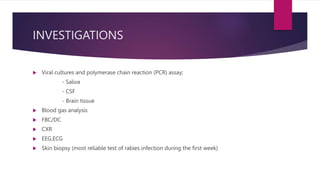
 Viral cultures and polymerase chain reaction (PCR) assay;
- Saliva
- CSF
- Brain tissue
 Blood gas analysis
 FBC/DC
 CXR
 EEG,ECG
 Skin biopsy (most reliable test of rabies infection during the first week)
MANAGEMENT
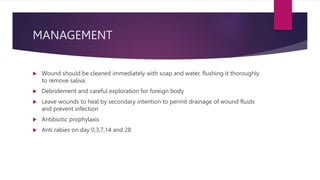
 Wound should be cleaned immediately with soap and water, flushing it thoroughly
to remove saliva.
 Debridement and careful exploration for foreign body
 Leave wounds to heal by secondary intention to permit drainage of wound fluids
and prevent infection
 Antibiotic prophylaxis
 Anti rabies on day 0,3,7,14 and 28
REFERENCES
 Zandi F, Goshadrou F, Meyfour A, Vaziri B. Rabies Infection: An Overview of
Lyssavirus-Host Protein Interactions. Iran Biomed J. 2021 Jul 1. 25 (4):226-42
 WHO. Rabies. World Health Organization. Available at
http://www.who.int/mediacentre/factsheets/fs099/en/. 21 May 2019; Accessed: 1
Jun 2019.
 Liu C, Cahill JD. Epidemiology of Rabies and Current US Vaccine Guidelines. R I
Med J (2013). 2020 Aug 3. 103 (6):51-53.

Rabies edited G.pptx

  • 1.
  • 2.
    INTRODUCTION  Rabies isa zoonotic viral disease that affects the CNS  Caused by a virus of the family Rhabdoviridae, genus Lyssavirus, subgroup rabies virus  Rabies is present on all continents except Antartica, with over 95% of human death occurring in Asia and Africa  It is one of the neglected tropical disease that predominantly affects already marginalized, poor and vulnerable populations  Once clinical symptoms appear, rabies is virtually 100% fatal.
  • 4.
    TRANSMISION  Through deepbite or scratch from an animal with rabies, usually a dog  Transmission can also occur if saliva of infected animals comes into direct contact with mucosa (e.g eyes or mouth) or fresh skin wounds.  Wildlife vectors and / or reservoirs include cats, wolves, foxes, jackals, skunks, mongooses, raccoons, vampire bats, and fruit and insect eating bats.  Human to human transmission has been documented only through infected corneal and solid organ grafts from unsuspected rabies infected donors.
  • 5.
    PATHOPHYSIOLOGY  Inoculation intomuscle  Endogenous muscle micro-RNA bind to viral transcripts and limit both replication and viral protein production , such that the virus is able to evade detection by antigen presenting cells  Once enough virus replicates, it binds motor neuron junctions at postsynaptic nicotinic acetylcholine receptors, which initiates uptake into the motor endplate.  The virus then rapidly propagates across motor axons and chemical synapses in retrograde fashion toward the ganglia and nerve roots.  The rabies virus travels along these axons at a rate of 12-24mm/day to enter the spinal ganglion.  At this point the prodromal symptoms of neuralgia and hypoesthesia may begin, in addition to fever and flulike illness
  • 6.
     Once reachingthe CNS, it spreads throughout  Anterograde spread of rabies virus via sensory and autonomic pathways from CNS to salivary glands and other viscera  Throughout propagation of the virus along motor pathways, the virus elicits little inflammation  Rabies does not damage neurons  Neuronal morphology and lifespan is normal throughout the cause of the  Death occurs from global neurotransmitter blockade and widespread dysfunction
  • 7.
     The virionacts in the synaptic space, where homology in amino acid sequences between neurotransmitter receptors for acetylcholine, GABA, and glycine may afford a mechanism for viral binding of these receptors. Thus its action is neurotoxic rather than cytotoxic  Characterized by the presence of negri
  • 8.
  • 9.
    INCUBATION PERIOD  Averageduration of incubation is 20-90 days  In more than 90% of cases, incubation is less than 1year  A person whose inoculum occurs with a scratch on the hand may take longer to develop symptoms of rabies than a person who receives a bite to the head  The incubation period is less than 50days if the patient is bitten on the head or neck or if a heavy inoculum is transferred through multiple bites, deep wounds, or large wounds.  Infected patients may not recall exposure because of the prolonged incubation period
  • 10.
    CLINICAL FEATURES  Twoforms of rabies - Furious rabies - Paralytic rabies FURIOUS RABIES Most common presentation and the duration of this period is 2-10days  Headache  Fevers, flu like symptoms  Confusion  Fluctuating periods of excitement with hallucinations  Hydrophobia
  • 11.
     Insomnia  Depression Diarrhea and vomiting  Pain or intense itching at the inoculation site -After several hours to days, this becomes episodic and interspersed with calm, cooperative, lucid periods -Furious episodes last less than 5min Episodes may be triggered by visual, auditory or tactile stimuli or may be spontaneous - This phase may end in cardiorespiratory arrest or may progress to paralysis
  • 12.
    PARALYTIC RABIES -Associated withobjective signs of developing CNS disease, however consciousness remains unaffected until the onset of coma. -Patient is relatively quiet compared with a person with the furious form. -The duration is 2-7days.  Muscle fasciculation  Priapism  Focal or generalized convulsions  Paralysis (ascending paralysis)
  • 13.
    INVESTIGATIONS  Viral culturesand polymerase chain reaction (PCR) assay; - Saliva - CSF - Brain tissue  Blood gas analysis  FBC/DC  CXR  EEG,ECG  Skin biopsy (most reliable test of rabies infection during the first week)
  • 14.
    MANAGEMENT  Wound shouldbe cleaned immediately with soap and water, flushing it thoroughly to remove saliva.  Debridement and careful exploration for foreign body  Leave wounds to heal by secondary intention to permit drainage of wound fluids and prevent infection  Antibiotic prophylaxis  Anti rabies on day 0,3,7,14 and 28
  • 15.
    REFERENCES  Zandi F,Goshadrou F, Meyfour A, Vaziri B. Rabies Infection: An Overview of Lyssavirus-Host Protein Interactions. Iran Biomed J. 2021 Jul 1. 25 (4):226-42  WHO. Rabies. World Health Organization. Available at http://www.who.int/mediacentre/factsheets/fs099/en/. 21 May 2019; Accessed: 1 Jun 2019.  Liu C, Cahill JD. Epidemiology of Rabies and Current US Vaccine Guidelines. R I Med J (2013). 2020 Aug 3. 103 (6):51-53.