•   The idea of mobile learning
•   The tools for mobile learning
•   The mobile learners
•   The global mobile learning landscape
•   The implication and potential of mobile
    learning
“Education is the goal, learning is the means. A
lot of learning can happen without teaching.”
-Nicholas Negroponte,
Chairman Emeritus, Massachusetts Institute of Technology's (MIT) Media Lab
• Mobile Learning = Ubiquitous learning =
  Learning on the Go! = “…an exciting form of
  learning that uses mobile technologies to
  enhance the learning experience.”
• u-Learning : The use of technology (mobile
  techonologies, WiFi Internet access, mobile
  devices) to learn without reflecting on it.
• Characteristics of Mobile Learning (among
  others):
  – Learner-centered
  – Gap-filler materials (not necessarily formal
    learning materials)
  – Greater learners’ autonomy
  – Young(er)
  – Learning is personalized and customized
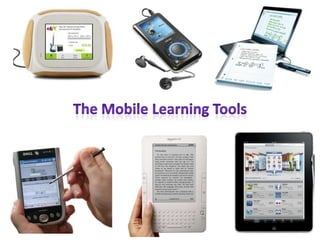
• Chumby – Fun + mobile internet device;
  streams newsfeeds, weather reports, short
  language course
• iPhone – 3-in-1 mobile device : phone, media
  player and internet surfing device, represents
  a convergence of technology
• Live Scribe – Digital Pen + Digital Notepad +
  Laptop/PC dock + Internet = Portable
  Thoughts!
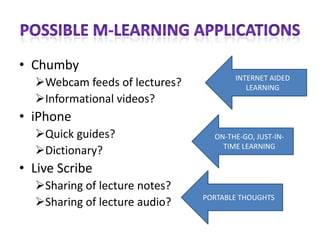
• Chumby
                                      INTERNET AIDED
  Webcam feeds of lectures?             LEARNING
  Informational videos?
• iPhone
  Quick guides?                 ON-THE-GO, JUST-IN-
                                   TIME LEARNING
  Dictionary?
• Live Scribe
  Sharing of lecture notes?
                               PORTABLE THOUGHTS
  Sharing of lecture audio?
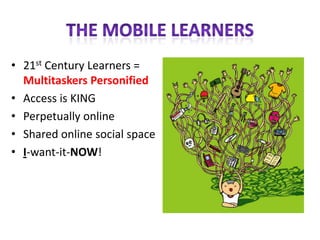
• 21st Century Learners =
  Multitaskers Personified
• Access is KING
• Perpetually online
• Shared online social space
• I-want-it-NOW!
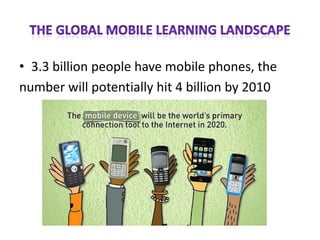
• 3.3 billion people have mobile phones, the
number will potentially hit 4 billion by 2010
• In IBM, employees download more than 4.5
  million podcasts to keep up-to-date and get
  cutting edge knowledge.
• In Korea, more than 90% of households are
  already connected to cheap, broadband
  internet
• We are increasingly relying on digital info,
  storage and access
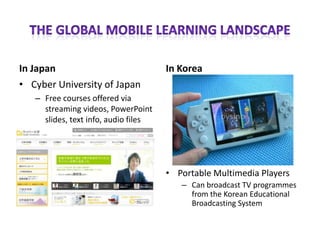
In Japan                              In Korea
• Cyber University of Japan
   – Free courses offered via
     streaming videos, PowerPoint
     slides, text info, audio files


                                      • Portable Multimedia Players
                                         – Can broadcast TV programmes
                                           from the Korean Educational
                                           Broadcasting System
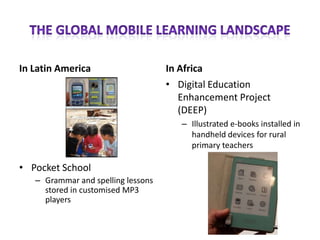
In Latin America                    In Africa
                                    • Digital Education
                                       Enhancement Project
                                       (DEEP)
                                       – Illustrated e-books installed in
                                         handheld devices for rural
                                         primary teachers

• Pocket School
   – Grammar and spelling lessons
     stored in customised MP3
     players
• The creation of learning environments where
  learning is going on 24/7 for anybody seeking it
• Greater need for digital learning skills or
  competency
   Searching/Googling/Identifying authority
   Networking/Facebooking/Ninging
• Participation vs Consumption
   Participation does not necessarily translates to
    consumption, vice versa (lurkers in the midst?)
• Addressing collaborative learning
   Mobile devices are mostly solitary devices – the
    connection (to the internet) makes it a gateway to
    collaboration
• How to effectively chunk information?
   Bite-size info
   Still relevant and useful
   Digestion rate
• Engaging content
   Bigger audience – what’s the common lowest
    denominator?
R U Learning 2
R U Learning 2
R U Learning 2

R U Learning 2

  • 2.
    The idea of mobile learning • The tools for mobile learning • The mobile learners • The global mobile learning landscape • The implication and potential of mobile learning
  • 4.
    “Education is thegoal, learning is the means. A lot of learning can happen without teaching.” -Nicholas Negroponte, Chairman Emeritus, Massachusetts Institute of Technology's (MIT) Media Lab
  • 5.
    • Mobile Learning= Ubiquitous learning = Learning on the Go! = “…an exciting form of learning that uses mobile technologies to enhance the learning experience.” • u-Learning : The use of technology (mobile techonologies, WiFi Internet access, mobile devices) to learn without reflecting on it.
  • 6.
    • Characteristics ofMobile Learning (among others): – Learner-centered – Gap-filler materials (not necessarily formal learning materials) – Greater learners’ autonomy – Young(er) – Learning is personalized and customized
  • 8.
    • Chumby –Fun + mobile internet device; streams newsfeeds, weather reports, short language course • iPhone – 3-in-1 mobile device : phone, media player and internet surfing device, represents a convergence of technology • Live Scribe – Digital Pen + Digital Notepad + Laptop/PC dock + Internet = Portable Thoughts!
  • 9.
    • Chumby INTERNET AIDED Webcam feeds of lectures? LEARNING Informational videos? • iPhone Quick guides? ON-THE-GO, JUST-IN- TIME LEARNING Dictionary? • Live Scribe Sharing of lecture notes? PORTABLE THOUGHTS Sharing of lecture audio?
  • 12.
    • 21st CenturyLearners = Multitaskers Personified • Access is KING • Perpetually online • Shared online social space • I-want-it-NOW!
  • 13.
    • 3.3 billionpeople have mobile phones, the number will potentially hit 4 billion by 2010
  • 14.
    • In IBM,employees download more than 4.5 million podcasts to keep up-to-date and get cutting edge knowledge. • In Korea, more than 90% of households are already connected to cheap, broadband internet • We are increasingly relying on digital info, storage and access
  • 15.
    In Japan In Korea • Cyber University of Japan – Free courses offered via streaming videos, PowerPoint slides, text info, audio files • Portable Multimedia Players – Can broadcast TV programmes from the Korean Educational Broadcasting System
  • 16.
    In Latin America In Africa • Digital Education Enhancement Project (DEEP) – Illustrated e-books installed in handheld devices for rural primary teachers • Pocket School – Grammar and spelling lessons stored in customised MP3 players
  • 17.
    • The creationof learning environments where learning is going on 24/7 for anybody seeking it • Greater need for digital learning skills or competency  Searching/Googling/Identifying authority  Networking/Facebooking/Ninging • Participation vs Consumption  Participation does not necessarily translates to consumption, vice versa (lurkers in the midst?)
  • 18.
    • Addressing collaborativelearning  Mobile devices are mostly solitary devices – the connection (to the internet) makes it a gateway to collaboration • How to effectively chunk information?  Bite-size info  Still relevant and useful  Digestion rate • Engaging content  Bigger audience – what’s the common lowest denominator?