In what ways does your media
product use, develop or
challenge forms and conventions
of real media products?
Frame One
Frame One Analysis
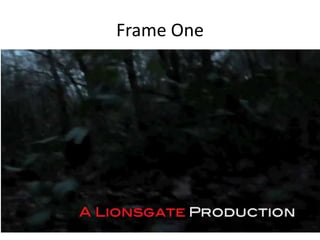
Instantly at the start of the film we wished to connote the darkness
explicitly, hence why we decided to depict a point of view shot from the
antagonist’s perspective. From the frame, we indicated the mise-en-scene
of extremely key features, with the low, handheld camera shot connoting
the animalistic, demonic features of the antagonist – as this would oppose
the general protagonist – so this frame highlights the binary oppositions
theory with the first shot.
The next aspect that we wished to depict within the shot was the darkness
of the shot, with the low lighting instantly giving the impression of an
antagonist – with a murky, unsettling atmosphere making the antagonist
appear as the dominant being within the setting that we created.
Furthermore, the darkness conveys the horror genre entirely, with the lack
of lighting having the effect of eliciting a response of fear as we opposed
light (with connotations typically of light and positivity) with dusky, negative
antagonist shots at the start of our opening sequence.
Frame One Analysis
This frame supports our genre hugely as I
aforementioned, effectively due to the fact that by showing
the antagonist instead of the protagonist it gives the binary
oppositions theory, as well as showing that the demonic
character has more authority because it is shown first.
Furthermore, it does not reveal the plot but gives implications
that the antagonist has more dominance, therefore meaning
that once the shot of the protagonist is shown – the audience
already expect something extremely bad to happen – which
engages them to our opening shot just by the first point of
view shot. It is very similar to the film ‘The Evil Dead’, as we
used this as our inspiration, because with this style of shot we
can set our storyline up through this shot, as it compares to
the point of view shot from the original ‘The Evil Dead’ film.
Frame Two:
Frame Two Analysis
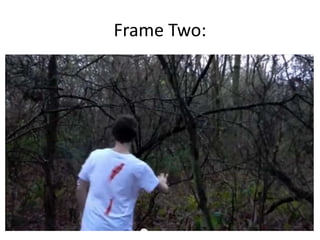
In order to create a thrilling opening section to our opening
sequence, we intended to use the mise-en-scene of the
darkened woods as well as the makeup of the
protagonist, with lots of blood showing the ideological themes
of horror that we researched initially. The long shot in this
instance is able to show the protagonist in a sense of
disequilibrium, leading on from the previous shot of the
antagonist and the shadow in the setting, as this enables us to
lead the narrative forward, with the protagonist being
confined in the setting that we created. The editing for this
shot enabled us to basically make the shot a lot darker than it
initially was, with the boundaries of the twigs acting as the
force between the protagonist and antagonist – hence
implying the binary oppositions theory further.
Frame Two Analysis
The music builds up from this frame, therefore
signalling the progression of the protagonist
through the woods – getting progressively faster
which also implicates that something mysterious
and evil is about to happen. This shot shows the
horror genre explicitly due to the costume, the
ripped shirt and blood and the low body language
of the protagonist conveys a sense of maelstrom
within the character – which means that the
antagonist is the dominant straight away from the
first frame.
Frame Three
Frame Three
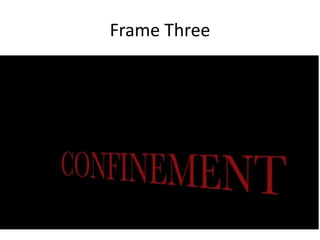
The next important frame was the name of the film, we
decided to alter the typical order conventions by putting
the name of our film ‘Confinement’ at the end of the
sequence – because this would go with the dramatic
effect of the demonic scream we had chosen. The title
enables us to connote the ideological themes of horror
because of the fact that the font we chosen is not
typically associated with the idea of a horror genre, and it
juxtaposes with the typical blood dripping that we
initially had. We decided to change this because by
having a font that would be more associated with law
films and not the horror genre, we differentiate from the
general horror genre and therefore become innovative.
Frame Three Analysis
The text of the film name ‘Confinement’ is a red
colour, so despite the font subverting from the horror
genre we still wanted to convey typical aspects of it which
is why we decided to use the red font as this indicates
blood, which is always relating to the genre of horror
strongly, as we depicted this with the colour as well as
using fake blood as a prop for the protagonist’s costume.
Finally, the slanted name of the film creates a sense of
disequilibrium and it is dynamic which highlights the
horror genre further because it shows the evil, slanted
side of horror which is why we used this feature to create
an effect – further emphasising our genre yet in subtle
ways.
Frame Four
Frame Four Analysis
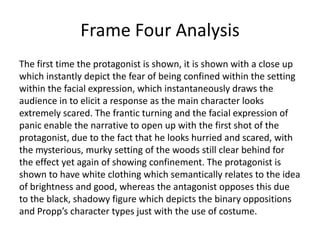
The first time the protagonist is shown, it is shown with a close up
which instantly depict the fear of being confined within the setting
within the facial expression, which instantaneously draws the
audience in to elicit a response as the main character looks
extremely scared. The frantic turning and the facial expression of
panic enable the narrative to open up with the first shot of the
protagonist, due to the fact that he looks hurried and scared, with
the mysterious, murky setting of the woods still clear behind for
the effect yet again of showing confinement. The protagonist is
shown to have white clothing which semantically relates to the idea
of brightness and good, whereas the antagonist opposes this due
to the black, shadowy figure which depicts the binary oppositions
and Propp’s character types just with the use of costume.
Frame Five
Frame Five Analysis
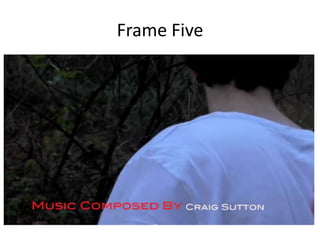
For the lighting in our opening sequence we wanted to
portray the location as being dimly lit, which was useful
because of the time and location of the woods, because
the darkness indicates the ideological themes of horror
semantically in terms of evil. In order to do this, we
filmed very early in the morning but also used the editing
effects on iMovie to highlight the character as being lost
and confined within the darkness of the woods. We
enable the character to be portrayed in the horror genre
because of the fact that there is no real light and the
protagonist scurries through worriedly in utter confusion.
Frame Six
Frame Six Analysis
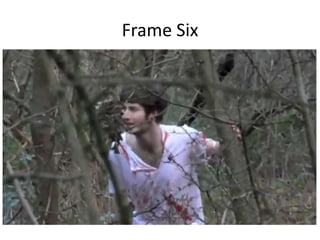
The setting of the opening sequence was within the woods
because this basically allowed us to show the character
isolated within the woods, to be confined behind many
different objects – allowing us to create the mise-en-scene of
mystery. From this shot, we indicate the horror genre
explicitly, with the protagonist hiding behind objects to show
that he is confined and effective there is no way out.
Furthermore, the antagonist is shown to pursue to antagonist
with the shadow covering the screen and the protagonist
staring round in anguish and confusion and the dissonant
sounds creating a climatic sense to the protagonist being
trapped within the setting – as well as the character being
hidden and basically stuck behind the trees.
Frame Seven
Frame Seven Analysis
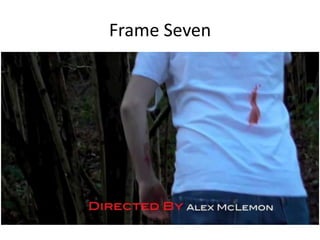
This frame shows the panning shot downwards
from the protagonist as he clings on to the trees as
some sense of sanctuary, with shows that we are
signifying the genre hugely within the opening
sequence with the costume of blood yet again
being shown predominantly in the shot. Also, the
downwards panning shot shows that the hope of
the protagonist is diminishing, with the dark
background of the setting still connoting the binary
oppositions of good versus evil semantically with
the lack of lighting and emphasising the darkness in
the woods.
Frame Eight
Frame Eight Analysis
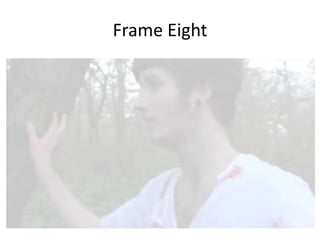
This frame shows our special effects because we wanted
to use the white flashing shots as being useful in our
production by effectively showing the white, blurs
within the mind of the protagonist but in a visual way.
By using the quick transitions of the fade to white, we
can use these frames in a similar way to the jump cuts
for fast-paced, frantic effect of being within maelstrom
mentally. The sound within this frame, along with the
quick, ever-changing shots (in terms of differentiating
between medium shots and close up shots) shows the
hysterical, panicking side to the protagonist through the
use of specific special effects on iMovie.
Frame Nine
Frame Nine
Frame Nine Analysis
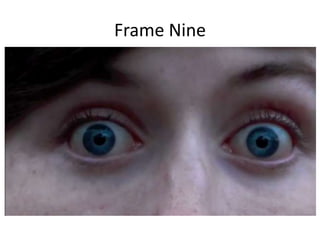
This final frame enables us to depict the utter shock of the
protagonist, with the tension building to a crescendo not
only with the music but the extreme close up to convey the
fear on the protagonist’s facial expression. The quick editing
with the extreme close up flashing to the black screen, with a
demonic scream alerts the audience that the antagonist is
further dominant in the mise-en-scene of the woods. The
suspense comes to its climatic end, with the tension at a
peak due to the jump shots flashing and the eyes on screen
for less than a second – leaving an abrupt shock on the
protagonist’s face – and eliciting fear upon the audience by
leaving them on a cliffhanger because the screen fades to
black whilst the scream plays loudly.

Question 1

  • 1.
    In what waysdoes your media product use, develop or challenge forms and conventions of real media products?
  • 2.
  • 3.
    Frame One Analysis Instantlyat the start of the film we wished to connote the darkness explicitly, hence why we decided to depict a point of view shot from the antagonist’s perspective. From the frame, we indicated the mise-en-scene of extremely key features, with the low, handheld camera shot connoting the animalistic, demonic features of the antagonist – as this would oppose the general protagonist – so this frame highlights the binary oppositions theory with the first shot. The next aspect that we wished to depict within the shot was the darkness of the shot, with the low lighting instantly giving the impression of an antagonist – with a murky, unsettling atmosphere making the antagonist appear as the dominant being within the setting that we created. Furthermore, the darkness conveys the horror genre entirely, with the lack of lighting having the effect of eliciting a response of fear as we opposed light (with connotations typically of light and positivity) with dusky, negative antagonist shots at the start of our opening sequence.
  • 4.
    Frame One Analysis Thisframe supports our genre hugely as I aforementioned, effectively due to the fact that by showing the antagonist instead of the protagonist it gives the binary oppositions theory, as well as showing that the demonic character has more authority because it is shown first. Furthermore, it does not reveal the plot but gives implications that the antagonist has more dominance, therefore meaning that once the shot of the protagonist is shown – the audience already expect something extremely bad to happen – which engages them to our opening shot just by the first point of view shot. It is very similar to the film ‘The Evil Dead’, as we used this as our inspiration, because with this style of shot we can set our storyline up through this shot, as it compares to the point of view shot from the original ‘The Evil Dead’ film.
  • 5.
  • 6.
    Frame Two Analysis Inorder to create a thrilling opening section to our opening sequence, we intended to use the mise-en-scene of the darkened woods as well as the makeup of the protagonist, with lots of blood showing the ideological themes of horror that we researched initially. The long shot in this instance is able to show the protagonist in a sense of disequilibrium, leading on from the previous shot of the antagonist and the shadow in the setting, as this enables us to lead the narrative forward, with the protagonist being confined in the setting that we created. The editing for this shot enabled us to basically make the shot a lot darker than it initially was, with the boundaries of the twigs acting as the force between the protagonist and antagonist – hence implying the binary oppositions theory further.
  • 7.
    Frame Two Analysis Themusic builds up from this frame, therefore signalling the progression of the protagonist through the woods – getting progressively faster which also implicates that something mysterious and evil is about to happen. This shot shows the horror genre explicitly due to the costume, the ripped shirt and blood and the low body language of the protagonist conveys a sense of maelstrom within the character – which means that the antagonist is the dominant straight away from the first frame.
  • 8.
  • 9.
    Frame Three The nextimportant frame was the name of the film, we decided to alter the typical order conventions by putting the name of our film ‘Confinement’ at the end of the sequence – because this would go with the dramatic effect of the demonic scream we had chosen. The title enables us to connote the ideological themes of horror because of the fact that the font we chosen is not typically associated with the idea of a horror genre, and it juxtaposes with the typical blood dripping that we initially had. We decided to change this because by having a font that would be more associated with law films and not the horror genre, we differentiate from the general horror genre and therefore become innovative.
  • 10.
    Frame Three Analysis Thetext of the film name ‘Confinement’ is a red colour, so despite the font subverting from the horror genre we still wanted to convey typical aspects of it which is why we decided to use the red font as this indicates blood, which is always relating to the genre of horror strongly, as we depicted this with the colour as well as using fake blood as a prop for the protagonist’s costume. Finally, the slanted name of the film creates a sense of disequilibrium and it is dynamic which highlights the horror genre further because it shows the evil, slanted side of horror which is why we used this feature to create an effect – further emphasising our genre yet in subtle ways.
  • 11.
  • 12.
    Frame Four Analysis Thefirst time the protagonist is shown, it is shown with a close up which instantly depict the fear of being confined within the setting within the facial expression, which instantaneously draws the audience in to elicit a response as the main character looks extremely scared. The frantic turning and the facial expression of panic enable the narrative to open up with the first shot of the protagonist, due to the fact that he looks hurried and scared, with the mysterious, murky setting of the woods still clear behind for the effect yet again of showing confinement. The protagonist is shown to have white clothing which semantically relates to the idea of brightness and good, whereas the antagonist opposes this due to the black, shadowy figure which depicts the binary oppositions and Propp’s character types just with the use of costume.
  • 13.
  • 14.
    Frame Five Analysis Forthe lighting in our opening sequence we wanted to portray the location as being dimly lit, which was useful because of the time and location of the woods, because the darkness indicates the ideological themes of horror semantically in terms of evil. In order to do this, we filmed very early in the morning but also used the editing effects on iMovie to highlight the character as being lost and confined within the darkness of the woods. We enable the character to be portrayed in the horror genre because of the fact that there is no real light and the protagonist scurries through worriedly in utter confusion.
  • 15.
  • 16.
    Frame Six Analysis Thesetting of the opening sequence was within the woods because this basically allowed us to show the character isolated within the woods, to be confined behind many different objects – allowing us to create the mise-en-scene of mystery. From this shot, we indicate the horror genre explicitly, with the protagonist hiding behind objects to show that he is confined and effective there is no way out. Furthermore, the antagonist is shown to pursue to antagonist with the shadow covering the screen and the protagonist staring round in anguish and confusion and the dissonant sounds creating a climatic sense to the protagonist being trapped within the setting – as well as the character being hidden and basically stuck behind the trees.
  • 17.
  • 18.
    Frame Seven Analysis Thisframe shows the panning shot downwards from the protagonist as he clings on to the trees as some sense of sanctuary, with shows that we are signifying the genre hugely within the opening sequence with the costume of blood yet again being shown predominantly in the shot. Also, the downwards panning shot shows that the hope of the protagonist is diminishing, with the dark background of the setting still connoting the binary oppositions of good versus evil semantically with the lack of lighting and emphasising the darkness in the woods.
  • 19.
  • 20.
    Frame Eight Analysis Thisframe shows our special effects because we wanted to use the white flashing shots as being useful in our production by effectively showing the white, blurs within the mind of the protagonist but in a visual way. By using the quick transitions of the fade to white, we can use these frames in a similar way to the jump cuts for fast-paced, frantic effect of being within maelstrom mentally. The sound within this frame, along with the quick, ever-changing shots (in terms of differentiating between medium shots and close up shots) shows the hysterical, panicking side to the protagonist through the use of specific special effects on iMovie.
  • 21.
  • 22.
  • 23.
    Frame Nine Analysis Thisfinal frame enables us to depict the utter shock of the protagonist, with the tension building to a crescendo not only with the music but the extreme close up to convey the fear on the protagonist’s facial expression. The quick editing with the extreme close up flashing to the black screen, with a demonic scream alerts the audience that the antagonist is further dominant in the mise-en-scene of the woods. The suspense comes to its climatic end, with the tension at a peak due to the jump shots flashing and the eyes on screen for less than a second – leaving an abrupt shock on the protagonist’s face – and eliciting fear upon the audience by leaving them on a cliffhanger because the screen fades to black whilst the scream plays loudly.