Question 5: How did you
attract/address your
target audience?
The Lionsgate introduction was
extremely useful for our
production, as we were able to
use it connote that our film was
from the horror genre – with this
specific introduction being used in
the film Saw VII – which is from
the most successful horror
franchise of all time.
The darkness and red aspects
depict the blood and the
ideological themes of horror due
to darkness, with the clouds in
the background relating to the
mise-en-scene in our opening
sequence where we have trees to
show the isolation of the
protagonist.
‘Based on a true story’ makes the
film appear as a lot scarier to the
audience and it will make them
believe about the events being
extremely scary – and will entice
them to the rest of the film.
Furthermore, the typography
shows the white upon the black
background which indicates the
binary opposition’s theory of
black versus white which
therefore relates also to good
versus evil.
The low, animalistic shot of the
antagonist at the start of the film
instantly shows the fact that the
antagonist has the power in the
sequence – with the unlevelled, point
of view shot showing the disturbing
features of the antagonist.
The darkness and low lighting in the
shot shows that we portrayed the
setting as ideal for the protagonist,
with the dull aspects showing that
there is no real light in the woods and
looking through the setting is
mysterious and extremely eerie.
The ‘A Lionsgate Production’ credit it
used with two different colours to
emphasise the difference between the
protagonist and the antagonist with
the use of colours – red showing the
blood features yet again which relates
to the horror theme and white for the
equilibrium of the protagonist.
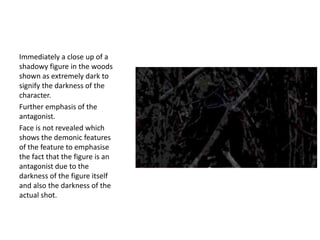
Immediately a close up of a
shadowy figure in the woods
shown as extremely dark to
signify the darkness of the
character.
Further emphasis of the
antagonist.
Face is not revealed which
shows the demonic features
of the feature to emphasise
the fact that the figure is an
antagonist due to the
darkness of the figure itself
and also the darkness of the
actual shot.
Shot from the back of the
protagonist to show the fact
that the character is lost within
the setting, as well as
implicating that the protagonist
is being chased.
The darkness of the shot as well
as the character having to go
through boundaries like the
trees shows that the
protagonist has no power in the
setting, which is extremely
juxtaposing from a typical
narrative due to the fact that
the male is less dominant.
The shot of footsteps shows
the protagonist is disturbed,
with the walking not following
a typical pattern and it
appears as if the protagonist
is injured.
The darkness of the woods of
which the footsteps stand
upon is covered by leaves and
just conveys the setting to be
a dark, eerie place for a
protagonist to be confined in.
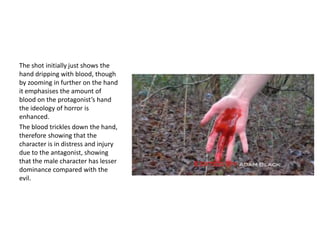
The shot initially just shows the
hand dripping with blood, though
by zooming in further on the hand
it emphasises the amount of
blood on the protagonist’s hand
the ideology of horror is
enhanced.
The blood trickles down the hand,
therefore showing that the
character is in distress and injury
due to the antagonist, showing
that the male character has lesser
dominance compared with the
evil.
First instance of a close up of the
protagonist, this shot shows the
utter fear and distress of the
situation as the character scurries
around the woods.
The character is unshaven, with
messy hair and a ripped up t-shirt
and blood in order to further
indicate the fact that the
protagonist is confined within the
setting.
The character is centrally
composed in the screen, though
the shot is not entirely stable
which shows the frantic aspects
of the protagonist trying to
escape from the antagonist.
The panning shot shows the
extent of blood that the
protagonist has on his body,
with the shot panning
upwards in order to clearly
convey the physical state of
the protagonist to be negative
and within disequilibrium –
which also signifies the
ideological themes of horror.
As the protagonist looks around
frantically and scared, a shadow
crosses the screen which startles
the character into a state of even
bigger fear – shown further with
the next shot which is a close up
to show facial expression and that
the character is entirely scared.
The protagonist is not shown
directly, many features like the
trees clearly show that the
character is trapped in the setting
with the mise-en-scene showing
to the audience that the
antagonist has all of the
dominance in this setting.
The point of view shot of the
antagonist is shown yet again,
showing the progression of the
demon to oppose the protagonist
with the darkness of the shot
showing the disequilibrium in the
film.
This shot shows the broken
physical state of the protagonist,
as he appears to see a shadowy
figure behind a tree, the medium
over the shoulder shot showing
the entirety of the setting as well
as the costume to highlight the
blood features further.
The close up does not show
the protagonist’s face, but is
instead used to convey the
state of the protagonist with
the sound effects of panting –
as well as the unshaven
features of the protagonist.
Another shot of the point of
view from antagonist, with
the third shot going with the
cluster of three rule –
showing that the opening
sequence is coming to its
crescendo and the tension is
almost at its climax.
In the next few shots are jump
cuts, which increases the pace
of the tension alike with the
previous antagonistic shot –
by showing several different
angled close ups of the
protagonist’s face.
The different facial expressions
and positions of the protagonist
jump frequently which show the
fragmented, disjointed emotional
state of the character as the shots
jump consistently.
The character also holds onto the
tree, showing that the protagonist
is using the setting in order to
connote the ideological themes of
horror by cowering away from the
antagonist.
The shots then appear as
extremely quick shots, cutting
almost instantly within a
second with white flashing
transitions which show the
diminishing thoughts inside
the mind of the protagonist.
The film cuts to black and is entirely
silent – showing that the film is
reaching its dramatic tension and
climax, with the action and horror,
suspenseful music abruptly ending.
This also contrasts with the white
flashes previously to emphasise the
binary oppositions between the
protagonist and the antagonist of the
film. Black semantically relates to
darkness whereas white relates to
positivity so these colours oppose
each other well.
The extreme close up of the
eyes convey the utter fear of
the protagonist, with the
features of the eyes shown
explicitly with the shot used
to show that the protagonist
is about to be attacked.
The text of the film name
‘Confinement’ is a red colour, so
despite the font subverting from the
horror genre we still wanted to convey
typical aspects of it which is why we
decided to use the red font as this
indicates blood, which is always
relating to the genre of horror
strongly.
The slanted name of the film creates a
sense of disequilibrium and it is
dynamic which highlights the horror
genre.
By having a font that would be more
associated with law films and not the
horror genre, we differentiate from
the general horror genre and therefore
become innovative.

Question 5

  • 1.
    Question 5: Howdid you attract/address your target audience?
  • 2.
    The Lionsgate introductionwas extremely useful for our production, as we were able to use it connote that our film was from the horror genre – with this specific introduction being used in the film Saw VII – which is from the most successful horror franchise of all time. The darkness and red aspects depict the blood and the ideological themes of horror due to darkness, with the clouds in the background relating to the mise-en-scene in our opening sequence where we have trees to show the isolation of the protagonist.
  • 3.
    ‘Based on atrue story’ makes the film appear as a lot scarier to the audience and it will make them believe about the events being extremely scary – and will entice them to the rest of the film. Furthermore, the typography shows the white upon the black background which indicates the binary opposition’s theory of black versus white which therefore relates also to good versus evil.
  • 4.
    The low, animalisticshot of the antagonist at the start of the film instantly shows the fact that the antagonist has the power in the sequence – with the unlevelled, point of view shot showing the disturbing features of the antagonist. The darkness and low lighting in the shot shows that we portrayed the setting as ideal for the protagonist, with the dull aspects showing that there is no real light in the woods and looking through the setting is mysterious and extremely eerie. The ‘A Lionsgate Production’ credit it used with two different colours to emphasise the difference between the protagonist and the antagonist with the use of colours – red showing the blood features yet again which relates to the horror theme and white for the equilibrium of the protagonist.
  • 5.
    Immediately a closeup of a shadowy figure in the woods shown as extremely dark to signify the darkness of the character. Further emphasis of the antagonist. Face is not revealed which shows the demonic features of the feature to emphasise the fact that the figure is an antagonist due to the darkness of the figure itself and also the darkness of the actual shot.
  • 6.
    Shot from theback of the protagonist to show the fact that the character is lost within the setting, as well as implicating that the protagonist is being chased. The darkness of the shot as well as the character having to go through boundaries like the trees shows that the protagonist has no power in the setting, which is extremely juxtaposing from a typical narrative due to the fact that the male is less dominant.
  • 7.
    The shot offootsteps shows the protagonist is disturbed, with the walking not following a typical pattern and it appears as if the protagonist is injured. The darkness of the woods of which the footsteps stand upon is covered by leaves and just conveys the setting to be a dark, eerie place for a protagonist to be confined in.
  • 8.
    The shot initiallyjust shows the hand dripping with blood, though by zooming in further on the hand it emphasises the amount of blood on the protagonist’s hand the ideology of horror is enhanced. The blood trickles down the hand, therefore showing that the character is in distress and injury due to the antagonist, showing that the male character has lesser dominance compared with the evil.
  • 9.
    First instance ofa close up of the protagonist, this shot shows the utter fear and distress of the situation as the character scurries around the woods. The character is unshaven, with messy hair and a ripped up t-shirt and blood in order to further indicate the fact that the protagonist is confined within the setting. The character is centrally composed in the screen, though the shot is not entirely stable which shows the frantic aspects of the protagonist trying to escape from the antagonist.
  • 10.
    The panning shotshows the extent of blood that the protagonist has on his body, with the shot panning upwards in order to clearly convey the physical state of the protagonist to be negative and within disequilibrium – which also signifies the ideological themes of horror.
  • 11.
    As the protagonistlooks around frantically and scared, a shadow crosses the screen which startles the character into a state of even bigger fear – shown further with the next shot which is a close up to show facial expression and that the character is entirely scared. The protagonist is not shown directly, many features like the trees clearly show that the character is trapped in the setting with the mise-en-scene showing to the audience that the antagonist has all of the dominance in this setting.
  • 12.
    The point ofview shot of the antagonist is shown yet again, showing the progression of the demon to oppose the protagonist with the darkness of the shot showing the disequilibrium in the film. This shot shows the broken physical state of the protagonist, as he appears to see a shadowy figure behind a tree, the medium over the shoulder shot showing the entirety of the setting as well as the costume to highlight the blood features further.
  • 13.
    The close updoes not show the protagonist’s face, but is instead used to convey the state of the protagonist with the sound effects of panting – as well as the unshaven features of the protagonist.
  • 14.
    Another shot ofthe point of view from antagonist, with the third shot going with the cluster of three rule – showing that the opening sequence is coming to its crescendo and the tension is almost at its climax.
  • 15.
    In the nextfew shots are jump cuts, which increases the pace of the tension alike with the previous antagonistic shot – by showing several different angled close ups of the protagonist’s face.
  • 16.
    The different facialexpressions and positions of the protagonist jump frequently which show the fragmented, disjointed emotional state of the character as the shots jump consistently. The character also holds onto the tree, showing that the protagonist is using the setting in order to connote the ideological themes of horror by cowering away from the antagonist.
  • 17.
    The shots thenappear as extremely quick shots, cutting almost instantly within a second with white flashing transitions which show the diminishing thoughts inside the mind of the protagonist.
  • 18.
    The film cutsto black and is entirely silent – showing that the film is reaching its dramatic tension and climax, with the action and horror, suspenseful music abruptly ending. This also contrasts with the white flashes previously to emphasise the binary oppositions between the protagonist and the antagonist of the film. Black semantically relates to darkness whereas white relates to positivity so these colours oppose each other well.
  • 19.
    The extreme closeup of the eyes convey the utter fear of the protagonist, with the features of the eyes shown explicitly with the shot used to show that the protagonist is about to be attacked.
  • 20.
    The text ofthe film name ‘Confinement’ is a red colour, so despite the font subverting from the horror genre we still wanted to convey typical aspects of it which is why we decided to use the red font as this indicates blood, which is always relating to the genre of horror strongly. The slanted name of the film creates a sense of disequilibrium and it is dynamic which highlights the horror genre. By having a font that would be more associated with law films and not the horror genre, we differentiate from the general horror genre and therefore become innovative.