How to use the quadratic formula
to find roots of a quadratic
equation.
A

quadratic equation looks like this:
 ax² + bx + c = 0 (where ‘a’ cannot be zero.)
 Solving the equation means finding ‘x’ values
that make the equation true. These ‘x’ values
are called the roots of the quadratic.
 Quadratic equations can have 0, 1 or two
roots.






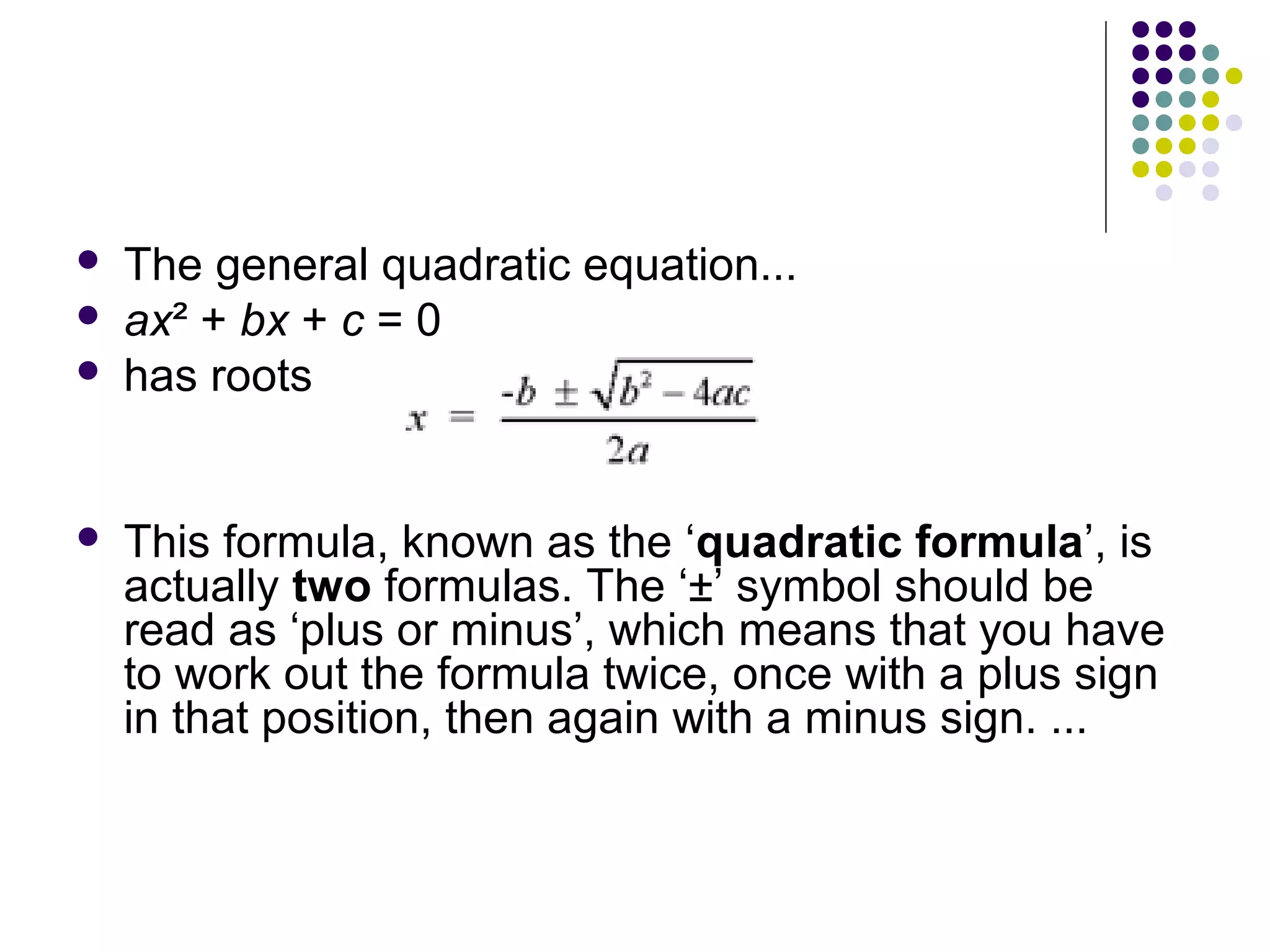
The general quadratic equation...
ax² + bx + c = 0
has roots

This formula, known as the ‘quadratic formula’, is
actually two formulas. The ‘±’ symbol should be
read as ‘plus or minus’, which means that you have
to work out the formula twice, once with a plus sign
in that position, then again with a minus sign. ...
STEPS
 Get

the equation in standar form (moving all
the terms to one side).
 Identify all the coeficients.
 Use the quadratic formula.
STEP 1
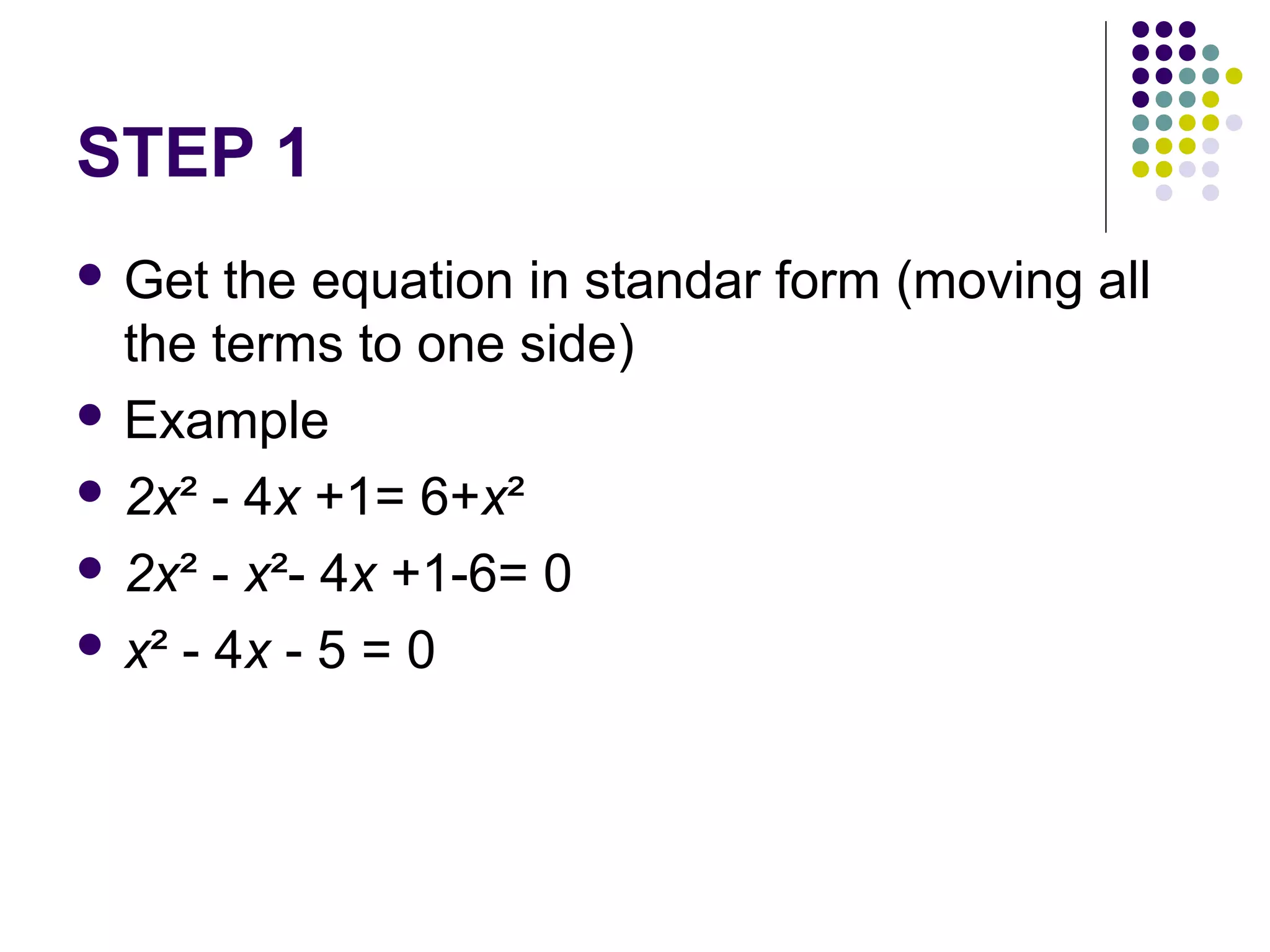
 Get

the equation in standar form (moving all
the terms to one side)
 Example
 2x² - 4x +1= 6+x²
 2x² - x²- 4x +1-6= 0
 x² - 4x - 5 = 0
STEP 2
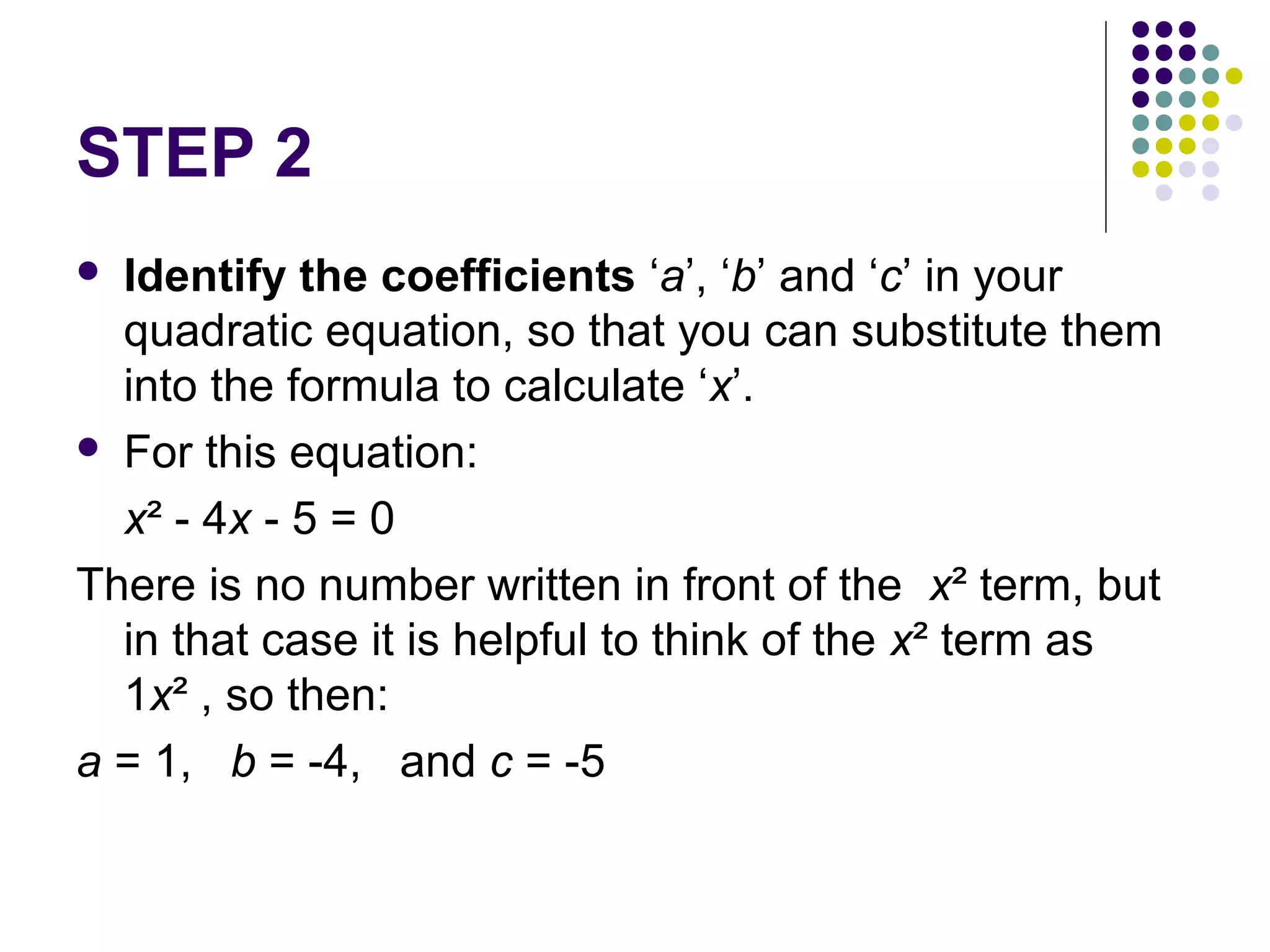
Identify the coefficients ‘a’, ‘b’ and ‘c’ in your
quadratic equation, so that you can substitute them
into the formula to calculate ‘x’.
 For this equation:
x² - 4x - 5 = 0
There is no number written in front of the x² term, but
in that case it is helpful to think of the x² term as
1x² , so then:
a = 1, b = -4, and c = -5

STEP 3




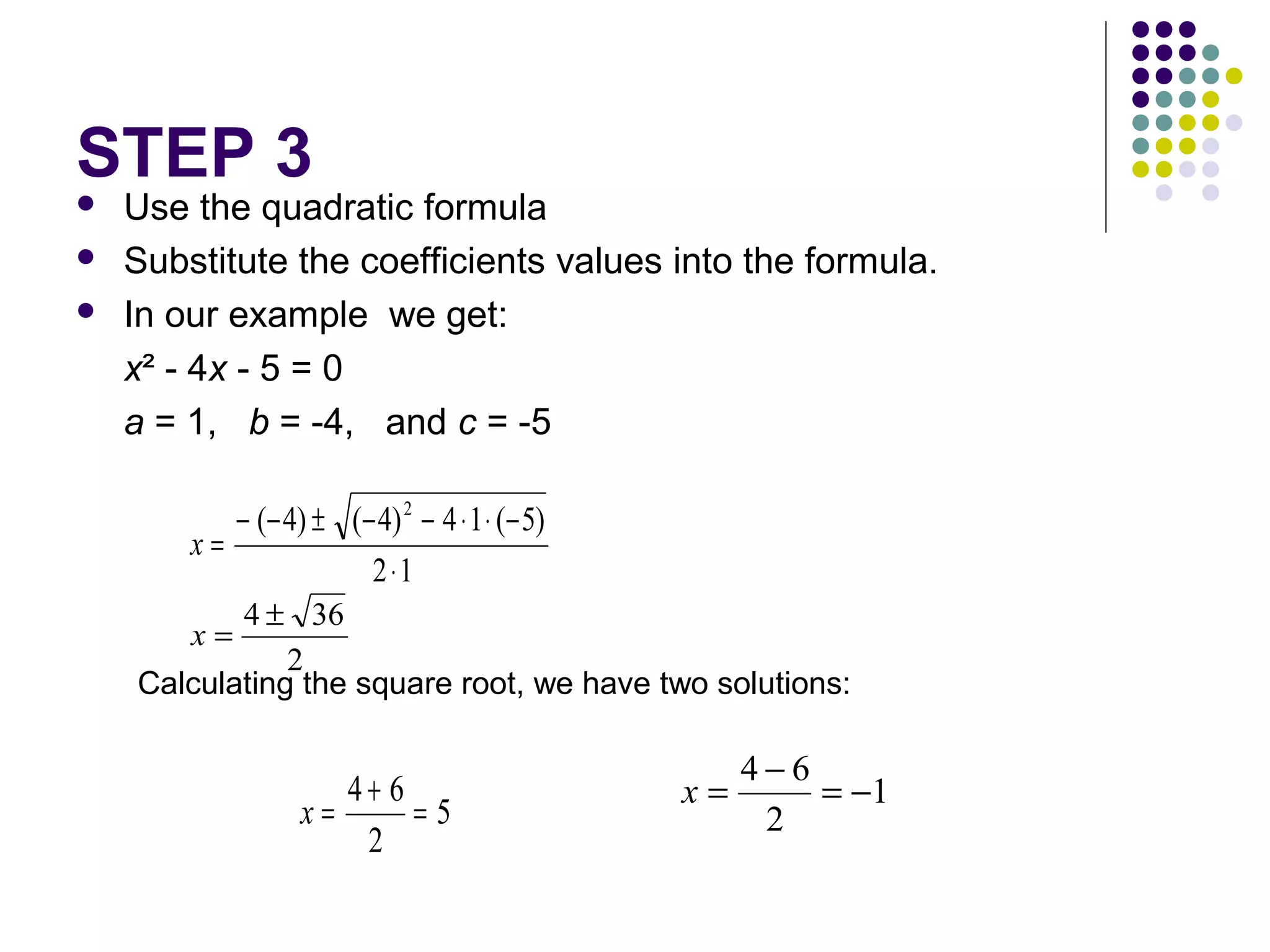
Use the quadratic formula
Substitute the coefficients values into the formula.
In our example we get:
x² - 4x - 5 = 0
a = 1, b = -4, and c = -5
− (− 4) ± (− 4) 2 − 4 ⋅ 1 ⋅ (− 5)
x=
2 ⋅1
4 ± 36
2
Calculating the square root, we have two solutions:
x=

4+ 6
x=
=5
2

x=

4−6
= −1
2
YOUR TURN !
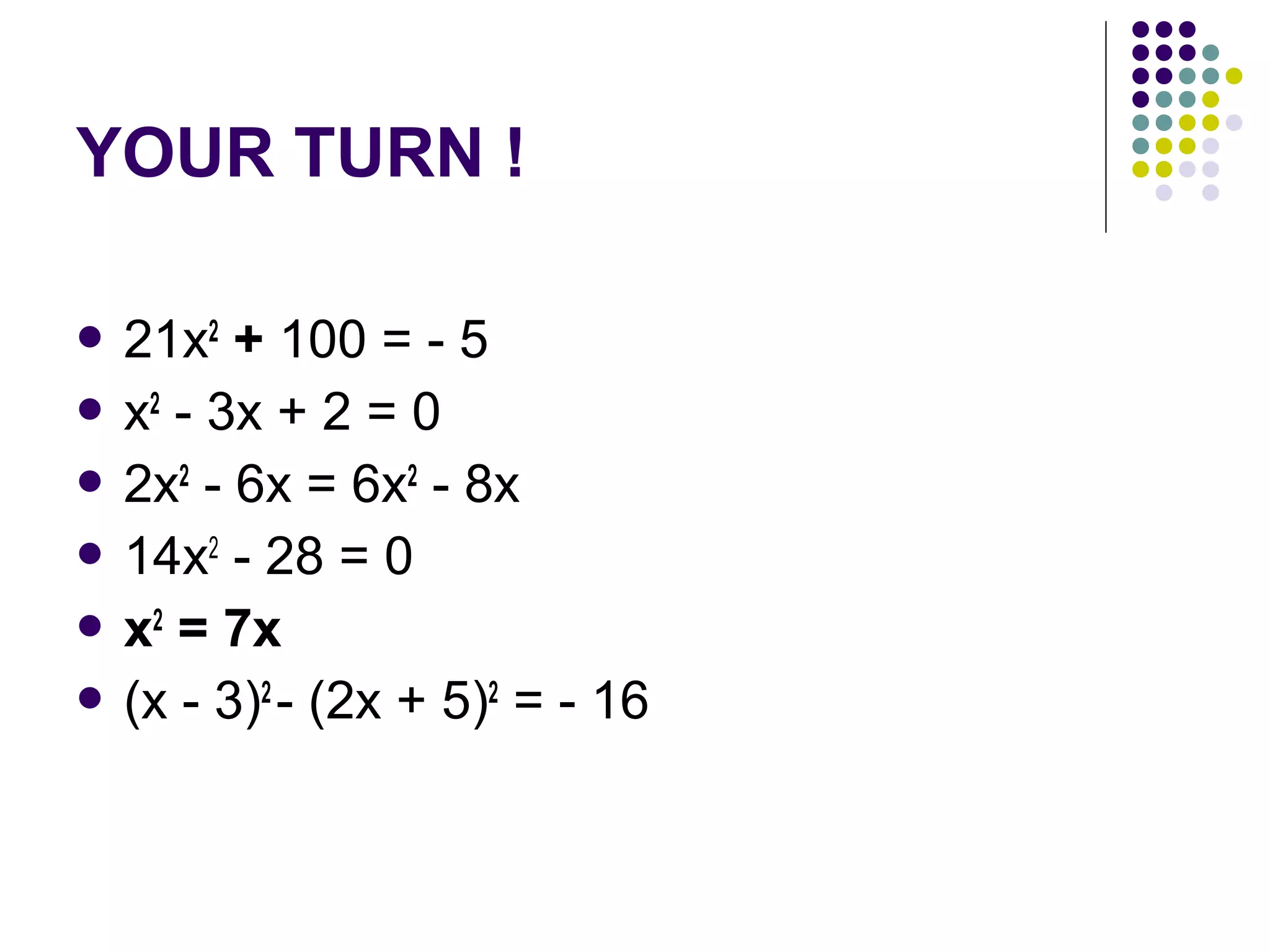
 21x2

+ 100 = - 5
 x2 - 3x + 2 = 0
 2x2 - 6x = 6x2 - 8x
 14x2 - 28 = 0
 x2 = 7x
 (x - 3)2 - (2x + 5)2 = - 16
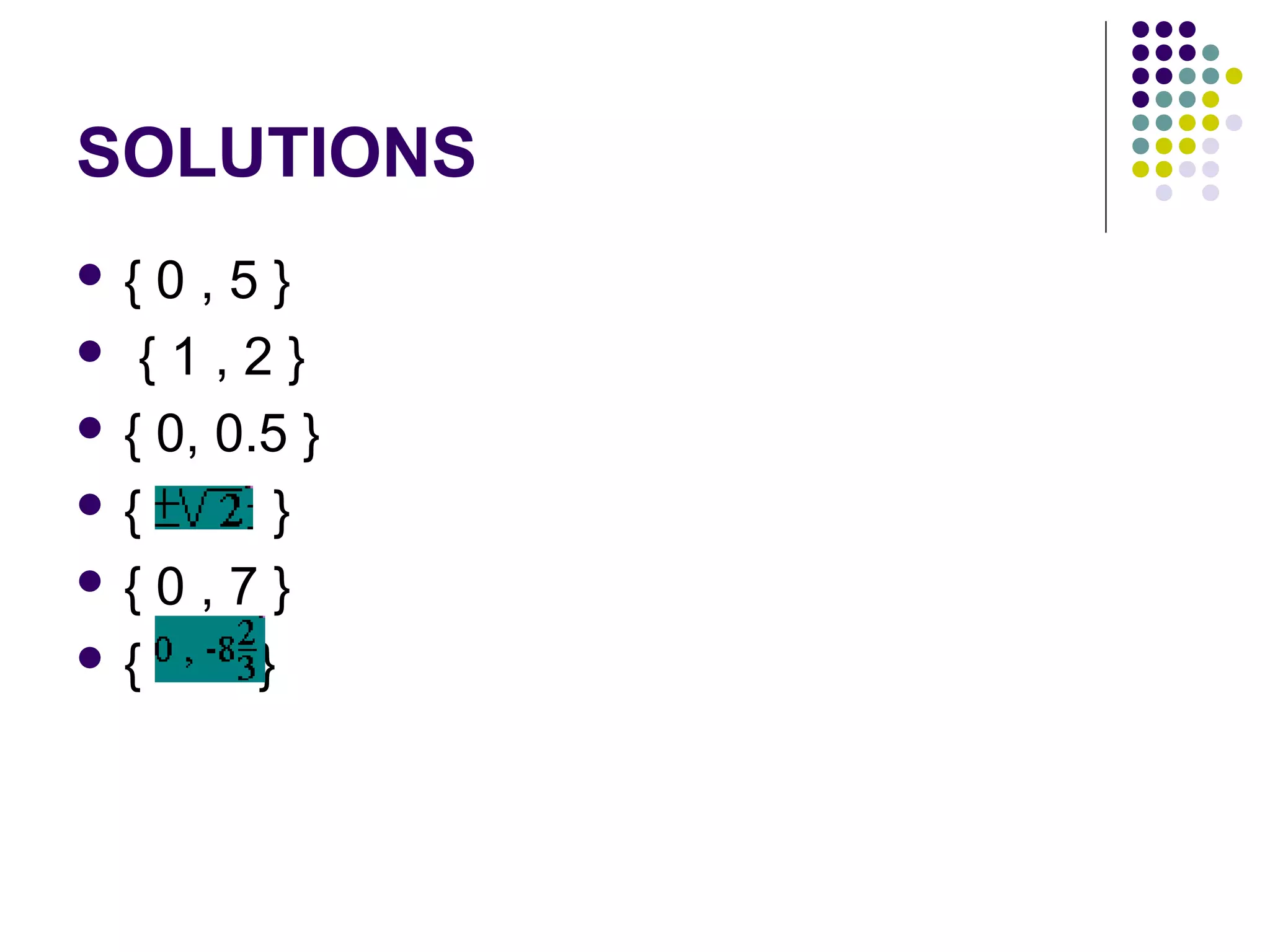
SOLUTIONS
{

0,5}
 { 1,2}
 { 0, 0.5 }
{
}
{ 0 , 7 }
{
}
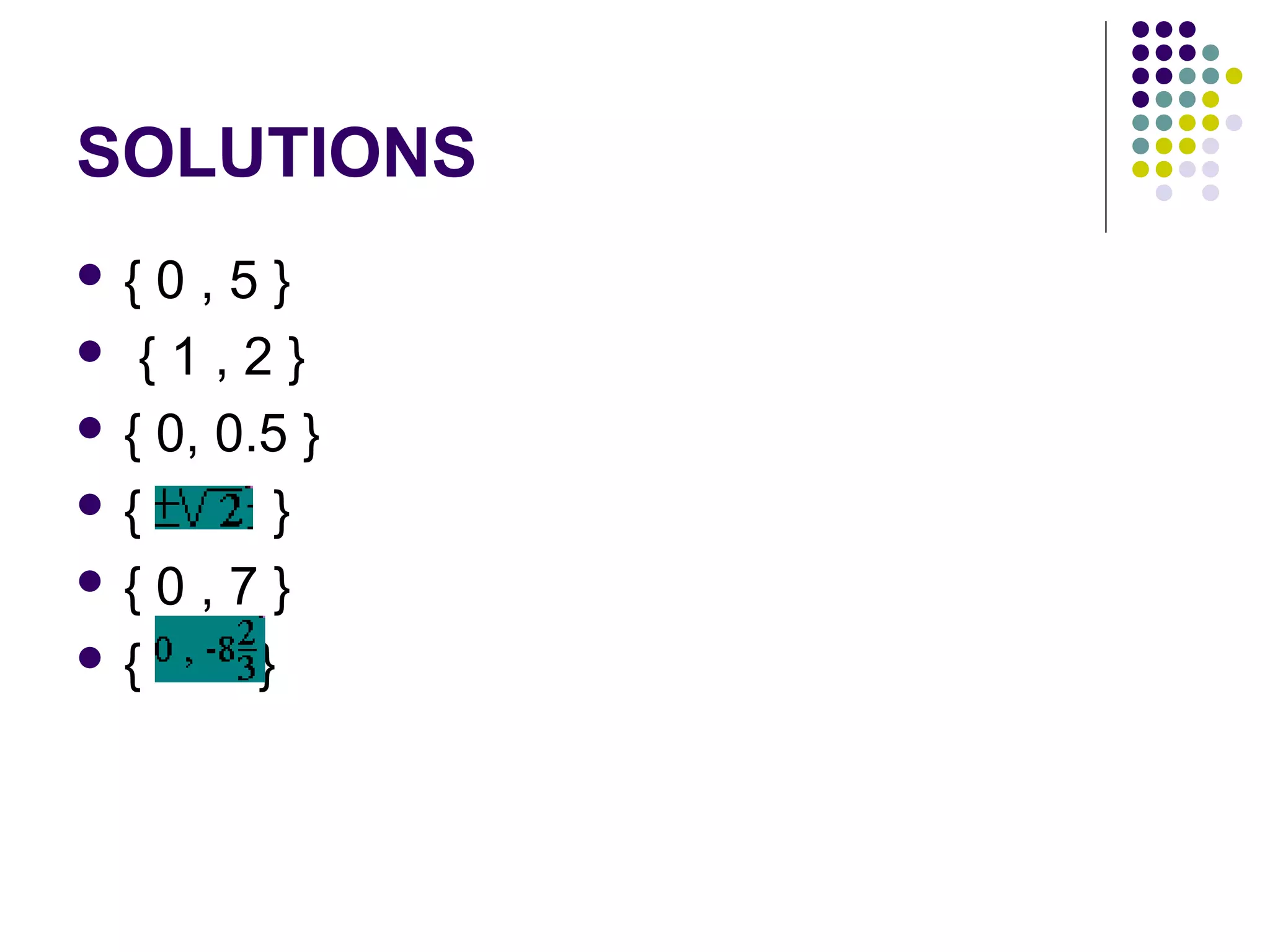
SOLUTIONS
{

0,5}
 { 1,2}
 { 0, 0.5 }
{
}
{ 0 , 7 }
{
}

Quadractic equations.steps

  • 1.
    How to usethe quadratic formula to find roots of a quadratic equation.
  • 2.
    A quadratic equation lookslike this:  ax² + bx + c = 0 (where ‘a’ cannot be zero.)  Solving the equation means finding ‘x’ values that make the equation true. These ‘x’ values are called the roots of the quadratic.  Quadratic equations can have 0, 1 or two roots.
  • 3.
        The general quadraticequation... ax² + bx + c = 0 has roots This formula, known as the ‘quadratic formula’, is actually two formulas. The ‘±’ symbol should be read as ‘plus or minus’, which means that you have to work out the formula twice, once with a plus sign in that position, then again with a minus sign. ...
  • 4.
    STEPS  Get the equationin standar form (moving all the terms to one side).  Identify all the coeficients.  Use the quadratic formula.
  • 5.
    STEP 1  Get theequation in standar form (moving all the terms to one side)  Example  2x² - 4x +1= 6+x²  2x² - x²- 4x +1-6= 0  x² - 4x - 5 = 0
  • 6.
    STEP 2 Identify thecoefficients ‘a’, ‘b’ and ‘c’ in your quadratic equation, so that you can substitute them into the formula to calculate ‘x’.  For this equation: x² - 4x - 5 = 0 There is no number written in front of the x² term, but in that case it is helpful to think of the x² term as 1x² , so then: a = 1, b = -4, and c = -5 
  • 7.
    STEP 3    Use thequadratic formula Substitute the coefficients values into the formula. In our example we get: x² - 4x - 5 = 0 a = 1, b = -4, and c = -5 − (− 4) ± (− 4) 2 − 4 ⋅ 1 ⋅ (− 5) x= 2 ⋅1 4 ± 36 2 Calculating the square root, we have two solutions: x= 4+ 6 x= =5 2 x= 4−6 = −1 2
  • 8.
    YOUR TURN ! 21x2 + 100 = - 5  x2 - 3x + 2 = 0  2x2 - 6x = 6x2 - 8x  14x2 - 28 = 0  x2 = 7x  (x - 3)2 - (2x + 5)2 = - 16
  • 9.
    SOLUTIONS { 0,5}  { 1,2} { 0, 0.5 } { } { 0 , 7 } { }
  • 10.
    SOLUTIONS { 0,5}  { 1,2} { 0, 0.5 } { } { 0 , 7 } { }