( Level –1 )Trainer : Mr. A.S. Rajarajan
Human Resource Division
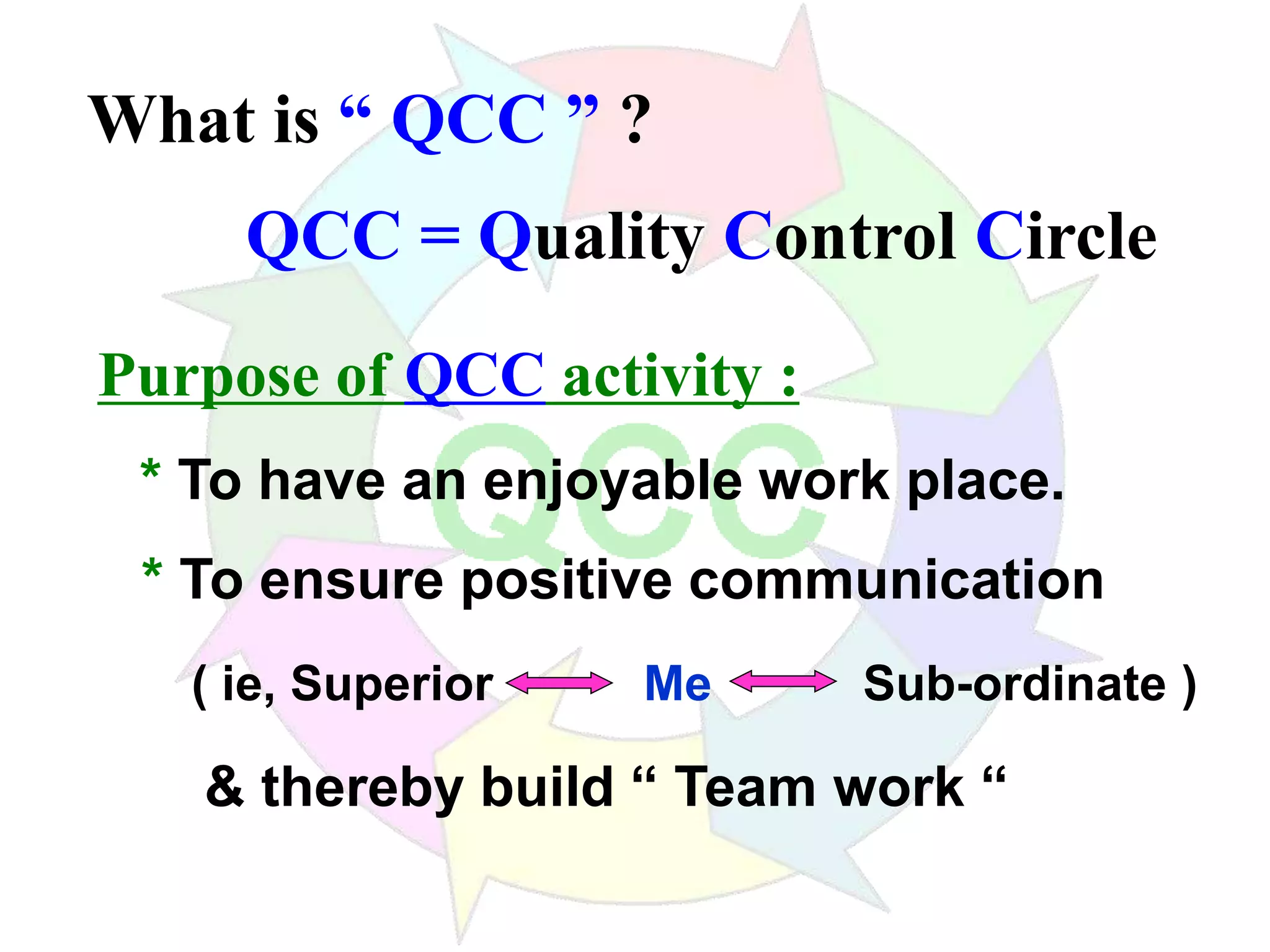
QCC = Quality Control Circle
Purpose of QCC activity :
* To have an enjoyable work place.
What is “ QCC ” ?
* To ensure positive communication
( ie, Superior Me Sub-ordinate )
& thereby build “ Team work “
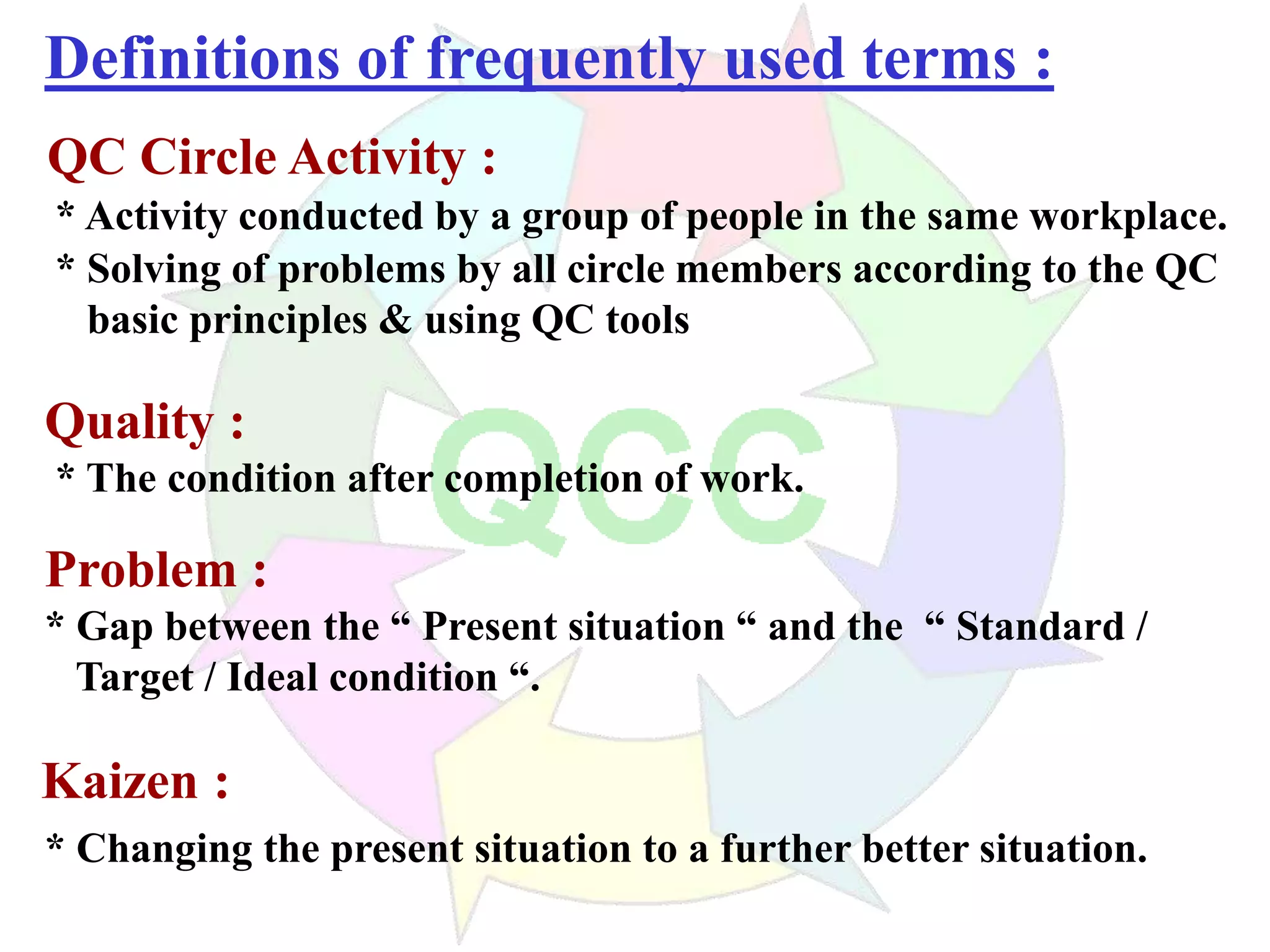
Definitions of frequently used terms :
QC Circle Activity :
* Activity conducted by a group of people in the same workplace.
* Solving of problems by all circle members according to the QC
basic principles & using QC tools
Quality :
* The condition after completion of work.
Problem :
* Gap between the “ Present situation “ and the “ Standard /
Target / Ideal condition “.
Kaizen :
* Changing the present situation to a further better situation.
3 QC Basic Principles
1. Rotate the PDCA CYCLE :
* Appropriate rotation of the PDCA cycle will result in a
good job.
P - Plan D - Do
C -Check A-Action
PDCA cycle Judge and act Standardization
( Note : If 1 rotation of PDCA cycle is not enough, further rotation to be done ).
3 QC Basic Principles ( Contd… ) :
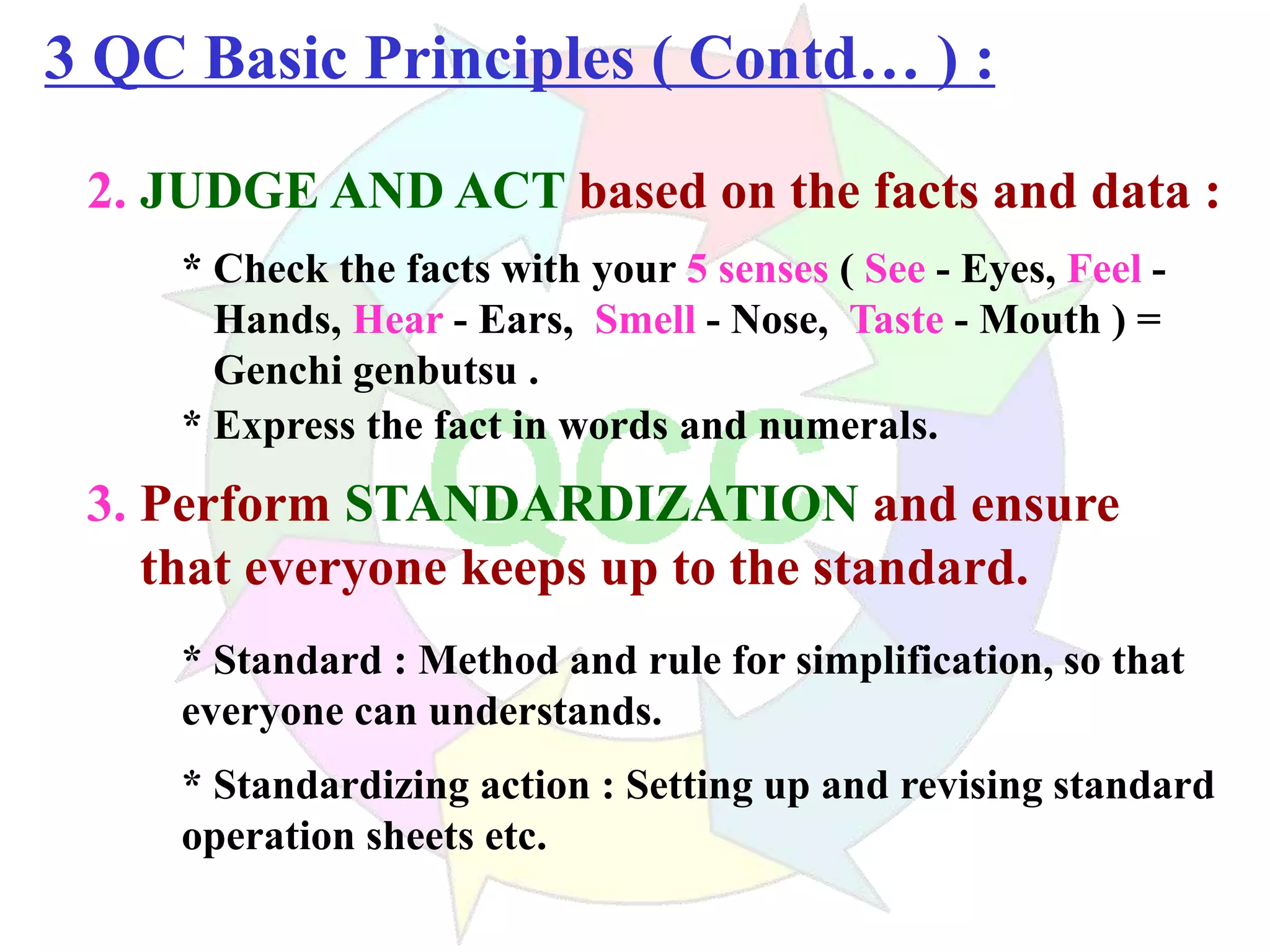
2. JUDGE AND ACT based on the facts and data :
* Check the facts with your 5 senses ( See - Eyes, Feel -
Hands, Hear - Ears, Smell - Nose, Taste - Mouth ) =
Genchi genbutsu .
* Express the fact in words and numerals.
3. Perform STANDARDIZATION and ensure
that everyone keeps up to the standard.
* Standard : Method and rule for simplification, so that
everyone can understands.
* Standardizing action : Setting up and revising standard
operation sheets etc.
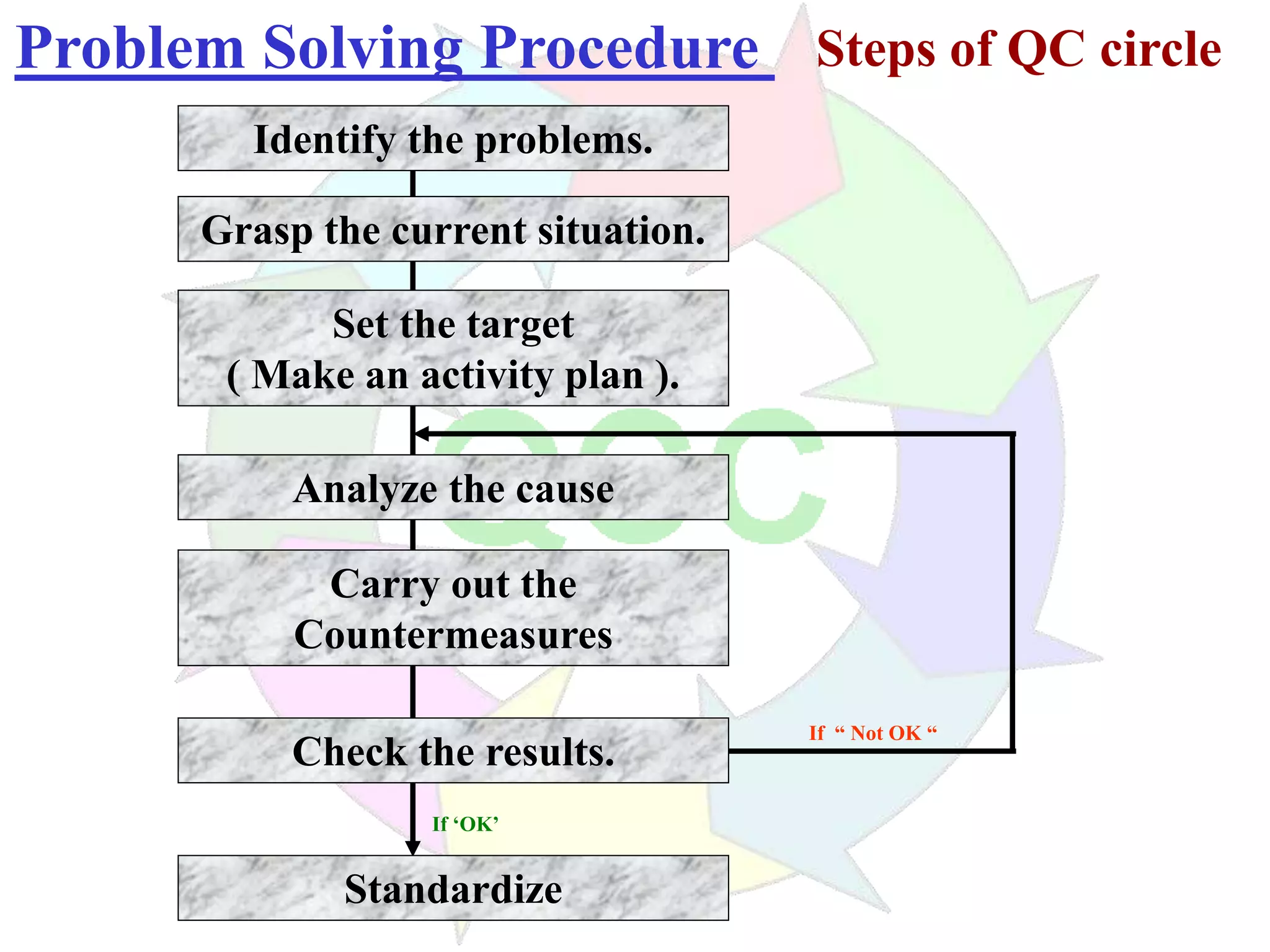
Problem Solving Procedure Steps of QC circle
Identify the problems.
Grasp the current situation.
Analyze the cause
Carry out the
Countermeasures
Standardize
If ‘OK’
If “ Not OK “
Set the target
( Make an activity plan ).
Check the results.
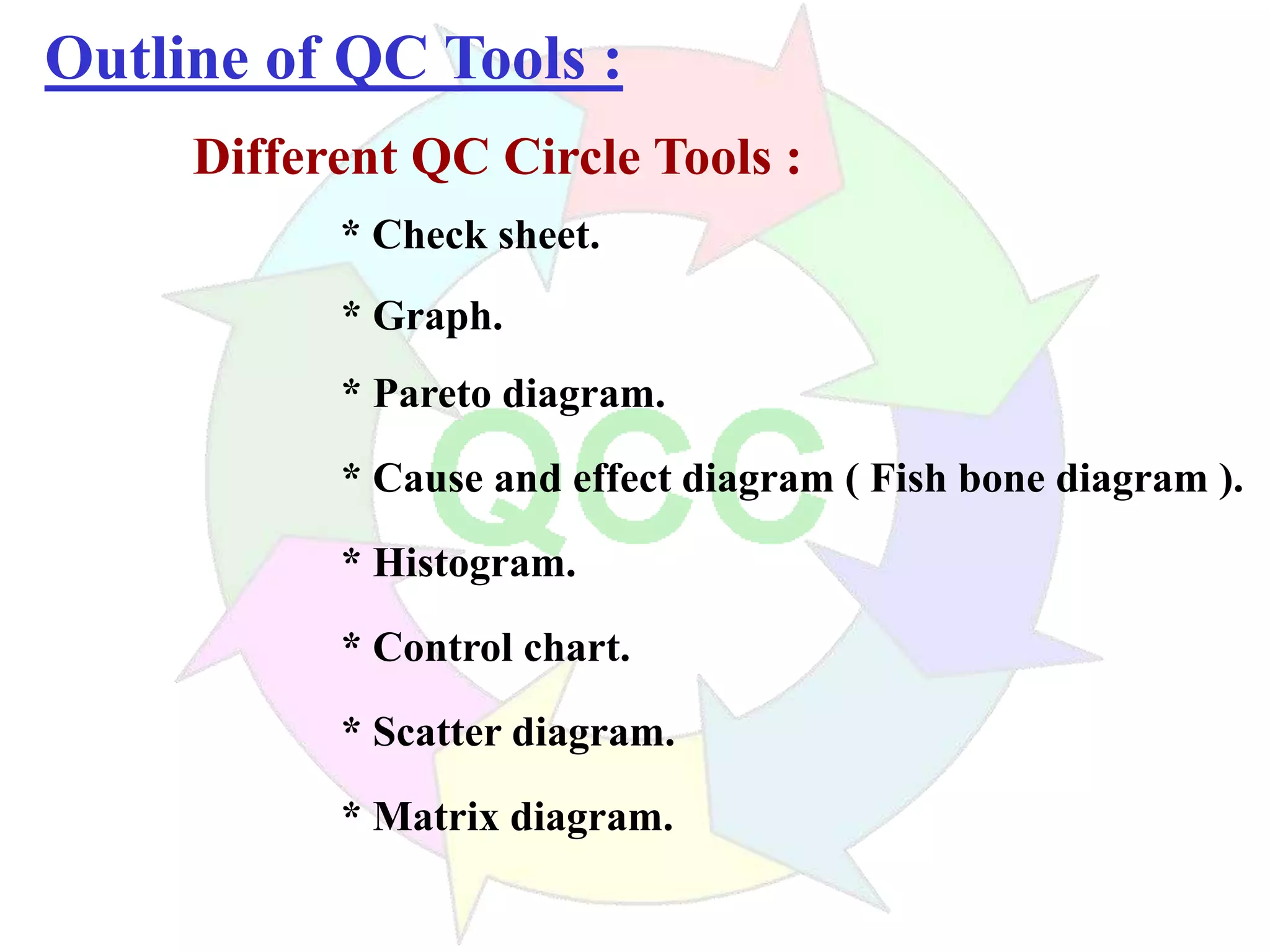
Outline of QC Tools :
Different QC Circle Tools :
* Check sheet.
* Graph.
* Pareto diagram.
* Cause and effect diagram ( Fish bone diagram ).
* Histogram.
* Control chart.
* Scatter diagram.
* Matrix diagram.
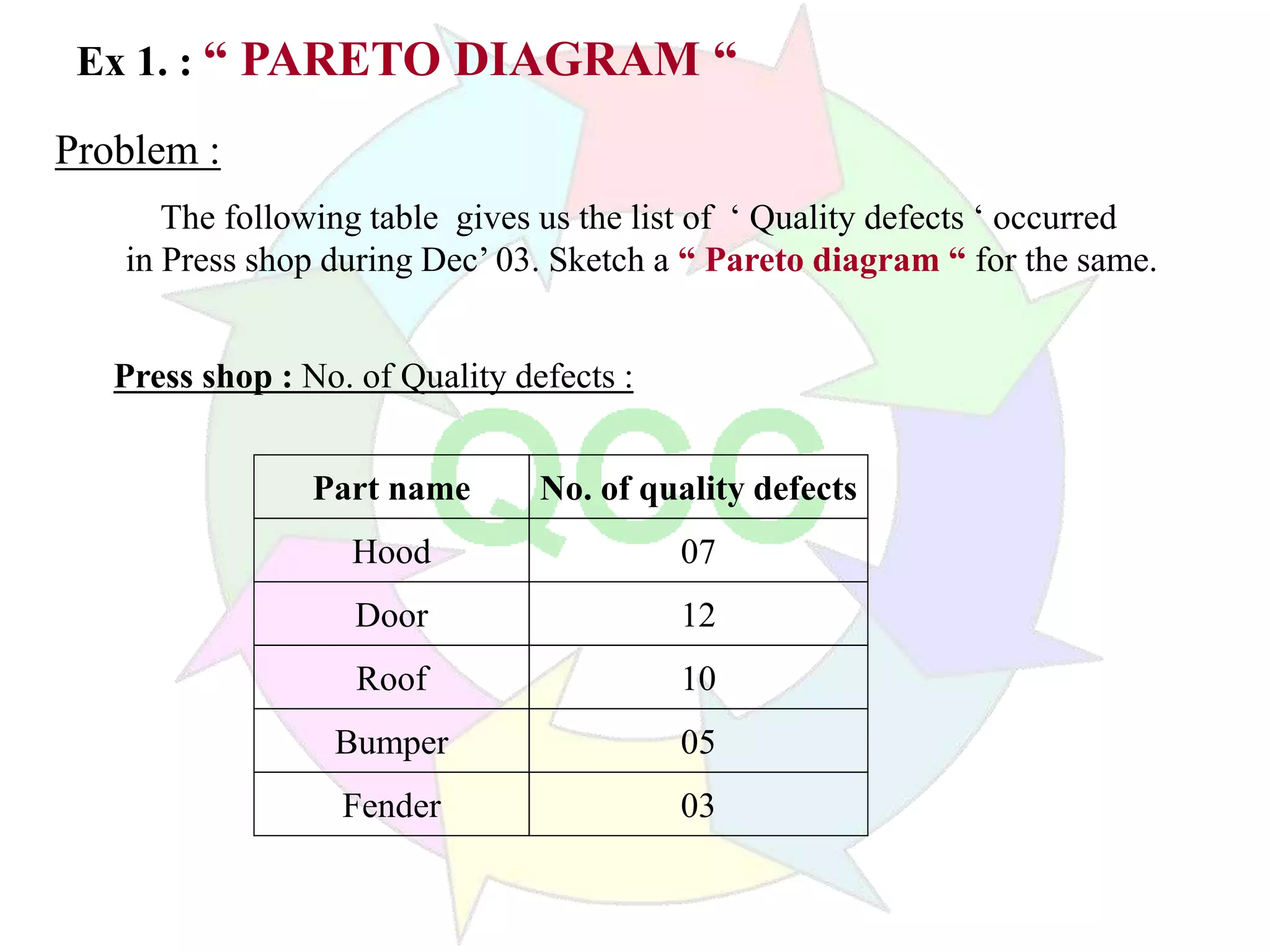
Problem :
The following table gives us the list of ‘ Quality defects ‘ occurred
in Press shop during Dec’ 03. Sketch a “ Pareto diagram “ for the same.
Press shop : No. of Quality defects :
Part name No. of quality defects
Hood 07
Door 12
Roof 10
Bumper 05
Fender 03
Ex 1. : “ PARETO DIAGRAM “
Part name No. of Defect
Door 12
Roof 10
Hood 07
Bumper 05
Fender 03
Ans :
Step - 2 : Cumulative of no. of defect.
Step - 1 : Arrange the list in descending order ( with reference to No. of defects )
Step - 3 : Cumulative in percentage of no. of defect.
No. of Defect
( cumulative )
12
22
29
34
37
Cumulative in %tage
32
59
78
92
100
" PARETO DIAGRAM "
0
2
4
6
8
10
12
14
Door Roof Hood Bumper Fender
No.ofdefects
0
10
20
30
40
50
60
70
80
90
100
%tage
If we eliminate these
3 problems, we can reduce
about 78 % of defects
STEP - 1 STEP - 2 STEP - 3
( Fish bone diagram )
Ex 2. : “ CAUSE AND EFFECT DIAGRAM “
Problem :
Dents occurring on Rr.Door panel. Sketch a “Fish bone diagram “ for the same.
DENT
on Rr. Door
panel
MaterialMan
MethodMachine
Dust on jig surface
Improper use of Hemming gun
TM not following SOP
Fatigue
Not cleaning the jigs
Not following standard methods
Dust on Die surface
Applying more force
while working.
Not related
These are the main
facts to cause this
defects

Qcc

  • 1.
    ( Level –1)Trainer : Mr. A.S. Rajarajan Human Resource Division
  • 2.
    QCC = QualityControl Circle Purpose of QCC activity : * To have an enjoyable work place. What is “ QCC ” ? * To ensure positive communication ( ie, Superior Me Sub-ordinate ) & thereby build “ Team work “
  • 3.
    Definitions of frequentlyused terms : QC Circle Activity : * Activity conducted by a group of people in the same workplace. * Solving of problems by all circle members according to the QC basic principles & using QC tools Quality : * The condition after completion of work. Problem : * Gap between the “ Present situation “ and the “ Standard / Target / Ideal condition “. Kaizen : * Changing the present situation to a further better situation.
  • 4.
    3 QC BasicPrinciples 1. Rotate the PDCA CYCLE : * Appropriate rotation of the PDCA cycle will result in a good job. P - Plan D - Do C -Check A-Action PDCA cycle Judge and act Standardization ( Note : If 1 rotation of PDCA cycle is not enough, further rotation to be done ).
  • 5.
    3 QC BasicPrinciples ( Contd… ) : 2. JUDGE AND ACT based on the facts and data : * Check the facts with your 5 senses ( See - Eyes, Feel - Hands, Hear - Ears, Smell - Nose, Taste - Mouth ) = Genchi genbutsu . * Express the fact in words and numerals. 3. Perform STANDARDIZATION and ensure that everyone keeps up to the standard. * Standard : Method and rule for simplification, so that everyone can understands. * Standardizing action : Setting up and revising standard operation sheets etc.
  • 6.
    Problem Solving ProcedureSteps of QC circle Identify the problems. Grasp the current situation. Analyze the cause Carry out the Countermeasures Standardize If ‘OK’ If “ Not OK “ Set the target ( Make an activity plan ). Check the results.
  • 7.
    Outline of QCTools : Different QC Circle Tools : * Check sheet. * Graph. * Pareto diagram. * Cause and effect diagram ( Fish bone diagram ). * Histogram. * Control chart. * Scatter diagram. * Matrix diagram.
  • 8.
    Problem : The followingtable gives us the list of ‘ Quality defects ‘ occurred in Press shop during Dec’ 03. Sketch a “ Pareto diagram “ for the same. Press shop : No. of Quality defects : Part name No. of quality defects Hood 07 Door 12 Roof 10 Bumper 05 Fender 03 Ex 1. : “ PARETO DIAGRAM “
  • 9.
    Part name No.of Defect Door 12 Roof 10 Hood 07 Bumper 05 Fender 03 Ans : Step - 2 : Cumulative of no. of defect. Step - 1 : Arrange the list in descending order ( with reference to No. of defects ) Step - 3 : Cumulative in percentage of no. of defect. No. of Defect ( cumulative ) 12 22 29 34 37 Cumulative in %tage 32 59 78 92 100 " PARETO DIAGRAM " 0 2 4 6 8 10 12 14 Door Roof Hood Bumper Fender No.ofdefects 0 10 20 30 40 50 60 70 80 90 100 %tage If we eliminate these 3 problems, we can reduce about 78 % of defects STEP - 1 STEP - 2 STEP - 3
  • 10.
    ( Fish bonediagram ) Ex 2. : “ CAUSE AND EFFECT DIAGRAM “ Problem : Dents occurring on Rr.Door panel. Sketch a “Fish bone diagram “ for the same. DENT on Rr. Door panel MaterialMan MethodMachine Dust on jig surface Improper use of Hemming gun TM not following SOP Fatigue Not cleaning the jigs Not following standard methods Dust on Die surface Applying more force while working. Not related These are the main facts to cause this defects