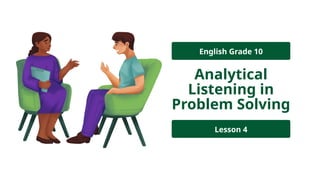
Analytical
Listening in
Problem Solving
English Grade 10
Lesson 4
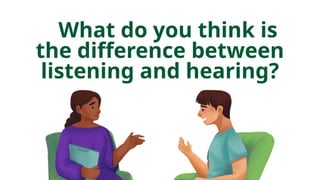
What do you think is
the difference between
listening and hearing?
Listening requires active
engagement, while
hearing is passive.
Hearing and Listening
They are almost the
same, they only differ
from the effort you put
on it.
Hearing
is simply the act of
perceiving sound by the
ear. It is passive, it means
it does not require
conscious effort. It is
involuntary.
Listening
is when you put effort or
pay attention to what you
were hearing. This is an
active skill that requires a
lot of effort. It is
voluntary.
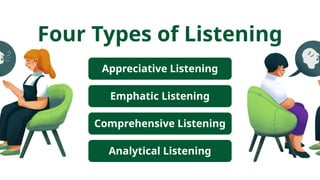
Appreciative Listening
Emphatic Listening
Comprehensive Listening
Analytical Listening
Four Types of Listening
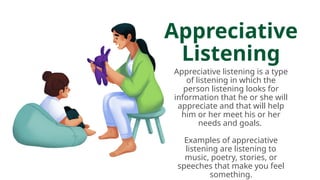
Appreciative
Listening
Appreciative listening is a type
of listening in which the
person listening looks for
information that he or she will
appreciate and that will help
him or her meet his or her
needs and goals.
Examples of appreciative
listening are listening to
music, poetry, stories, or
speeches that make you feel
something.
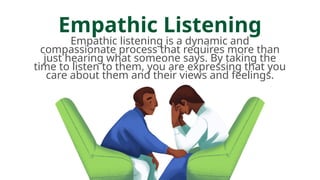
Empathic Listening
Empathic listening is a dynamic and
compassionate process that requires more than
just hearing what someone says. By taking the
time to listen to them, you are expressing that you
care about them and their views and feelings.
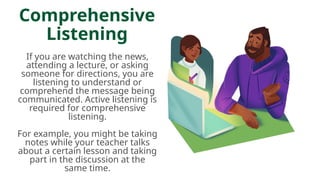
Comprehensive
Listening
If you are watching the news,
attending a lecture, or asking
someone for directions, you are
listening to understand or
comprehend the message being
communicated. Active listening is
required for comprehensive
listening.
For example, you might be taking
notes while your teacher talks
about a certain lesson and taking
part in the discussion at the
same time.
Analytical Listening
The purpose of analytical listening is to evaluate
the message's content. As a critical listener, you
take in the entirety of the message, analyze it, and
evaluate what you have heard. Analytical listening
evaluates the relationship between ideas reflected
in the communication.
Let's Try!
Now that you're
familiar with the
different types of
listening, analyze the
following scenarios
and identify whether
they involve
appreciative
listening, empathic
listening,
comprehensive
listening, or
analytical listening.
Let's Try!
The class will be
divided into 4
groups. Each group
has to put their
names on a ½ sheet
of paper. For 5mins.
analyze the given
situation and write
your answer (with
explanation) on the
same paper where
names are written.
Let's Try!
A couple seeks the
professional counsel of a
marriage expert. During
the conversation, they
listened to the
professional's advice and
appraised their
circumstances. Both of
them realized the things
that needed to be done
and corrected.
What type of listening is
exhibited by the couple?
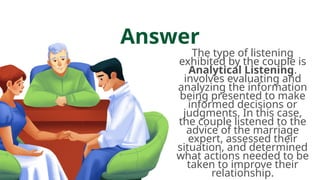
Answer
The type of listening
exhibited by the couple is
Analytical Listening.
involves evaluating and
analyzing the information
being presented to make
informed decisions or
judgments. In this case,
the couple listened to the
advice of the marriage
expert, assessed their
situation, and determined
what actions needed to be
taken to improve their
relationship.
Let's Try!
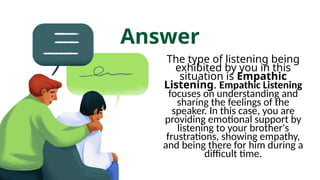
You've heard that your
brother was laid off
from his regular job
because of the
pandemic. He was
devastated because of
what happened. You
tried to keep him
company and console
him by listening to his
frustrations.
What type of listening is
being exhibited by you
Answer
The type of listening being
exhibited by you in this
situation is Empathic
Listening. Empathic Listening
focuses on understanding and
sharing the feelings of the
speaker. In this case, you are
providing emotional support by
listening to your brother's
frustrations, showing empathy,
and being there for him during a
difficult time.
Let's Try!
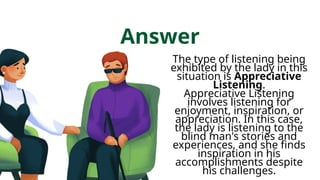
A lady volunteered for an
event for the blinds. She
met a blind man and was
able to have a chat with
him. She listened to the
man's stories and
experiences and was
inspired by his
accomplishments despite
being blind.
What type of listening is
being exhibited by the
lady in this situation?
Answer
The type of listening being
exhibited by the lady in this
situation is Appreciative
Listening.
Appreciative Listening
involves listening for
enjoyment, inspiration, or
appreciation. In this case,
the lady is listening to the
blind man's stories and
experiences, and she finds
inspiration in his
accomplishments despite
his challenges.
Let's Try!
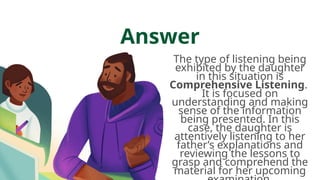
The father is reviewing his
daughter for her upcoming
examination next week.
They run through all the
lessons that her daughter
had over the period. The
daughter listened
attentively as she tried to
understand the lessons.
What type of listening is
being exhibited by the
daughter in this situation?
Answer
The type of listening being
exhibited by the daughter
in this situation is
Comprehensive Listening.
It is focused on
understanding and making
sense of the information
being presented. In this
case, the daughter is
attentively listening to her
father’s explanations and
reviewing the lessons to
grasp and comprehend the
material for her upcoming
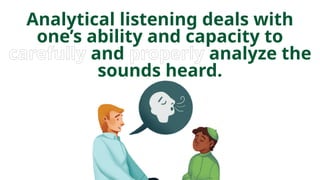
Analytical listening deals with
one’s ability and capacity to
carefully and properly analyze the
sounds heard.
This does not only involve comprehension
and what has been heard, but more
importantly the ability to distinguish and
categorize information listened to.
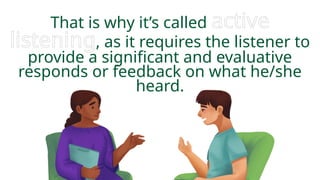
That is why it’s called active
listening, as it requires the listener to
provide a significant and evaluative
responds or feedback on what he/she
heard.
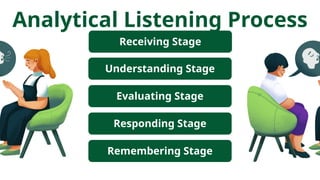
Understanding Stage
Evaluating Stage
Responding Stage
Remembering Stage
Analytical Listening Process
Receiving Stage
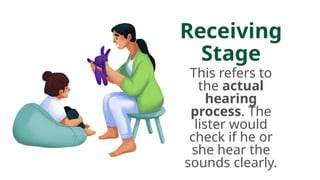
Receiving
Stage
This refers to
the actual
hearing
process. The
lister would
check if he or
she hear the
sounds clearly.
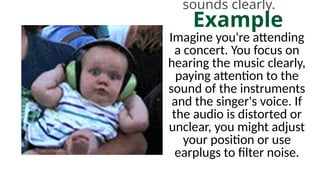
sounds clearly.
Example
Imagine you're attending
a concert. You focus on
hearing the music clearly,
paying attention to the
sound of the instruments
and the singer's voice. If
the audio is distorted or
unclear, you might adjust
your position or use
earplugs to filter noise.
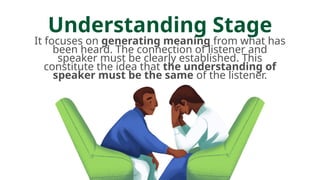
Understanding Stage
It focuses on generating meaning from what has
been heard. The connection of listener and
speaker must be clearly established. This
constitute the idea that the understanding of
speaker must be the same of the listener.
Example of Understanding Stage
In a classroom, your teacher explains a new math
concept. You listen carefully, ensuring you
understand the steps involved. If you have a
question, you ask for clarification to make sure
you grasp the concept in the same way the
teacher intends.
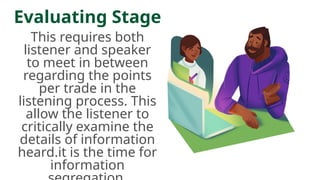
Evaluating Stage
This requires both
listener and speaker
to meet in between
regarding the points
per trade in the
listening process. This
allow the listener to
critically examine the
details of information
heard.it is the time for
information
Evaluating Stage
Example
During a debate, you
listen to both sides of
an argument. You
analyze the strengths
and weaknesses of
each point,
determining which
arguments are more
convincing or
supported by
evidence. This helps
you decide which side
you agree with.
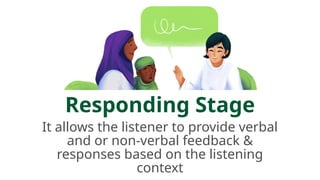
Responding Stage
It allows the listener to provide verbal
and or non-verbal feedback &
responses based on the listening
context
Responding Stage Example
After a friend tells you a story about their day, you
nod, smile, or say, "That sounds fun!" or "I see
what you mean." Your response shows you were
actively listening and engaging with the
conversation.
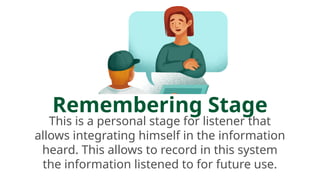
Remembering Stage
This is a personal stage for listener that
allows integrating himself in the information
heard. This allows to record in this system
the information listened to for future use.
Example of Remembering Stage
After listening to a lecture about historical
events, you take notes or mentally
summarize the key points. Later, when
studying for a test, you recall the
information because you actively listened
and remembered the details.
Analytical listening helps
us understand people
around us, increase our
confidence, build relation,
and solve problem.
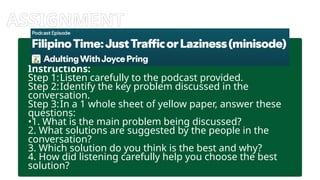
ASSIGNMENT
Instructions:
Step 1:Listen carefully to the podcast provided.
Step 2:Identify the key problem discussed in the
conversation.
Step 3:In a 1 whole sheet of yellow paper, answer these
questions:
•1. What is the main problem being discussed?
2. What solutions are suggested by the people in the
conversation?
3. Which solution do you think is the best and why?
4. How did listening carefully help you choose the best
solution?

Q1 Analytical Listening in Problem Solving - Copy.pptx

  • 1.
  • 2.
    What do youthink is the difference between listening and hearing?
  • 3.
    Listening requires active engagement,while hearing is passive.
  • 4.
    Hearing and Listening Theyare almost the same, they only differ from the effort you put on it.
  • 5.
    Hearing is simply theact of perceiving sound by the ear. It is passive, it means it does not require conscious effort. It is involuntary.
  • 6.
    Listening is when youput effort or pay attention to what you were hearing. This is an active skill that requires a lot of effort. It is voluntary.
  • 7.
    Appreciative Listening Emphatic Listening ComprehensiveListening Analytical Listening Four Types of Listening
  • 8.
    Appreciative Listening Appreciative listening isa type of listening in which the person listening looks for information that he or she will appreciate and that will help him or her meet his or her needs and goals. Examples of appreciative listening are listening to music, poetry, stories, or speeches that make you feel something.
  • 9.
    Empathic Listening Empathic listeningis a dynamic and compassionate process that requires more than just hearing what someone says. By taking the time to listen to them, you are expressing that you care about them and their views and feelings.
  • 10.
    Comprehensive Listening If you arewatching the news, attending a lecture, or asking someone for directions, you are listening to understand or comprehend the message being communicated. Active listening is required for comprehensive listening. For example, you might be taking notes while your teacher talks about a certain lesson and taking part in the discussion at the same time.
  • 11.
    Analytical Listening The purposeof analytical listening is to evaluate the message's content. As a critical listener, you take in the entirety of the message, analyze it, and evaluate what you have heard. Analytical listening evaluates the relationship between ideas reflected in the communication.
  • 12.
    Let's Try! Now thatyou're familiar with the different types of listening, analyze the following scenarios and identify whether they involve appreciative listening, empathic listening, comprehensive listening, or analytical listening.
  • 13.
    Let's Try! The classwill be divided into 4 groups. Each group has to put their names on a ½ sheet of paper. For 5mins. analyze the given situation and write your answer (with explanation) on the same paper where names are written.
  • 14.
    Let's Try! A coupleseeks the professional counsel of a marriage expert. During the conversation, they listened to the professional's advice and appraised their circumstances. Both of them realized the things that needed to be done and corrected. What type of listening is exhibited by the couple?
  • 15.
    Answer The type oflistening exhibited by the couple is Analytical Listening. involves evaluating and analyzing the information being presented to make informed decisions or judgments. In this case, the couple listened to the advice of the marriage expert, assessed their situation, and determined what actions needed to be taken to improve their relationship.
  • 16.
    Let's Try! You've heardthat your brother was laid off from his regular job because of the pandemic. He was devastated because of what happened. You tried to keep him company and console him by listening to his frustrations. What type of listening is being exhibited by you
  • 17.
    Answer The type oflistening being exhibited by you in this situation is Empathic Listening. Empathic Listening focuses on understanding and sharing the feelings of the speaker. In this case, you are providing emotional support by listening to your brother's frustrations, showing empathy, and being there for him during a difficult time.
  • 18.
    Let's Try! A ladyvolunteered for an event for the blinds. She met a blind man and was able to have a chat with him. She listened to the man's stories and experiences and was inspired by his accomplishments despite being blind. What type of listening is being exhibited by the lady in this situation?
  • 19.
    Answer The type oflistening being exhibited by the lady in this situation is Appreciative Listening. Appreciative Listening involves listening for enjoyment, inspiration, or appreciation. In this case, the lady is listening to the blind man's stories and experiences, and she finds inspiration in his accomplishments despite his challenges.
  • 20.
    Let's Try! The fatheris reviewing his daughter for her upcoming examination next week. They run through all the lessons that her daughter had over the period. The daughter listened attentively as she tried to understand the lessons. What type of listening is being exhibited by the daughter in this situation?
  • 21.
    Answer The type oflistening being exhibited by the daughter in this situation is Comprehensive Listening. It is focused on understanding and making sense of the information being presented. In this case, the daughter is attentively listening to her father’s explanations and reviewing the lessons to grasp and comprehend the material for her upcoming
  • 22.
    Analytical listening dealswith one’s ability and capacity to carefully and properly analyze the sounds heard.
  • 23.
    This does notonly involve comprehension and what has been heard, but more importantly the ability to distinguish and categorize information listened to.
  • 24.
    That is whyit’s called active listening, as it requires the listener to provide a significant and evaluative responds or feedback on what he/she heard.
  • 25.
    Understanding Stage Evaluating Stage RespondingStage Remembering Stage Analytical Listening Process Receiving Stage
  • 26.
    Receiving Stage This refers to theactual hearing process. The lister would check if he or she hear the sounds clearly.
  • 27.
    sounds clearly. Example Imagine you'reattending a concert. You focus on hearing the music clearly, paying attention to the sound of the instruments and the singer's voice. If the audio is distorted or unclear, you might adjust your position or use earplugs to filter noise.
  • 28.
    Understanding Stage It focuseson generating meaning from what has been heard. The connection of listener and speaker must be clearly established. This constitute the idea that the understanding of speaker must be the same of the listener.
  • 29.
    Example of UnderstandingStage In a classroom, your teacher explains a new math concept. You listen carefully, ensuring you understand the steps involved. If you have a question, you ask for clarification to make sure you grasp the concept in the same way the teacher intends.
  • 30.
    Evaluating Stage This requiresboth listener and speaker to meet in between regarding the points per trade in the listening process. This allow the listener to critically examine the details of information heard.it is the time for information
  • 31.
    Evaluating Stage Example During adebate, you listen to both sides of an argument. You analyze the strengths and weaknesses of each point, determining which arguments are more convincing or supported by evidence. This helps you decide which side you agree with.
  • 32.
    Responding Stage It allowsthe listener to provide verbal and or non-verbal feedback & responses based on the listening context
  • 33.
    Responding Stage Example Aftera friend tells you a story about their day, you nod, smile, or say, "That sounds fun!" or "I see what you mean." Your response shows you were actively listening and engaging with the conversation.
  • 34.
    Remembering Stage This isa personal stage for listener that allows integrating himself in the information heard. This allows to record in this system the information listened to for future use.
  • 35.
    Example of RememberingStage After listening to a lecture about historical events, you take notes or mentally summarize the key points. Later, when studying for a test, you recall the information because you actively listened and remembered the details.
  • 36.
    Analytical listening helps usunderstand people around us, increase our confidence, build relation, and solve problem.
  • 37.
    ASSIGNMENT Instructions: Step 1:Listen carefullyto the podcast provided. Step 2:Identify the key problem discussed in the conversation. Step 3:In a 1 whole sheet of yellow paper, answer these questions: •1. What is the main problem being discussed? 2. What solutions are suggested by the people in the conversation? 3. Which solution do you think is the best and why? 4. How did listening carefully help you choose the best solution?

Editor's Notes

  • #1 Lesson 4 is Optional