EARLY CHILDHOOD
DEVELOPMENT
Early Childhood Development program focuses and believes
in a child-centered experiential approach to learning
through creative playtime experiences. Children are
provided with opportunities to:
 grow socially, emotionally, physically and
 intellectually
 improve problem solving
 make decisions and begin taking responsibilities for
those decisions
 develop communication and negotiation skills in
relating to other people
 gain divergent thinking skills as their own ideas and
creativity
 most importantly develop self-esteem and self-
assurance
 Early Childhood Education consists of activities and
experiences that are intended to effect developmental
changes in children.
Benefits of Early Childhood
Development
Parents need to understand that every child is an individual
and that not all children behave alike. Some children
reach the customary stages of development at the
appropriate time while others may experience them sooner
or much later.
Children must try
 share with others and make friends
 enjoy participating in games
 enjoy music and creative art
 love being read to
 eager to participate in physical outdoor activities
Educational Philosophy
Our educational philosophy is child-centered. Early
Childhood years are the most formative time in
human development. The foundation for self-esteem
is laid, and children learn to adapt successfully to the
world. We encourage the development of critical
thinking skills, creative, imagination and self-
expression
.
 We seek to create environment for learning. Each child
spends time in individual and group activities. There are
many kinds of learning:
 Creative Expression: art, painting, music and movement
 Social Relationships: small and large group activities and
dramatic play
 Communication Skills: puppetry, story telling and sharing
 Science Awareness: nature walk, project work,
investigation
 Motor Skills: movement, climbing and rhythm
 The formative years are the most important
development years in a child’s life. Children at the time
learn mainly through experience, manipulation of
objects, and a stimulating environment
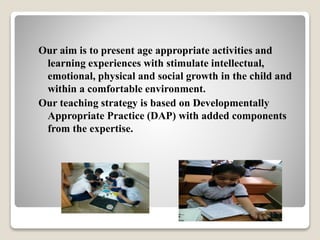
Our aim is to present age appropriate activities and
learning experiences with stimulate intellectual,
emotional, physical and social growth in the child and
within a comfortable environment.
Our teaching strategy is based on Developmentally
Appropriate Practice (DAP) with added components
from the expertise.
As fellow parents we know parental involvement is vital to
the success of the child and to that and make every utmost
efforts to keep you aware of your child’s activities during
the day.
Children’s work is not differentiated from play. Variety and
novelty are essential elements in arousing curiosity. Daily
activities include dramatic play, dance, creative art,
experiences, manipulation and classification of materials,
large and small muscle exercise and verbal interaction to
develop language.
Provide Quality Standard
Our Goal
Academic Excellence
Our goal is to keep abreast with the latest methodologies
of teaching. To translate our future aspirations into
realities, we have set target for:
 a support learning environment with maximum facilities
 curriculum focused leadership
 a system of monitoring performance and attainment
 ongoing staff and professional development program
 parental involvement andsupport
 enlightened awareness and knowledge of Islam
academically sound
 leadership skills
 a strong value base
 a sense of responsibility for the under -privileged the
society and the family
 a keen desire for continuous learning and learning
 civic sense
 well-behaved, well-mannered, well spoken, and well-
groomed
 competitive and ambitious
 practical skills
Early Childhood Development
“Helps Shape Children’s Future”
Presented by
Gulzar Sadruddin Hassanally

1ECD COMPLETE (2)

  • 1.
  • 2.
    Early Childhood Developmentprogram focuses and believes in a child-centered experiential approach to learning through creative playtime experiences. Children are provided with opportunities to:  grow socially, emotionally, physically and  intellectually  improve problem solving
  • 3.
     make decisionsand begin taking responsibilities for those decisions  develop communication and negotiation skills in relating to other people  gain divergent thinking skills as their own ideas and creativity  most importantly develop self-esteem and self- assurance  Early Childhood Education consists of activities and experiences that are intended to effect developmental changes in children.
  • 4.
    Benefits of EarlyChildhood Development Parents need to understand that every child is an individual and that not all children behave alike. Some children reach the customary stages of development at the appropriate time while others may experience them sooner or much later.
  • 5.
    Children must try share with others and make friends  enjoy participating in games  enjoy music and creative art  love being read to  eager to participate in physical outdoor activities
  • 6.
    Educational Philosophy Our educationalphilosophy is child-centered. Early Childhood years are the most formative time in human development. The foundation for self-esteem is laid, and children learn to adapt successfully to the world. We encourage the development of critical thinking skills, creative, imagination and self- expression .
  • 7.
     We seekto create environment for learning. Each child spends time in individual and group activities. There are many kinds of learning:  Creative Expression: art, painting, music and movement  Social Relationships: small and large group activities and dramatic play  Communication Skills: puppetry, story telling and sharing
  • 8.
     Science Awareness:nature walk, project work, investigation  Motor Skills: movement, climbing and rhythm  The formative years are the most important development years in a child’s life. Children at the time learn mainly through experience, manipulation of objects, and a stimulating environment
  • 9.
    Our aim isto present age appropriate activities and learning experiences with stimulate intellectual, emotional, physical and social growth in the child and within a comfortable environment. Our teaching strategy is based on Developmentally Appropriate Practice (DAP) with added components from the expertise.
  • 10.
    As fellow parentswe know parental involvement is vital to the success of the child and to that and make every utmost efforts to keep you aware of your child’s activities during the day. Children’s work is not differentiated from play. Variety and novelty are essential elements in arousing curiosity. Daily activities include dramatic play, dance, creative art, experiences, manipulation and classification of materials, large and small muscle exercise and verbal interaction to develop language.
  • 11.
    Provide Quality Standard OurGoal Academic Excellence
  • 12.
    Our goal isto keep abreast with the latest methodologies of teaching. To translate our future aspirations into realities, we have set target for:  a support learning environment with maximum facilities  curriculum focused leadership  a system of monitoring performance and attainment  ongoing staff and professional development program  parental involvement andsupport
  • 13.
     enlightened awarenessand knowledge of Islam academically sound  leadership skills  a strong value base  a sense of responsibility for the under -privileged the society and the family  a keen desire for continuous learning and learning  civic sense  well-behaved, well-mannered, well spoken, and well- groomed  competitive and ambitious  practical skills
  • 14.
    Early Childhood Development “HelpsShape Children’s Future” Presented by Gulzar Sadruddin Hassanally