GROUP MEMBERS
POKHREL,BHARAT
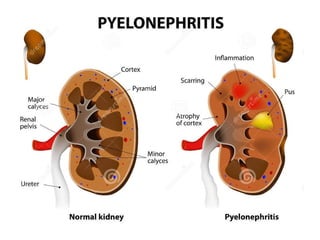
PYELONEPHRITIS
l
Bacterial infection of the kidney (RENAL
PELVIS)
l
Difference from:
l
UTI→ Involves Urethra
l
Cystitis →Involves Bladder
l
Female>Male
l
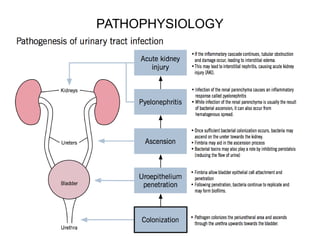
Attributed to ascending bacteria along the path
of the URETER, E.coli (80%)
Predisposing Factors
l
Mnemonics: SCARRIN' UP
l
S- SEX (Female <40, Male >40)
l
C- CATHETHERIZATION
l
A- AGE (Infant and Elderly)
l
R- RENAL LESIONS
l
R- REFILUX (VESICOUTERAL)
l
I- IMMUNODEFICIENT
l
N- NIDDM, IDDM
l
U- URINARY OBSTRUCTION
l
P- PREGNANCY
Signs and Symptoms
l
Fever and flank pain
l
In very young and elderly patients
l
Irritability, poor appetite, or altered mental status.
l
Dysuria
l
Nausea and vomiting (Non-specific)
l
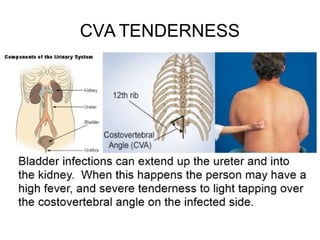
CVA(Costovertebral angle) Tenderness
CVA TENDERNESS
PATHOPHYSIOLOGY
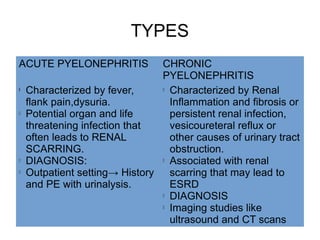
TYPES
ACUTE PYELONEPHRITIS CHRONIC
PYELONEPHRITIS
l Characterized by fever,
flank pain,dysuria.
l Potential organ and life
threatening infection that
often leads to RENAL
SCARRING.
l DIAGNOSIS:
l Outpatient setting→ History
and PE with urinalysis.
l Characterized by Renal
Inflammation and fibrosis or
persistent renal infection,
vesicoureteral reflux or
other causes of urinary tract
obstruction.
l Associated with renal
scarring that may lead to
ESRD
l DIAGNOSIS
l Imaging studies like
ultrasound and CT scans
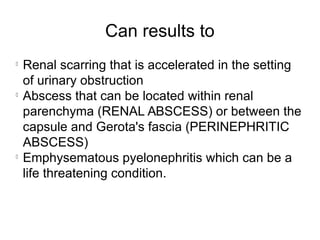
Can results to
l
Renal scarring that is accelerated in the setting
of urinary obstruction
l
Abscess that can be located within renal
parenchyma (RENAL ABSCESS) or between the
capsule and Gerota's fascia (PERINEPHRITIC
ABSCESS)
l
Emphysematous pyelonephritis which can be a
life threatening condition.
DIAGNOSIS
l
Urinalysis → Examines the appearance,
concentration and content of urine.
l
Urine culture → To isolate the bacteria in the
urine
l
Any patient not responding to Antibiotic therapy
after 72 hours should
l
Undergo CT imaging to rule out an ABSCESS
OR OBSTRUCTION
TREATMENT
l
INPATIENT with fever, sepsis, high WBC count
on urine → Give IV Antibiotics
l
OUTPATIENT → Without too many risk factors
l
Oral Antibiotics
l
Most commonly Fluroquiniolones eg.
Ciprofloxacin, Levufloxacin
l
Aminoglycosides (Gentamycin)
l
Bactrim (Trimethoprim-sulfamethaxazole)

Pyelonephritis pokhrel,bharat

  • 1.
  • 3.
    PYELONEPHRITIS l Bacterial infection ofthe kidney (RENAL PELVIS) l Difference from: l UTI→ Involves Urethra l Cystitis →Involves Bladder l Female>Male l Attributed to ascending bacteria along the path of the URETER, E.coli (80%)
  • 4.
    Predisposing Factors l Mnemonics: SCARRIN'UP l S- SEX (Female <40, Male >40) l C- CATHETHERIZATION l A- AGE (Infant and Elderly) l R- RENAL LESIONS l R- REFILUX (VESICOUTERAL) l I- IMMUNODEFICIENT l N- NIDDM, IDDM l U- URINARY OBSTRUCTION l P- PREGNANCY
  • 5.
    Signs and Symptoms l Feverand flank pain l In very young and elderly patients l Irritability, poor appetite, or altered mental status. l Dysuria l Nausea and vomiting (Non-specific) l CVA(Costovertebral angle) Tenderness
  • 6.
  • 7.
  • 8.
    TYPES ACUTE PYELONEPHRITIS CHRONIC PYELONEPHRITIS lCharacterized by fever, flank pain,dysuria. l Potential organ and life threatening infection that often leads to RENAL SCARRING. l DIAGNOSIS: l Outpatient setting→ History and PE with urinalysis. l Characterized by Renal Inflammation and fibrosis or persistent renal infection, vesicoureteral reflux or other causes of urinary tract obstruction. l Associated with renal scarring that may lead to ESRD l DIAGNOSIS l Imaging studies like ultrasound and CT scans
  • 9.
    Can results to l Renalscarring that is accelerated in the setting of urinary obstruction l Abscess that can be located within renal parenchyma (RENAL ABSCESS) or between the capsule and Gerota's fascia (PERINEPHRITIC ABSCESS) l Emphysematous pyelonephritis which can be a life threatening condition.
  • 10.
    DIAGNOSIS l Urinalysis → Examinesthe appearance, concentration and content of urine. l Urine culture → To isolate the bacteria in the urine l Any patient not responding to Antibiotic therapy after 72 hours should l Undergo CT imaging to rule out an ABSCESS OR OBSTRUCTION
  • 11.
    TREATMENT l INPATIENT with fever,sepsis, high WBC count on urine → Give IV Antibiotics l OUTPATIENT → Without too many risk factors l Oral Antibiotics l Most commonly Fluroquiniolones eg. Ciprofloxacin, Levufloxacin l Aminoglycosides (Gentamycin) l Bactrim (Trimethoprim-sulfamethaxazole)