PLACENTAL HORMONES
HCG AND HPL
@copyright and owner
POKHREL,BHARAT
DOCTOR OF MEDICINE
PLACENTA
l FOETAL ORIGIN → CHORION FRONDOSUM
l MATERNAL ORIGIN → DECIDUA BASALIS
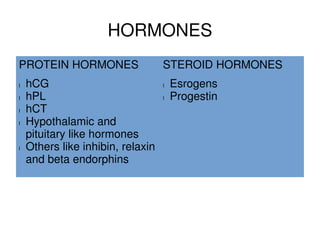
HORMONES
PROTEIN HORMONES STEROID HORMONES
l hCG
l hPL
l hCT
l Hypothalamic and
pituitary like hormones
l Others like inhibin, relaxin
and beta endorphins
l Esrogens
l Progestin
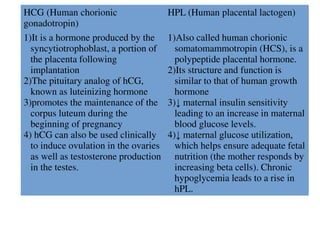
HCG (Human chorionic
gonadotropin)
HPL (Human placental lactogen)
1)It is a hormone produced by the
syncytiotrophoblast, a portion of
the placenta following
implantation
2)The pituitary analog of hCG,
known as luteinizing hormone
3)promotes the maintenance of the
corpus luteum during the
beginning of pregnancy
4) hCG can also be used clinically
to induce ovulation in the ovaries
as well as testosterone production
in the testes.
1)Also called human chorionic
somatomammotropin (HCS), is a
polypeptide placental hormone.
2)Its structure and function is
similar to that of human growth
hormone
3)↓ maternal insulin sensitivity
leading to an increase in maternal
blood glucose levels.
4)↓ maternal glucose utilization,
which helps ensure adequate fetal
nutrition (the mother responds by
increasing beta cells). Chronic
hypoglycemia leads to a rise in
hPL.
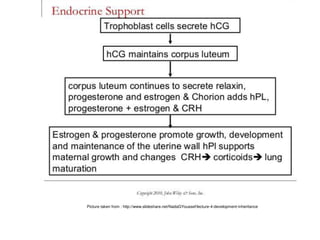
Picture taken from : http://www.slideshare.net/NadaGYoussef/lecture-4-development-inheritance
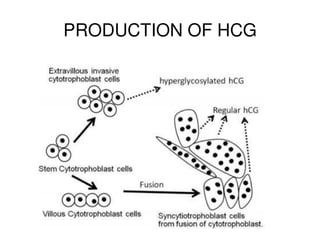
PRODUCTION OF HCG

Hcg and hpl

  • 1.
    PLACENTAL HORMONES HCG ANDHPL @copyright and owner POKHREL,BHARAT DOCTOR OF MEDICINE
  • 2.
    PLACENTA l FOETAL ORIGIN→ CHORION FRONDOSUM l MATERNAL ORIGIN → DECIDUA BASALIS
  • 3.
    HORMONES PROTEIN HORMONES STEROIDHORMONES l hCG l hPL l hCT l Hypothalamic and pituitary like hormones l Others like inhibin, relaxin and beta endorphins l Esrogens l Progestin
  • 4.
    HCG (Human chorionic gonadotropin) HPL(Human placental lactogen) 1)It is a hormone produced by the syncytiotrophoblast, a portion of the placenta following implantation 2)The pituitary analog of hCG, known as luteinizing hormone 3)promotes the maintenance of the corpus luteum during the beginning of pregnancy 4) hCG can also be used clinically to induce ovulation in the ovaries as well as testosterone production in the testes. 1)Also called human chorionic somatomammotropin (HCS), is a polypeptide placental hormone. 2)Its structure and function is similar to that of human growth hormone 3)↓ maternal insulin sensitivity leading to an increase in maternal blood glucose levels. 4)↓ maternal glucose utilization, which helps ensure adequate fetal nutrition (the mother responds by increasing beta cells). Chronic hypoglycemia leads to a rise in hPL.
  • 5.
    Picture taken from: http://www.slideshare.net/NadaGYoussef/lecture-4-development-inheritance
  • 6.