Detecting Pulsars
with Machine
Learning and How
Astronomers can
crack Wall Street.
Poon Panichpibool, Astronomy Department University of Virginia
P
ulsar (Pulsating Radio Star) is an exotic
and intrincically intersting object in the
Universe. The best science from pul-
sar observation are now widely used as tools
via ”Pulsar Timing” due to the extreme ac-
curacy of measuring Pulsar’s period. In or-
der to detect Pulsars, Astronomers have to
spend countless hours going through a large
data base of Pulsar survey. Therefore, As-
tronomers are now trying to use the most Ad-
vanced Computational technology ”Machine
Learning” to aid them in their search for ex-
otic ”Pulsars”.
What is a Pulsar?
Astronomers have learned that a Pulsar is a rapidly
rotating neutron star which is highly magnetized.
It emits a beam of electromagnetic radiation wave
which can be observed on the Earth if the beam is
pointing toward observers. With that beam emitting
characteristic, a pulsar is truly a lighthouse in the
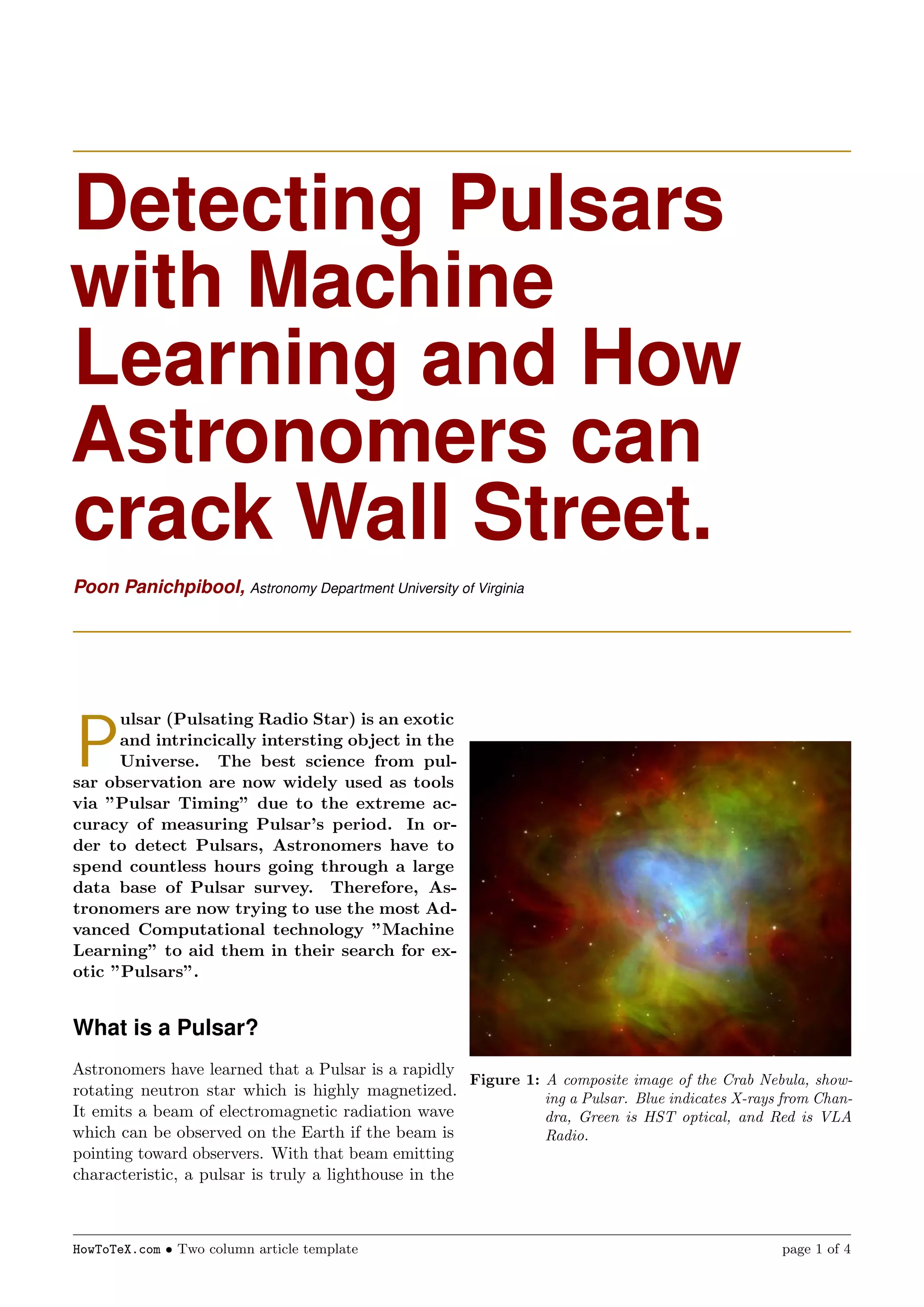
Figure 1: A composite image of the Crab Nebula, show-
ing a Pulsar. Blue indicates X-rays from Chan-
dra, Green is HST optical, and Red is VLA
Radio.
HowToTeX.com • Two column article template page 1 of 4
Universe. Most studied pulsars are ”radio pulsars”
which appear to emit short pulses of radio emission.
The pulse period is generally between 1.4 ms and
8.5 seconds. These radio emission is continouse and
beamed. Therefore, observers can see a radio pulse
each time the pulsar beam get in their line of sights.
The pulse periods are quite stable since they equal to
the spinning period of rotating neutron stars. There
are numbers of important results come out of radio
observation of pulsars for following reasons:
1. Neutron stars can be used as Extreme conditions
Physics Laboratories which can not be generated
on the Earth e.g. deep gravitational potentials,
ρ exceeding nuclear densities, and extremely
high magnetic field B ∼ 1014 Gauss.
2. Pulse periods are measured with high accuracies
such that it allows sensitive measurement of tiny
quantities such as the gravitational radiation by
a Binary Pulsar system or Disturbance in gravity
for planetary-mass objects orbiting around a
pulsar.
Since the first observation of Pulsar in 1967 by Joce-
lyn Bell Burnell and Antony Hewish, Pulsars have
been used as an evidence of neutron star existence.
Moreover, Pulsars also provide us understanding
about the strong nuclear force and extreme condition
of nuclear equation of state, testing general relativity,
and a discovery of the first extrasolar planet.
Pulsars are generally categorized into three classes.
1. Rotation-Powered Pulsar where the loss of rota-
tional energy provides the power to pulsar.
2. Accretion-Powered Pulsar (most of X-rays Pul-
sars) where the gravitational energy of accreted
material generate the power and emit X-rays.
3. Magnetars where the extremely strong Magnetic
field decays to provide the power to Pulsars.
As mentioned earlier, the best uses of Pulsar ob-
servations come from using them as tools via ”Pulsar
Timing”. By tracking the times of arrival of the
radio pulses (TOA), the pulsar timing can be used
to monitor the rotation of the neutron star. This
pulsar timing is an extraordinary feature of pulsar
observation due to its unambiguously tracking of
single rotation of the neutron star over long periods
with high precision. It allows pulsar astronomers to
understand the interior physics of neutron stars, mak-
ing extremely accurate astrometric measurements,
and testing gravitational theories. Here is example
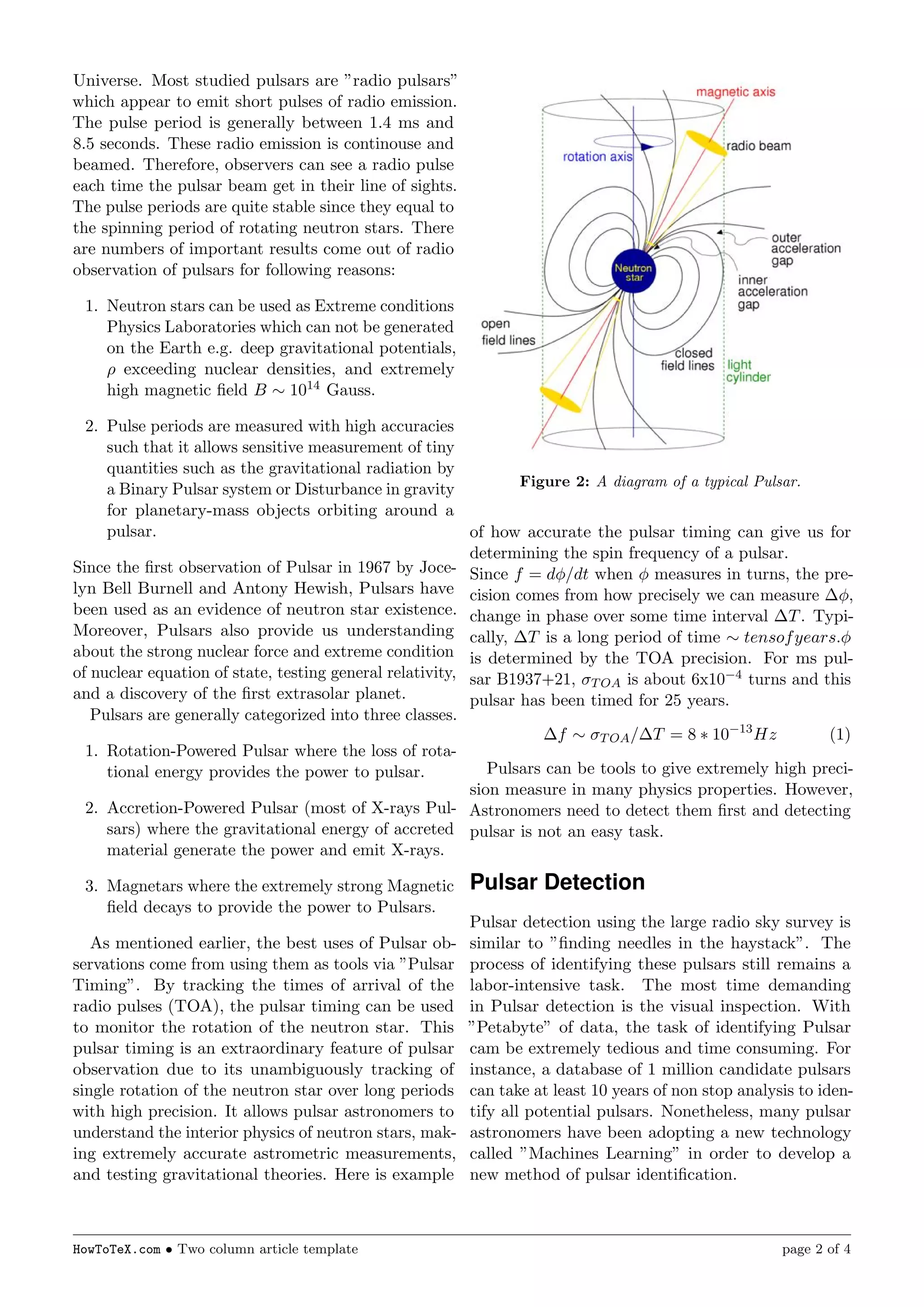
Figure 2: A diagram of a typical Pulsar.
of how accurate the pulsar timing can give us for
determining the spin frequency of a pulsar.
Since f = dφ/dt when φ measures in turns, the pre-
cision comes from how precisely we can measure ∆φ,
change in phase over some time interval ∆T. Typi-
cally, ∆T is a long period of time ∼ tensofyears.φ
is determined by the TOA precision. For ms pul-
sar B1937+21, σTOA is about 6x10⁻⁴ turns and this
pulsar has been timed for 25 years.
∆f ∼ σTOA/∆T = 8 ∗ 10−13
Hz (1)
Pulsars can be tools to give extremely high preci-
sion measure in many physics properties. However,
Astronomers need to detect them first and detecting
pulsar is not an easy task.
Pulsar Detection
Pulsar detection using the large radio sky survey is
similar to ”finding needles in the haystack”. The
process of identifying these pulsars still remains a
labor-intensive task. The most time demanding
in Pulsar detection is the visual inspection. With
”Petabyte” of data, the task of identifying Pulsar
cam be extremely tedious and time consuming. For
instance, a database of 1 million candidate pulsars
can take at least 10 years of non stop analysis to iden-
tify all potential pulsars. Nonetheless, many pulsar
astronomers have been adopting a new technology
called ”Machines Learning” in order to develop a
new method of pulsar identification.
HowToTeX.com • Two column article template page 2 of 4
Figure 3: A diagram of two layers classification system
of the PICS AI.
Many groups of Astronomers and Data scientists
have bee working on a novel artificial intelligence
(AI) program which can identify pulsars from recent
surveys using image pattern recognition with many
neural networks. These AI program will be trained in
order to mimic human experts and separate pulsars
from noise and interference by looking for patterns
from candidate plots. The process of training and
back-testing the program is called ”machine learning”
i.e. programmers provide all necessary data for the
AI to learn and be able to work on analysis by itself
or themselves (since these program typical deploy
many neural or AI brain networks.).
For example, from W.W. Zhu et al., their PICS
(Pulsar Image-based Classification System) AI will
be taught the salient features of different pulsars
from a set of human-analyzed candidate through
machine learning. Their training set are from the
Pulsar Arecibo :-band Feed Array (PALFA) survey.
Each pulsar candidate will generate four diagnostic
plots consists of image data up to thousands of pixels.
Then the AI will input these data and uses these
candidates as a training set over ∼ 9000 neurons.
After the AI is trained, it will be tested with different
pulsar survey e.g. the Green Bank North Celestial
Cap survey. This group has been integrated their
PICS AI into the PALFA survey pipeline and has
discovered size new pulsars in 2014.
Machine Learning on Wall Street
Not only Pulsar Astronomers but also Quantitative
Hedge Fund have been using this machine learn-
ing technique with pattern recognition. Systematic
trading or rules-based trading is not a new thing
in on Wall Street. Many people have established
their own trading systems and became successful e.g.
CANSLIM, SERPA systems. However, using an AI
to make a decision in trading is quite a new idea. In
Figure 4: A discovery plot of PSR J1938+20
fact, many hedge funds such as James Simon (The
Quant King)’s Renaissance Technologies has been
using mathematical model and powerful computer to
predict the direction of securities price in any market.
Stock market is commonly regarded as a place full
with uncertainty and unpredictable. Hence, predic-
tion of stock market movement has been a long-time
attraction to many people from different fields. Nu-
merous studies tried to use machine learning algo-
rithm to forecast the movement of securities price
such as Support Vector Machine (SVM), Artificial
Neural Network (ANN) and reinforcement learning.
By training the AI to use pattern recognition, the
AI can predict the movement of the securities price
and make a trade decision (Buy, Sell, and Hold).
Since Astronomers are now using more machine
learning in their researches, they can also apply the
same model to price prediction trading system. With
more development in pattern recognition and ma-
chine learning, undoubtedly that astronomers can
one day predict the movement of stock market and
crack Wall Street (It may solve funding problems for
Astronomers as well!).
References
• http://www.cv.nrao.edu/course/astr534/Pulsars.html
• http://www.cv.nrao.edu/course/astr534/
PulsarTiming.html
• http://www.agile5technologies.com/wp-
content/uploads/Thesis.pdf
• http://eugenezhulenev.com/blog/2014/11/14/stock-
price-prediction-with-big-data-and-machine-
learning/
HowToTeX.com • Two column article template page 3 of 4
Figure 5: An example of price prediction model
Figure 6: An example of Machine Learning trading sys-
tem
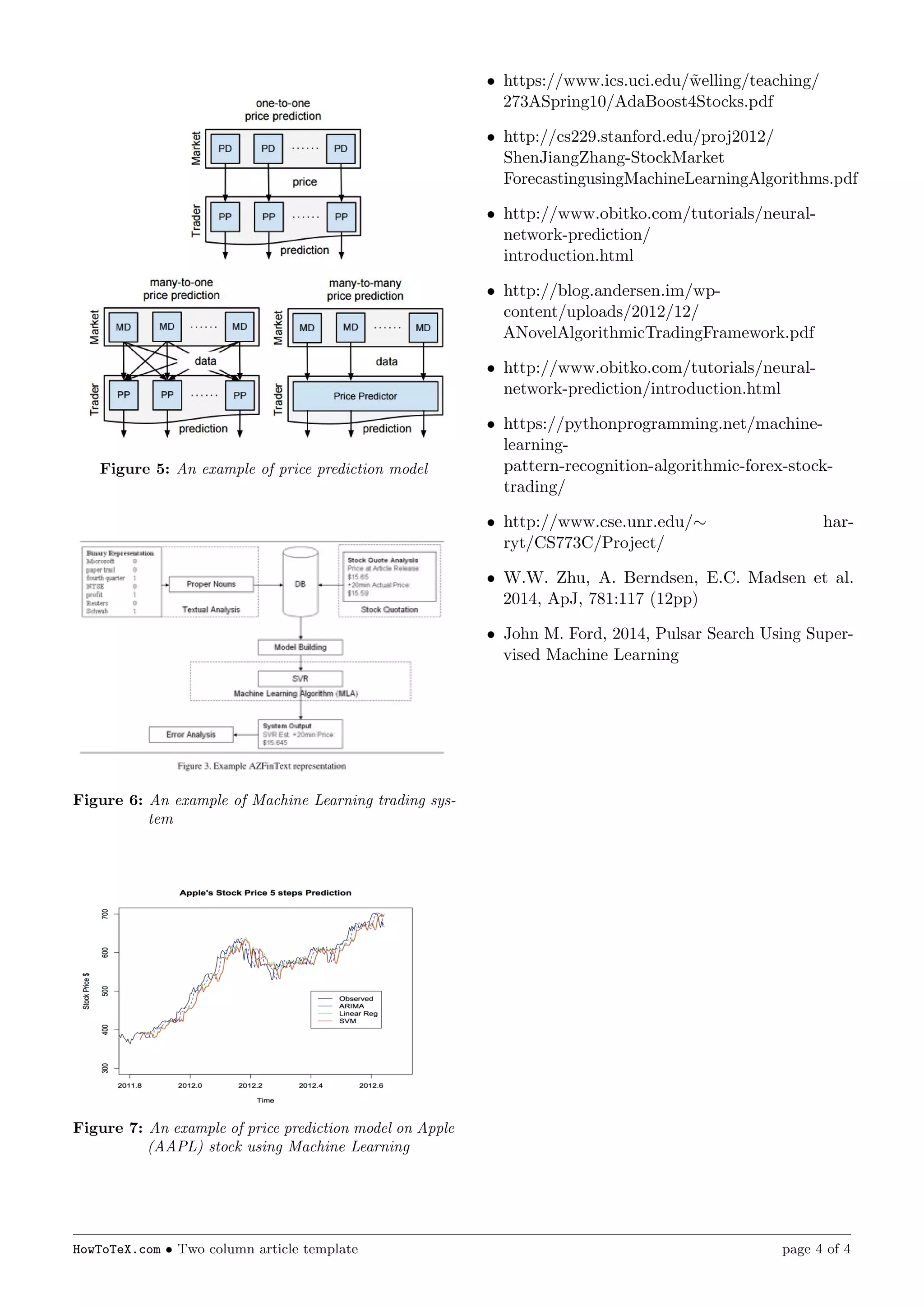
Figure 7: An example of price prediction model on Apple
(AAPL) stock using Machine Learning
• https://www.ics.uci.edu/˜welling/teaching/
273ASpring10/AdaBoost4Stocks.pdf
• http://cs229.stanford.edu/proj2012/
ShenJiangZhang-StockMarket
ForecastingusingMachineLearningAlgorithms.pdf
• http://www.obitko.com/tutorials/neural-
network-prediction/
introduction.html
• http://blog.andersen.im/wp-
content/uploads/2012/12/
ANovelAlgorithmicTradingFramework.pdf
• http://www.obitko.com/tutorials/neural-
network-prediction/introduction.html
• https://pythonprogramming.net/machine-
learning-
pattern-recognition-algorithmic-forex-stock-
trading/
• http://www.cse.unr.edu/∼ har-
ryt/CS773C/Project/
• W.W. Zhu, A. Berndsen, E.C. Madsen et al.
2014, ApJ, 781:117 (12pp)
• John M. Ford, 2014, Pulsar Search Using Super-
vised Machine Learning
HowToTeX.com • Two column article template page 4 of 4

Pulsardetection

  • 1.
    Detecting Pulsars with Machine Learningand How Astronomers can crack Wall Street. Poon Panichpibool, Astronomy Department University of Virginia P ulsar (Pulsating Radio Star) is an exotic and intrincically intersting object in the Universe. The best science from pul- sar observation are now widely used as tools via ”Pulsar Timing” due to the extreme ac- curacy of measuring Pulsar’s period. In or- der to detect Pulsars, Astronomers have to spend countless hours going through a large data base of Pulsar survey. Therefore, As- tronomers are now trying to use the most Ad- vanced Computational technology ”Machine Learning” to aid them in their search for ex- otic ”Pulsars”. What is a Pulsar? Astronomers have learned that a Pulsar is a rapidly rotating neutron star which is highly magnetized. It emits a beam of electromagnetic radiation wave which can be observed on the Earth if the beam is pointing toward observers. With that beam emitting characteristic, a pulsar is truly a lighthouse in the Figure 1: A composite image of the Crab Nebula, show- ing a Pulsar. Blue indicates X-rays from Chan- dra, Green is HST optical, and Red is VLA Radio. HowToTeX.com • Two column article template page 1 of 4
  • 2.
    Universe. Most studiedpulsars are ”radio pulsars” which appear to emit short pulses of radio emission. The pulse period is generally between 1.4 ms and 8.5 seconds. These radio emission is continouse and beamed. Therefore, observers can see a radio pulse each time the pulsar beam get in their line of sights. The pulse periods are quite stable since they equal to the spinning period of rotating neutron stars. There are numbers of important results come out of radio observation of pulsars for following reasons: 1. Neutron stars can be used as Extreme conditions Physics Laboratories which can not be generated on the Earth e.g. deep gravitational potentials, ρ exceeding nuclear densities, and extremely high magnetic field B ∼ 1014 Gauss. 2. Pulse periods are measured with high accuracies such that it allows sensitive measurement of tiny quantities such as the gravitational radiation by a Binary Pulsar system or Disturbance in gravity for planetary-mass objects orbiting around a pulsar. Since the first observation of Pulsar in 1967 by Joce- lyn Bell Burnell and Antony Hewish, Pulsars have been used as an evidence of neutron star existence. Moreover, Pulsars also provide us understanding about the strong nuclear force and extreme condition of nuclear equation of state, testing general relativity, and a discovery of the first extrasolar planet. Pulsars are generally categorized into three classes. 1. Rotation-Powered Pulsar where the loss of rota- tional energy provides the power to pulsar. 2. Accretion-Powered Pulsar (most of X-rays Pul- sars) where the gravitational energy of accreted material generate the power and emit X-rays. 3. Magnetars where the extremely strong Magnetic field decays to provide the power to Pulsars. As mentioned earlier, the best uses of Pulsar ob- servations come from using them as tools via ”Pulsar Timing”. By tracking the times of arrival of the radio pulses (TOA), the pulsar timing can be used to monitor the rotation of the neutron star. This pulsar timing is an extraordinary feature of pulsar observation due to its unambiguously tracking of single rotation of the neutron star over long periods with high precision. It allows pulsar astronomers to understand the interior physics of neutron stars, mak- ing extremely accurate astrometric measurements, and testing gravitational theories. Here is example Figure 2: A diagram of a typical Pulsar. of how accurate the pulsar timing can give us for determining the spin frequency of a pulsar. Since f = dφ/dt when φ measures in turns, the pre- cision comes from how precisely we can measure ∆φ, change in phase over some time interval ∆T. Typi- cally, ∆T is a long period of time ∼ tensofyears.φ is determined by the TOA precision. For ms pul- sar B1937+21, σTOA is about 6x10⁻⁴ turns and this pulsar has been timed for 25 years. ∆f ∼ σTOA/∆T = 8 ∗ 10−13 Hz (1) Pulsars can be tools to give extremely high preci- sion measure in many physics properties. However, Astronomers need to detect them first and detecting pulsar is not an easy task. Pulsar Detection Pulsar detection using the large radio sky survey is similar to ”finding needles in the haystack”. The process of identifying these pulsars still remains a labor-intensive task. The most time demanding in Pulsar detection is the visual inspection. With ”Petabyte” of data, the task of identifying Pulsar cam be extremely tedious and time consuming. For instance, a database of 1 million candidate pulsars can take at least 10 years of non stop analysis to iden- tify all potential pulsars. Nonetheless, many pulsar astronomers have been adopting a new technology called ”Machines Learning” in order to develop a new method of pulsar identification. HowToTeX.com • Two column article template page 2 of 4
  • 3.
    Figure 3: Adiagram of two layers classification system of the PICS AI. Many groups of Astronomers and Data scientists have bee working on a novel artificial intelligence (AI) program which can identify pulsars from recent surveys using image pattern recognition with many neural networks. These AI program will be trained in order to mimic human experts and separate pulsars from noise and interference by looking for patterns from candidate plots. The process of training and back-testing the program is called ”machine learning” i.e. programmers provide all necessary data for the AI to learn and be able to work on analysis by itself or themselves (since these program typical deploy many neural or AI brain networks.). For example, from W.W. Zhu et al., their PICS (Pulsar Image-based Classification System) AI will be taught the salient features of different pulsars from a set of human-analyzed candidate through machine learning. Their training set are from the Pulsar Arecibo :-band Feed Array (PALFA) survey. Each pulsar candidate will generate four diagnostic plots consists of image data up to thousands of pixels. Then the AI will input these data and uses these candidates as a training set over ∼ 9000 neurons. After the AI is trained, it will be tested with different pulsar survey e.g. the Green Bank North Celestial Cap survey. This group has been integrated their PICS AI into the PALFA survey pipeline and has discovered size new pulsars in 2014. Machine Learning on Wall Street Not only Pulsar Astronomers but also Quantitative Hedge Fund have been using this machine learn- ing technique with pattern recognition. Systematic trading or rules-based trading is not a new thing in on Wall Street. Many people have established their own trading systems and became successful e.g. CANSLIM, SERPA systems. However, using an AI to make a decision in trading is quite a new idea. In Figure 4: A discovery plot of PSR J1938+20 fact, many hedge funds such as James Simon (The Quant King)’s Renaissance Technologies has been using mathematical model and powerful computer to predict the direction of securities price in any market. Stock market is commonly regarded as a place full with uncertainty and unpredictable. Hence, predic- tion of stock market movement has been a long-time attraction to many people from different fields. Nu- merous studies tried to use machine learning algo- rithm to forecast the movement of securities price such as Support Vector Machine (SVM), Artificial Neural Network (ANN) and reinforcement learning. By training the AI to use pattern recognition, the AI can predict the movement of the securities price and make a trade decision (Buy, Sell, and Hold). Since Astronomers are now using more machine learning in their researches, they can also apply the same model to price prediction trading system. With more development in pattern recognition and ma- chine learning, undoubtedly that astronomers can one day predict the movement of stock market and crack Wall Street (It may solve funding problems for Astronomers as well!). References • http://www.cv.nrao.edu/course/astr534/Pulsars.html • http://www.cv.nrao.edu/course/astr534/ PulsarTiming.html • http://www.agile5technologies.com/wp- content/uploads/Thesis.pdf • http://eugenezhulenev.com/blog/2014/11/14/stock- price-prediction-with-big-data-and-machine- learning/ HowToTeX.com • Two column article template page 3 of 4
  • 4.
    Figure 5: Anexample of price prediction model Figure 6: An example of Machine Learning trading sys- tem Figure 7: An example of price prediction model on Apple (AAPL) stock using Machine Learning • https://www.ics.uci.edu/˜welling/teaching/ 273ASpring10/AdaBoost4Stocks.pdf • http://cs229.stanford.edu/proj2012/ ShenJiangZhang-StockMarket ForecastingusingMachineLearningAlgorithms.pdf • http://www.obitko.com/tutorials/neural- network-prediction/ introduction.html • http://blog.andersen.im/wp- content/uploads/2012/12/ ANovelAlgorithmicTradingFramework.pdf • http://www.obitko.com/tutorials/neural- network-prediction/introduction.html • https://pythonprogramming.net/machine- learning- pattern-recognition-algorithmic-forex-stock- trading/ • http://www.cse.unr.edu/∼ har- ryt/CS773C/Project/ • W.W. Zhu, A. Berndsen, E.C. Madsen et al. 2014, ApJ, 781:117 (12pp) • John M. Ford, 2014, Pulsar Search Using Super- vised Machine Learning HowToTeX.com • Two column article template page 4 of 4