

Public Relations
 Introduction
 Objective
 Tools
 Methods
Definition of PR
 Public relations is the profitable integration
of an organisation’s new and existing
relationship with stakeholders, employees
and customers to create and protect the
brand reputation of the organisation.
 Public relations is a set of planned
activities designed to promote goodwill
between an organisation and its public.
 Public relations still offers its organisations
the greatest experience and skill through
Objectives of PR
 Empathy
 Dialogue
 Information
 Understanding
 Human Relations
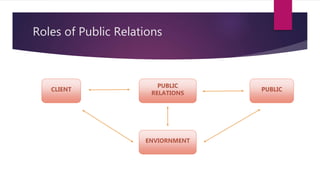
Roles of Public Relations
PR Tools and techniques
 Press releases
 Newsletters
 Blogging
 Social Media Marketing
 Employee Interactions
 Sponsorships and Partnerships
PR Methods
RESEARCH PLANNING EXECUTION EVALUATION
Effective public relations should be practiced
in four iterative steps-:
i. Research
ii. Planning and goal setting
iii. Implementation and monitoring
iv. Evaluation
Research
Research helps to frame issues, to identify key
stakeholders and set the objectives that the
public relations program cab be measured
against.
 Primary research: Newly developed, custom
research directly inquiring about the questions
and issues facing the organisation.
 Secondary research: Existing research perhaps
collected for another purpose that can be
Planning
 Identifying goals, objectives and target audience for
the organisation.
 The first step in any planning is an environmental
scan. One useful format is the SWOT analysis
(strengths, weakness, opportunities and threats)
which analyses the company’s strengths and
weakness in meeting the opportunities and threats
in the external environment.
 The environmental scan should be ongoing, one
approach for this is to set up an issues anticipation
The needs that the organisation can address-:
 Customers: Why should I by from company X?
 Employees: Why should I work for company X?
 Investors: Why should I invest in company X?
The public relations function need to collaborate
with the respective department of the organisation
to address these questions.
Implementation
 How appropriate were the tactics to achieving objectives?
 How creative were the tactics?
 How well were the tactics implemented?
 How efficient was the execution of tactics in relations to
resources?
Evaluation
 After a public relations program is implemented, the effect should be
measured against predetermined objectives.
 Quantitative methods are most commonly used to evaluate public
relations programs and campaigns.
i. Surveys
ii. Media monitoring
iii. Online analysis
Public relations

Public relations

  • 2.
    Public Relations  Introduction Objective  Tools  Methods
  • 3.
    Definition of PR Public relations is the profitable integration of an organisation’s new and existing relationship with stakeholders, employees and customers to create and protect the brand reputation of the organisation.  Public relations is a set of planned activities designed to promote goodwill between an organisation and its public.  Public relations still offers its organisations the greatest experience and skill through
  • 4.
    Objectives of PR Empathy  Dialogue  Information  Understanding  Human Relations
  • 5.
    Roles of PublicRelations
  • 6.
    PR Tools andtechniques  Press releases  Newsletters  Blogging  Social Media Marketing  Employee Interactions  Sponsorships and Partnerships
  • 7.
    PR Methods RESEARCH PLANNINGEXECUTION EVALUATION Effective public relations should be practiced in four iterative steps-: i. Research ii. Planning and goal setting iii. Implementation and monitoring iv. Evaluation
  • 8.
    Research Research helps toframe issues, to identify key stakeholders and set the objectives that the public relations program cab be measured against.  Primary research: Newly developed, custom research directly inquiring about the questions and issues facing the organisation.  Secondary research: Existing research perhaps collected for another purpose that can be
  • 9.
    Planning  Identifying goals,objectives and target audience for the organisation.  The first step in any planning is an environmental scan. One useful format is the SWOT analysis (strengths, weakness, opportunities and threats) which analyses the company’s strengths and weakness in meeting the opportunities and threats in the external environment.  The environmental scan should be ongoing, one approach for this is to set up an issues anticipation
  • 10.
    The needs thatthe organisation can address-:  Customers: Why should I by from company X?  Employees: Why should I work for company X?  Investors: Why should I invest in company X? The public relations function need to collaborate with the respective department of the organisation to address these questions.
  • 11.
    Implementation  How appropriatewere the tactics to achieving objectives?  How creative were the tactics?  How well were the tactics implemented?  How efficient was the execution of tactics in relations to resources?
  • 12.
    Evaluation  After apublic relations program is implemented, the effect should be measured against predetermined objectives.  Quantitative methods are most commonly used to evaluate public relations programs and campaigns. i. Surveys ii. Media monitoring iii. Online analysis