Erikson’s
Eight Stages
of
Psychosocial
DevelopmentPresentation by Renee Illerbrun,
Heather Kleinsmith, Kevin
McMullen, and Ann Pallifrone
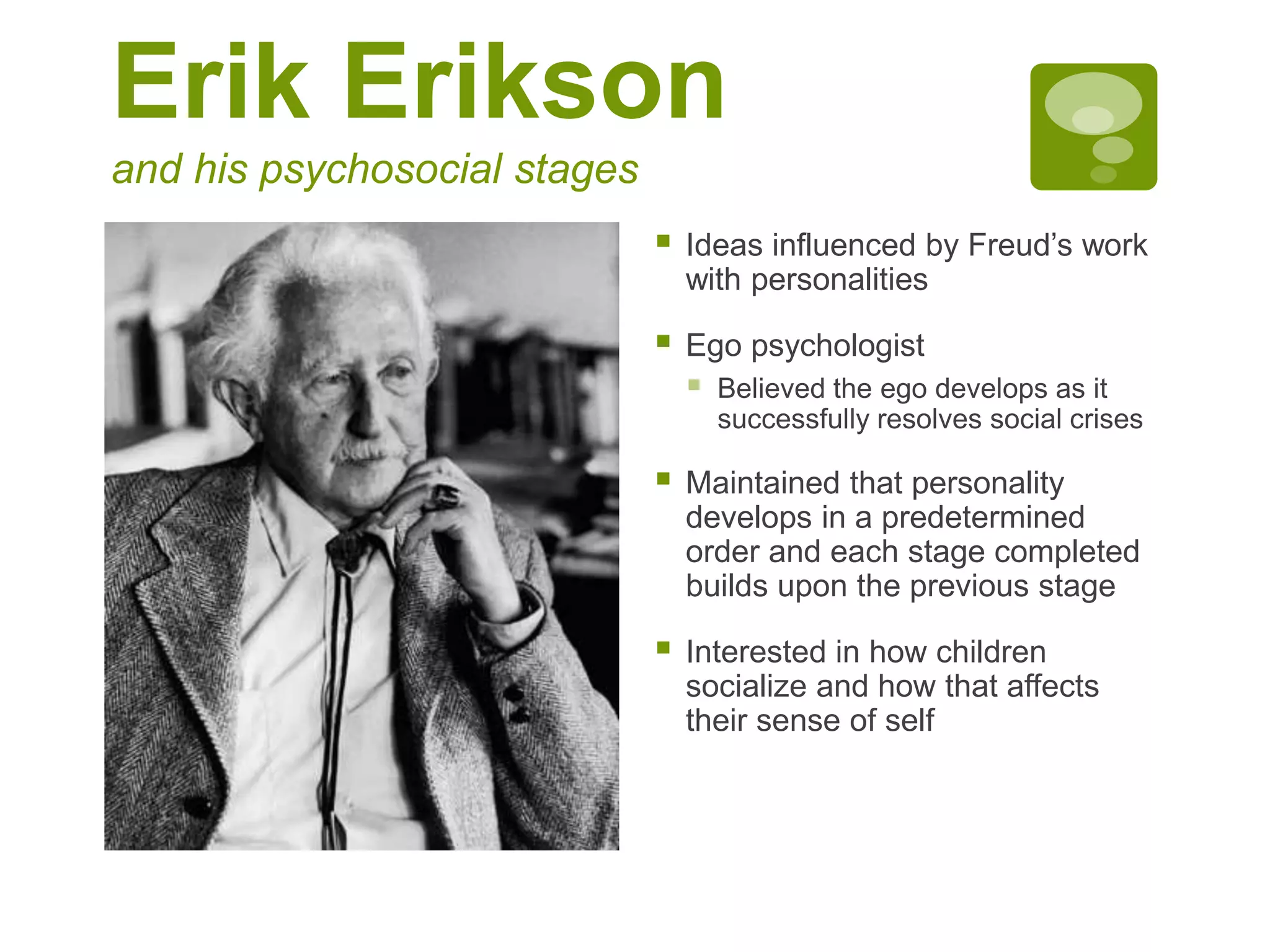
Erik Erikson
and his psychosocial stages
 Ideas influenced by Freud’s work
with personalities
 Ego psychologist
 Believed the ego develops as it
successfully resolves social crises
 Maintained that personality
develops in a predetermined
order and each stage completed
builds upon the previous stage
 Interested in how children
socialize and how that affects
their sense of self
Eight Stages
of Psychosocial Development
Stage One:
Trust vs. Mistrust
Can I trust the people around me?
The most important period in a person’s life
Infancy
Trust
• Stability
• Consistency
• Building blocks that are necessary to
construct the trust for success in life
• Virtue of hope
Mistrust
• Failing to complete the stage of virtue
of hope
• Increased/heightened sense of fear
• Anxiety
• General feeling of mistrust in the world
around them
Stage Two:
Autonomy vs. Shame and
Doubt
Can I do things myself or am I reliant on
the help of others?
Children at this stage are focused on
developing a greater sense of self-control.
Early Childhood
Autonomy
• Ages of 1-3 years old
• Independence
• Self-confidence
• Positive or negative
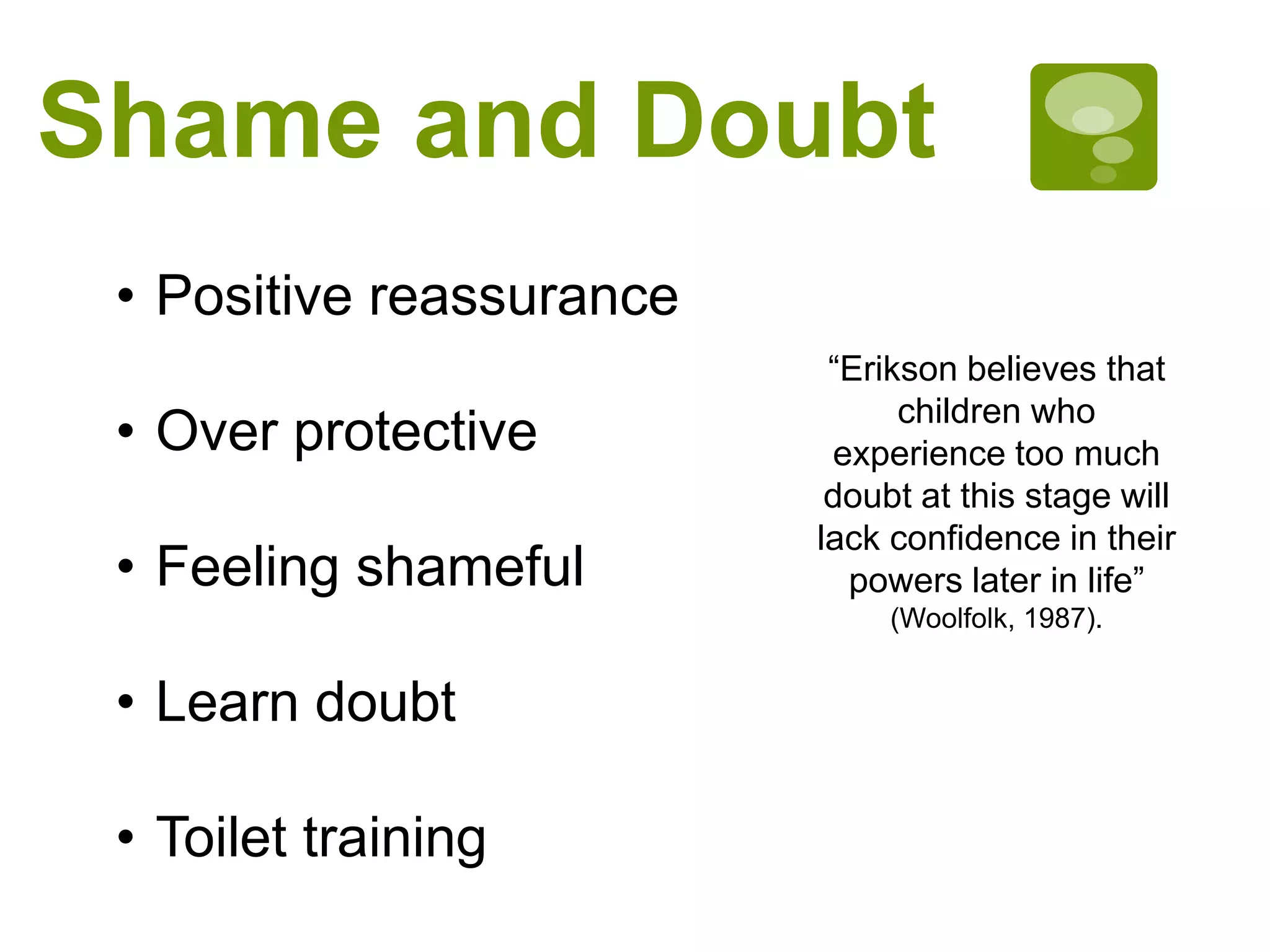
Shame and Doubt
• Positive reassurance
• Over protective
• Feeling shameful
• Learn doubt
• Toilet training
“Erikson believes that
children who
experience too much
doubt at this stage will
lack confidence in their
powers later in life”
(Woolfolk, 1987).
Stage Three:
Initiative vs. Guilt
Am I good or bad?
Children begin to assert their power and
control over the world through social
interaction.
Preschool
The Facts
Initiative vs. Guilt
• Play age (years 3-5)
• Child develops fundamental understanding of morals
and values
• Gain self-esteem and learn to cooperate with peers
• Sense of power and control of environment
• Positive outcome of this stage is self-purpose and
worth
Stage Four:
Industry vs. Inferiority
How can I be good?
Children begin to develop a sense of pride in
their accomplishments and abilities.
School Age
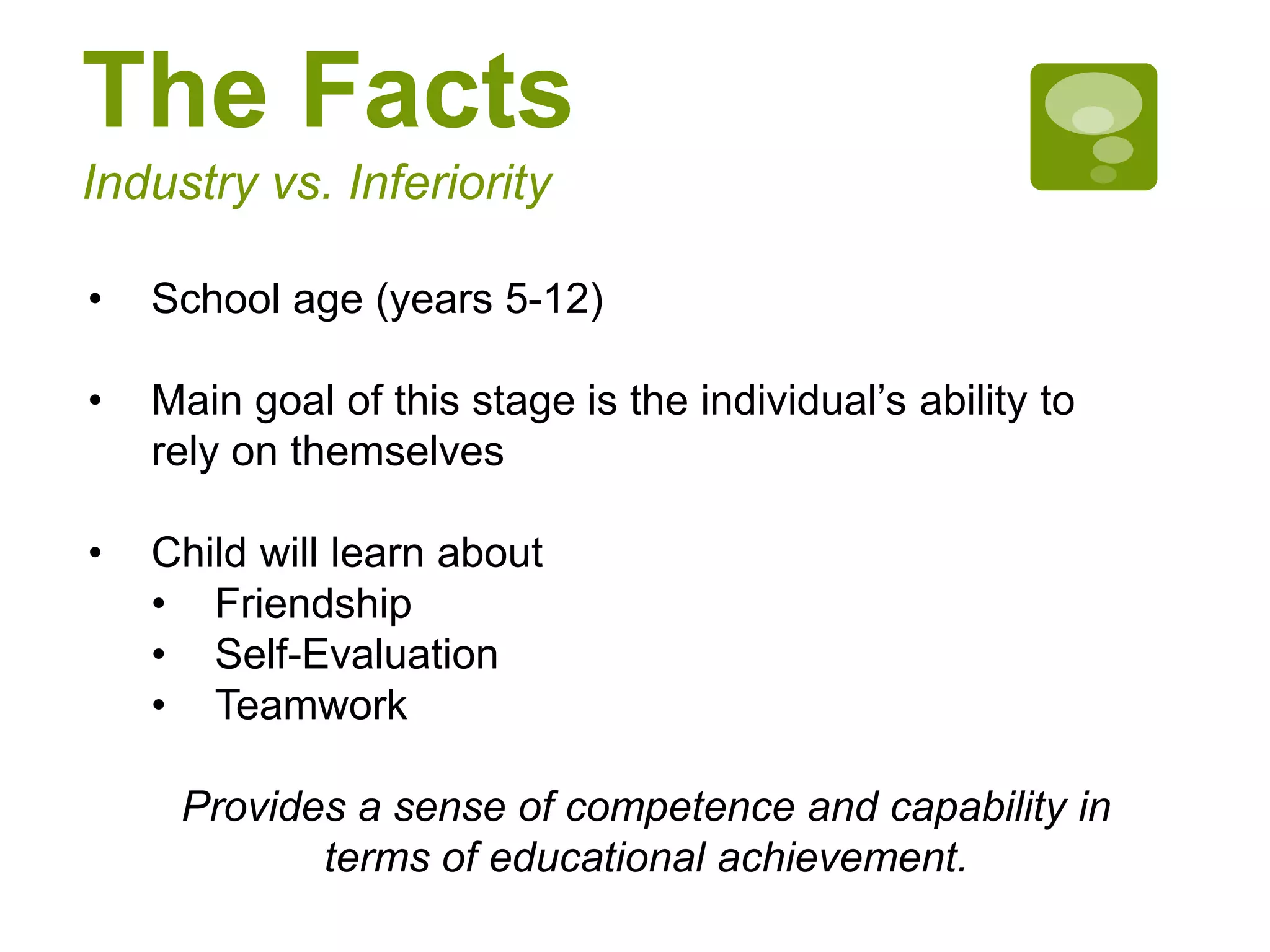
The Facts
Industry vs. Inferiority
• School age (years 5-12)
• Main goal of this stage is the individual’s ability to
rely on themselves
• Child will learn about
• Friendship
• Self-Evaluation
• Teamwork
Provides a sense of competence and capability in
terms of educational achievement.
Stage Five:
Identity vs. Role Confusion
Who am I? Who can I be?
Children are exploring their independence
and sense of self.
Adolescence
The Facts
Identity vs. Role Confusion
• Ages 13-19 years old (adolescence)
• Fidelity is the main virtue
• Development of social relationships is important
• Concerned with appearances
• Sense of sexual identity
• Figuring out future roles in the adult world
• Risk of “identity crisis”
Stage Six:
Intimacy vs. Isolation
Will I be loved or will I be alone?
The major conflict centers on forming
intimate, loving relationships with other
people.
Young Adulthood
The Facts
Intimacy vs. Isolation
• Ages 18-40
• Newfound identity and meaningfulness
• Developing intimacy and willingness to
express feelings and share experiences
Possible Outcomes
Intimacy vs. Isolation
Failure to Establish Intimacy Results in:
1. Loneliness
2. Feeling or being uncared for
Success in Establishing Intimacy Results in:
1. Close intimate friendships
2. Feeling secure in relationships
What is the importance in understanding
this stage?
Stage Seven:
Generativity vs. Self-
Absorption (Stagnation)
How can I contribute to the world?
Adults strive to create or nurture things that
will outlast them.
Middle Adulthood
The Facts
Generativity vs. Self-Absorption
- Ages 40-65
- Goes further into looking beyond and toward the future
- Establishing family and productivity in the community
- If they do not feel productive or that they have
accomplished their goals, they feel like they are losing the
meaning of life
- mid-life crisis
Why is this important to understand?
Stage Eight:
Ego Integrity vs. Despair
Did I live a meaningful life?
People reflect on the life they have lived and
come away with either a sense of fulfillment or
a sense of regret.
Maturity
The Facts
Ego Integrity vs. Despair
• Age 65 until death
• Wisdom is the main virtue
• Retrospection (the final developmental task)
• Can occur out of sequence
ex. Terminal disease diagnosis
Possible Outcomes
Ego Integrity vs. Despair
Seeing Your Life as Productive/Successful:
- Contemplate accomplishments
- Develop integrity
Seeing Your Life as Unproductive/Unsuccessful:
- Dissatisfied with life
- Develop despair
- Can lead to depression/hopelessness
So, how is this theory
relevant to us and what
we’ve studied in class?
and
How does this theory help
us to better understand
ourselves?

HUR-101-99Y Group Presentation

  • 1.
    Erikson’s Eight Stages of Psychosocial DevelopmentPresentation byRenee Illerbrun, Heather Kleinsmith, Kevin McMullen, and Ann Pallifrone
  • 2.
    Erik Erikson and hispsychosocial stages  Ideas influenced by Freud’s work with personalities  Ego psychologist  Believed the ego develops as it successfully resolves social crises  Maintained that personality develops in a predetermined order and each stage completed builds upon the previous stage  Interested in how children socialize and how that affects their sense of self
  • 3.
  • 5.
    Stage One: Trust vs.Mistrust Can I trust the people around me? The most important period in a person’s life Infancy
  • 6.
    Trust • Stability • Consistency •Building blocks that are necessary to construct the trust for success in life • Virtue of hope
  • 7.
    Mistrust • Failing tocomplete the stage of virtue of hope • Increased/heightened sense of fear • Anxiety • General feeling of mistrust in the world around them
  • 8.
    Stage Two: Autonomy vs.Shame and Doubt Can I do things myself or am I reliant on the help of others? Children at this stage are focused on developing a greater sense of self-control. Early Childhood
  • 9.
    Autonomy • Ages of1-3 years old • Independence • Self-confidence • Positive or negative
  • 10.
    Shame and Doubt •Positive reassurance • Over protective • Feeling shameful • Learn doubt • Toilet training “Erikson believes that children who experience too much doubt at this stage will lack confidence in their powers later in life” (Woolfolk, 1987).
  • 11.
    Stage Three: Initiative vs.Guilt Am I good or bad? Children begin to assert their power and control over the world through social interaction. Preschool
  • 12.
    The Facts Initiative vs.Guilt • Play age (years 3-5) • Child develops fundamental understanding of morals and values • Gain self-esteem and learn to cooperate with peers • Sense of power and control of environment • Positive outcome of this stage is self-purpose and worth
  • 13.
    Stage Four: Industry vs.Inferiority How can I be good? Children begin to develop a sense of pride in their accomplishments and abilities. School Age
  • 14.
    The Facts Industry vs.Inferiority • School age (years 5-12) • Main goal of this stage is the individual’s ability to rely on themselves • Child will learn about • Friendship • Self-Evaluation • Teamwork Provides a sense of competence and capability in terms of educational achievement.
  • 15.
    Stage Five: Identity vs.Role Confusion Who am I? Who can I be? Children are exploring their independence and sense of self. Adolescence
  • 16.
    The Facts Identity vs.Role Confusion • Ages 13-19 years old (adolescence) • Fidelity is the main virtue • Development of social relationships is important • Concerned with appearances • Sense of sexual identity • Figuring out future roles in the adult world • Risk of “identity crisis”
  • 17.
    Stage Six: Intimacy vs.Isolation Will I be loved or will I be alone? The major conflict centers on forming intimate, loving relationships with other people. Young Adulthood
  • 18.
    The Facts Intimacy vs.Isolation • Ages 18-40 • Newfound identity and meaningfulness • Developing intimacy and willingness to express feelings and share experiences
  • 19.
    Possible Outcomes Intimacy vs.Isolation Failure to Establish Intimacy Results in: 1. Loneliness 2. Feeling or being uncared for Success in Establishing Intimacy Results in: 1. Close intimate friendships 2. Feeling secure in relationships What is the importance in understanding this stage?
  • 20.
    Stage Seven: Generativity vs.Self- Absorption (Stagnation) How can I contribute to the world? Adults strive to create or nurture things that will outlast them. Middle Adulthood
  • 21.
    The Facts Generativity vs.Self-Absorption - Ages 40-65 - Goes further into looking beyond and toward the future - Establishing family and productivity in the community - If they do not feel productive or that they have accomplished their goals, they feel like they are losing the meaning of life - mid-life crisis Why is this important to understand?
  • 22.
    Stage Eight: Ego Integrityvs. Despair Did I live a meaningful life? People reflect on the life they have lived and come away with either a sense of fulfillment or a sense of regret. Maturity
  • 23.
    The Facts Ego Integrityvs. Despair • Age 65 until death • Wisdom is the main virtue • Retrospection (the final developmental task) • Can occur out of sequence ex. Terminal disease diagnosis
  • 24.
    Possible Outcomes Ego Integrityvs. Despair Seeing Your Life as Productive/Successful: - Contemplate accomplishments - Develop integrity Seeing Your Life as Unproductive/Unsuccessful: - Dissatisfied with life - Develop despair - Can lead to depression/hopelessness
  • 25.
    So, how isthis theory relevant to us and what we’ve studied in class? and How does this theory help us to better understand ourselves?