PSYCHOLOGICAL DEVELOPMENT IN
MIDDLE CHILDHOOD
Topic:
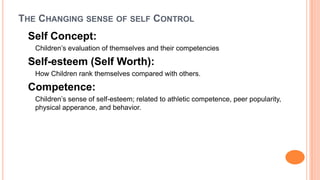
THE CHANGING SENSE OF SELF CONTROL
Self Concept:
Children’s evaluation of themselves and their competencies
Self-esteem (Self Worth):
How Children rank themselves compared with others.
Competence:
Children’s sense of self-esteem; related to athletic competence, peer popularity,
physical apperance, and behavior.
Self Control:
Restraint exercised over impulses, emotions, or desires
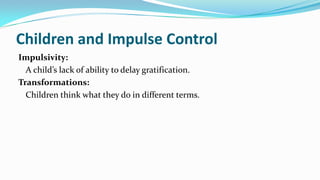
Children and Impulse Control
Impulsivity:
A child’s lack of ability to delay gratification.
Transformations:
Children think what they do in different terms.
The Influence of Peers
Peer:
Refers to youngsters who are similar in age to other
children, usually within 12 months of one another.
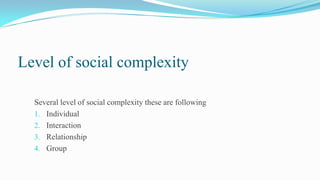
Level of social complexity
Several level of social complexity these are following
1. Individual
2. Interaction
3. Relationship
4. Group
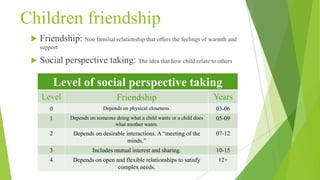
Children friendship
 Friendship: Non familial relationship that offers the feelings of warmth and
support
 Social perspective taking: The idea that how child relate to others
Level of social perspective taking
Level Friendship Years
0 Depends on physical closeness. 03-06
1 Depends on someone doing what a child wants or a child does
what another wants.
05-09
2 Depends on desirable interactions. A “meeting of the
minds.”
07-12
3 Includes mutual interest and sharing. 10-15
4 Depends on open and flexible relationships to satisfy
complex needs.
12+
Schools and Middle Childhood
 Are Schools really that important?
 Schools and Development
 Schools, Development and Learning
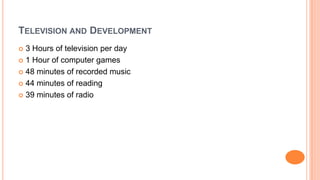
TELEVISION AND DEVELOPMENT
 3 Hours of television per day
 1 Hour of computer games
 48 minutes of recorded music
 44 minutes of reading
 39 minutes of radio
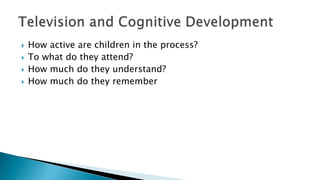
 How active are children in the process?
 To what do they attend?
 How much do they understand?
 How much do they remember
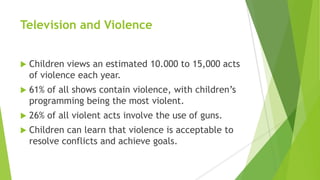
Television and Violence
 Children views an estimated 10.000 to 15,000 acts
of violence each year.
 61% of all shows contain violence, with children’s
programming being the most violent.
 26% of all violent acts involve the use of guns.
 Children can learn that violence is acceptable to
resolve conflicts and achieve goals.
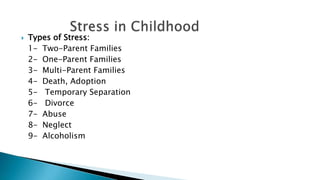
 Types of Stress:
1- Two-Parent Families
2- One-Parent Families
3- Multi-Parent Families
4- Death, Adoption
5- Temporary Separation
6- Divorce
7- Abuse
8- Neglect
9- Alcoholism
Why Children react differently in stress
 Sex
 Age
 Temperament
The End

psychologicaldevelopmentinmiddlechildhood2-130628033003-phpapp01.pdf

  • 1.
  • 2.
    THE CHANGING SENSEOF SELF CONTROL Self Concept: Children’s evaluation of themselves and their competencies Self-esteem (Self Worth): How Children rank themselves compared with others. Competence: Children’s sense of self-esteem; related to athletic competence, peer popularity, physical apperance, and behavior.
  • 3.
    Self Control: Restraint exercisedover impulses, emotions, or desires
  • 4.
    Children and ImpulseControl Impulsivity: A child’s lack of ability to delay gratification. Transformations: Children think what they do in different terms.
  • 5.
    The Influence ofPeers Peer: Refers to youngsters who are similar in age to other children, usually within 12 months of one another.
  • 6.
    Level of socialcomplexity Several level of social complexity these are following 1. Individual 2. Interaction 3. Relationship 4. Group
  • 7.
    Children friendship  Friendship:Non familial relationship that offers the feelings of warmth and support  Social perspective taking: The idea that how child relate to others Level of social perspective taking Level Friendship Years 0 Depends on physical closeness. 03-06 1 Depends on someone doing what a child wants or a child does what another wants. 05-09 2 Depends on desirable interactions. A “meeting of the minds.” 07-12 3 Includes mutual interest and sharing. 10-15 4 Depends on open and flexible relationships to satisfy complex needs. 12+
  • 8.
    Schools and MiddleChildhood  Are Schools really that important?  Schools and Development  Schools, Development and Learning
  • 9.
    TELEVISION AND DEVELOPMENT 3 Hours of television per day  1 Hour of computer games  48 minutes of recorded music  44 minutes of reading  39 minutes of radio
  • 10.
     How activeare children in the process?  To what do they attend?  How much do they understand?  How much do they remember
  • 11.
    Television and Violence Children views an estimated 10.000 to 15,000 acts of violence each year.  61% of all shows contain violence, with children’s programming being the most violent.  26% of all violent acts involve the use of guns.  Children can learn that violence is acceptable to resolve conflicts and achieve goals.
  • 12.
     Types ofStress: 1- Two-Parent Families 2- One-Parent Families 3- Multi-Parent Families 4- Death, Adoption 5- Temporary Separation 6- Divorce 7- Abuse 8- Neglect 9- Alcoholism
  • 13.
    Why Children reactdifferently in stress  Sex  Age  Temperament
  • 14.