He was an influential American
psychologist who sought to explain
learning and motivation
by scientific laws of behavior. He is
also known for his work in drive
theory.
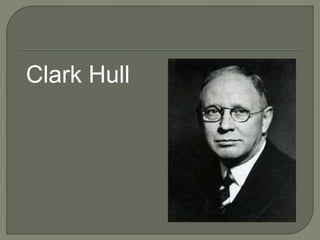
Clark Hull
According to the drive theory of
motivation, people are motivated
to take certain actions in order to
reduce the internal tension that is
caused by unmet needs.
For example, you might be
motivated to drink a glass of
water in order to reduce the
internal state of thirst.
This theory is useful in
explaining behaviors that
have a strong biological
component, such as
hunger or thirst.
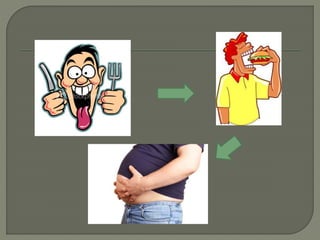
The problem with the drive theory
of motivation is that these
behaviors are not always motivated
purely by physiological needs. For
example, people often eat even
when they are not really hungry.
.
It is defined as energy source for
behavior which is the primary key
in the initiation, strength and
persistence of all motivational
behaviors.
The arousal theory of
motivation suggests that
people take certain actions
to either decrease or
increase levels of arousal.
When arousal levels get too
low, for example, a person
might watch and exciting
movie or go for a jog.
When arousal levels get too
high, on the other hand, a
person would probably look for
ways to relax such as
meditating or reading a book.
According to this theory, we are
motivated to maintain an
optimal level of arousal,
although this level can vary
based on the individual or the
situation.

Psych Drive Reduction Theory

  • 2.
    He was aninfluential American psychologist who sought to explain learning and motivation by scientific laws of behavior. He is also known for his work in drive theory.
  • 3.
  • 4.
    According to thedrive theory of motivation, people are motivated to take certain actions in order to reduce the internal tension that is caused by unmet needs.
  • 5.
    For example, youmight be motivated to drink a glass of water in order to reduce the internal state of thirst.
  • 6.
    This theory isuseful in explaining behaviors that have a strong biological component, such as hunger or thirst.
  • 7.
    The problem withthe drive theory of motivation is that these behaviors are not always motivated purely by physiological needs. For example, people often eat even when they are not really hungry.
  • 9.
    . It is definedas energy source for behavior which is the primary key in the initiation, strength and persistence of all motivational behaviors.
  • 10.
    The arousal theoryof motivation suggests that people take certain actions to either decrease or increase levels of arousal.
  • 11.
    When arousal levelsget too low, for example, a person might watch and exciting movie or go for a jog.
  • 12.
    When arousal levelsget too high, on the other hand, a person would probably look for ways to relax such as meditating or reading a book.
  • 13.
    According to thistheory, we are motivated to maintain an optimal level of arousal, although this level can vary based on the individual or the situation.