Introduction to Psychology Instructor: Louise Lee Email:  [email_address]
Psychology Theories What is psychology? Scientific studies of mental processes and behavior Goals of psychology Describe Explain Predict Control / prescribe
Two Schools of Psychology Psychoanalysis (Freud, Erikson) VS  Humanism (Rogers, Maslow)
Freud’s theory of the human mind Id  Pleasure principle (sex, aggression)  Ego  Reality principle (reason) Superego Moral principle (social norms & values)
Freud’s theory of motivation The unconscious:  feelings, wishes,  desires,  repressed memories Behavior is motivated  by the unconscious
Freud’s psychosexual development Genital Stage ~ over 12 Latency Stage ~ 6-12 Phallic Stage ~ 4-6 Anal Stage ~ 2-4 Oral Stage ~ 0 – 2 Stages of Development Age
Oral Stage 0-2 years old Mouth Sucking, chewing Frustration  distrustful, pessimistic Overindulgence  gullible, too optimistic
Anal Stage 2-4 years old Anus, bladder Toilet training  Conflict: Retain and release  bodily waste Frustration  anal retentive Over-indulgence  anal explosive
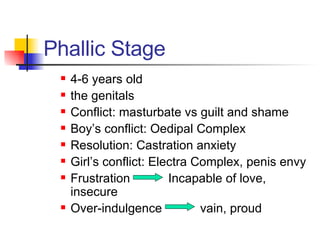
Phallic Stage 4-6 years old the genitals Conflict: masturbate vs guilt and shame Boy’s conflict: Oedipal Complex Resolution: Castration anxiety Girl’s conflict: Electra Complex, penis envy Frustration  Incapable of love, insecure Over-indulgence  vain, proud
Latency Stage & Genital Stage Latency 6-12 years old Sexual desires lie dormant Genital Above 12 years old Refocus on genitals Develop intimate relationships
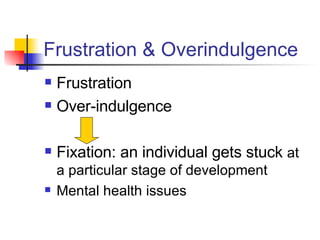
Frustration & Overindulgence Frustration Over-indulgence Fixation: an individual gets stuck  at a particular stage of development Mental health issues
Transference & Countertransference Transference Project irrational feelings and attitudes from the past onto people in the present. Countertransference Unconscious attitudes that a therapist or a nurse develops towards a client in response to a client’s behavior.
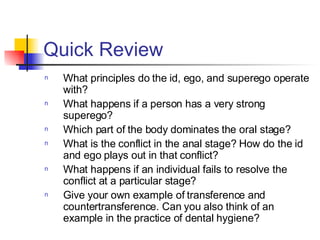
Quick Review What principles do the id, ego, and superego operate with? What happens if a person has a very strong superego? Which part of the body dominates the oral stage? What is the conflict in the anal stage? How do the id and ego plays out in that conflict? What happens if an individual fails to resolve the conflict at a particular stage? Give your own example of transference and countertransference. Can you also think of an example in the practice of dental hygiene?
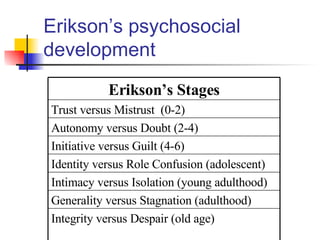
Erikson’s psychosocial development Integrity versus Despair (old age) Generality versus Stagnation (adulthood) Intimacy versus Isolation (young adulthood) Identity versus Role Confusion (adolescent) Initiative versus Guilt (4-6) Autonomy versus Doubt (2-4) Trust versus Mistrust  (0-2)  Erikson’s Stages
Freud and Erikson Compare and contrast Freud’s and Erikson’s theories.
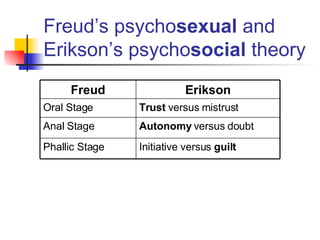
Freud’s psycho sexual  and Erikson’s psycho social  theory Erikson Freud Initiative versus  guilt Phallic Stage  Autonomy  versus doubt Anal Stage Trust  versus mistrust Oral Stage
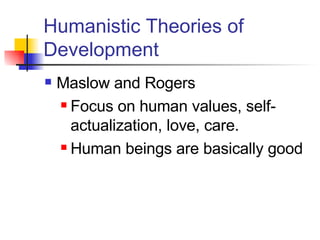
Humanistic Theories of Development Maslow and Rogers Focus on human values, self-actualization, love, care.  Human beings are basically good
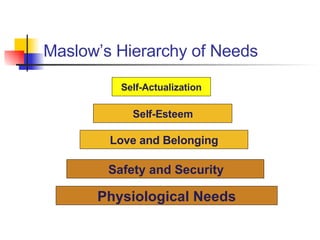
Maslow’s Hierarchy of Needs Self-Actualization Self-Esteem Love and Belonging Safety and Security Physiological Needs
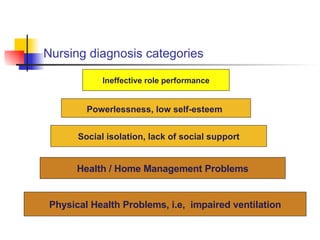
Nursing diagnosis categories Ineffective role performance Powerlessness, low self-esteem   Social isolation, lack of social support Health / Home Management Problems Physical Health Problems, i.e,  impaired ventilation
Applying Maslow’s Theory in  the Healthcare Context Maslow’s theory can be applied to:   identify a  patient’s needs prioritize healthcare interventions
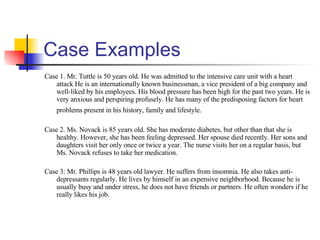
Case Examples Case 1. Mr. Tuttle is 50 years old. He was admitted to the intensive care unit with a heart attack He is an internationally known businessman, a vice president of a big company and well-liked by his employees. His blood pressure has been high for the past two years. He is very anxious and perspiring profusely. He has many of the predisposing factors for heart problems present in his history, family and lifestyle.   Case 2. Ms. Novack is 85 years old. She has moderate diabetes, but other than that she is healthy. However, she has been feeling depressed. Her spouse died recently. Her sons and daughters visit her only once or twice a year. The nurse visits her on a regular basis, but Ms. Novack refuses to take her medication. Case 3: Mr. Phillips is 48 years old lawyer. He suffers from insomnia. He also takes anti-depressants regularly. He lives by himself in an expensive neighborhood. Because he is  usually busy and under stress, he does not have friends or partners. He often wonders if he really likes his job.
Carl Rogers “ How can I provide the kind of relationship in which this person may use for personal growth?” Client-centered Approach Genuine Empathetic Understanding Unconditional acceptance
Quick Review What are the differences between the psychoanalysts and humanists? What does Maslow mean by self-actualization?  Can you discuss how the three qualities of client-centered approach figure in relationship of a client and a dental hygienist?

Psych Chap 1 Dec 12

  • 1.
    Introduction to PsychologyInstructor: Louise Lee Email: [email_address]
  • 2.
    Psychology Theories Whatis psychology? Scientific studies of mental processes and behavior Goals of psychology Describe Explain Predict Control / prescribe
  • 3.
    Two Schools ofPsychology Psychoanalysis (Freud, Erikson) VS Humanism (Rogers, Maslow)
  • 4.
    Freud’s theory ofthe human mind Id Pleasure principle (sex, aggression) Ego Reality principle (reason) Superego Moral principle (social norms & values)
  • 5.
    Freud’s theory ofmotivation The unconscious: feelings, wishes, desires, repressed memories Behavior is motivated by the unconscious
  • 6.
    Freud’s psychosexual developmentGenital Stage ~ over 12 Latency Stage ~ 6-12 Phallic Stage ~ 4-6 Anal Stage ~ 2-4 Oral Stage ~ 0 – 2 Stages of Development Age
  • 7.
    Oral Stage 0-2years old Mouth Sucking, chewing Frustration distrustful, pessimistic Overindulgence gullible, too optimistic
  • 8.
    Anal Stage 2-4years old Anus, bladder Toilet training Conflict: Retain and release bodily waste Frustration anal retentive Over-indulgence anal explosive
  • 9.
    Phallic Stage 4-6years old the genitals Conflict: masturbate vs guilt and shame Boy’s conflict: Oedipal Complex Resolution: Castration anxiety Girl’s conflict: Electra Complex, penis envy Frustration Incapable of love, insecure Over-indulgence vain, proud
  • 10.
    Latency Stage &Genital Stage Latency 6-12 years old Sexual desires lie dormant Genital Above 12 years old Refocus on genitals Develop intimate relationships
  • 11.
    Frustration & OverindulgenceFrustration Over-indulgence Fixation: an individual gets stuck at a particular stage of development Mental health issues
  • 12.
    Transference & CountertransferenceTransference Project irrational feelings and attitudes from the past onto people in the present. Countertransference Unconscious attitudes that a therapist or a nurse develops towards a client in response to a client’s behavior.
  • 13.
    Quick Review Whatprinciples do the id, ego, and superego operate with? What happens if a person has a very strong superego? Which part of the body dominates the oral stage? What is the conflict in the anal stage? How do the id and ego plays out in that conflict? What happens if an individual fails to resolve the conflict at a particular stage? Give your own example of transference and countertransference. Can you also think of an example in the practice of dental hygiene?
  • 14.
    Erikson’s psychosocial developmentIntegrity versus Despair (old age) Generality versus Stagnation (adulthood) Intimacy versus Isolation (young adulthood) Identity versus Role Confusion (adolescent) Initiative versus Guilt (4-6) Autonomy versus Doubt (2-4) Trust versus Mistrust (0-2) Erikson’s Stages
  • 15.
    Freud and EriksonCompare and contrast Freud’s and Erikson’s theories.
  • 16.
    Freud’s psycho sexual and Erikson’s psycho social theory Erikson Freud Initiative versus guilt Phallic Stage Autonomy versus doubt Anal Stage Trust versus mistrust Oral Stage
  • 17.
    Humanistic Theories ofDevelopment Maslow and Rogers Focus on human values, self-actualization, love, care. Human beings are basically good
  • 18.
    Maslow’s Hierarchy ofNeeds Self-Actualization Self-Esteem Love and Belonging Safety and Security Physiological Needs
  • 19.
    Nursing diagnosis categoriesIneffective role performance Powerlessness, low self-esteem Social isolation, lack of social support Health / Home Management Problems Physical Health Problems, i.e, impaired ventilation
  • 20.
    Applying Maslow’s Theoryin the Healthcare Context Maslow’s theory can be applied to: identify a patient’s needs prioritize healthcare interventions
  • 21.
    Case Examples Case1. Mr. Tuttle is 50 years old. He was admitted to the intensive care unit with a heart attack He is an internationally known businessman, a vice president of a big company and well-liked by his employees. His blood pressure has been high for the past two years. He is very anxious and perspiring profusely. He has many of the predisposing factors for heart problems present in his history, family and lifestyle. Case 2. Ms. Novack is 85 years old. She has moderate diabetes, but other than that she is healthy. However, she has been feeling depressed. Her spouse died recently. Her sons and daughters visit her only once or twice a year. The nurse visits her on a regular basis, but Ms. Novack refuses to take her medication. Case 3: Mr. Phillips is 48 years old lawyer. He suffers from insomnia. He also takes anti-depressants regularly. He lives by himself in an expensive neighborhood. Because he is usually busy and under stress, he does not have friends or partners. He often wonders if he really likes his job.
  • 22.
    Carl Rogers “How can I provide the kind of relationship in which this person may use for personal growth?” Client-centered Approach Genuine Empathetic Understanding Unconditional acceptance
  • 23.
    Quick Review Whatare the differences between the psychoanalysts and humanists? What does Maslow mean by self-actualization? Can you discuss how the three qualities of client-centered approach figure in relationship of a client and a dental hygienist?