Interpersonal theory
PRESENTED BY-
MR.PANKAJ SINGH
SHEKHAWAT
BOOKS BY HARRY STACK SULLIVAN
• Personal Psychopathology.
• Conceptions of Modern Psychiatry.
• The Interpersonal Theory of Psychiatry.
• The Psychiatric Interview.
• Schizophrenia as a Human Process.
definition
According to Vacarolis, it is
defined as “the process of
developing trustworthy
relationship that involves the
interaction between two or
more people”.
Behavioural deviations
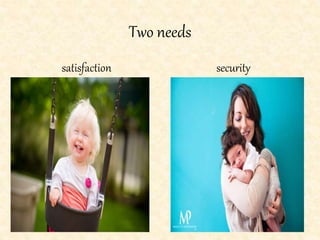
Two needs
satisfaction security
Major concept
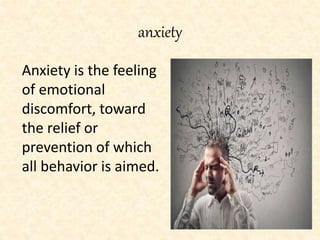
anxiety
Anxiety is the feeling
of emotional
discomfort, toward
the relief or
prevention of which
all behavior is aimed.
Satisfaction of needs
Satisfaction of
needs is the
fulfillment of all
requirements
associated with an
individual’s
psychochemical
environment.
Interpersonal security
Interpersonal Security
is the feeling
associated with the
relief from anxiety. He
believed individuals
have an innate need
for interpersonal
security.
Self esteem
• Good me - Good me is
the part of personality
that develop in the
response to positive
feedback from the
primary caregiver
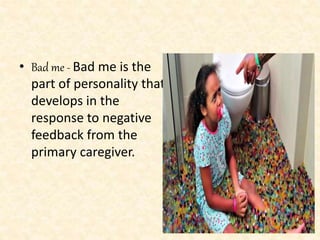
• Bad me - Bad me is the
part of personality that
develops in the
response to negative
feedback from the
primary caregiver.
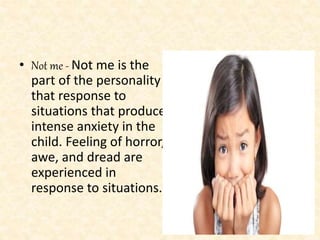
• Not me - Not me is the
part of the personality
that response to
situations that produce
intense anxiety in the
child. Feeling of horror,
awe, and dread are
experienced in
response to situations.
Level of cognition
prototaxic
• Stream of consciousness
e.g. sensations, images,
feelings that flow
through the mind. Purest
form will be observed in
early months of life.
Experiences that are
impossible to put into
words or to
communicate to others
are called prototaxic.
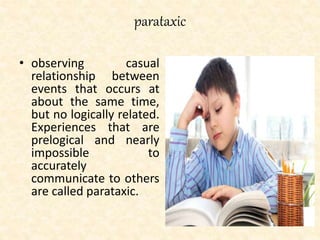
parataxic
• observing casual
relationship between
events that occurs at
about the same time,
but no logically related.
Experiences that are
prelogical and nearly
impossible to
accurately
communicate to others
are called parataxic.
syntaxic
• Consensually validated
symbol acclivity, verbal in
nature, produces logical
order among experience
and enable people to
communicate with one
another. Experiences that
can be accurately
communicated to others
called syntaxic.
principals
Interpersonal relationship and personality
development
• In this development Sullivan was concerned
with anxiety arousing aspects of development
of interpersonal relationships during early
development. Since the infant completely
dependent on significant others for meeting
all physical and psychological needs lack of
love and care lead to an insecure and anxious
human being.
Social exchange, roles and games
• Three ways of viewing our relationship with
other people will helpful in understanding
both satisfying and hurtful interactions.
• Each person in the relationship wants
something from the other and the exchange
that results is essentially a trading or
bargaining one.
Interpersonal accomodation
• It is the process where by two persons evolve
patterns or communication and interaction
that enable to attain common goals, meet
mutual needs and build a satisfying
relationship.
Stages of personality
development
Infancy (Birth-18 months)
• GRATIFICATION OF NEEDS – During the
beginning stage, the major developmental
task for the child is the gratification of needs.
This is accomplished through activity
associated with the mouth such as crying,
thumb sucking.
Childhood (18 mo-6 yrs)
• DELAYED GRATIFICATION - At ages 18 month
to 6 years, the child learns that interference
with fulfillment of personal wishes and desires
may result in the delayed gratification.
Juvenile era(6-9 yrs)
• FORMATION OF PEER GROUP - The major task
of juvenile stage is formation of satisfactory
relationships within peer groups. This is
accomplished through the use of competition,
co-operation, and compromise.
Preadolescence (9-12 yrs)
• DEVELOPING RELATIONSHIPS WITHIN SAME
GENDER - The task at the Preadolescence
stage focus on developing relationships with
persons of the same sex. One’s ability to
collaborate with and show love and affection
for another person begins at this stage.
Early Adolescence (12-14 yrs)
• IDENTITY - During early adolescence, the child
is struggling with developing a sense of
identity that is separate and independent
from the parents. The major task is the
formation of satisfactory relationships with
members of the opposite sex.
Late Adolescence (14-21 yrs)
• FORMING LASTING, INTIMATE
RELATIONSHIPS - The late adolescence period
is characterized by tasks associated with the
attempt to achieve interdependence with the
society and the formation of a lasting,
intimate relationship with a selected member
of opposite sex.
Factors influencing
the Interpersonal
Communication
• VALUES, ATTITUDES AND BELIEFS - Values,
attitudes and beliefs can influence
interpersonal communication.
• CULTURE OR RELIGION - : Culture values are
learned and differ from society to society.
• For example: In some European countries men
may great each other with hugs and kisses.
This behavior was appropriate in those
cultures but would communicate a different
message in the United States.
• SOCIAL STATUS - Social status or powers have
suggested that high status persons are
associated with gestures communicate their
higher power position.
• GENDER - Gender influences the manner in
which the individuals communicate. Each
culture has gender signals that are recognized
as either masculine or feminine and provide a
basis for distinguishing between members of
each sex.
• AGE - Age influences the interpersonal
communication and it is more evident than
during adolescence. In their struggle to
separate from prenatal confines and establish
their own identify adolescents generate a
pattern of communication that is unique and
changes from generation to generation.
• ENVIRONMENT – Some individuals who feel
uncomfortable and refuse to speak during a
group therapy session may be open and
willing to discuss problems privately on a one-
to-one basis with the nurse.
RELEVANCE OF INTERPERSONAL
THEORY TO NURSING PRACTICE:
• It has a significance relevance to nursing
practice. Nurses develop therapeutic
relationships with clients in an effort to help
them generalize this ability to interact
successfully with others.
• Nurses use the concepts of sullivan’s theory to
help clients achieve a higher degree of
independent and interpersonal functioning.
CONCLUSION
• The interpersonal model is handicapped by
incomplete information concerning most
aspects of interpersonal relationship. As a
result many of Sullivan’s concepts and those
of later investigators lack of limitations,
however the interpersonal model has served
to focus attention on the quality of the
individuals close personal relationships as a
key factor in determining whether behavior
will be effective or maladaptive.
assignment
Write down the major concept of
interpersonal theory and submitted on
13/04/2017 at 12:00 PM
Interpersonal theory

Interpersonal theory

  • 1.
  • 3.
    BOOKS BY HARRYSTACK SULLIVAN • Personal Psychopathology. • Conceptions of Modern Psychiatry. • The Interpersonal Theory of Psychiatry. • The Psychiatric Interview. • Schizophrenia as a Human Process.
  • 4.
    definition According to Vacarolis,it is defined as “the process of developing trustworthy relationship that involves the interaction between two or more people”.
  • 5.
  • 6.
  • 7.
  • 8.
    anxiety Anxiety is thefeeling of emotional discomfort, toward the relief or prevention of which all behavior is aimed.
  • 9.
    Satisfaction of needs Satisfactionof needs is the fulfillment of all requirements associated with an individual’s psychochemical environment.
  • 10.
    Interpersonal security Interpersonal Security isthe feeling associated with the relief from anxiety. He believed individuals have an innate need for interpersonal security.
  • 11.
    Self esteem • Goodme - Good me is the part of personality that develop in the response to positive feedback from the primary caregiver
  • 12.
    • Bad me- Bad me is the part of personality that develops in the response to negative feedback from the primary caregiver.
  • 13.
    • Not me- Not me is the part of the personality that response to situations that produce intense anxiety in the child. Feeling of horror, awe, and dread are experienced in response to situations.
  • 14.
  • 15.
    prototaxic • Stream ofconsciousness e.g. sensations, images, feelings that flow through the mind. Purest form will be observed in early months of life. Experiences that are impossible to put into words or to communicate to others are called prototaxic.
  • 16.
    parataxic • observing casual relationshipbetween events that occurs at about the same time, but no logically related. Experiences that are prelogical and nearly impossible to accurately communicate to others are called parataxic.
  • 17.
    syntaxic • Consensually validated symbolacclivity, verbal in nature, produces logical order among experience and enable people to communicate with one another. Experiences that can be accurately communicated to others called syntaxic.
  • 18.
  • 19.
    Interpersonal relationship andpersonality development • In this development Sullivan was concerned with anxiety arousing aspects of development of interpersonal relationships during early development. Since the infant completely dependent on significant others for meeting all physical and psychological needs lack of love and care lead to an insecure and anxious human being.
  • 20.
    Social exchange, rolesand games • Three ways of viewing our relationship with other people will helpful in understanding both satisfying and hurtful interactions. • Each person in the relationship wants something from the other and the exchange that results is essentially a trading or bargaining one.
  • 21.
    Interpersonal accomodation • Itis the process where by two persons evolve patterns or communication and interaction that enable to attain common goals, meet mutual needs and build a satisfying relationship.
  • 22.
  • 23.
    Infancy (Birth-18 months) •GRATIFICATION OF NEEDS – During the beginning stage, the major developmental task for the child is the gratification of needs. This is accomplished through activity associated with the mouth such as crying, thumb sucking.
  • 24.
    Childhood (18 mo-6yrs) • DELAYED GRATIFICATION - At ages 18 month to 6 years, the child learns that interference with fulfillment of personal wishes and desires may result in the delayed gratification.
  • 25.
    Juvenile era(6-9 yrs) •FORMATION OF PEER GROUP - The major task of juvenile stage is formation of satisfactory relationships within peer groups. This is accomplished through the use of competition, co-operation, and compromise.
  • 26.
    Preadolescence (9-12 yrs) •DEVELOPING RELATIONSHIPS WITHIN SAME GENDER - The task at the Preadolescence stage focus on developing relationships with persons of the same sex. One’s ability to collaborate with and show love and affection for another person begins at this stage.
  • 27.
    Early Adolescence (12-14yrs) • IDENTITY - During early adolescence, the child is struggling with developing a sense of identity that is separate and independent from the parents. The major task is the formation of satisfactory relationships with members of the opposite sex.
  • 28.
    Late Adolescence (14-21yrs) • FORMING LASTING, INTIMATE RELATIONSHIPS - The late adolescence period is characterized by tasks associated with the attempt to achieve interdependence with the society and the formation of a lasting, intimate relationship with a selected member of opposite sex.
  • 29.
  • 30.
    • VALUES, ATTITUDESAND BELIEFS - Values, attitudes and beliefs can influence interpersonal communication.
  • 31.
    • CULTURE ORRELIGION - : Culture values are learned and differ from society to society. • For example: In some European countries men may great each other with hugs and kisses. This behavior was appropriate in those cultures but would communicate a different message in the United States.
  • 32.
    • SOCIAL STATUS- Social status or powers have suggested that high status persons are associated with gestures communicate their higher power position.
  • 33.
    • GENDER -Gender influences the manner in which the individuals communicate. Each culture has gender signals that are recognized as either masculine or feminine and provide a basis for distinguishing between members of each sex.
  • 34.
    • AGE -Age influences the interpersonal communication and it is more evident than during adolescence. In their struggle to separate from prenatal confines and establish their own identify adolescents generate a pattern of communication that is unique and changes from generation to generation.
  • 35.
    • ENVIRONMENT –Some individuals who feel uncomfortable and refuse to speak during a group therapy session may be open and willing to discuss problems privately on a one- to-one basis with the nurse.
  • 36.
    RELEVANCE OF INTERPERSONAL THEORYTO NURSING PRACTICE: • It has a significance relevance to nursing practice. Nurses develop therapeutic relationships with clients in an effort to help them generalize this ability to interact successfully with others. • Nurses use the concepts of sullivan’s theory to help clients achieve a higher degree of independent and interpersonal functioning.
  • 37.
    CONCLUSION • The interpersonalmodel is handicapped by incomplete information concerning most aspects of interpersonal relationship. As a result many of Sullivan’s concepts and those of later investigators lack of limitations, however the interpersonal model has served to focus attention on the quality of the individuals close personal relationships as a key factor in determining whether behavior will be effective or maladaptive.

  • 38.

    assignment Write down themajor concept of interpersonal theory and submitted on 13/04/2017 at 12:00 PM