Presented By :
     Qurrot Ulain Taher
        (B.Sc-IInd Yr)
St. Ann’S College for Women.
St.Ann's Degree College for Women
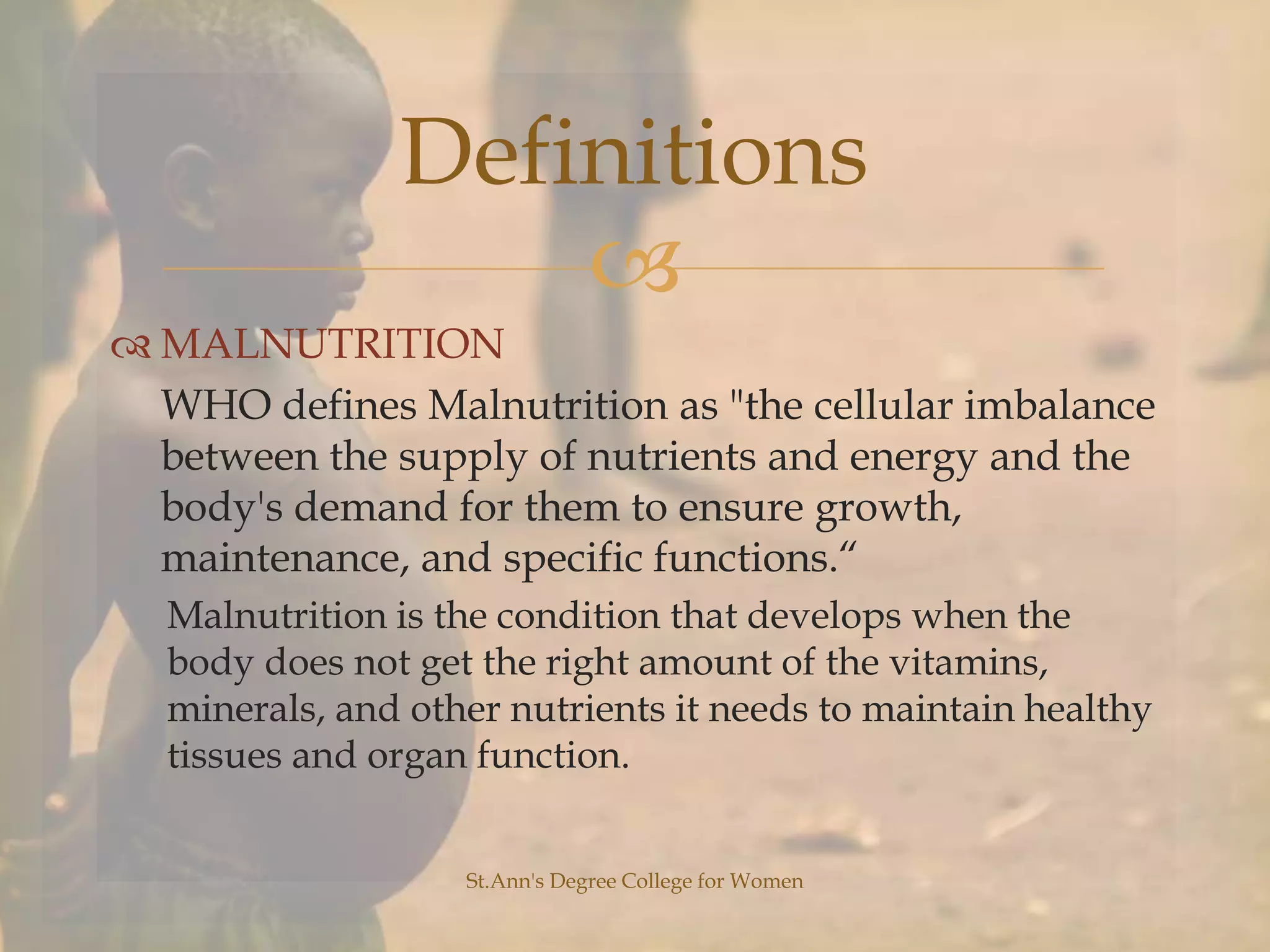
Definitions
                   
 MALNUTRITION
  WHO defines Malnutrition as "the cellular imbalance
  between the supply of nutrients and energy and the
  body's demand for them to ensure growth,
  maintenance, and specific functions.“
  Malnutrition is the condition that develops when the
  body does not get the right amount of the vitamins,
  minerals, and other nutrients it needs to maintain healthy
  tissues and organ function.


                   St.Ann's Degree College for Women
 PROTEIN ENERGY MALNUTRITION
  It is a group of body depletion disorders which
  include kwashiorkor, marasmus and the intermediate
  stages
 MARASMUS
  Represents simple starvation . The body adapts to a
  chronic state of insufficient caloric intake
 KWASHIORKOR
  It is the body’s response to insufficient protein intake
  but usually sufficient calories for energy


                   St.Ann's Degree College for Women
DESCRIPTION


St.Ann's Degree College for Women
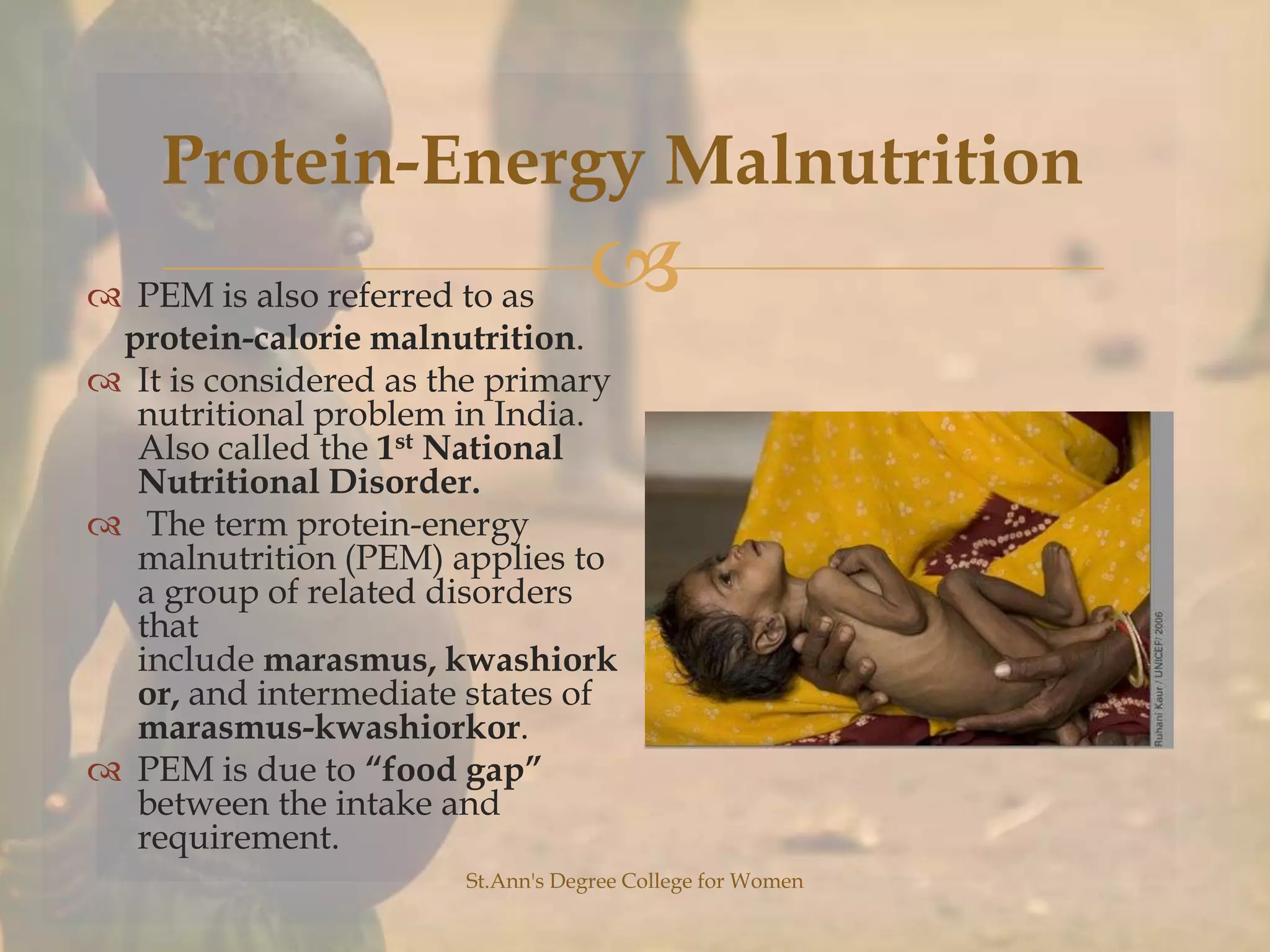
Protein-Energy Malnutrition
 PEM is also referred to as      
 protein-calorie malnutrition.
 It is considered as the primary
  nutritional problem in India.
  Also called the 1st National
  Nutritional Disorder.
 The term protein-energy
  malnutrition (PEM) applies to
  a group of related disorders
  that
  include marasmus, kwashiork
  or, and intermediate states of
  marasmus-kwashiorkor.
 PEM is due to “food gap”
  between the intake and
  requirement.
                       St.Ann's Degree College for Women
AETIOLOGY


St.Ann's Degree College for Women
AETIOLOGY:
Different combinations of many aetiological
factors can lead to PEM in children. They are:
Social and Economic Factors
Biological factors
Environmental factors
Role of Free Radicals & Aflatoxin
Age of the Host


                St.Ann's Degree College for Women
 Amongst the Social, Economic, Biological and
  Environmental Factors the common causes are:
     Lack of breast feeding and giving diluted formula
     Improper complementary feeding
     Over crowding in family
     Ignorance
     Illiteracy
     Lack of health education
     Poverty
     Infection
     Familial disharmony


                    St.Ann's Degree College for Women
 Role of Free Radicals & Aflatoxin: Two new theories
  have been postulated recently to explain the
  pathogenesis of kwashiorkor. These include Free
  Radical Damage & Aflatoxin Poisoning . These may
  damage liver cells giving rise to kwashiorkor.
 Age Of Host :
 Frequent in Infants & young children whose rapid
  growth increases nutritional requirement.
 PEM in pregnant and lactating women can affect the
  growth, nutritional status & survival rates of their
  fetuses, new born and infants.
 Elderly can also suffer from PEM due to alteration of
  GI System
                  St.Ann's Degree College for Women
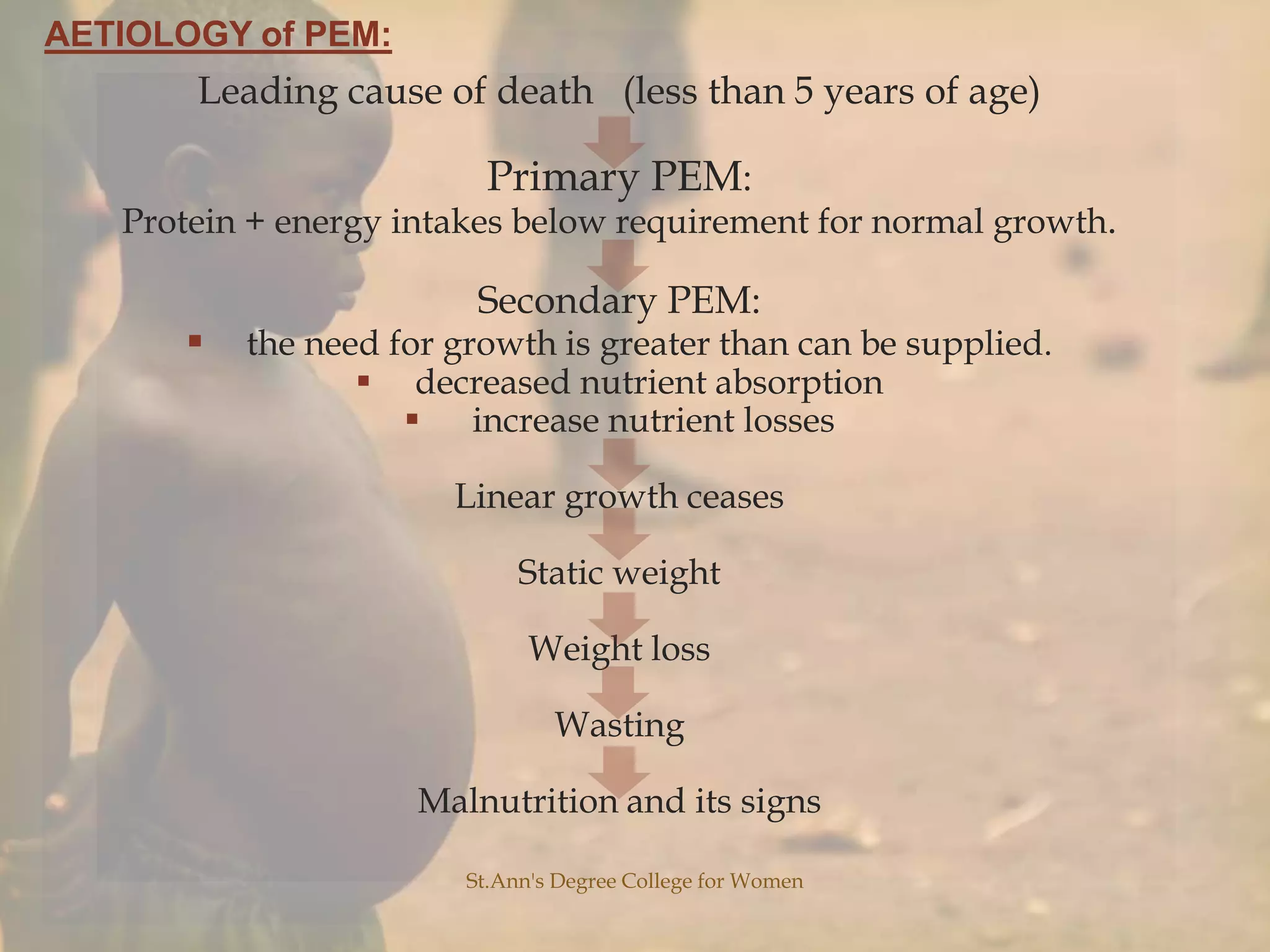
AETIOLOGY of PEM:
       Leading cause of death (less than 5 years of age)

                          Primary PEM:
   Protein + energy intakes below requirement for normal growth.

                         Secondary PEM:
         the need for growth is greater than can be supplied.
                  decreased nutrient absorption
                     increase nutrient losses

                       Linear growth ceases

                             Static weight

                              Weight loss

                                Wasting

                     Malnutrition and its signs

                        St.Ann's Degree College for Women
PREVALENCE


St.Ann's Degree College for Women
PREVALENCE:
•   Protein-energy
    malnutrition is a basic
    lack of food (from
    famine) and a major
    cause of infant
    mortality and
    morbidity worldwide.


•   Protein-energy
    malnutrition caused
    0.46% of all deaths
    worldwide in 2002, an
    average of 42 deaths
    per million people per
    year.


                              St.Ann's Degree College for Women
Child Malnutrition in
                                                                             India
                                                                           2005-2006


                                                                         Urban   36.4

                                                                         Rural   49.0

 Malnutrition is the direct St.Ann's Degree College for Women 50% of deaths in children.
                             or indirect cause of more
 PEM is a silent killer in many children.
CLINICAL FEATURES


 St.Ann's Degree College for Women
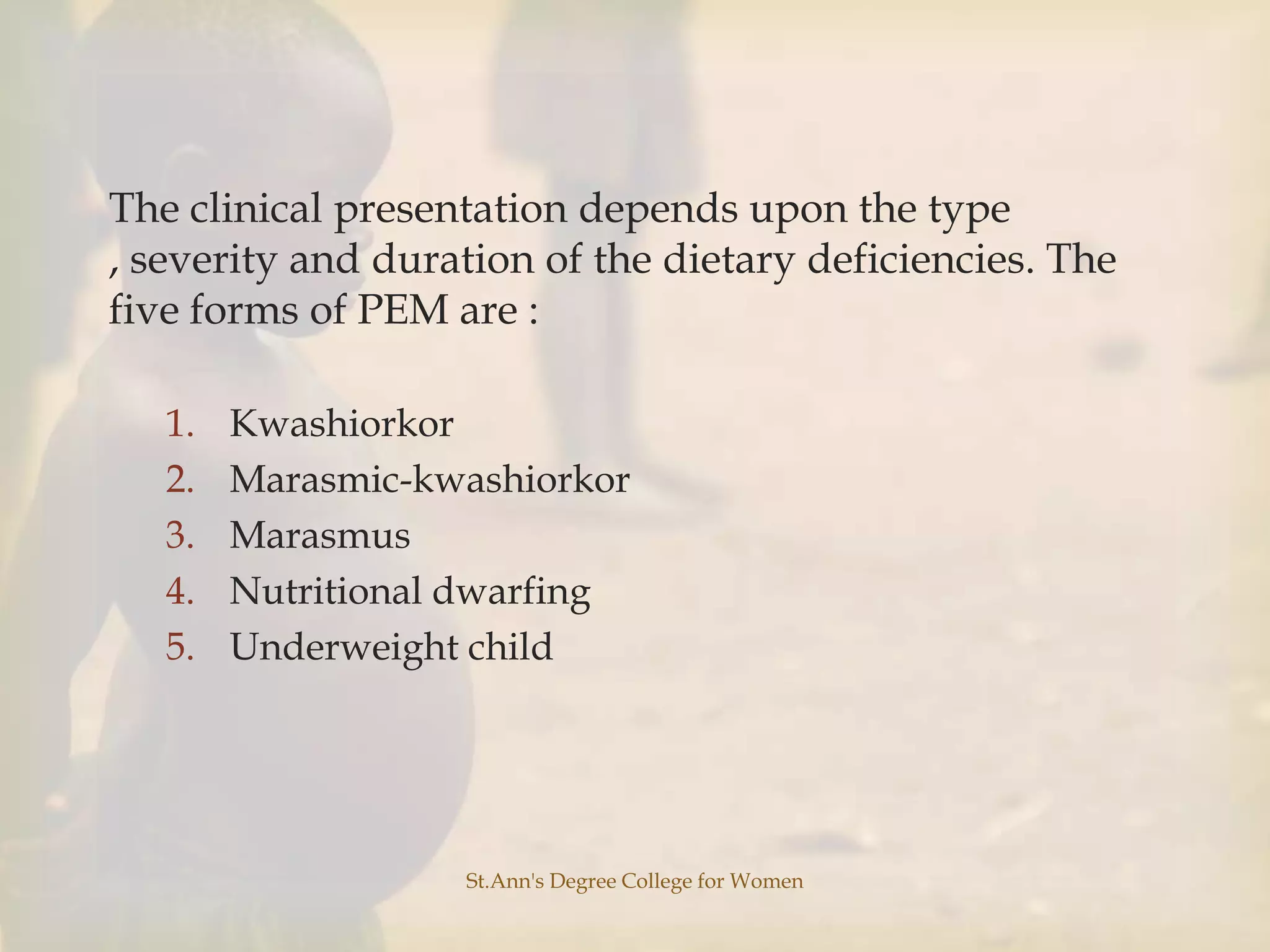
The clinical presentation depends upon the type
, severity and duration of the dietary deficiencies. The
five forms of PEM are :

   1.   Kwashiorkor
   2.   Marasmic-kwashiorkor
   3.   Marasmus
   4.   Nutritional dwarfing
   5.   Underweight child


                   St.Ann's Degree College for Women
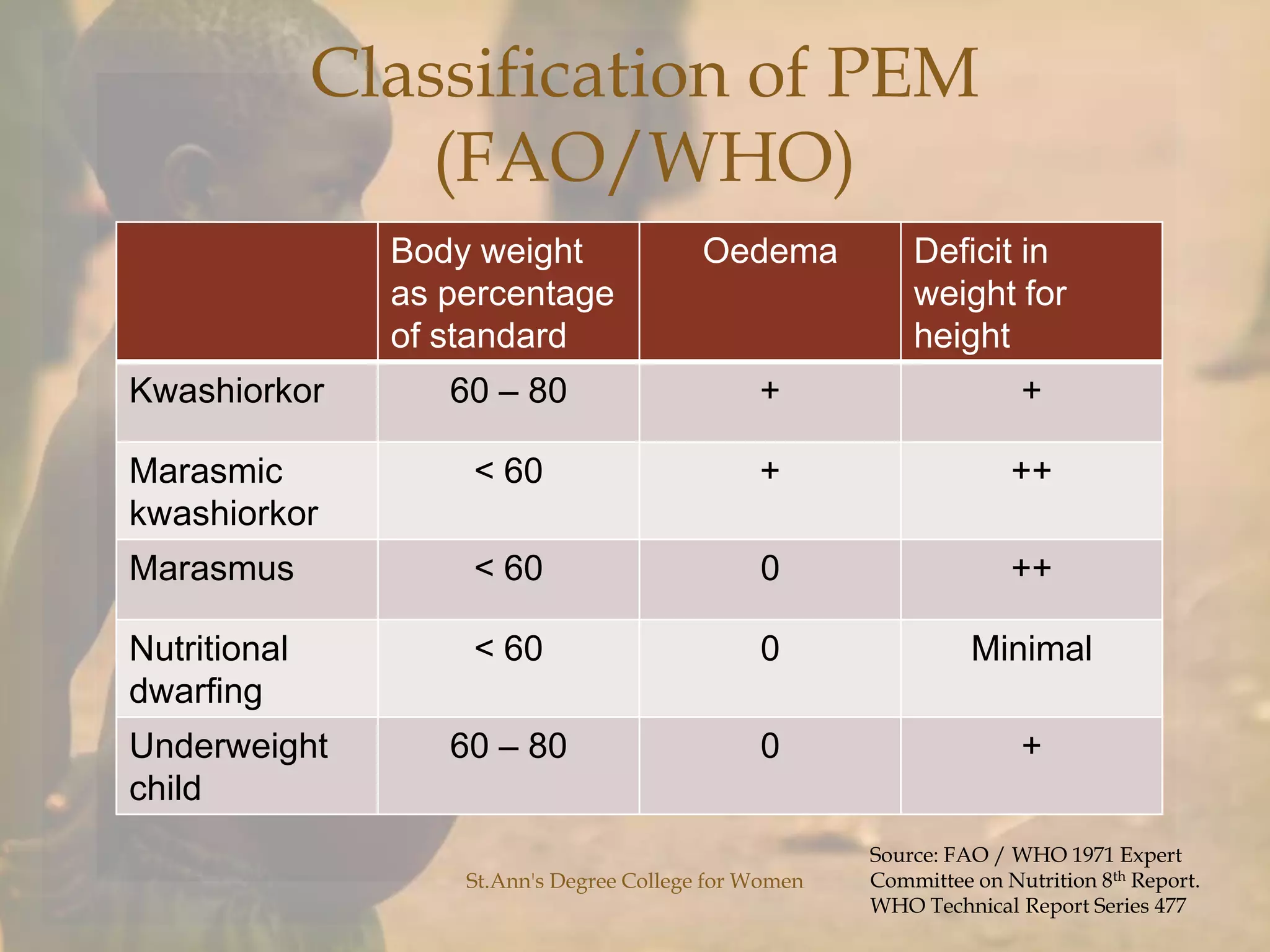
Classification of PEM
                  (FAO/WHO)
                Body weight
                as percentage             Oedema           Deficit in
                                                            weight for
                of standard                                 height
Kwashiorkor        60 – 80                      +                      +

Marasmic            < 60                        +                     ++
kwashiorkor
Marasmus            < 60                        0                     ++

Nutritional         < 60                        0                 Minimal
dwarfing
Underweight        60 – 80                      0                      +
child
                                                        Source: FAO / WHO 1971 Expert
                    St.Ann's Degree College for Women   Committee on Nutrition 8th Report.
                                                        WHO Technical Report Series 477
KWASHIORKOR
             
 The term kwashiorkor is taken from the Ga language of
  Ghana and means "the sickness of the weaning”.
 Williams first used the term in 1933, and it refers to an
  inadequate protein intake with reasonable caloric
  (energy) intake.
 Kwashiorkor, also called wet protein-energy
  malnutrition, is a form of PEM characterized primarily by
  protein deficiency.
 This condition usually appears at the age of about 12
  months when breastfeeding is discontinued, but it can
  develop at any time during a child's formative years.
 It causes fluid retention (edema); dry, peeling skin; and
  hair discoloration.
                    St.Ann's Degree College for Women
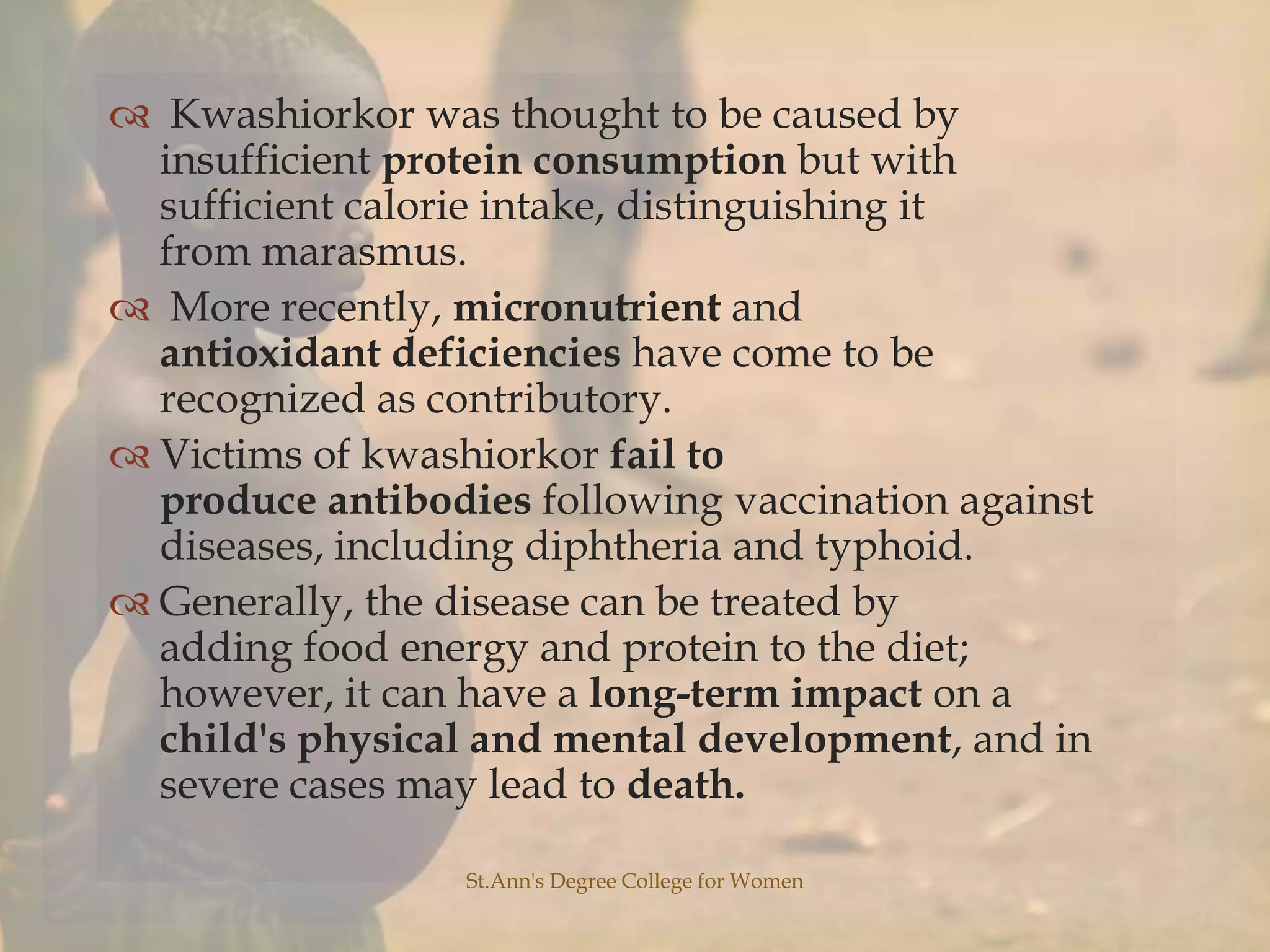
 Kwashiorkor was thought to be caused by
  insufficient protein consumption but with
  sufficient calorie intake, distinguishing it
  from marasmus.
 More recently, micronutrient and
  antioxidant deficiencies have come to be
  recognized as contributory.
 Victims of kwashiorkor fail to
  produce antibodies following vaccination against
  diseases, including diphtheria and typhoid.
 Generally, the disease can be treated by
  adding food energy and protein to the diet;
  however, it can have a long-term impact on a
  child's physical and mental development, and in
  severe cases may lead to death.

                  St.Ann's Degree College for Women
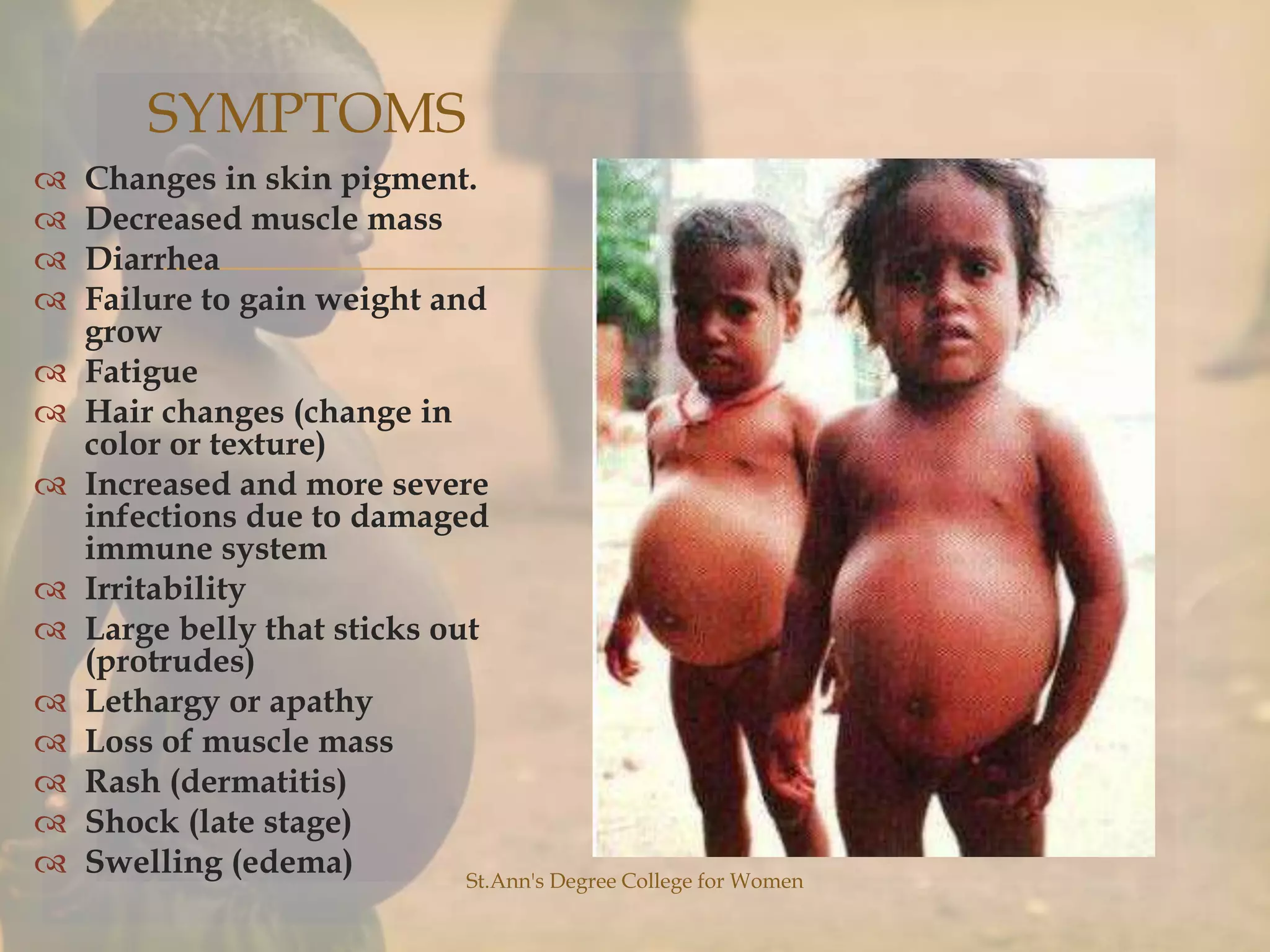
SYMPTOMS
   Changes in skin pigment.
   Decreased muscle mass


    Diarrhea
    Failure to gain weight and
                                             
    grow
   Fatigue
   Hair changes (change in
    color or texture)
   Increased and more severe
    infections due to damaged
    immune system
   Irritability
   Large belly that sticks out
    (protrudes)
   Lethargy or apathy
   Loss of muscle mass
   Rash (dermatitis)
   Shock (late stage)
   Swelling (edema)          St.Ann's Degree College for Women
St.Ann's Degree College for Women
MARASMUS
                
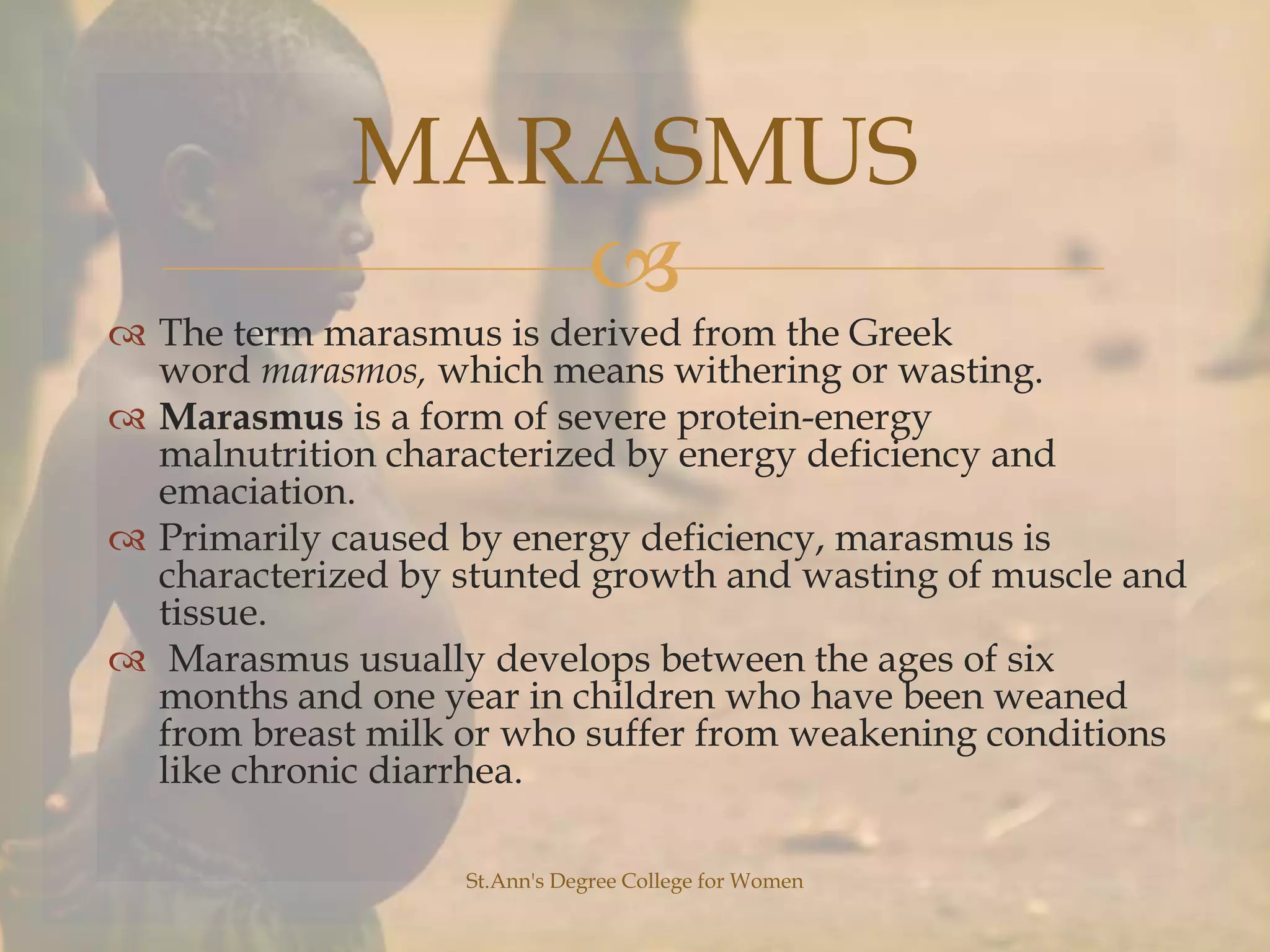
 The term marasmus is derived from the Greek
  word marasmos, which means withering or wasting.
 Marasmus is a form of severe protein-energy
  malnutrition characterized by energy deficiency and
  emaciation.
 Primarily caused by energy deficiency, marasmus is
  characterized by stunted growth and wasting of muscle and
  tissue.
 Marasmus usually develops between the ages of six
  months and one year in children who have been weaned
  from breast milk or who suffer from weakening conditions
  like chronic diarrhea.

                   St.Ann's Degree College for Women
SYMPTOMS
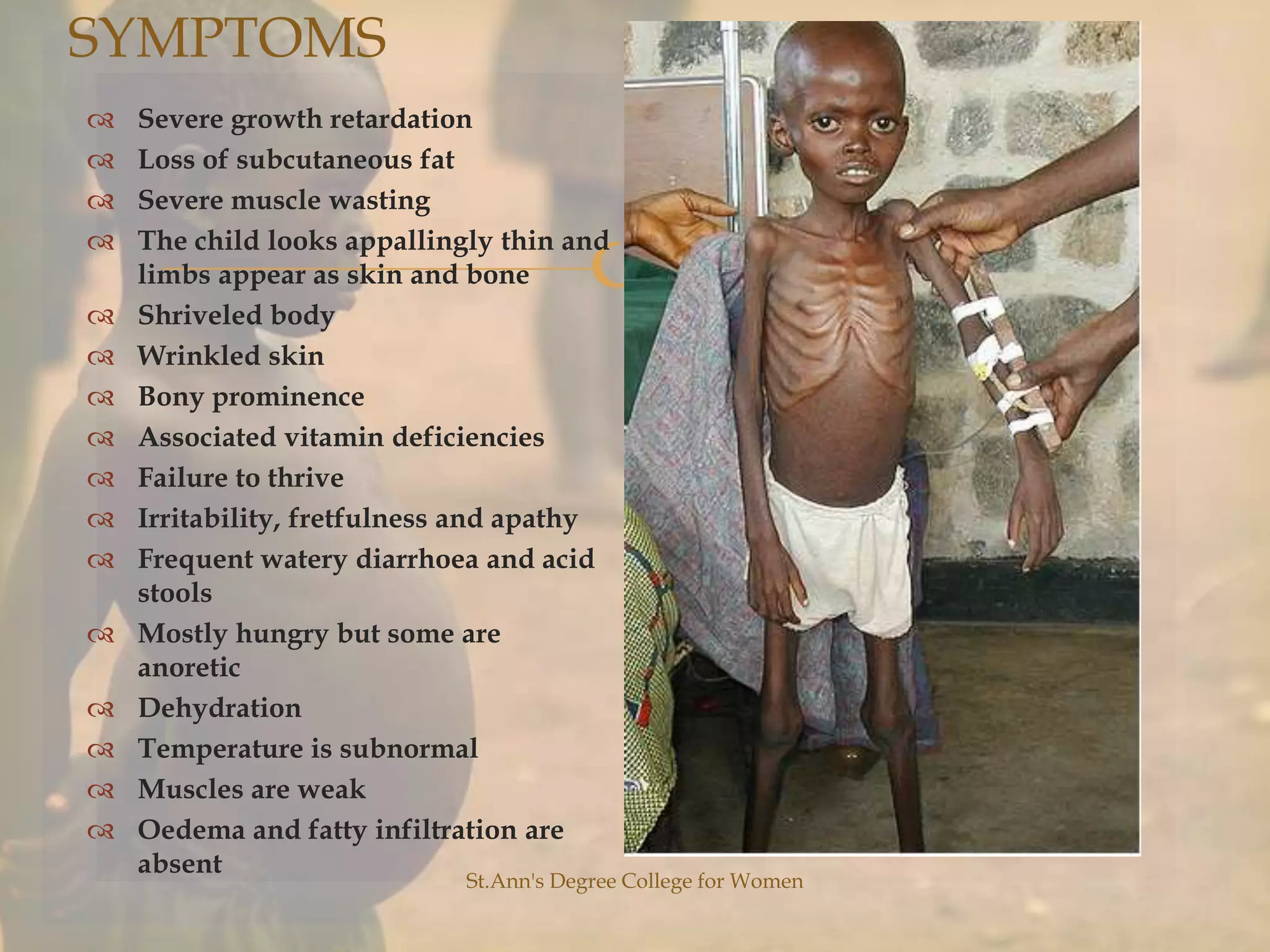
   Severe growth retardation
   Loss of subcutaneous fat
   Severe muscle wasting



    The child looks appallingly thin and
    limbs appear as skin and bone
    Shriveled body
                                        
   Wrinkled skin
   Bony prominence
   Associated vitamin deficiencies
   Failure to thrive
   Irritability, fretfulness and apathy
   Frequent watery diarrhoea and acid
    stools
   Mostly hungry but some are
    anoretic
   Dehydration
   Temperature is subnormal
   Muscles are weak
   Oedema and fatty infiltration are
    absent
                             St.Ann's Degree College for Women
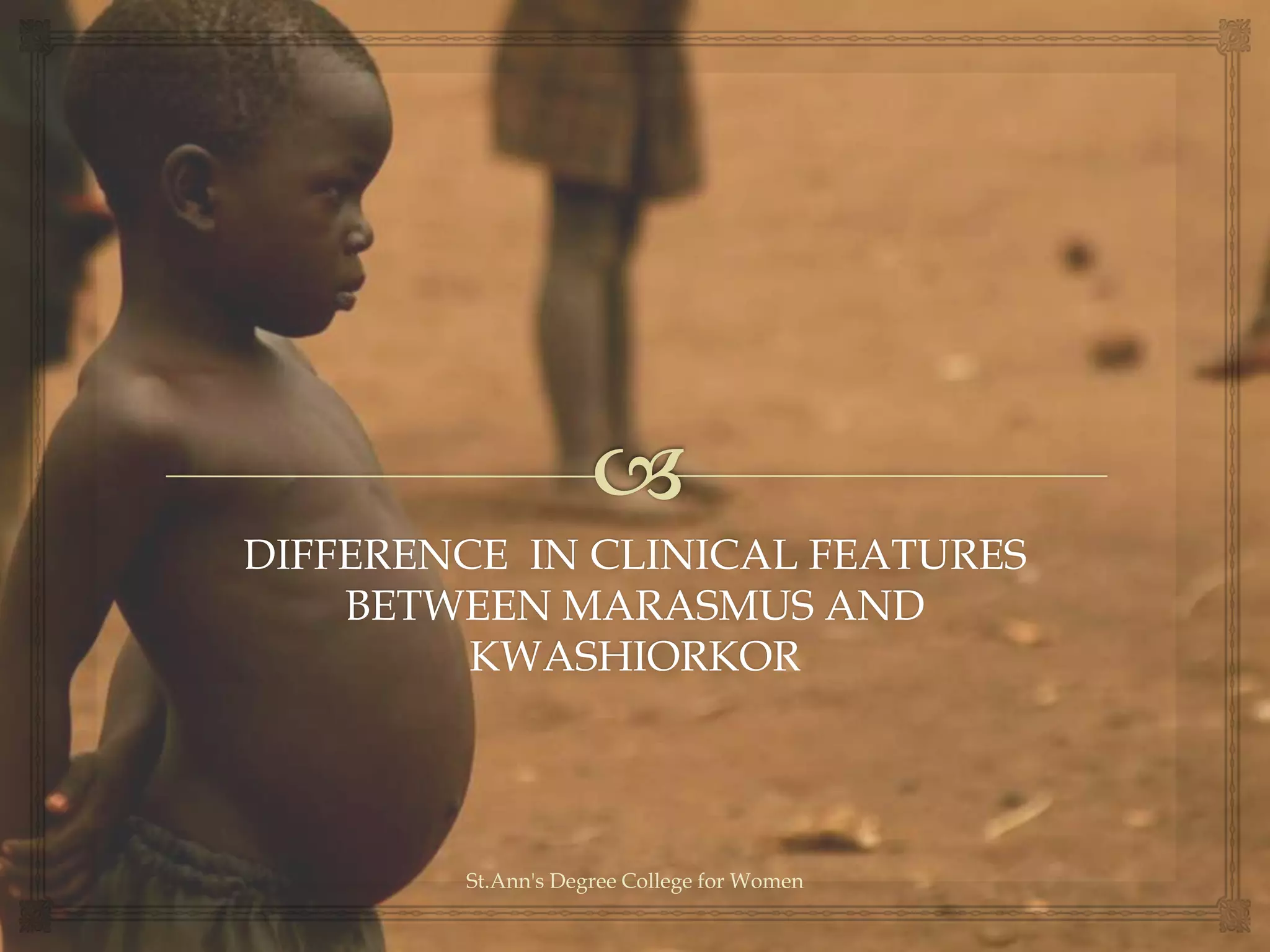
DIFFERENCE IN CLINICAL FEATURES
    BETWEEN MARASMUS AND
         KWASHIORKOR


        St.Ann's Degree College for Women
St.Ann's Degree College for Women
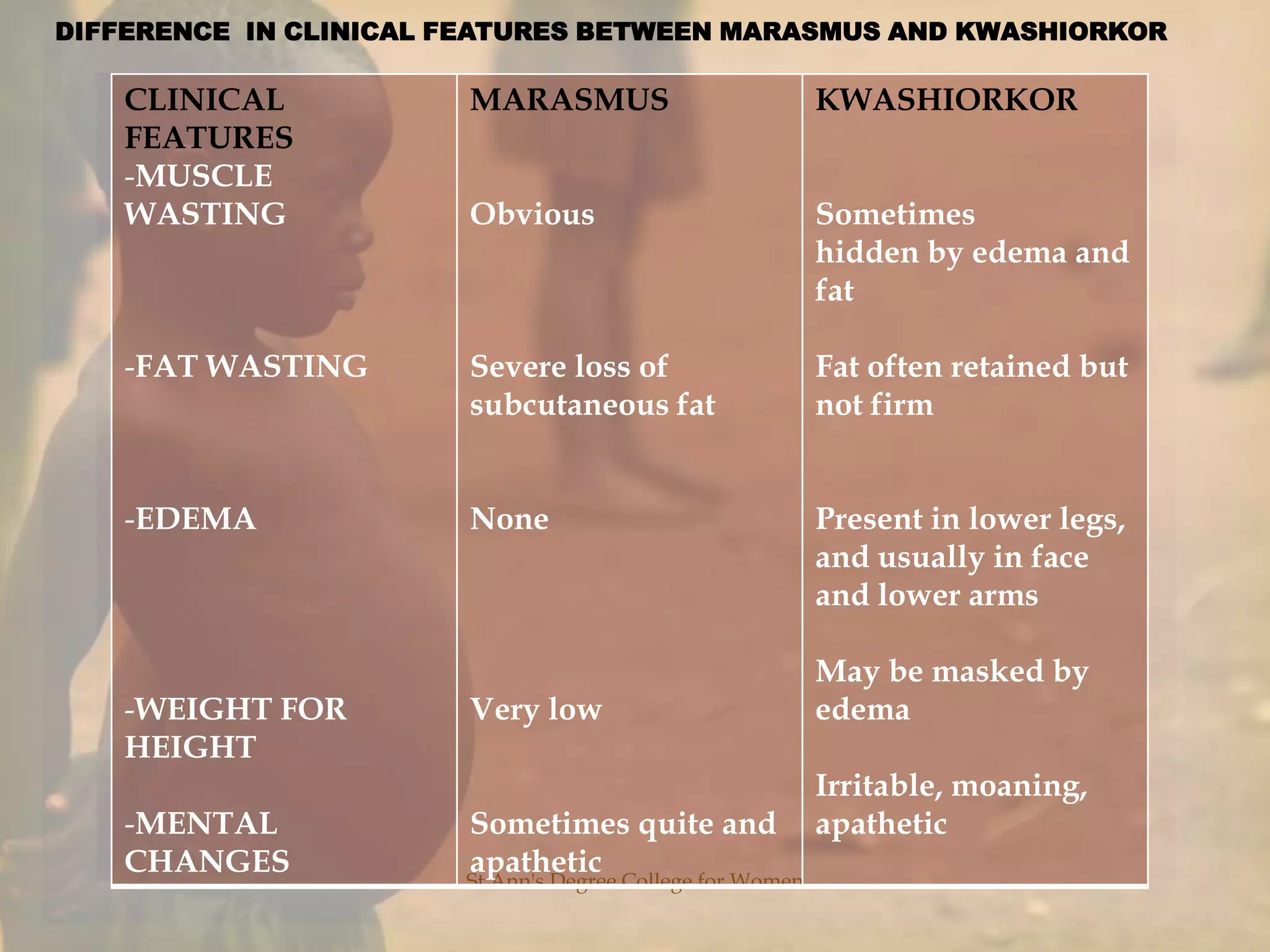
DIFFERENCE IN CLINICAL FEATURES BETWEEN MARASMUS AND KWASHIORKOR

   CLINICAL            MARASMUS                            KWASHIORKOR
   FEATURES
   -MUSCLE
   WASTING             Obvious                             Sometimes
                                                           hidden by edema and
                                                           fat

   -FAT WASTING        Severe loss of                      Fat often retained but
                       subcutaneous fat                    not firm


   -EDEMA              None                                Present in lower legs,
                                                           and usually in face
                                                           and lower arms

                                                           May be masked by
   -WEIGHT FOR         Very low                            edema
   HEIGHT
                                                           Irritable, moaning,
   -MENTAL             Sometimes quite and                 apathetic
   CHANGES             apathetic
                       St.Ann's Degree College for Women
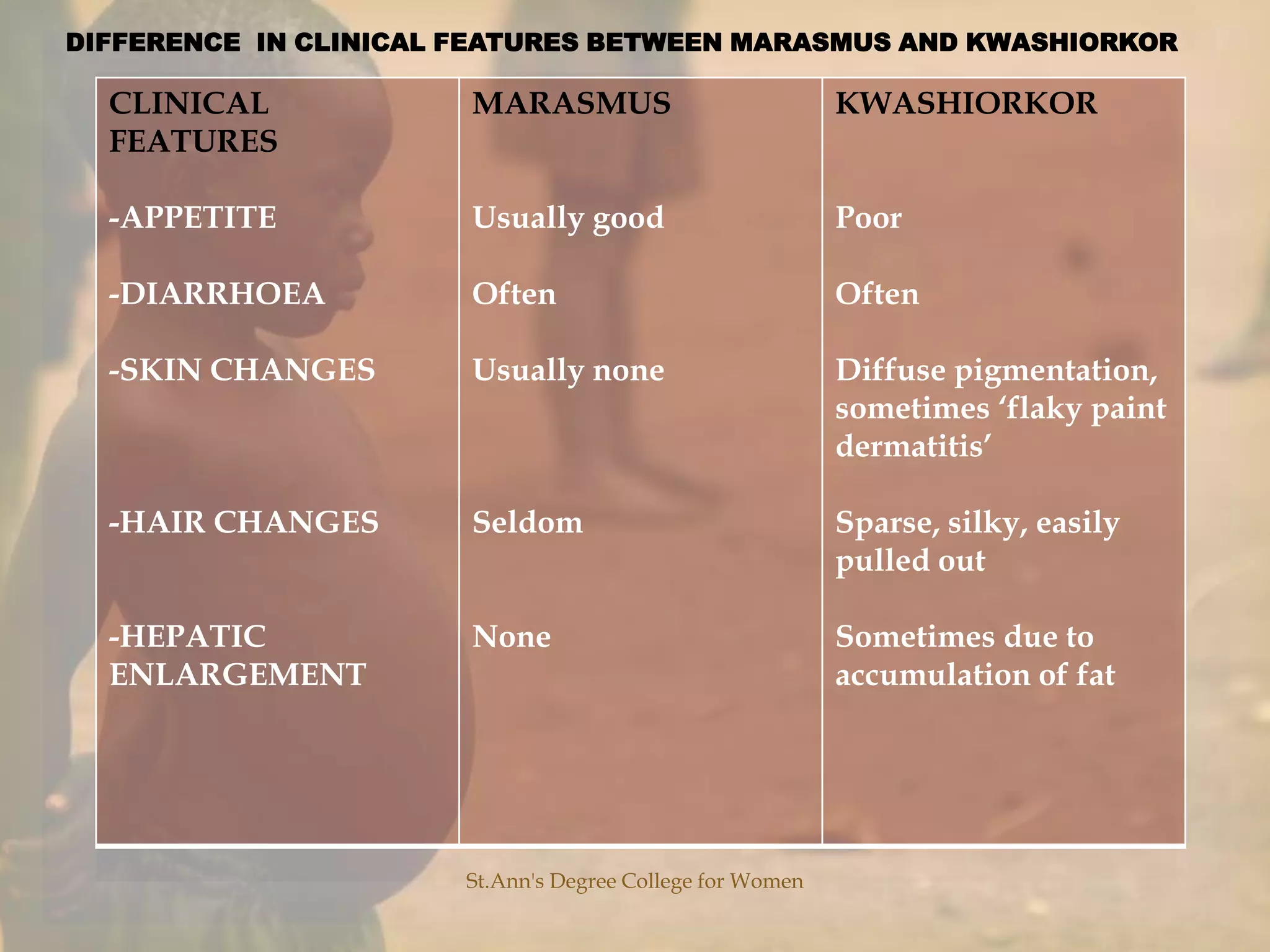
DIFFERENCE IN CLINICAL FEATURES BETWEEN MARASMUS AND KWASHIORKOR

  CLINICAL             MARASMUS                            KWASHIORKOR
  FEATURES

  -APPETITE            Usually good                        Poor

  -DIARRHOEA           Often                               Often

  -SKIN CHANGES        Usually none                        Diffuse pigmentation,
                                                           sometimes „flaky paint
                                                           dermatitis‟

  -HAIR CHANGES        Seldom                              Sparse, silky, easily
                                                           pulled out

  -HEPATIC             None                                Sometimes due to
  ENLARGEMENT                                              accumulation of fat


                       St.Ann's Degree College for Women
MARASMIC-KWASHIORKOR
A severely malnourished child
with features of both
marasmus and Kwashiorkor.
 The features of
  Kwashiorkor are severe
  oedema of feet and legs and
  also hands, lower arms,
  abdomen and face. Also
  there is pale skin and hair,
  and the child is unhappy.
 There are also signs of
  marasmus, wasting of the
  muscles of the upper arms,
  shoulders and chest so that
  you can see the ribs.

                      St.Ann's Degree College for Women
NUTRITIONAL DWARFING
             OR
          STUNTING

 Some children adapt to prolonged insufficiency of
  food-energy and protein by a marked retardation of
  growth.
 Weight and height are both reduced and in the same
  proportion, so they appear superficially normal.


                 St.Ann's Degree College for Women
UNDERWEIGHT CHILD

 Children with sub-
  clinical PEM can be
  detected by their weight
  for age or weight for
  height, which are
  significantly below
  normal. They may have
  reduced plasma albumin.
  They are at risk for
  respiratory and gastric
  infections


                 St.Ann's Degree College for Women
BIOCHEMICAL & METABOLIC
       CHANGES


     St.Ann's Degree College for Women
BIOCHEMICAL & METABOLIC CHANGES
 Significant findings in kwashiorkor include hypoalbuminemia
  (10-25 g/L), hypoproteinemia (transferrin, essential amino
  acids, lipoprotein), and hypoglycemia.
 Plasma cortisol and growth hormone levels are high, but
  insulin secretion and insulinlike growth factor levels are
  decreased.
 The percentage of body water and extracellular water is
  increased.
 Electrolytes, especially potassium and magnesium, are
  depleted.
 Levels of some enzymes (including lactase) are decreased, and
  circulating lipid levels (especially cholesterol) are low.
 Ketonuria occurs, and protein-energy malnutrition may cause a
  decrease in the urinary excretion of urea because of decreased
  protein intake.
 In both kwashiorkor and marasmus, iron deficiency anemia and
  metabolic acidosis are present.
 Urinary excretion of hydroxyproline is diminished, reflecting
  impaired growth and wound healing.
                     St.Ann's Degree College for Women
St.Ann's Degree College for Women
TREATMENT


St.Ann's Degree College for Women
TREATMENT
                        
Treatment strategy can be divided into three stages.
 Resolving life threatening conditions
 Restoring nutritional status
 Ensuring nutritional rehabilitation.

There are three stages of treatment.

1. Hospital Treatment
The following conditions should be corrected.
Hypothermia, hypoglycemia, infection, dehydration, electrolyte
imbalance, anaemia and other vitamin and mineral deficiencies.
2. Dietary Management
The diet should be from locally available staple foods - inexpensive, easily
digestible, evenly distributed throughout the day and increased number of
feedings to increase the quantity of food.
3. Rehabilitation
The concept of nutritional rehabilitation is based on practical nutritional training
for mothers in which they learn by feeding their children back to health under
supervision and using local foods.
                              St.Ann's Degree College for Women
PREVENTION


St.Ann's Degree College for Women
PREVENTION

 Promotion of breast feeding
 Development of low cost weaning
 Nutrition education and promotion of correct
  feeding practices
 Family planning and spacing of births
 Immunization
 Food fortification
 Early diagnosis and treatment


                  St.Ann's Degree College for Women
THANK YOU


St.Ann's Degree College for Women

Protein Energy Malnutrition

  • 1.
    Presented By : Qurrot Ulain Taher (B.Sc-IInd Yr) St. Ann’S College for Women. St.Ann's Degree College for Women
  • 2.
    Definitions   MALNUTRITION WHO defines Malnutrition as "the cellular imbalance between the supply of nutrients and energy and the body's demand for them to ensure growth, maintenance, and specific functions.“ Malnutrition is the condition that develops when the body does not get the right amount of the vitamins, minerals, and other nutrients it needs to maintain healthy tissues and organ function. St.Ann's Degree College for Women
  • 3.
     PROTEIN ENERGYMALNUTRITION It is a group of body depletion disorders which include kwashiorkor, marasmus and the intermediate stages  MARASMUS Represents simple starvation . The body adapts to a chronic state of insufficient caloric intake  KWASHIORKOR It is the body’s response to insufficient protein intake but usually sufficient calories for energy St.Ann's Degree College for Women
  • 4.
  • 5.
    Protein-Energy Malnutrition  PEMis also referred to as  protein-calorie malnutrition.  It is considered as the primary nutritional problem in India. Also called the 1st National Nutritional Disorder.  The term protein-energy malnutrition (PEM) applies to a group of related disorders that include marasmus, kwashiork or, and intermediate states of marasmus-kwashiorkor.  PEM is due to “food gap” between the intake and requirement. St.Ann's Degree College for Women
  • 6.
  • 7.
    AETIOLOGY: Different combinations ofmany aetiological factors can lead to PEM in children. They are: Social and Economic Factors Biological factors Environmental factors Role of Free Radicals & Aflatoxin Age of the Host St.Ann's Degree College for Women
  • 8.
     Amongst theSocial, Economic, Biological and Environmental Factors the common causes are:  Lack of breast feeding and giving diluted formula  Improper complementary feeding  Over crowding in family  Ignorance  Illiteracy  Lack of health education  Poverty  Infection  Familial disharmony St.Ann's Degree College for Women
  • 9.
     Role ofFree Radicals & Aflatoxin: Two new theories have been postulated recently to explain the pathogenesis of kwashiorkor. These include Free Radical Damage & Aflatoxin Poisoning . These may damage liver cells giving rise to kwashiorkor.  Age Of Host :  Frequent in Infants & young children whose rapid growth increases nutritional requirement.  PEM in pregnant and lactating women can affect the growth, nutritional status & survival rates of their fetuses, new born and infants.  Elderly can also suffer from PEM due to alteration of GI System St.Ann's Degree College for Women
  • 10.
    AETIOLOGY of PEM: Leading cause of death (less than 5 years of age) Primary PEM: Protein + energy intakes below requirement for normal growth. Secondary PEM:  the need for growth is greater than can be supplied.  decreased nutrient absorption  increase nutrient losses Linear growth ceases Static weight Weight loss Wasting Malnutrition and its signs St.Ann's Degree College for Women
  • 11.
  • 12.
    PREVALENCE: • Protein-energy malnutrition is a basic lack of food (from famine) and a major cause of infant mortality and morbidity worldwide. • Protein-energy malnutrition caused 0.46% of all deaths worldwide in 2002, an average of 42 deaths per million people per year. St.Ann's Degree College for Women
  • 13.
    Child Malnutrition in India 2005-2006 Urban 36.4 Rural 49.0  Malnutrition is the direct St.Ann's Degree College for Women 50% of deaths in children. or indirect cause of more  PEM is a silent killer in many children.
  • 14.
    CLINICAL FEATURES St.Ann'sDegree College for Women
  • 15.
    The clinical presentationdepends upon the type , severity and duration of the dietary deficiencies. The five forms of PEM are : 1. Kwashiorkor 2. Marasmic-kwashiorkor 3. Marasmus 4. Nutritional dwarfing 5. Underweight child St.Ann's Degree College for Women
  • 16.
    Classification of PEM (FAO/WHO) Body weight as percentage  Oedema Deficit in weight for of standard height Kwashiorkor 60 – 80 + + Marasmic < 60 + ++ kwashiorkor Marasmus < 60 0 ++ Nutritional < 60 0 Minimal dwarfing Underweight 60 – 80 0 + child Source: FAO / WHO 1971 Expert St.Ann's Degree College for Women Committee on Nutrition 8th Report. WHO Technical Report Series 477
  • 17.
    KWASHIORKOR   The term kwashiorkor is taken from the Ga language of Ghana and means "the sickness of the weaning”.  Williams first used the term in 1933, and it refers to an inadequate protein intake with reasonable caloric (energy) intake.  Kwashiorkor, also called wet protein-energy malnutrition, is a form of PEM characterized primarily by protein deficiency.  This condition usually appears at the age of about 12 months when breastfeeding is discontinued, but it can develop at any time during a child's formative years.  It causes fluid retention (edema); dry, peeling skin; and hair discoloration. St.Ann's Degree College for Women
  • 18.
     Kwashiorkor wasthought to be caused by insufficient protein consumption but with sufficient calorie intake, distinguishing it from marasmus.  More recently, micronutrient and antioxidant deficiencies have come to be recognized as contributory.  Victims of kwashiorkor fail to produce antibodies following vaccination against diseases, including diphtheria and typhoid.  Generally, the disease can be treated by adding food energy and protein to the diet; however, it can have a long-term impact on a child's physical and mental development, and in severe cases may lead to death. St.Ann's Degree College for Women
  • 19.
    SYMPTOMS  Changes in skin pigment.  Decreased muscle mass   Diarrhea Failure to gain weight and  grow  Fatigue  Hair changes (change in color or texture)  Increased and more severe infections due to damaged immune system  Irritability  Large belly that sticks out (protrudes)  Lethargy or apathy  Loss of muscle mass  Rash (dermatitis)  Shock (late stage)  Swelling (edema) St.Ann's Degree College for Women
  • 20.
  • 21.
    MARASMUS   The term marasmus is derived from the Greek word marasmos, which means withering or wasting.  Marasmus is a form of severe protein-energy malnutrition characterized by energy deficiency and emaciation.  Primarily caused by energy deficiency, marasmus is characterized by stunted growth and wasting of muscle and tissue.  Marasmus usually develops between the ages of six months and one year in children who have been weaned from breast milk or who suffer from weakening conditions like chronic diarrhea. St.Ann's Degree College for Women
  • 22.
    SYMPTOMS  Severe growth retardation  Loss of subcutaneous fat  Severe muscle wasting   The child looks appallingly thin and limbs appear as skin and bone Shriveled body   Wrinkled skin  Bony prominence  Associated vitamin deficiencies  Failure to thrive  Irritability, fretfulness and apathy  Frequent watery diarrhoea and acid stools  Mostly hungry but some are anoretic  Dehydration  Temperature is subnormal  Muscles are weak  Oedema and fatty infiltration are absent St.Ann's Degree College for Women
  • 23.
    DIFFERENCE IN CLINICALFEATURES BETWEEN MARASMUS AND KWASHIORKOR St.Ann's Degree College for Women
  • 24.
  • 25.
    DIFFERENCE IN CLINICALFEATURES BETWEEN MARASMUS AND KWASHIORKOR CLINICAL MARASMUS KWASHIORKOR FEATURES -MUSCLE WASTING Obvious Sometimes hidden by edema and fat -FAT WASTING Severe loss of Fat often retained but subcutaneous fat not firm -EDEMA None Present in lower legs, and usually in face and lower arms May be masked by -WEIGHT FOR Very low edema HEIGHT Irritable, moaning, -MENTAL Sometimes quite and apathetic CHANGES apathetic St.Ann's Degree College for Women
  • 26.
    DIFFERENCE IN CLINICALFEATURES BETWEEN MARASMUS AND KWASHIORKOR CLINICAL MARASMUS KWASHIORKOR FEATURES -APPETITE Usually good Poor -DIARRHOEA Often Often -SKIN CHANGES Usually none Diffuse pigmentation, sometimes „flaky paint dermatitis‟ -HAIR CHANGES Seldom Sparse, silky, easily pulled out -HEPATIC None Sometimes due to ENLARGEMENT accumulation of fat St.Ann's Degree College for Women
  • 27.
    MARASMIC-KWASHIORKOR A severely malnourishedchild with features of both marasmus and Kwashiorkor.  The features of Kwashiorkor are severe oedema of feet and legs and also hands, lower arms, abdomen and face. Also there is pale skin and hair, and the child is unhappy.  There are also signs of marasmus, wasting of the muscles of the upper arms, shoulders and chest so that you can see the ribs. St.Ann's Degree College for Women
  • 28.
    NUTRITIONAL DWARFING OR STUNTING  Some children adapt to prolonged insufficiency of food-energy and protein by a marked retardation of growth.  Weight and height are both reduced and in the same proportion, so they appear superficially normal. St.Ann's Degree College for Women
  • 29.
    UNDERWEIGHT CHILD  Childrenwith sub- clinical PEM can be detected by their weight for age or weight for height, which are significantly below normal. They may have reduced plasma albumin. They are at risk for respiratory and gastric infections St.Ann's Degree College for Women
  • 30.
    BIOCHEMICAL & METABOLIC CHANGES St.Ann's Degree College for Women
  • 31.
    BIOCHEMICAL & METABOLICCHANGES  Significant findings in kwashiorkor include hypoalbuminemia (10-25 g/L), hypoproteinemia (transferrin, essential amino acids, lipoprotein), and hypoglycemia.  Plasma cortisol and growth hormone levels are high, but insulin secretion and insulinlike growth factor levels are decreased.  The percentage of body water and extracellular water is increased.  Electrolytes, especially potassium and magnesium, are depleted.  Levels of some enzymes (including lactase) are decreased, and circulating lipid levels (especially cholesterol) are low.  Ketonuria occurs, and protein-energy malnutrition may cause a decrease in the urinary excretion of urea because of decreased protein intake.  In both kwashiorkor and marasmus, iron deficiency anemia and metabolic acidosis are present.  Urinary excretion of hydroxyproline is diminished, reflecting impaired growth and wound healing. St.Ann's Degree College for Women
  • 32.
  • 33.
  • 34.
    TREATMENT  Treatment strategy can be divided into three stages.  Resolving life threatening conditions  Restoring nutritional status  Ensuring nutritional rehabilitation. There are three stages of treatment. 1. Hospital Treatment The following conditions should be corrected. Hypothermia, hypoglycemia, infection, dehydration, electrolyte imbalance, anaemia and other vitamin and mineral deficiencies. 2. Dietary Management The diet should be from locally available staple foods - inexpensive, easily digestible, evenly distributed throughout the day and increased number of feedings to increase the quantity of food. 3. Rehabilitation The concept of nutritional rehabilitation is based on practical nutritional training for mothers in which they learn by feeding their children back to health under supervision and using local foods. St.Ann's Degree College for Women
  • 35.
  • 36.
    PREVENTION  Promotion ofbreast feeding  Development of low cost weaning  Nutrition education and promotion of correct feeding practices  Family planning and spacing of births  Immunization  Food fortification  Early diagnosis and treatment St.Ann's Degree College for Women
  • 37.
    THANK YOU St.Ann's DegreeCollege for Women