Getting into pa schoolBy Sarah Sanders, PAS-IIMidwestern University
OBJECTIVESUnderstanding the PA profession
Choosing the right school
Becoming a competitive applicant
Utilizing available resourcesWhat is a Physician Assistant?“Physician Assistants (PAs) are health professionals licensed to practice medicine with physician supervision. Physician Assistants are qualified upon graduation from an accredited physician assistant educational program and/or certification by the National Commission on Certification of Physician Assistants. Within the physician/PA relationship, Physician Assistants exercise autonomy in medical decision-making and provide a broad range of diagnostic and therapeutic services. The clinical role of Physician Assistants includes primary and specialty care in medical and surgical practice settings in rural and urban areas. Physician Assistant practice is centered on patient care and may include educational, research, and administrative activities.”  						www.aapa.org
PA vs MDPoints for the PAs:You can change specialties relatively easilyYou will go to school for 2-3 yearsYou will have smaller debtYou can find a job conducive to a family lifePoints for the MDs:You will be “in charge”You will make more money
PA vs NPNurse PractitionersAre RNs with advanced training in a clinical specialtyTake a biopsychosocial approach as they collaborate with physiciansAre able to function independentlyPhysician AssistantsAre trained much like physicians, focusing on diseases/pathologic aspects of healthcareTake a team approach with their supervising physicians
what program is right for me?
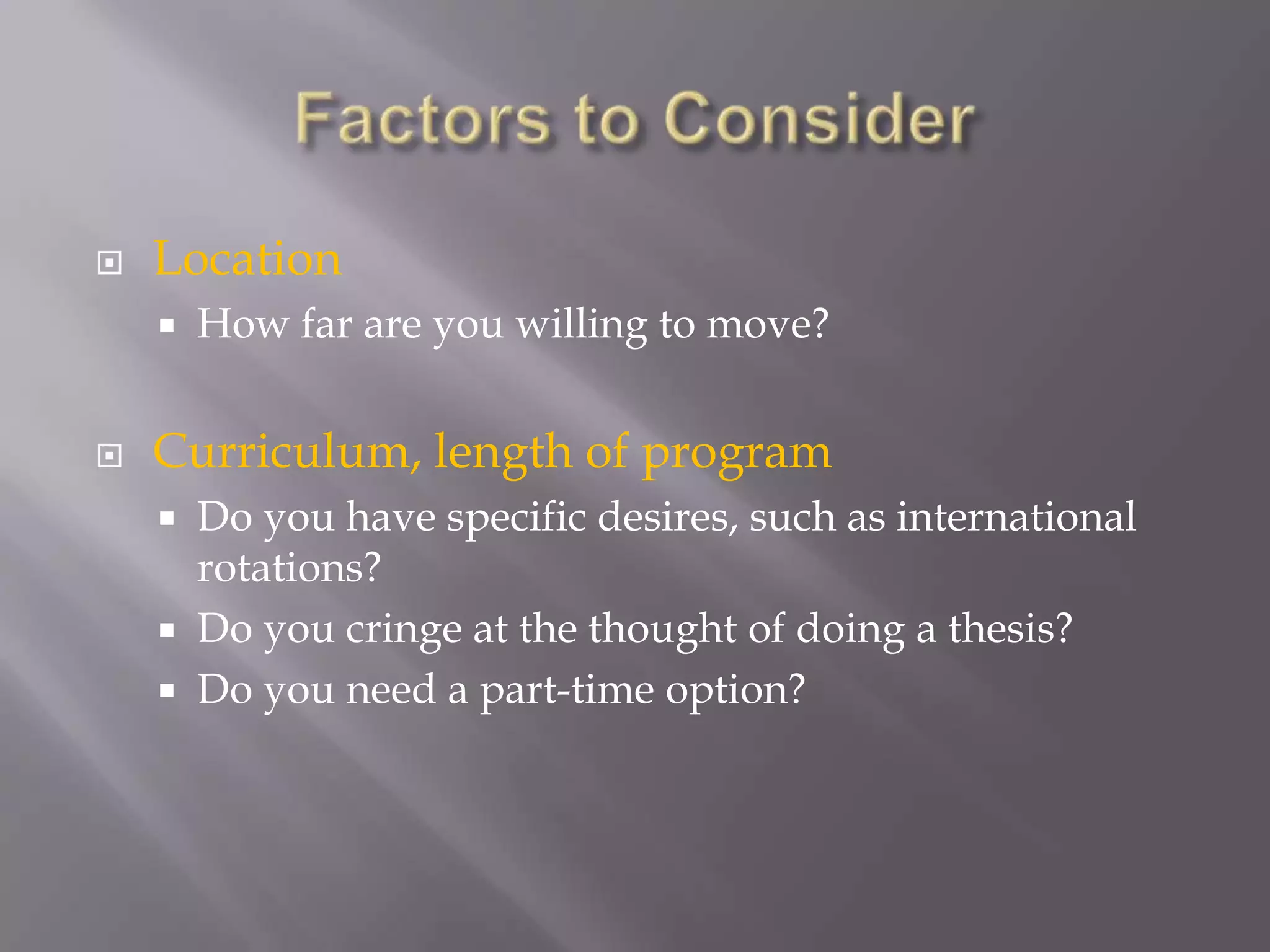
Factors to ConsiderLocationHow far are you willing to move?Curriculum, length of programDo you have specific desires, such as international rotations?Do you cringe at the thought of doing a thesis?Do you need a part-time option?
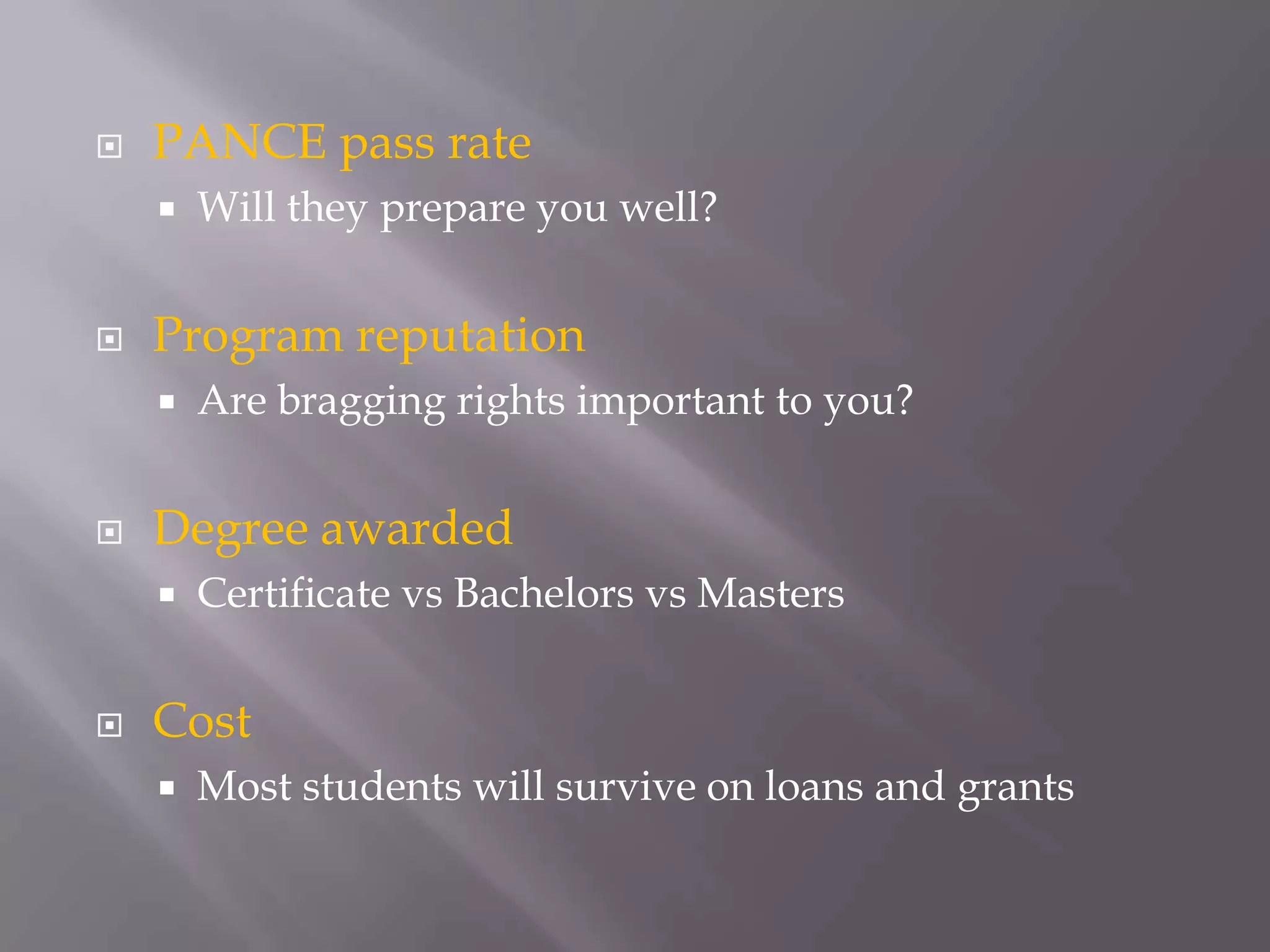
PANCE pass rateWill they prepare you well?Program reputationAre bragging rights important to you?Degree awardedCertificate vs Bachelors vs MastersCostMost students will survive on loans and grants
So who has what I want?Browse programs websitesVisit campusesCall admissions advisorsCheck out what others have to say**Be selective, but remember that staying open-minded will increase your chances of acceptance!
Okay, I’ve narrowed down my list. Now what?
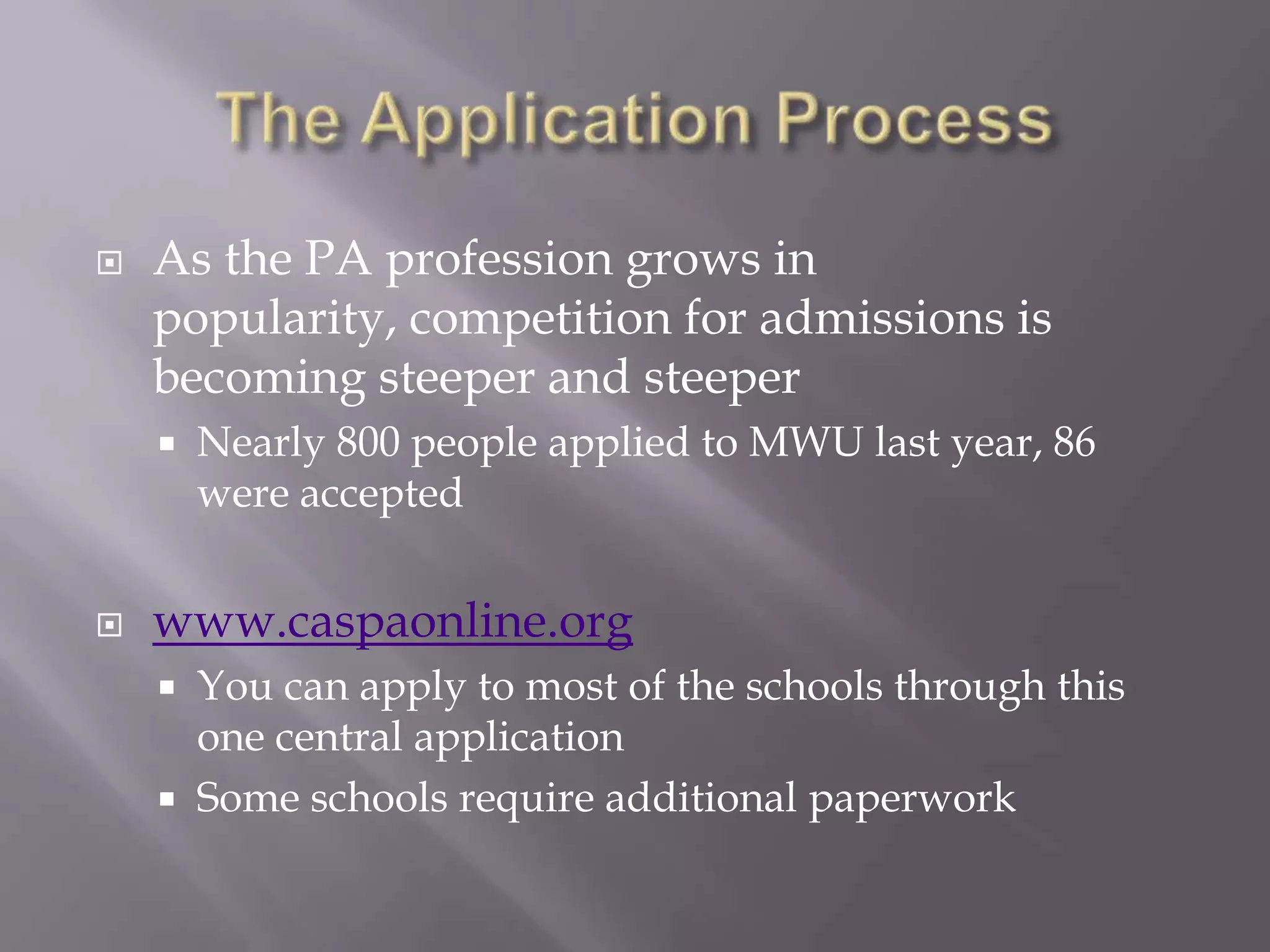
The Application ProcessAs the PA profession grows in popularity, competition for admissions is becoming steeper and steeperNearly 800 people applied to MWU last year, 86 were acceptedwww.caspaonline.orgYou can apply to most of the schools through this one central application Some schools require additional paperwork
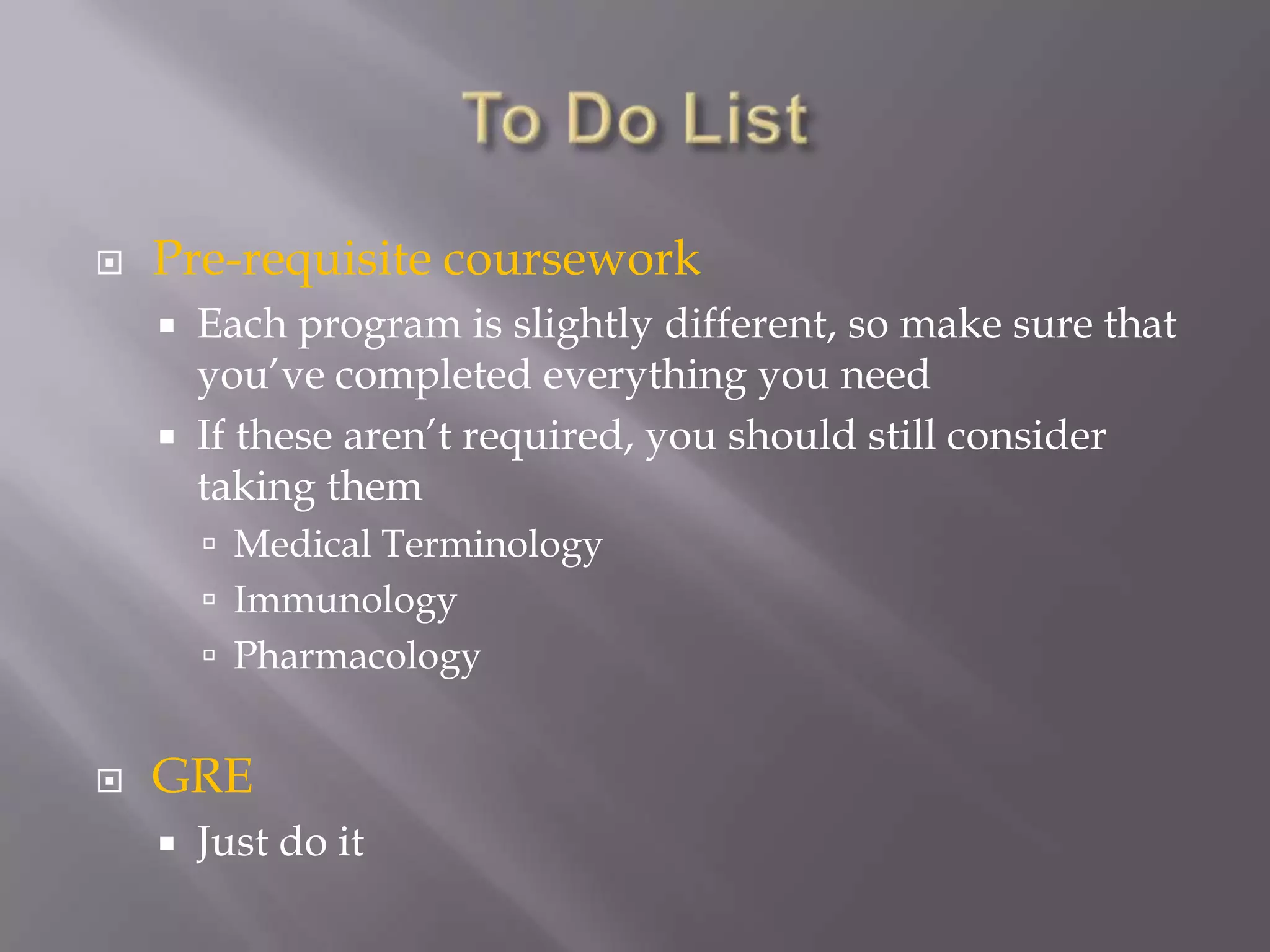
To Do ListPre-requisite courseworkEach program is slightly different, so make sure that you’ve completed everything you needIf these aren’t required, you should still consider taking themMedical TerminologyImmunologyPharmacologyGREJust do it
Healthcare experienceHands-on experience gives you a good foundation to build on (ex. EMTs, MAs, athletic trainers, CNAs, EKG Techs…)Unique situations help you stand out in the applicant pool and give you a different perspective on things (ex.  Military, Public Health, PeaceCorps, medical lawyers…)CASPA/EssayKeep in mind that this gives the Admissions Committees their first look at you…avoid fluff and focus on what makes you special
InterviewYou’ve impressed the Committee on paper, or at least intrigued them enough to meet in person Prepare, but don’t rehearseFamiliarize yourself with the program (mission statement, unique aspects) and the faculty membersMake sure you have a clear goal in mind and think about how you are going to convey that to themThe most important thing to keep in mind is to BE YOURSELF and don’t overanalyze things
Throughout this whole process…

Getting Into PA School

  • 1.
    Getting into paschoolBy Sarah Sanders, PAS-IIMidwestern University
  • 2.
  • 3.
  • 4.
  • 5.
    Utilizing available resourcesWhatis a Physician Assistant?“Physician Assistants (PAs) are health professionals licensed to practice medicine with physician supervision. Physician Assistants are qualified upon graduation from an accredited physician assistant educational program and/or certification by the National Commission on Certification of Physician Assistants. Within the physician/PA relationship, Physician Assistants exercise autonomy in medical decision-making and provide a broad range of diagnostic and therapeutic services. The clinical role of Physician Assistants includes primary and specialty care in medical and surgical practice settings in rural and urban areas. Physician Assistant practice is centered on patient care and may include educational, research, and administrative activities.” www.aapa.org
  • 6.
    PA vs MDPointsfor the PAs:You can change specialties relatively easilyYou will go to school for 2-3 yearsYou will have smaller debtYou can find a job conducive to a family lifePoints for the MDs:You will be “in charge”You will make more money
  • 7.
    PA vs NPNursePractitionersAre RNs with advanced training in a clinical specialtyTake a biopsychosocial approach as they collaborate with physiciansAre able to function independentlyPhysician AssistantsAre trained much like physicians, focusing on diseases/pathologic aspects of healthcareTake a team approach with their supervising physicians
  • 8.
    what program isright for me?
  • 9.
    Factors to ConsiderLocationHowfar are you willing to move?Curriculum, length of programDo you have specific desires, such as international rotations?Do you cringe at the thought of doing a thesis?Do you need a part-time option?
  • 10.
    PANCE pass rateWillthey prepare you well?Program reputationAre bragging rights important to you?Degree awardedCertificate vs Bachelors vs MastersCostMost students will survive on loans and grants
  • 11.
    So who haswhat I want?Browse programs websitesVisit campusesCall admissions advisorsCheck out what others have to say**Be selective, but remember that staying open-minded will increase your chances of acceptance!
  • 12.
    Okay, I’ve narroweddown my list. Now what?
  • 14.
    The Application ProcessAsthe PA profession grows in popularity, competition for admissions is becoming steeper and steeperNearly 800 people applied to MWU last year, 86 were acceptedwww.caspaonline.orgYou can apply to most of the schools through this one central application Some schools require additional paperwork
  • 15.
    To Do ListPre-requisitecourseworkEach program is slightly different, so make sure that you’ve completed everything you needIf these aren’t required, you should still consider taking themMedical TerminologyImmunologyPharmacologyGREJust do it
  • 16.
    Healthcare experienceHands-on experiencegives you a good foundation to build on (ex. EMTs, MAs, athletic trainers, CNAs, EKG Techs…)Unique situations help you stand out in the applicant pool and give you a different perspective on things (ex. Military, Public Health, PeaceCorps, medical lawyers…)CASPA/EssayKeep in mind that this gives the Admissions Committees their first look at you…avoid fluff and focus on what makes you special
  • 17.
    InterviewYou’ve impressed theCommittee on paper, or at least intrigued them enough to meet in person Prepare, but don’t rehearseFamiliarize yourself with the program (mission statement, unique aspects) and the faculty membersMake sure you have a clear goal in mind and think about how you are going to convey that to themThe most important thing to keep in mind is to BE YOURSELF and don’t overanalyze things
  • 18.
  • 19.
    Remember That There’sHelp Out There For YouAdvisorsCurrent PAsCurrent studentsThe internetwww.physicianassistantforum.comwww.aapa.orgwww…
  • 20.