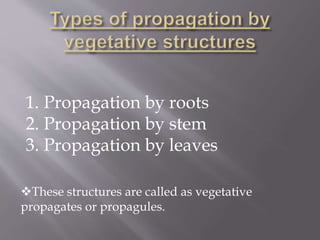
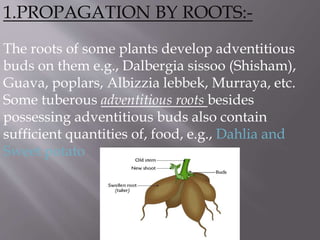
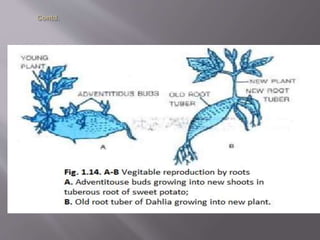
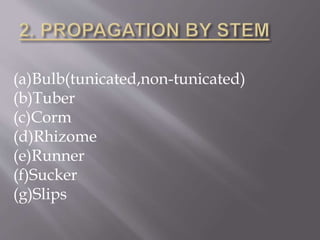
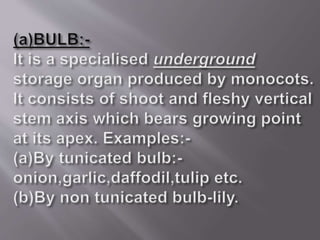
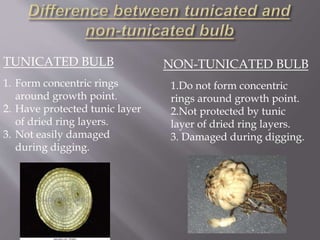
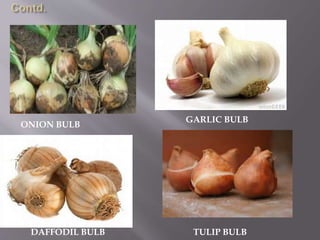
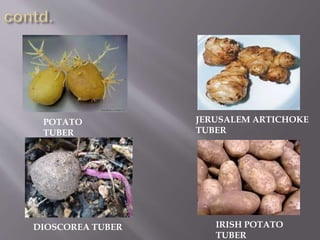
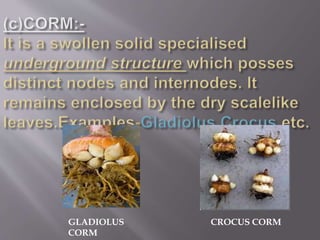
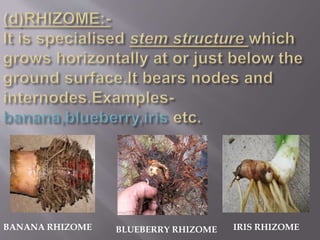
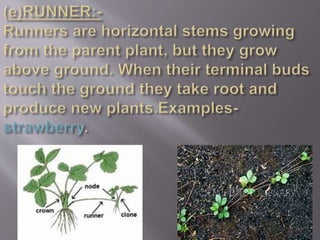
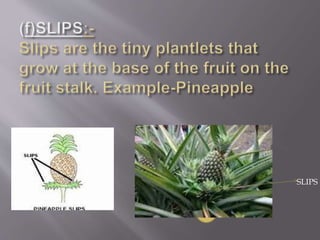
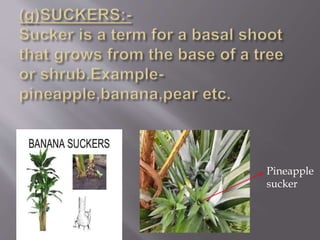
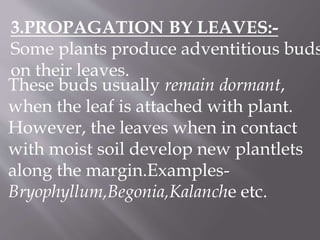
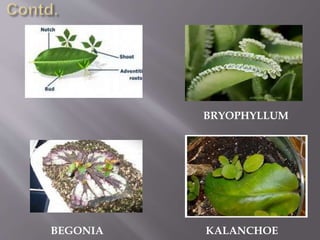
Vegetative propagation is a form of asexual reproduction that creates genetically identical offspring from a fragment or portion of the parent plant, such as roots, stems, leaves, bulbs, tubers, corms, rhizomes, runners, suckers, or slips. There are several advantages to vegetative propagation including preserving desirable traits, not requiring pollination, being faster than sexual reproduction, and allowing plants to survive unfavorable conditions through structures like tubers, corms, and bulbs. It is especially useful for agricultural and horticultural purposes in propagating crops that do not produce viable seeds, such as bananas, sugarcane, potatoes, and seedless fruit varieties.