•A pronoun is a word
  used in place of a
    noun or another
        pronoun.
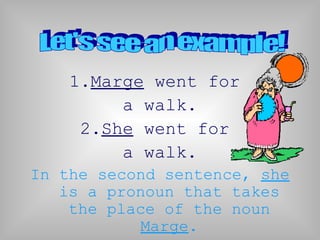
1.Marge went for
         a walk.
     2.She went for
         a walk.
In the second sentence, she
   is a pronoun that takes
    the place of the noun
           Marge.
1
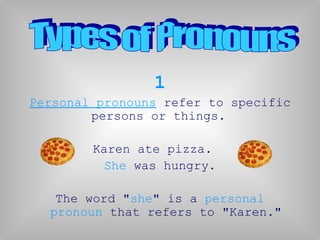
Personal pronouns refer to specific
        persons or things.

        Karen ate pizza.
         She was hungry.

   The word "she" is a personal
  pronoun that refers to "Karen."
2
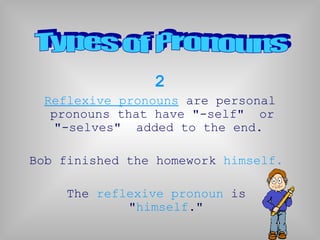
  Reflexive pronouns are personal
   pronouns that have "-self" or
    "-selves" added to the end.

Bob finished the homework himself.

     The reflexive pronoun is
             "himself."
3
  Indefinite pronouns are pronouns
   that do not refer to a specific
          person or thing.
Someone, anybody, and, everyone are
        indefinite pronouns.
      Someone stole my wallet!
      The word "someone" is the
         indefinite pronoun.
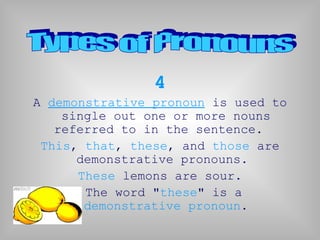
4
A demonstrative pronoun is used to
    single out one or more nouns
   referred to in the sentence.
 This, that, these, and those are
      demonstrative pronouns.
      These lemons are sour.
       The word "these" is a
       demonstrative pronoun.
5
Interrogative pronouns are used to
         ask a question.
     Who, whom, and which are
     interrogative pronouns.
      Which shoes are mine?
      The word "which" is an
       interrogative pronoun.
6
Possessive pronouns are used to
 show ownership, but they never
      have an apostrophe.
 Ours, his, their, and her are
      possessive pronouns.
    Those are his pencils.
      The word "his" is a
       possessive pronoun.
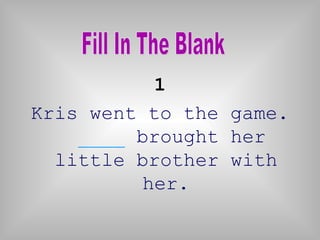
1
Kris went to the game.
    ____ brought her
  little brother with
          her.
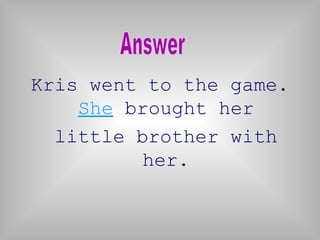
Kris went to the game.
    She brought her
  little brother with
          her.
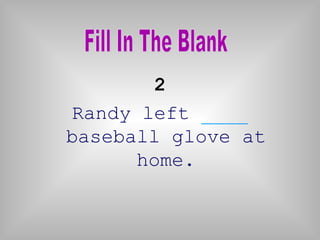
2
Randy left ____
baseball glove at
      home.
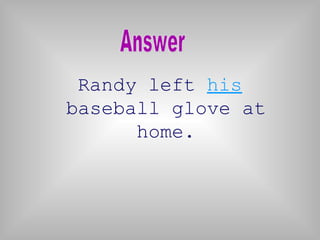
Randy left his
baseball glove at
      home.
3
_____ left a
 book on the
  playground.
Someone left a
  book on the
  playground.
4
_____ pair of shoes
  belongs to James?
Which pair of shoes
  belongs to James?
5
That beach blanket is
        ____.
That beach blanket is
         ours.

Pronouns1

  • 2.
    •A pronoun isa word used in place of a noun or another pronoun.
  • 3.
    1.Marge went for a walk. 2.She went for a walk. In the second sentence, she is a pronoun that takes the place of the noun Marge.
  • 4.
    1 Personal pronouns referto specific persons or things. Karen ate pizza. She was hungry. The word "she" is a personal pronoun that refers to "Karen."
  • 5.
    2 Reflexivepronouns are personal pronouns that have "-self" or "-selves" added to the end. Bob finished the homework himself. The reflexive pronoun is "himself."
  • 6.
    3 Indefinitepronouns are pronouns that do not refer to a specific person or thing. Someone, anybody, and, everyone are indefinite pronouns. Someone stole my wallet! The word "someone" is the indefinite pronoun.
  • 7.
    4 A demonstrative pronounis used to single out one or more nouns referred to in the sentence. This, that, these, and those are demonstrative pronouns. These lemons are sour. The word "these" is a demonstrative pronoun.
  • 8.
    5 Interrogative pronouns areused to ask a question. Who, whom, and which are interrogative pronouns. Which shoes are mine? The word "which" is an interrogative pronoun.
  • 9.
    6 Possessive pronouns areused to show ownership, but they never have an apostrophe. Ours, his, their, and her are possessive pronouns. Those are his pencils. The word "his" is a possessive pronoun.
  • 10.
    1 Kris went tothe game. ____ brought her little brother with her.
  • 11.
    Kris went tothe game. She brought her little brother with her.
  • 12.
  • 13.
  • 14.
    3 _____ left a book on the playground.
  • 15.
    Someone left a book on the playground.
  • 16.
    4 _____ pair ofshoes belongs to James?
  • 17.
    Which pair ofshoes belongs to James?
  • 18.
  • 19.