Student Writing Workshop


    My heart says to write. My hands
    want to write. My mind has ideas.
      How do I get it all on paper?


Ms. Eliana Crespo
Writing is boring!
• Do you write a little every day?
• Do you write about things important to
  you?
• Sometimes don’t worry about mistakes.
• Sometimes take time to edit.
• We read to learn. We write to learn.
• Explore each door.
• Make writing powerful.
The Writing Process
• Prewriting: Choosing   • Publishing: Putting
  and collecting to        your writing out there
  make a plan              for others to see,
• Writing: first draft     hear, read, enjoy
• Revising: Clear up     • Collecting: Keep a
  “wanderings”             portfolio of your
• Editing: spelling,       writing projects
  grammar, punctuation
Writing Well, Writing Best

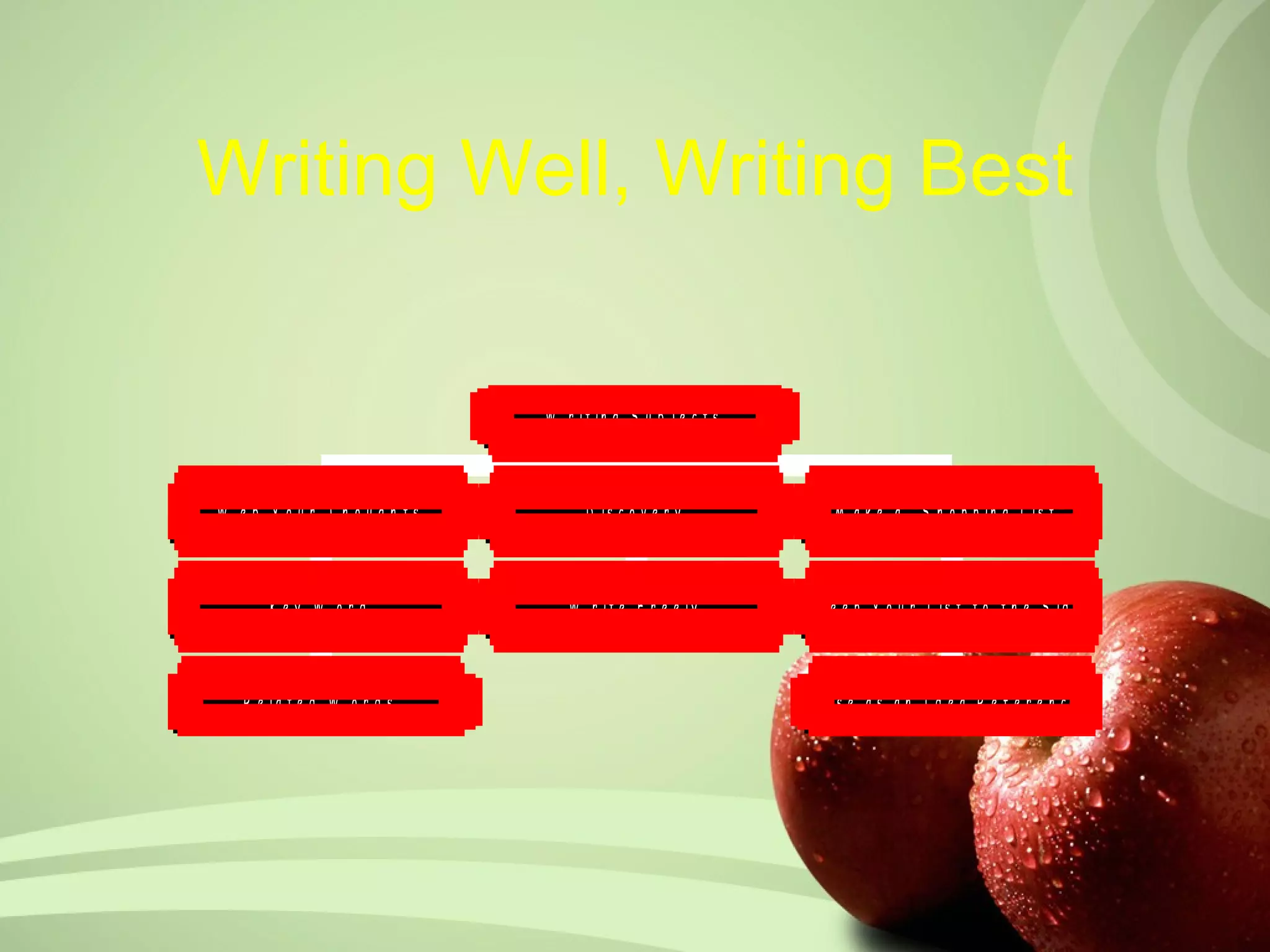
                           W r it in g S u b j e c t s


W eb Y our T houghts             D is c o v e r y          M a k e a " S h o p p in g L is t "


     Key W ord                W r it e F r e e ly        K e e p Y o u r L is t t o t h e S id e


  R e la t e d W o r d s                                 U se as an Idea R eference
Reader, Writer
•   Read Books
•   Read Magazines
•   Read Newspapers
•   Read Internet News
•   Visit Bookstores
•   Ask Your Teacher
•   Find Out What Your Parents Read
Be An Investigator
• As you read, investigate how the author
  wrote “his” story
• Who was the audience?
• What was the purpose?
• How did the author describe his
  characters and setting?
• What as the plot? Why do you think it was
  chosen?
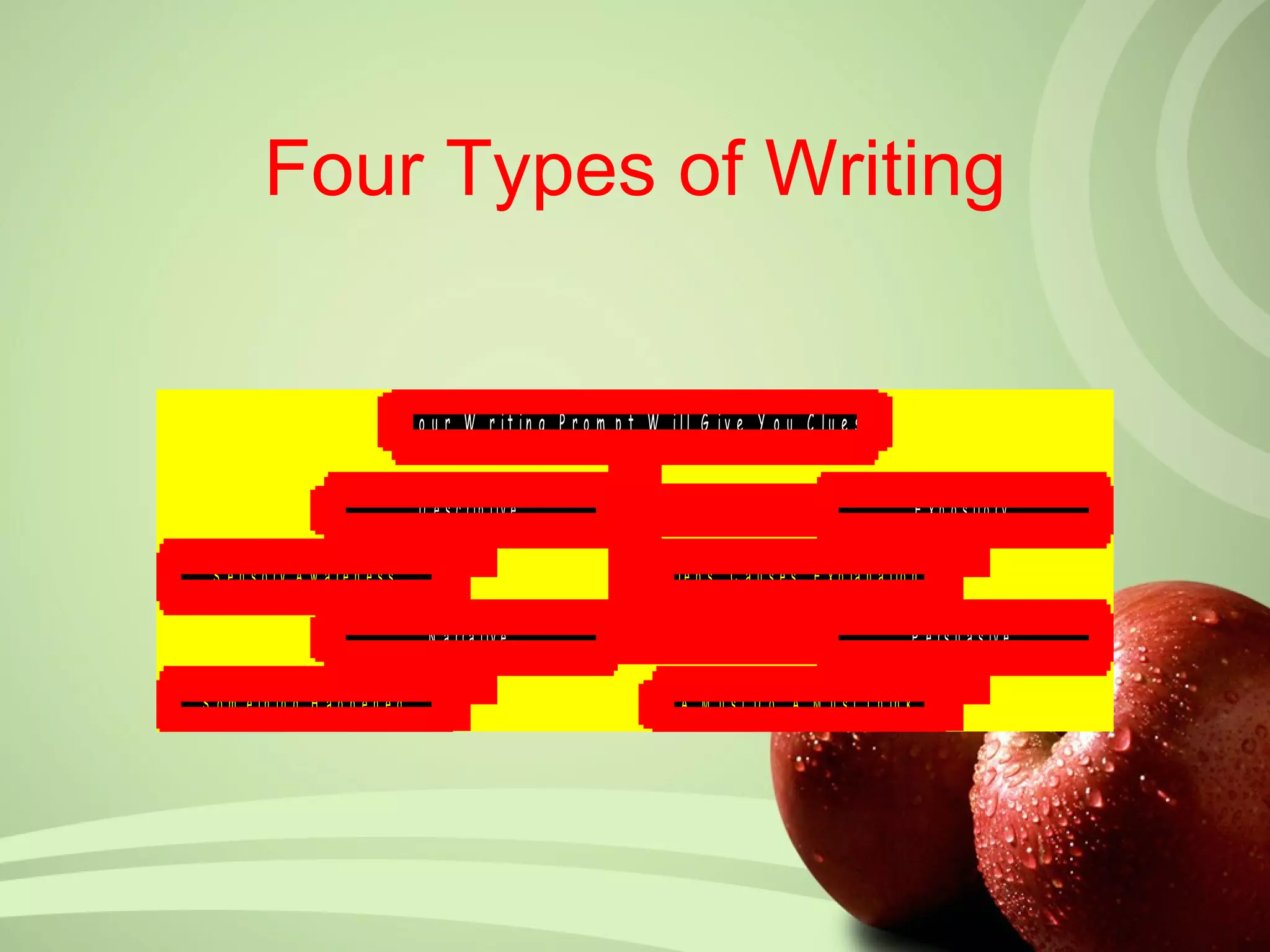
Four Types of Writing


                                   Y o u r W r it in g P r o m p t W ill G iv e Y o u C lu e s


                                     D e s c r ip t iv e                                                        E x p o s it o r y


 S e n s o ry A w a re n e s s                                      S t e p s , C a u s e s , E x p la n a t io n s

                                      N a r r a t iv e                                                          P e r s u a s iv e


S o m e t h in g H a p p e n e d                                       A M u s t D o , A M u s t T h in k
I’ve decided what style of writing, now what?

                      It’s time to collect
                  details to support your
Gather your thoughts.        writing.              Visit the library.

                              Interview experts.

    Talk it up.
                                       Watch videos, T.V.

          Read about your subject.

                           Participate. Be a part of
                           what you are writing.
Surf the Net.
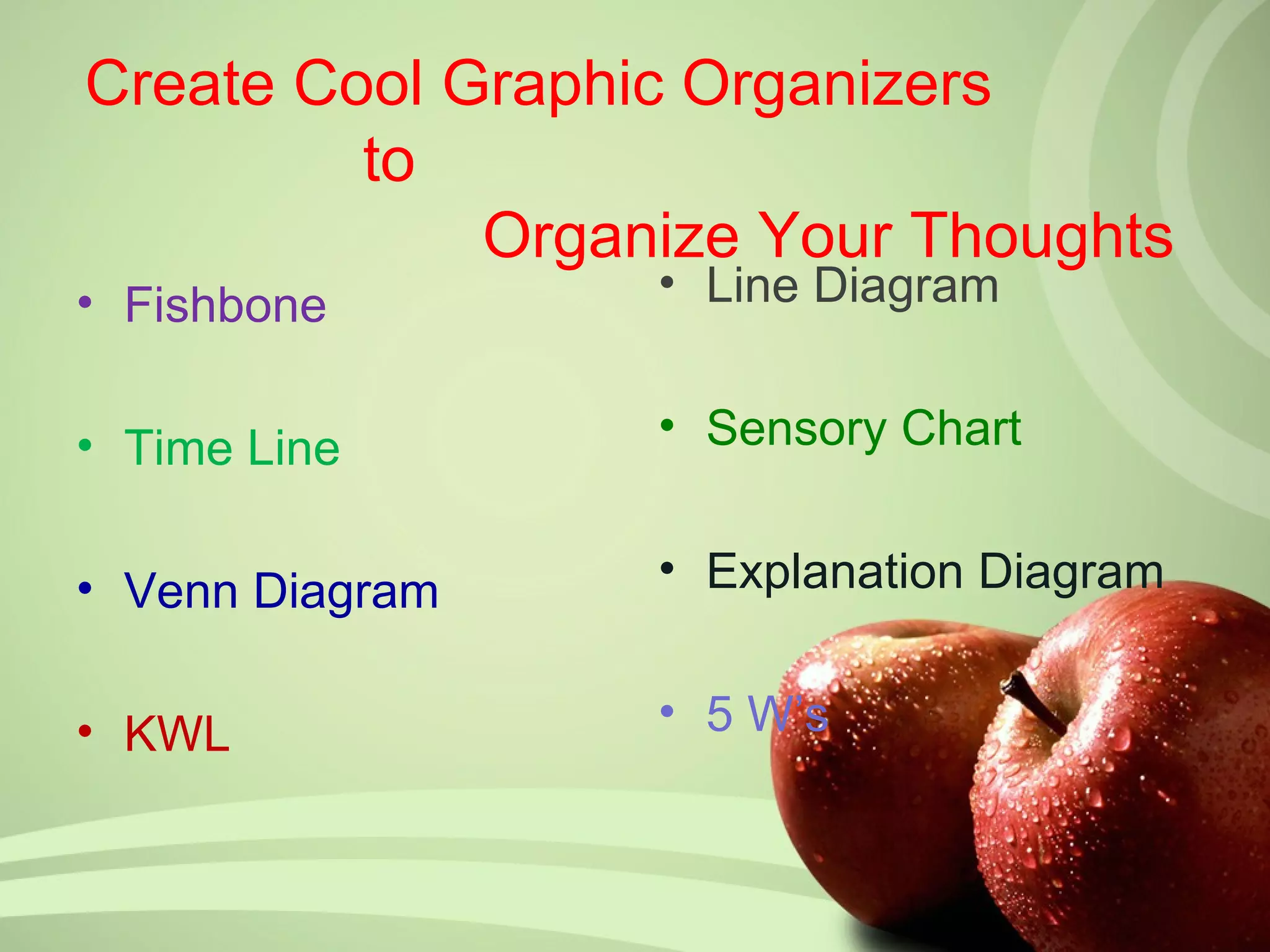
Create Cool Graphic Organizers
         to
             Organize Your Thoughts
• Fishbone        • Line Diagram


• Time Line       • Sensory Chart


• Venn Diagram    • Explanation Diagram


• KWL             • 5 W’s
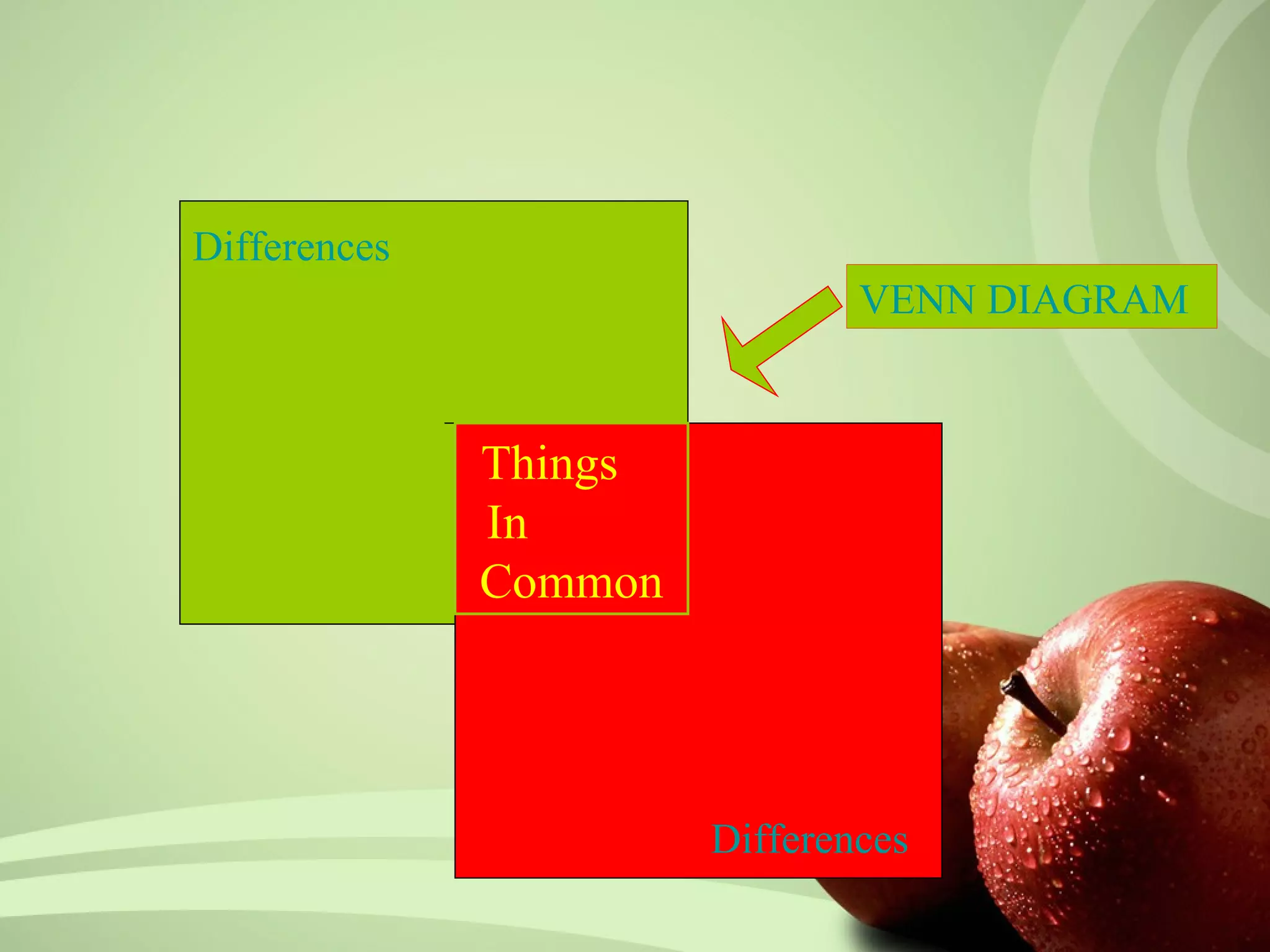
Differences
                               VENN DIAGRAM


              Things
              In
              Common


                       Differences
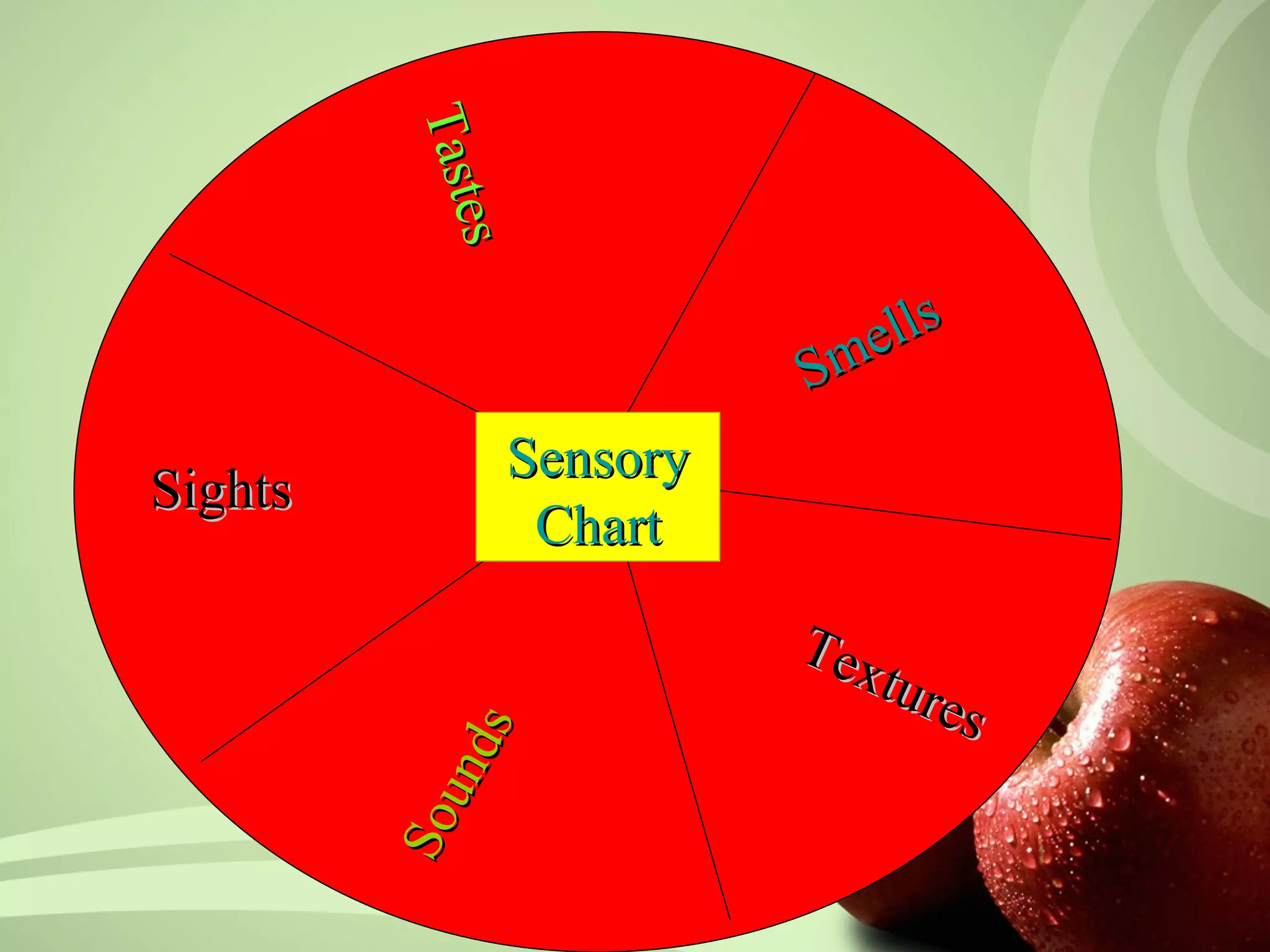
Tast
          Taste
               es
                s
                               lls
                          S me
                Sensory
Sights
                 Chart

                          Tex
                              ture
                                   s
                s
            und
         So
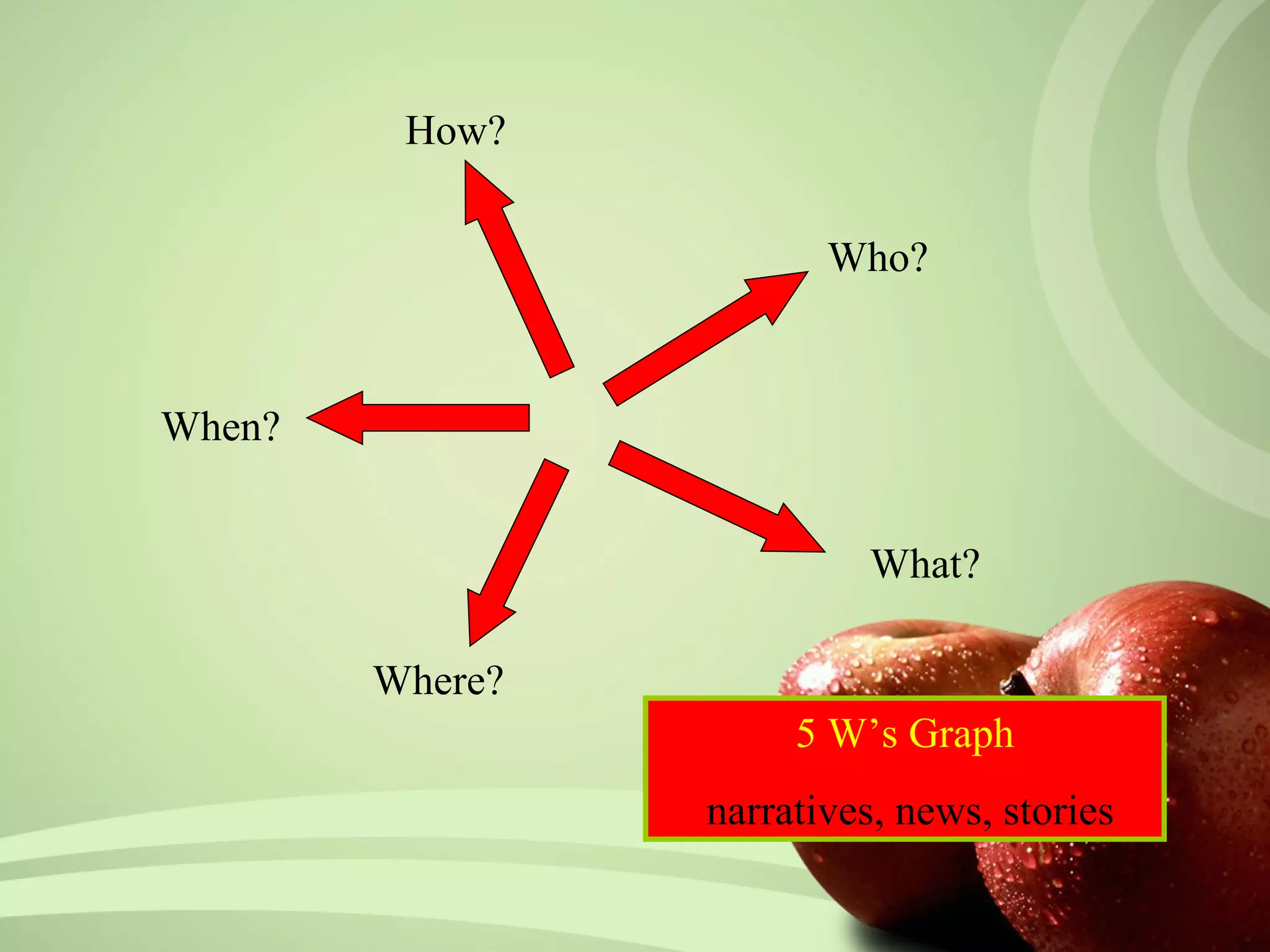
How?


                        Who?


When?


                           What?

        Where?
                      5 W’s Graph
                 narratives, news, stories
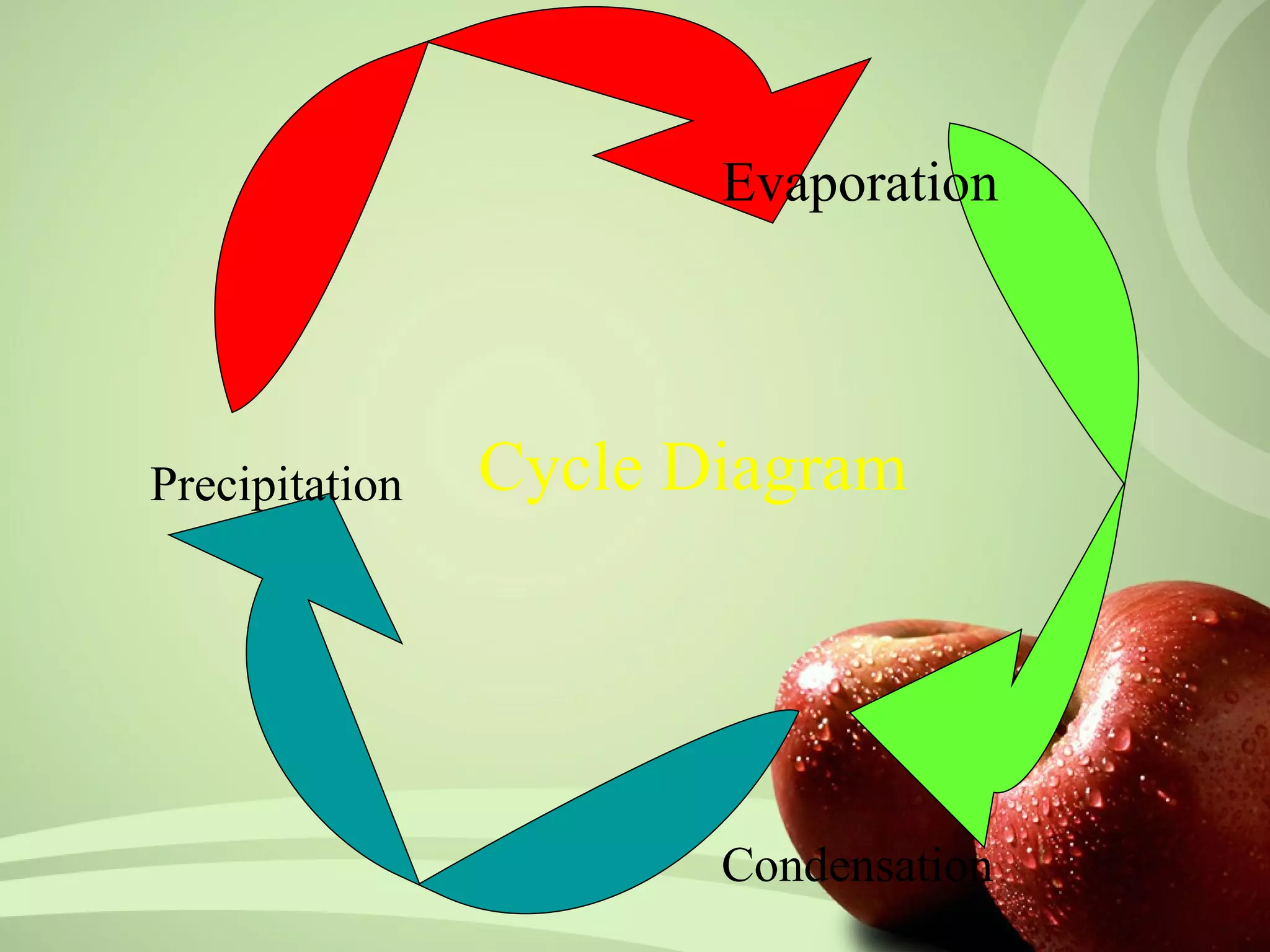
Evaporation


Precipitation   Cycle Diagram


                       Condensation
REMEMBER, IT’S JUST A
       DRAFT

     It’s Time to Write

       First Draft of Ideas
Use the information you gathered.
     Add whatever you think
            necessary.
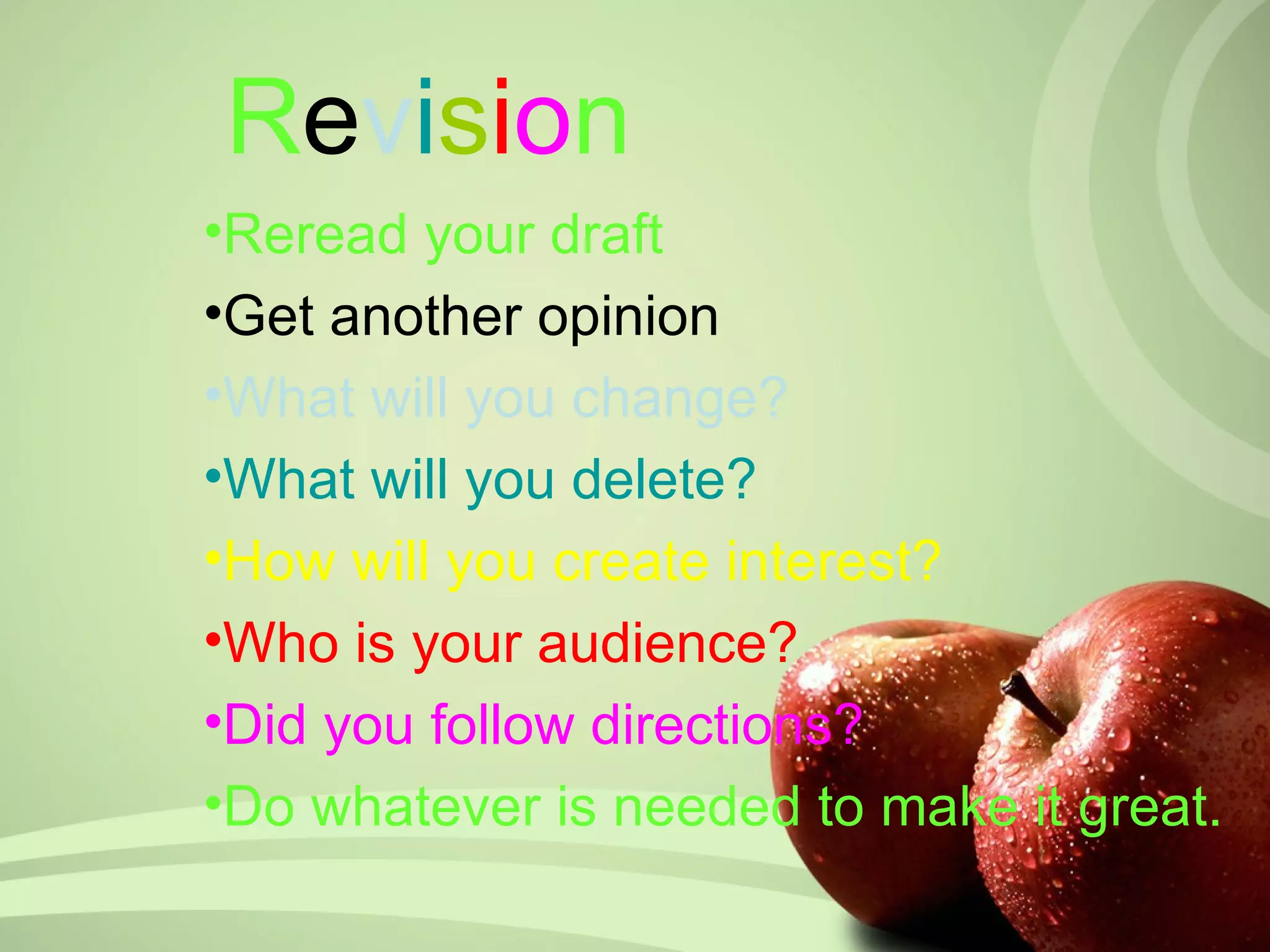
Revision
•Reread your draft
•Get another opinion
•What will you change?
•What will you delete?
•How will you create interest?
•Who is your audience?
•Did you follow directions?
•Do whatever is needed to make it great.
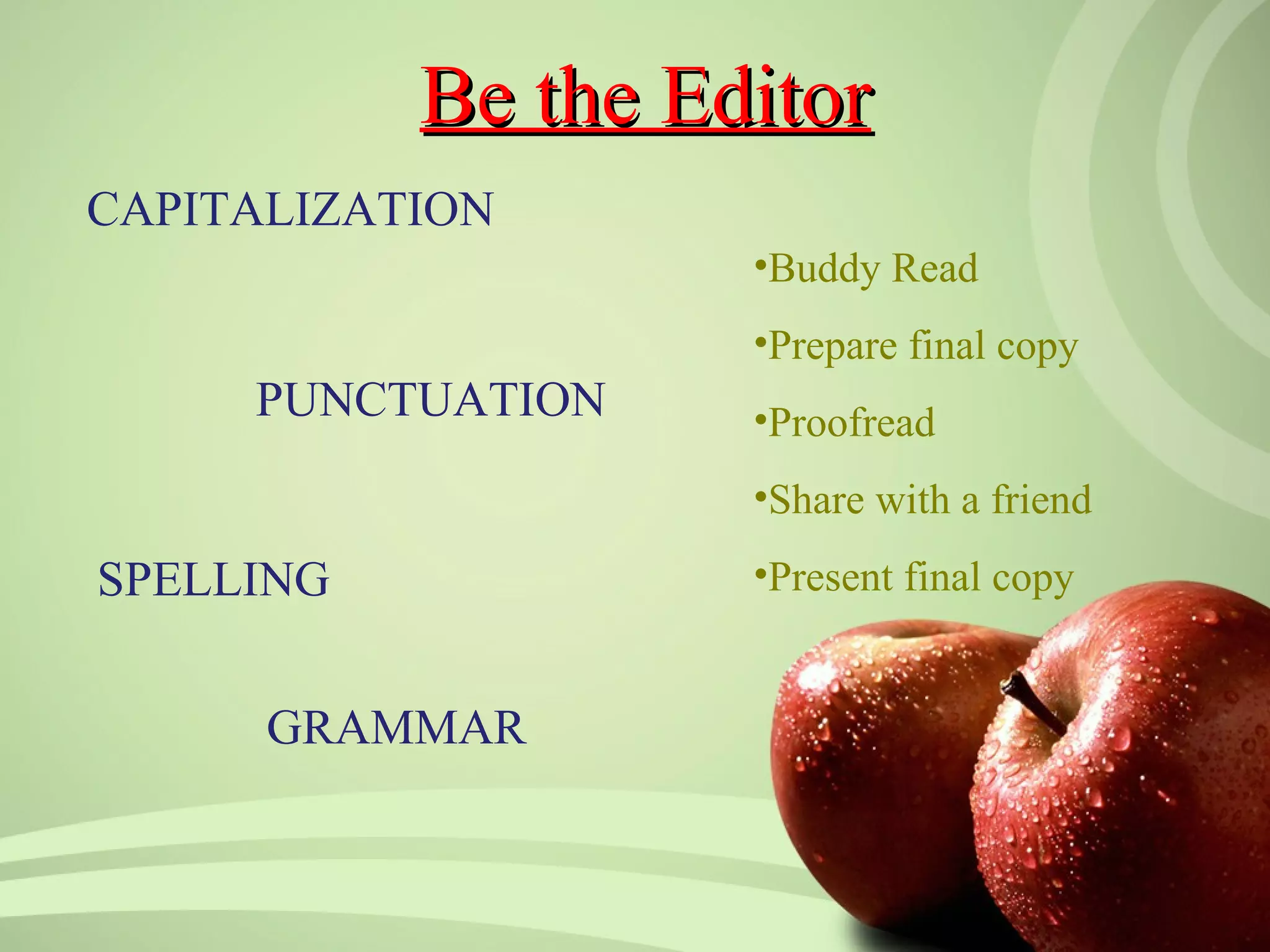
Be the Editor
CAPITALIZATION
                    •Buddy Read
                    •Prepare final copy
     PUNCTUATION    •Proofread
                    •Share with a friend

SPELLING            •Present final copy


      GRAMMAR
Enjoy
  What You Wrote.
  You Are Now an
  Author!!!
        THE END

Writing tips for students

  • 1.
    Student Writing Workshop My heart says to write. My hands want to write. My mind has ideas. How do I get it all on paper? Ms. Eliana Crespo
  • 2.
    Writing is boring! •Do you write a little every day? • Do you write about things important to you? • Sometimes don’t worry about mistakes. • Sometimes take time to edit. • We read to learn. We write to learn. • Explore each door. • Make writing powerful.
  • 3.
    The Writing Process •Prewriting: Choosing • Publishing: Putting and collecting to your writing out there make a plan for others to see, • Writing: first draft hear, read, enjoy • Revising: Clear up • Collecting: Keep a “wanderings” portfolio of your • Editing: spelling, writing projects grammar, punctuation
  • 4.
    Writing Well, WritingBest W r it in g S u b j e c t s W eb Y our T houghts D is c o v e r y M a k e a " S h o p p in g L is t " Key W ord W r it e F r e e ly K e e p Y o u r L is t t o t h e S id e R e la t e d W o r d s U se as an Idea R eference
  • 5.
    Reader, Writer • Read Books • Read Magazines • Read Newspapers • Read Internet News • Visit Bookstores • Ask Your Teacher • Find Out What Your Parents Read
  • 6.
    Be An Investigator •As you read, investigate how the author wrote “his” story • Who was the audience? • What was the purpose? • How did the author describe his characters and setting? • What as the plot? Why do you think it was chosen?
  • 7.
    Four Types ofWriting Y o u r W r it in g P r o m p t W ill G iv e Y o u C lu e s D e s c r ip t iv e E x p o s it o r y S e n s o ry A w a re n e s s S t e p s , C a u s e s , E x p la n a t io n s N a r r a t iv e P e r s u a s iv e S o m e t h in g H a p p e n e d A M u s t D o , A M u s t T h in k
  • 8.
    I’ve decided whatstyle of writing, now what? It’s time to collect details to support your Gather your thoughts. writing. Visit the library. Interview experts. Talk it up. Watch videos, T.V. Read about your subject. Participate. Be a part of what you are writing. Surf the Net.
  • 9.
    Create Cool GraphicOrganizers to Organize Your Thoughts • Fishbone • Line Diagram • Time Line • Sensory Chart • Venn Diagram • Explanation Diagram • KWL • 5 W’s
  • 10.
    Differences VENN DIAGRAM Things In Common Differences
  • 11.
    Tast Taste es s lls S me Sensory Sights Chart Tex ture s s und So
  • 12.
    How? Who? When? What? Where? 5 W’s Graph narratives, news, stories
  • 13.
    Evaporation Precipitation Cycle Diagram Condensation
  • 14.
    REMEMBER, IT’S JUSTA DRAFT It’s Time to Write First Draft of Ideas Use the information you gathered. Add whatever you think necessary.
  • 15.
    Revision •Reread your draft •Getanother opinion •What will you change? •What will you delete? •How will you create interest? •Who is your audience? •Did you follow directions? •Do whatever is needed to make it great.
  • 16.
    Be the Editor CAPITALIZATION •Buddy Read •Prepare final copy PUNCTUATION •Proofread •Share with a friend SPELLING •Present final copy GRAMMAR
  • 17.
    Enjoy WhatYou Wrote. You Are Now an Author!!! THE END