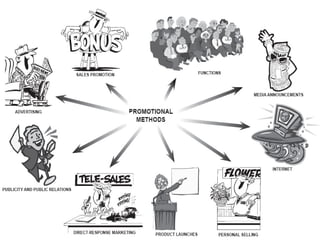
Promotion mix Promotion is to make your customers aware that your product exists. Four major aspects of promotional mix Advertising Personal selling Public relations Sales promotion
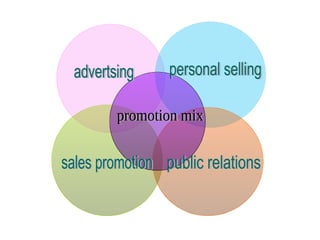
promotion mix advertsing personal selling public relations sales promotion
 
 
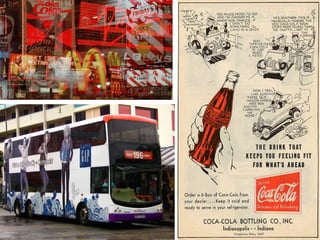
Advertising   Any paid presentation and promotion of ideas, goods, or services by an identified sponsor.  Various medium of advertising are: Television Radio Newspaper and magazines Travel trade press videos  Print ads cinema  exhibitions and trade fairs  internet
 
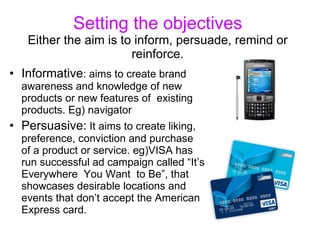
Setting the objectives Either the aim is to inform, persuade, remind or reinforce. Informative : aims to create brand awareness and knowledge of new products or new features of  existing products. Eg) navigator Persuasive:  It aims to create liking, preference, conviction and purchase of a product or service. eg)VISA has run successful ad campaign called “It’s Everywhere  You Want  to Be”, that showcases desirable locations and events that don’t accept the American Express card.
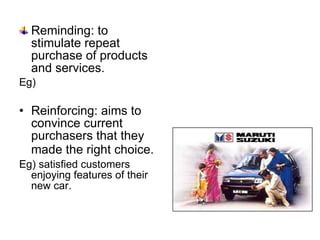
Reminding: to stimulate repeat purchase of products and services . Eg) Reinforcing: aims to convince current purchasers that they made the right choice.   Eg) satisfied customers enjoying features of their new car.
Deciding on advertising budget Stage in product life cycle:  new brand/product-large advertising expenditure;  old product-low cost of advertising. Market share and consumer base:   high market share- low cost of advertising  low market share- high cost involved Competition and clutter: A brand must advertise more heavily to be heard in a pool of competitors.
Advertising frequency:  The number of repetitions needed to put across the brand’s message to consumers has an important impact on the advertising budget.   Provide substitutability: Brands in less-well-differentiated or commodity-like product classes (beer, soft drinks, banks , and airlines) require heavy advertising to establish a differential image.
Developing advertising campaign Message generation and evaluation It is important to generate fresh insights and avoid using the same appeals and positions as others. A good ad normally focuses on one or two core selling propositions.  Creative Development And Execution   The ad’s impact depends not only on what is said but often more importantly on how it is said. Message execution can be decisive.
Reaches large, geographically dispersed audiences, often with high frequency;  Low cost per exposure, though overall costs are high;  Consumers perceive advertised goods as more legitimate;  Dramatizes company/brand;  Builds brand image;  may stimulate short-term sales; Impersonal, one-way communication; Expensive  Features
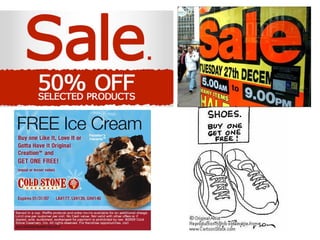
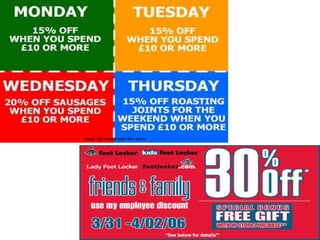
Sales promotion Involves the use of special short-term techniques, often in the form of incentives, to encourage customers to respond or undertake some activity.  For instance, the use of retail coupons with expiration dates requires customers to act while the incentive is still valid.
 
 
Makes use of a variety of formats: premiums, coupons, contests, etc. Attracts attention, offers strong purchase incentives, dramatizes offers, boosts sagging sales;  Stimulates quick response;  Short-lived;  Not effective at building long-term brand preferences
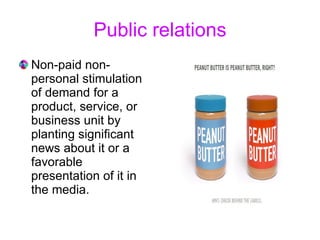
Public relations Non-paid non-personal stimulation of demand for a product, service, or business unit by planting significant news about it or a favorable presentation of it in the media.
Highly credible;  Very believable;  Many forms: news stories, news features, events and sponsorships, etc.;  Reaches many prospects missed via other forms of promotion;  Dramatizes company or product;  Often the most under used element in the promotional mix;  Relatively  inexpensive (certainly not 'free' as many people think--there are costs involved)
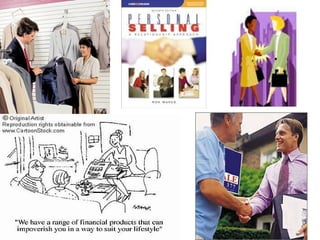
Personal selling Sales men selling to the customer on a one to one basis. Advantages being that questions can be answered straight away, problems can be sorted out at a personal level. The sales man remains with the customers case through to the completion of the sale.
 
Most effective tool for building buyers’ preferences, convictions, and actions; Personal interaction allows for feedback and adjustments;  Relationship-oriented;  Buyers are more attentive;  Sales force represents a long-term commitment;  Most expensive of the promotional tools

Promotion Mix

  • 1.
    Promotion mix Promotionis to make your customers aware that your product exists. Four major aspects of promotional mix Advertising Personal selling Public relations Sales promotion
  • 2.
    promotion mix advertsingpersonal selling public relations sales promotion
  • 3.
  • 4.
  • 5.
    Advertising Any paid presentation and promotion of ideas, goods, or services by an identified sponsor. Various medium of advertising are: Television Radio Newspaper and magazines Travel trade press videos Print ads cinema exhibitions and trade fairs internet
  • 6.
  • 7.
    Setting the objectivesEither the aim is to inform, persuade, remind or reinforce. Informative : aims to create brand awareness and knowledge of new products or new features of existing products. Eg) navigator Persuasive: It aims to create liking, preference, conviction and purchase of a product or service. eg)VISA has run successful ad campaign called “It’s Everywhere You Want to Be”, that showcases desirable locations and events that don’t accept the American Express card.
  • 8.
    Reminding: to stimulaterepeat purchase of products and services . Eg) Reinforcing: aims to convince current purchasers that they made the right choice. Eg) satisfied customers enjoying features of their new car.
  • 9.
    Deciding on advertisingbudget Stage in product life cycle: new brand/product-large advertising expenditure; old product-low cost of advertising. Market share and consumer base: high market share- low cost of advertising low market share- high cost involved Competition and clutter: A brand must advertise more heavily to be heard in a pool of competitors.
  • 10.
    Advertising frequency: The number of repetitions needed to put across the brand’s message to consumers has an important impact on the advertising budget. Provide substitutability: Brands in less-well-differentiated or commodity-like product classes (beer, soft drinks, banks , and airlines) require heavy advertising to establish a differential image.
  • 11.
    Developing advertising campaignMessage generation and evaluation It is important to generate fresh insights and avoid using the same appeals and positions as others. A good ad normally focuses on one or two core selling propositions. Creative Development And Execution The ad’s impact depends not only on what is said but often more importantly on how it is said. Message execution can be decisive.
  • 12.
    Reaches large, geographicallydispersed audiences, often with high frequency; Low cost per exposure, though overall costs are high; Consumers perceive advertised goods as more legitimate; Dramatizes company/brand; Builds brand image; may stimulate short-term sales; Impersonal, one-way communication; Expensive Features
  • 13.
    Sales promotion Involvesthe use of special short-term techniques, often in the form of incentives, to encourage customers to respond or undertake some activity.  For instance, the use of retail coupons with expiration dates requires customers to act while the incentive is still valid.
  • 14.
  • 15.
  • 16.
    Makes use ofa variety of formats: premiums, coupons, contests, etc. Attracts attention, offers strong purchase incentives, dramatizes offers, boosts sagging sales; Stimulates quick response; Short-lived; Not effective at building long-term brand preferences
  • 17.
    Public relations Non-paidnon-personal stimulation of demand for a product, service, or business unit by planting significant news about it or a favorable presentation of it in the media.
  • 18.
    Highly credible; Very believable; Many forms: news stories, news features, events and sponsorships, etc.; Reaches many prospects missed via other forms of promotion; Dramatizes company or product; Often the most under used element in the promotional mix; Relatively inexpensive (certainly not 'free' as many people think--there are costs involved)
  • 19.
    Personal selling Salesmen selling to the customer on a one to one basis. Advantages being that questions can be answered straight away, problems can be sorted out at a personal level. The sales man remains with the customers case through to the completion of the sale.
  • 20.
  • 21.
    Most effective toolfor building buyers’ preferences, convictions, and actions; Personal interaction allows for feedback and adjustments; Relationship-oriented; Buyers are more attentive; Sales force represents a long-term commitment; Most expensive of the promotional tools