The Future of Air Traffic Control
            system
              Present by:
           AHMED S. ALQAHTANI
Table of Contents
•   Abstract
•   Introduction
•   ATC system development in future.
•   Major systems in development
•   The airport as an operation system.
•   System development of ATC.
•   Conclusion
•   Glossary
•   Figures
•   References
Abstract
Air Traffic Control system has developed in
  predecessor and it’s necessary to developed
  this system to avoid air traffic collisions, I
  displayed here in slides the system developed
  stages and future of ATC system thru satellite .
Introduction
The United States air traffic control system is
  safest in the world. Federal Aviation
  Administration and its Air traffic organization
  work continuously to improve the system.
The next generation will transform the national
  airspace system from one that is based on
  ground radars to one that uses satellite
  technology.
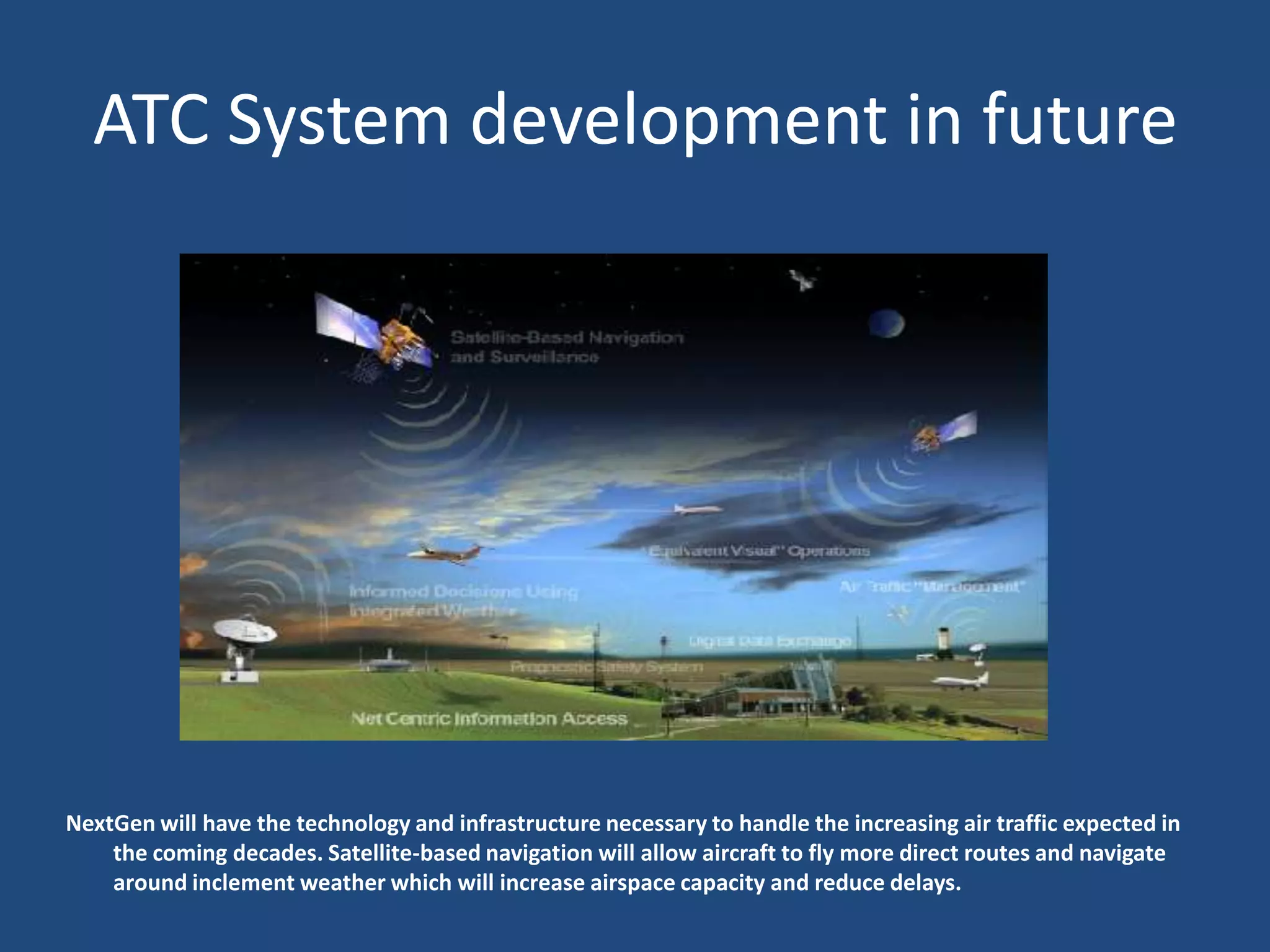
ATC System development in future


NextGen will have the technology and infrastructure necessary to handle the increasing air traffic expected in
    the coming decades. Satellite-based navigation will allow aircraft to fly more direct routes and navigate
    around inclement weather which will increase airspace capacity and reduce delays.
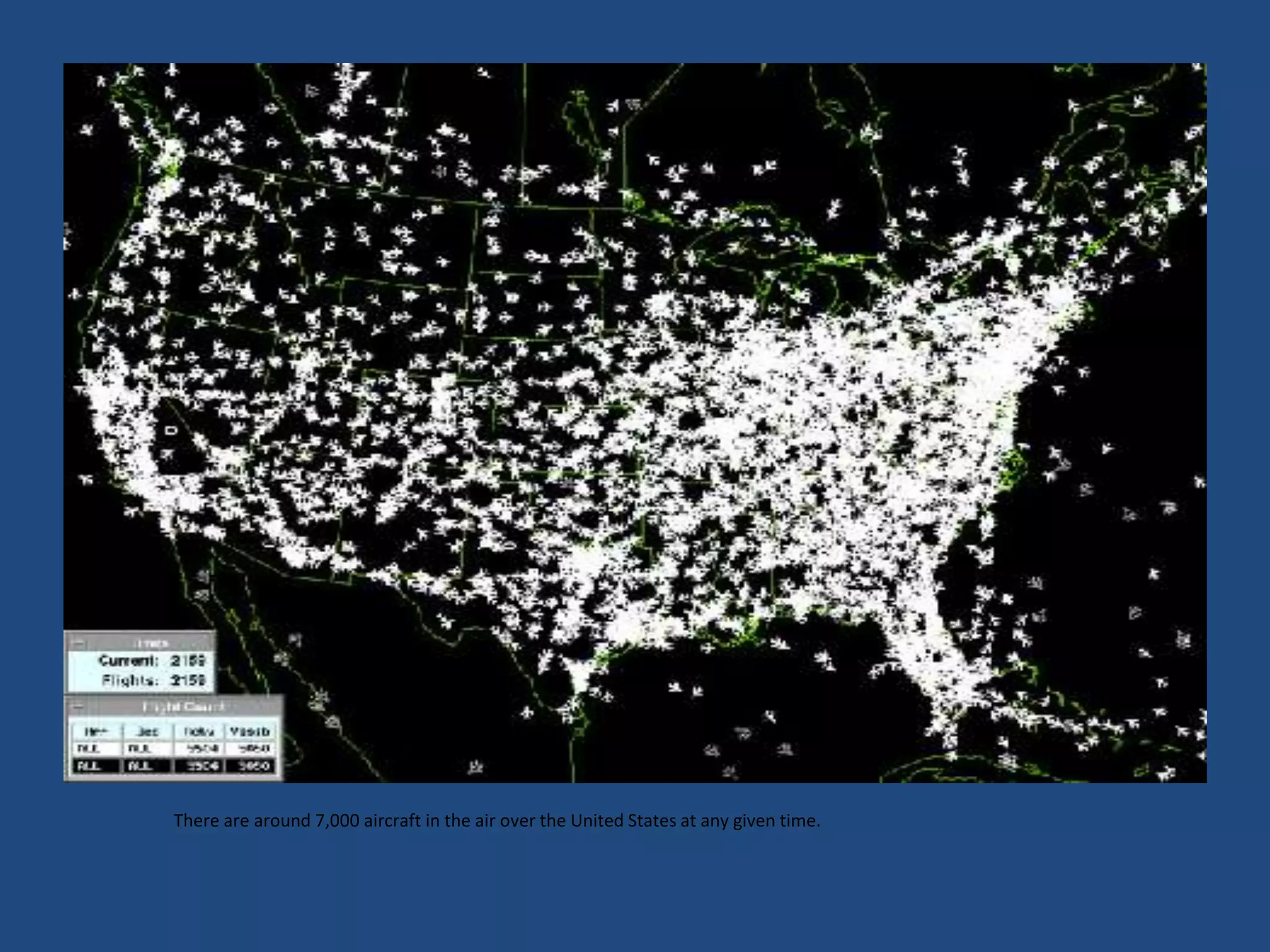
There are around 7,000 aircraft in the air over the United States at any given time.
Major systems in development
• 120. Satellite system: a system using earth
  satellites can provide worldwide navigation coverage
  with the accuracy associated with line-of-sight
  frequencies.
• 121. Microwave Landing System: More flexible
  approach paths in while ILS has served well.
• 123. Collision-Avoidance System: Two aircraft
  on parallel tracks may pass each other very closely.
The Airport as an operation system
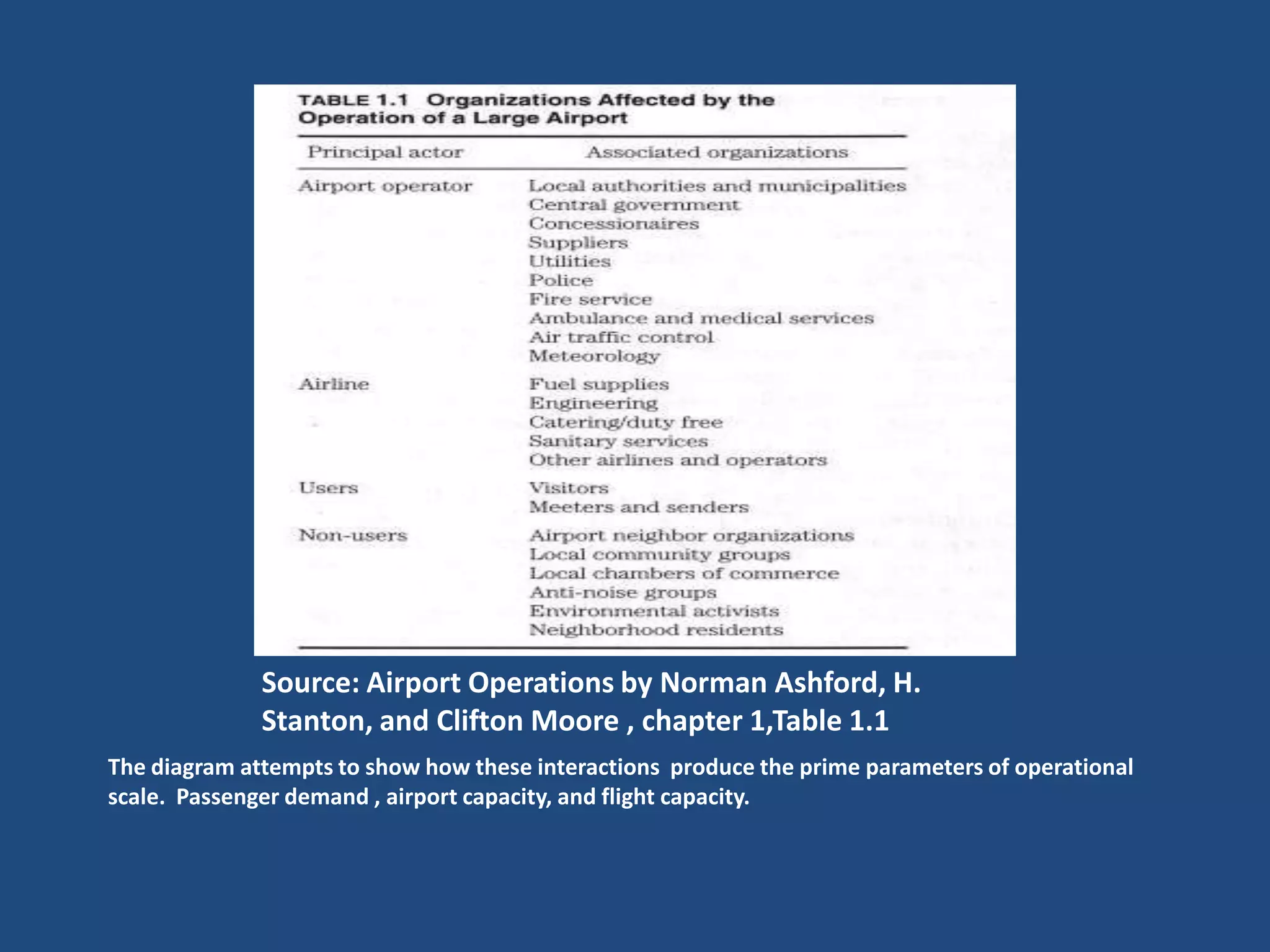
• The airport as system
Airport forms an essential part of the air
  transport system. therefore, the point of
  interaction of the three major components of
  the air transport system:
The airport, including for these discussion
  purpose the airways control system – The
  airline – The user.
Source: Airport Operations by Norman Ashford, H.
              Stanton, and Clifton Moore , chapter 1,Table 1.1
The diagram attempts to show how these interactions produce the prime parameters of operational
scale. Passenger demand , airport capacity, and flight capacity.
System development of ATC:
• Stage 1 : Procedural ATC System
Stage 1 ATC system use procedural method, they
  requires - flight plan - paper strips - radio
  system.
• Stage 2: Procedural ATC with radar assistance
In 1960s ATC began to use radar with
  surveillance approach radar (SAR). Radar
  could be use to monitor aircraft thru
  Instrument landing system (ILS).
• Stage 3: The first-generation “automated”
  ATC system.
Radar and computer, radar provide real-time
  surveillance within ATCC.
• Stage 4: Current generation radar and
  computer-based ATC system.
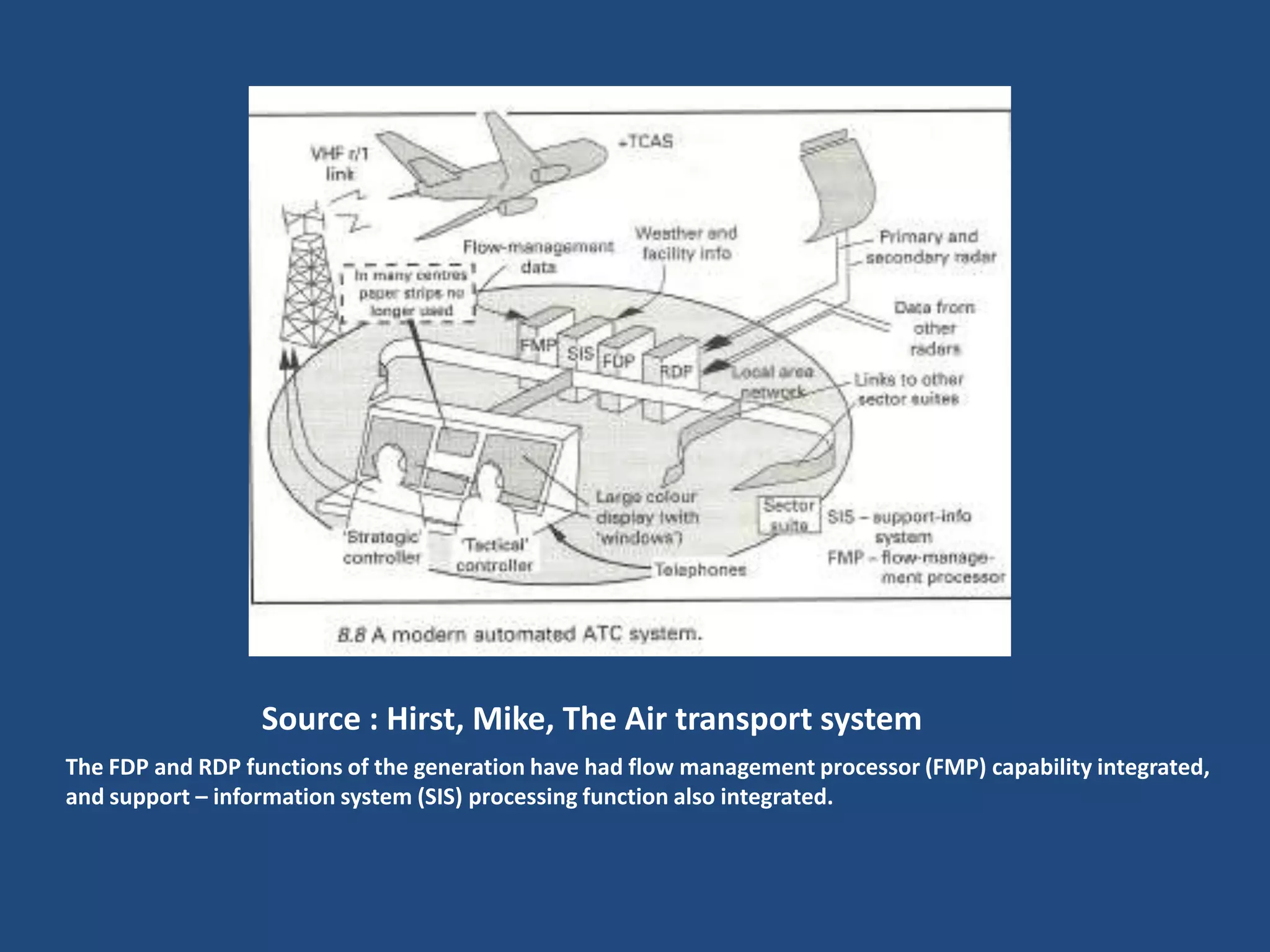
A modern automated ATC system is illustrated,
  with tactical and strategic controllers on
  modern flight deck.
Source : Hirst, Mike, The Air transport system
The FDP and RDP functions of the generation have had flow management processor (FMP) capability integrated,
and support – information system (SIS) processing function also integrated.
Conclusions
As FAA moved transition of ATC system from
  radar-based to satellite based. controllers and
  pilots will have the advantage of this
  technology.
Satellite-Technology will allow controllers to
  guide aircraft in more direct routes through
  the nation's airspace.
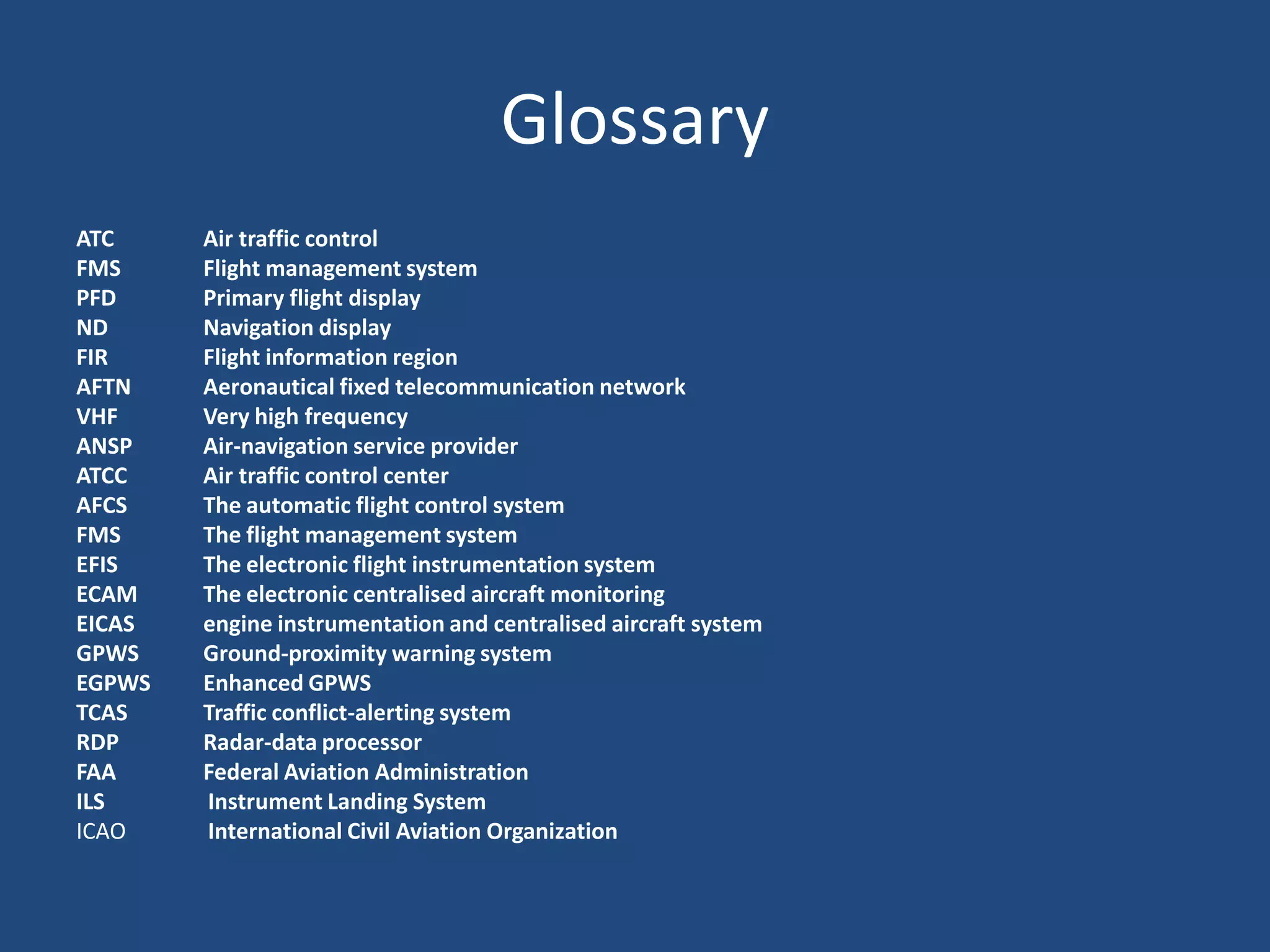
Glossary
ATC     Air traffic control
FMS     Flight management system
PFD     Primary flight display
ND      Navigation display
FIR     Flight information region
AFTN    Aeronautical fixed telecommunication network
VHF     Very high frequency
ANSP    Air-navigation service provider
ATCC    Air traffic control center
AFCS    The automatic flight control system
FMS     The flight management system
EFIS    The electronic flight instrumentation system
ECAM    The electronic centralised aircraft monitoring
EICAS   engine instrumentation and centralised aircraft system
GPWS    Ground-proximity warning system
EGPWS   Enhanced GPWS
TCAS    Traffic conflict-alerting system
RDP     Radar-data processor
FAA     Federal Aviation Administration
ILS     Instrument Landing System
ICAO    International Civil Aviation Organization
Figures
• 1.2 Fundamentals of Radar Signal Processing, Mark A.
  Richards.
• 1.3 Airport Operations by Norman Ashford, H. Stanton, and
  Clifton Moore. Chapter one.
References
• Source : FAA in URL http://www.faa.gov/air_traffic/briefing/
• Hirst, Mike, The Air transport system, Part II System elements
• Airport Operations by Norman Ashford, H. Stanton, and
  Clifton Moore.
• Electronics Engineers' Handbook, Donald G. Fink, Sec.25-120,
  121, 123.

Project01 atc

  • 1.
    The Future ofAir Traffic Control system Present by: AHMED S. ALQAHTANI
  • 2.
    Table of Contents • Abstract • Introduction • ATC system development in future. • Major systems in development • The airport as an operation system. • System development of ATC. • Conclusion • Glossary • Figures • References
  • 3.
    Abstract Air Traffic Controlsystem has developed in predecessor and it’s necessary to developed this system to avoid air traffic collisions, I displayed here in slides the system developed stages and future of ATC system thru satellite .
  • 4.
    Introduction The United Statesair traffic control system is safest in the world. Federal Aviation Administration and its Air traffic organization work continuously to improve the system. The next generation will transform the national airspace system from one that is based on ground radars to one that uses satellite technology.
  • 5.
    ATC System developmentin future NextGen will have the technology and infrastructure necessary to handle the increasing air traffic expected in the coming decades. Satellite-based navigation will allow aircraft to fly more direct routes and navigate around inclement weather which will increase airspace capacity and reduce delays.
  • 6.
    There are around7,000 aircraft in the air over the United States at any given time.
  • 7.
    Major systems indevelopment • 120. Satellite system: a system using earth satellites can provide worldwide navigation coverage with the accuracy associated with line-of-sight frequencies. • 121. Microwave Landing System: More flexible approach paths in while ILS has served well. • 123. Collision-Avoidance System: Two aircraft on parallel tracks may pass each other very closely.
  • 8.
    The Airport asan operation system • The airport as system Airport forms an essential part of the air transport system. therefore, the point of interaction of the three major components of the air transport system: The airport, including for these discussion purpose the airways control system – The airline – The user.
  • 9.
    Source: Airport Operationsby Norman Ashford, H. Stanton, and Clifton Moore , chapter 1,Table 1.1 The diagram attempts to show how these interactions produce the prime parameters of operational scale. Passenger demand , airport capacity, and flight capacity.
  • 10.
    System development ofATC: • Stage 1 : Procedural ATC System Stage 1 ATC system use procedural method, they requires - flight plan - paper strips - radio system. • Stage 2: Procedural ATC with radar assistance In 1960s ATC began to use radar with surveillance approach radar (SAR). Radar could be use to monitor aircraft thru Instrument landing system (ILS).
  • 11.
    • Stage 3:The first-generation “automated” ATC system. Radar and computer, radar provide real-time surveillance within ATCC. • Stage 4: Current generation radar and computer-based ATC system. A modern automated ATC system is illustrated, with tactical and strategic controllers on modern flight deck.
  • 12.
    Source : Hirst,Mike, The Air transport system The FDP and RDP functions of the generation have had flow management processor (FMP) capability integrated, and support – information system (SIS) processing function also integrated.
  • 13.
    Conclusions As FAA movedtransition of ATC system from radar-based to satellite based. controllers and pilots will have the advantage of this technology. Satellite-Technology will allow controllers to guide aircraft in more direct routes through the nation's airspace.
  • 14.
    Glossary ATC Air traffic control FMS Flight management system PFD Primary flight display ND Navigation display FIR Flight information region AFTN Aeronautical fixed telecommunication network VHF Very high frequency ANSP Air-navigation service provider ATCC Air traffic control center AFCS The automatic flight control system FMS The flight management system EFIS The electronic flight instrumentation system ECAM The electronic centralised aircraft monitoring EICAS engine instrumentation and centralised aircraft system GPWS Ground-proximity warning system EGPWS Enhanced GPWS TCAS Traffic conflict-alerting system RDP Radar-data processor FAA Federal Aviation Administration ILS Instrument Landing System ICAO International Civil Aviation Organization
  • 15.
    Figures • 1.2 Fundamentalsof Radar Signal Processing, Mark A. Richards. • 1.3 Airport Operations by Norman Ashford, H. Stanton, and Clifton Moore. Chapter one.
  • 16.
    References • Source :FAA in URL http://www.faa.gov/air_traffic/briefing/ • Hirst, Mike, The Air transport system, Part II System elements • Airport Operations by Norman Ashford, H. Stanton, and Clifton Moore. • Electronics Engineers' Handbook, Donald G. Fink, Sec.25-120, 121, 123.