By
Umesh Kumar Meher 1
The Project Manager
“Project Managers are special people
who will ensure project success”
2
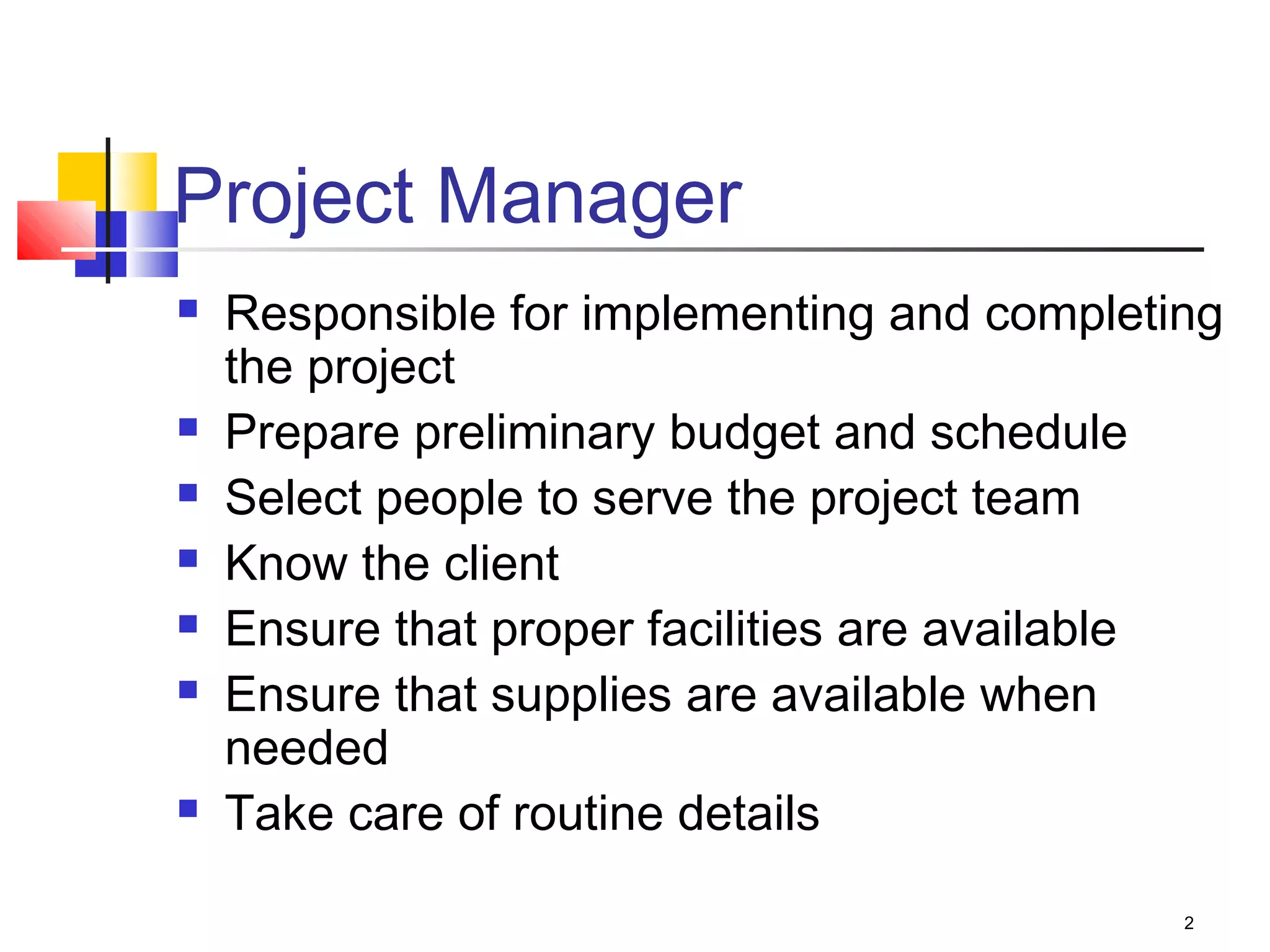
Project Manager
 Responsible for implementing and completing
the project
 Prepare preliminary budget and schedule
 Select people to serve the project team
 Know the client
 Ensure that proper facilities are available
 Ensure that supplies are available when
needed
 Take care of routine details
3
Comparison between Functional and
Project Manager’s Role and
Responsibilities
4
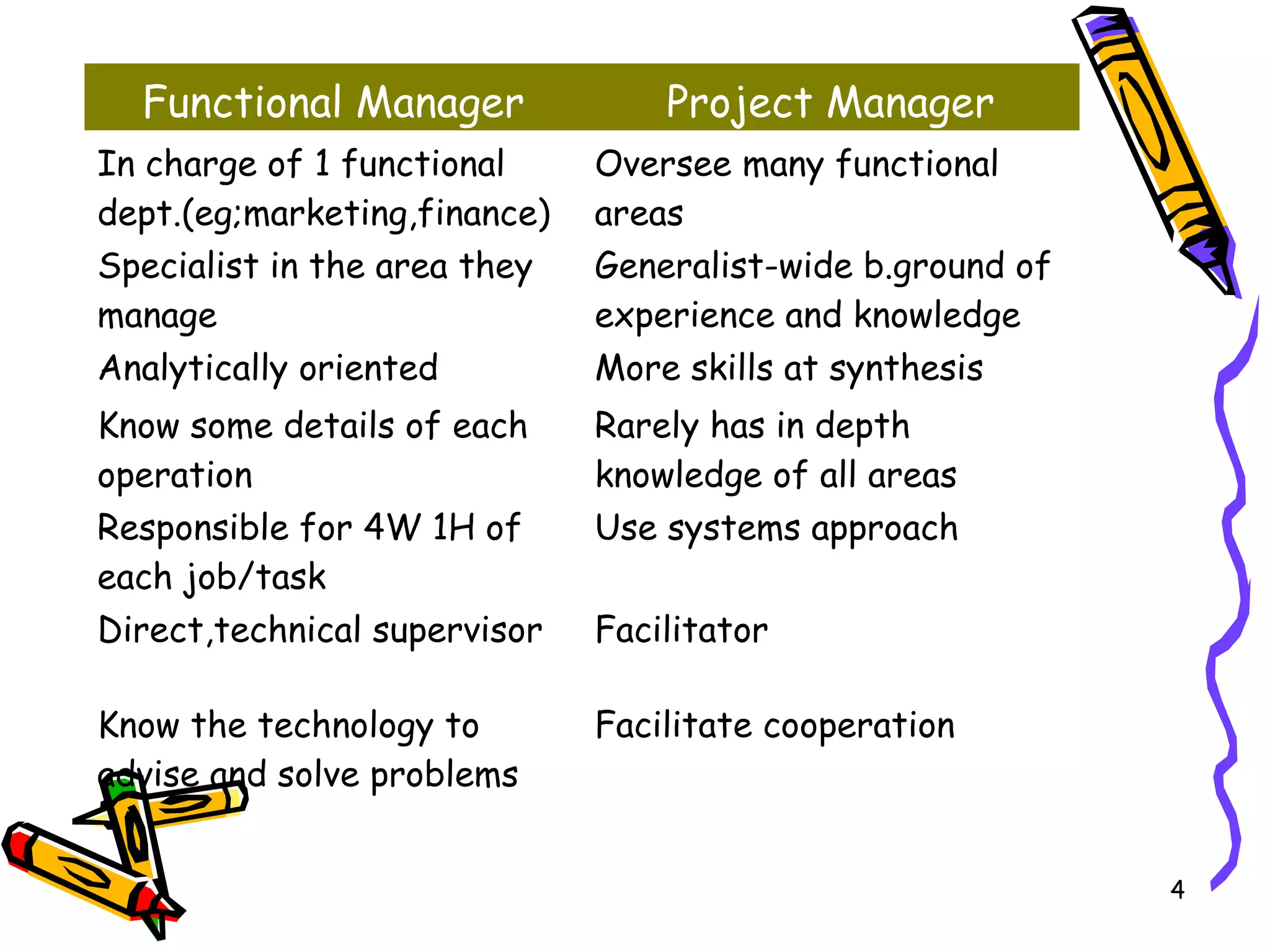
Functional Manager Project Manager
In charge of 1 functional
dept.(eg;marketing,finance)
Oversee many functional
areas
Specialist in the area they
manage
Generalist-wide b.ground of
experience and knowledge
Analytically oriented More skills at synthesis
Know some details of each
operation
Rarely has in depth
knowledge of all areas
Responsible for 4W 1H of
each job/task
Use systems approach
Direct,technical supervisor Facilitator
Know the technology to
advise and solve problems
Facilitate cooperation
5
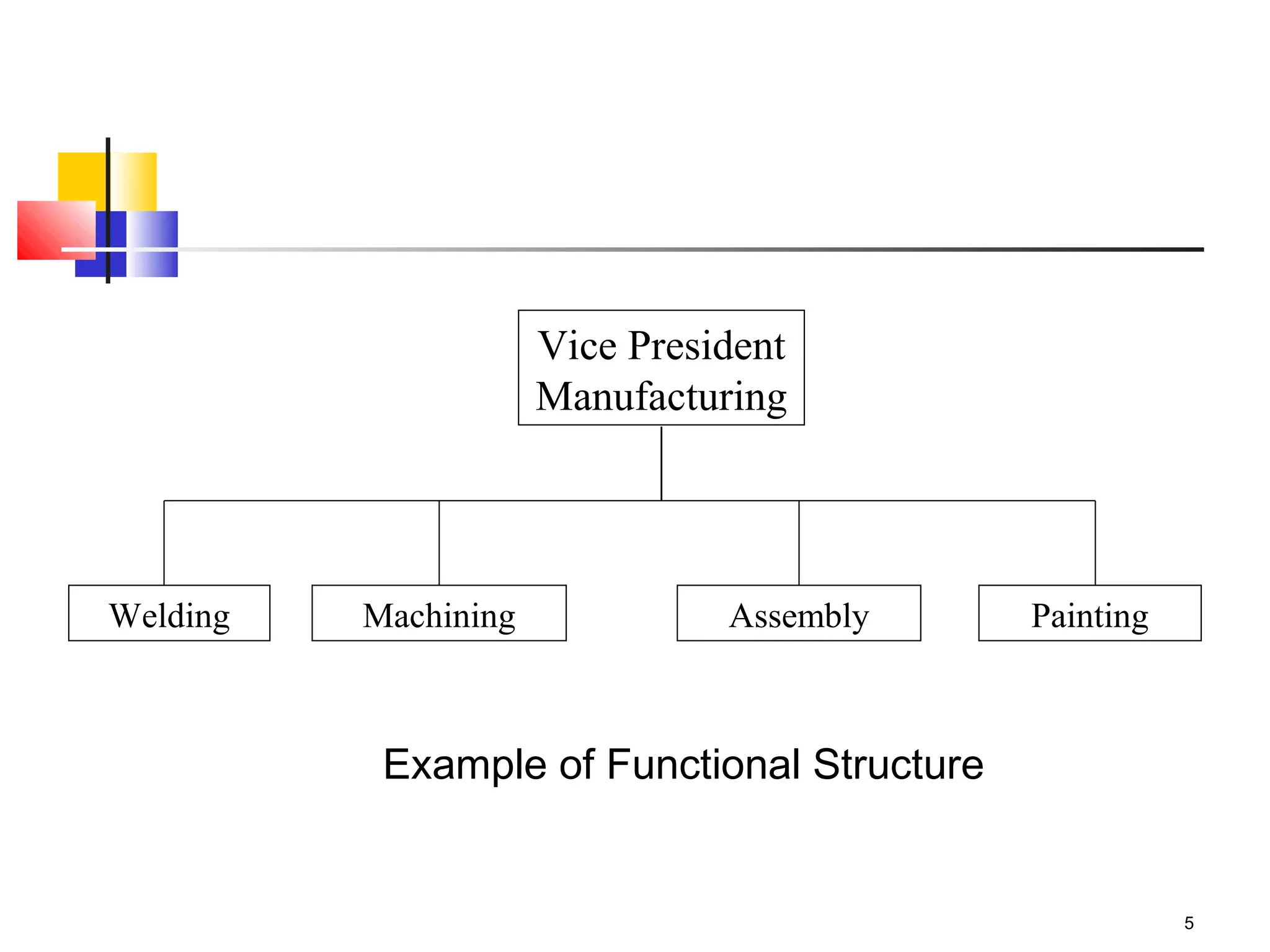
Vice President
Manufacturing
Welding Machining Assembly Painting
Example of Functional Structure
6
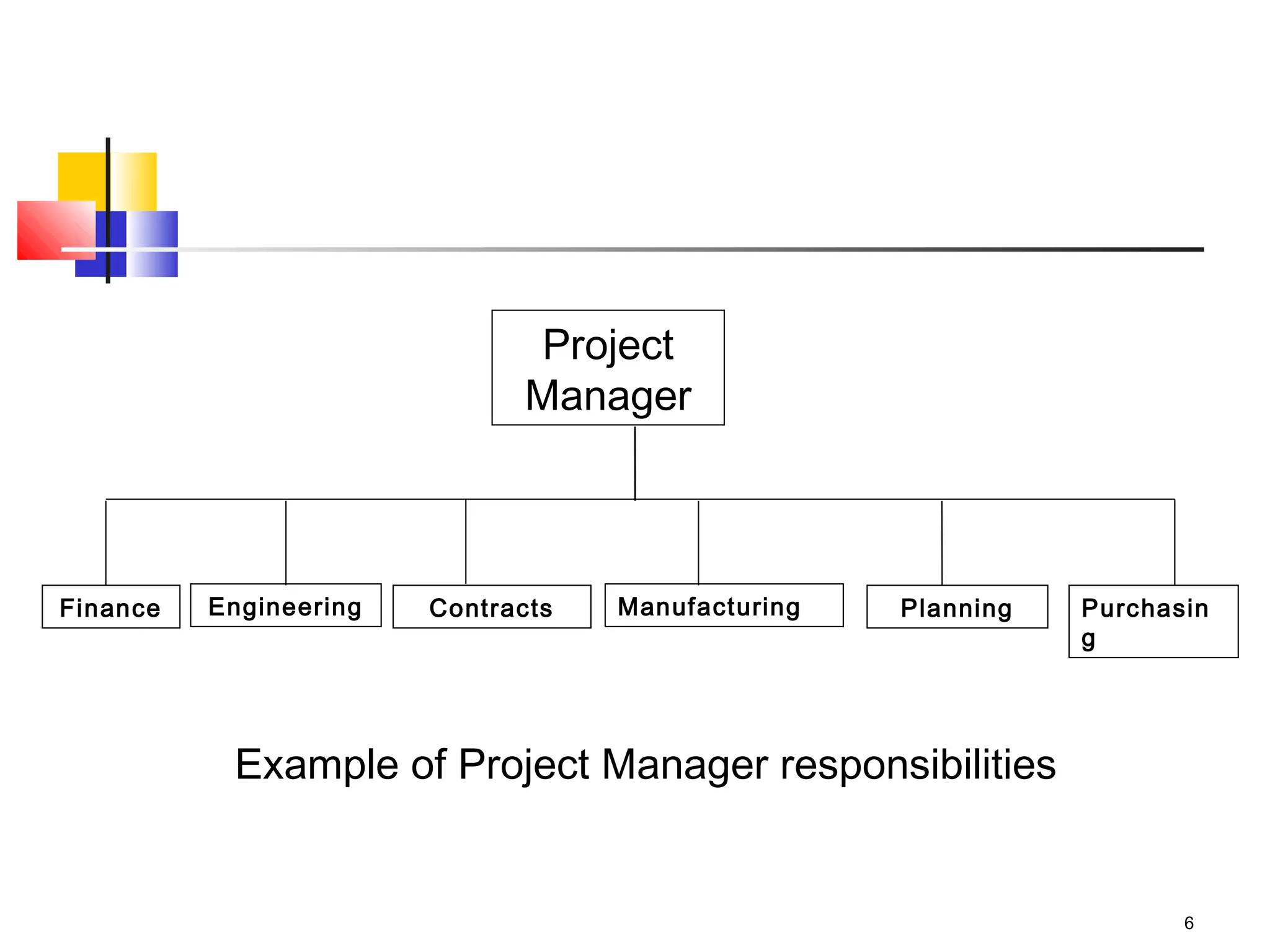
Example of Project Manager responsibilities
Project
Manager
Finance Engineering Contracts PlanningManufacturing Purchasin
g
7
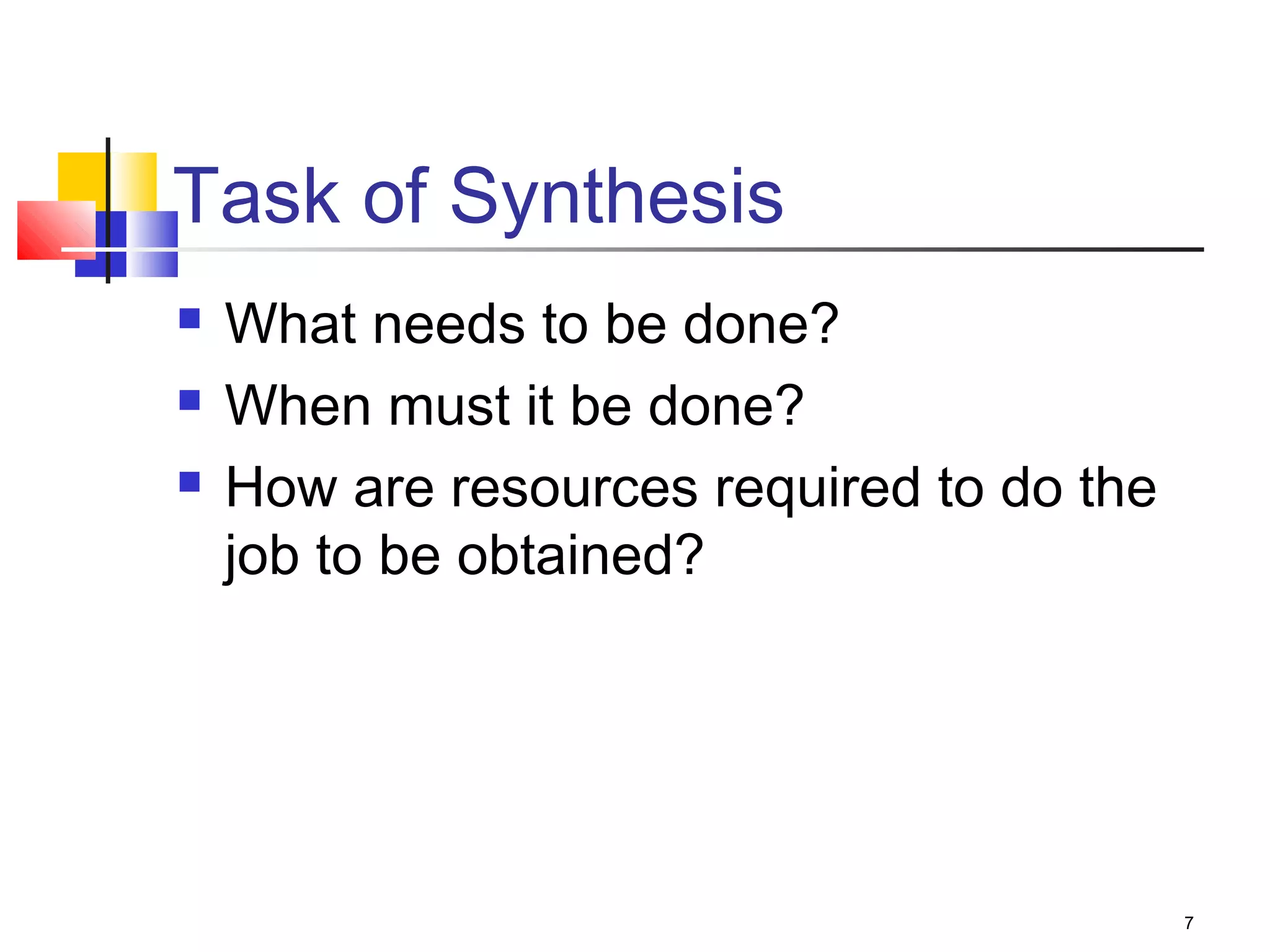
Task of Synthesis
 What needs to be done?
 When must it be done?
 How are resources required to do the
job to be obtained?
8
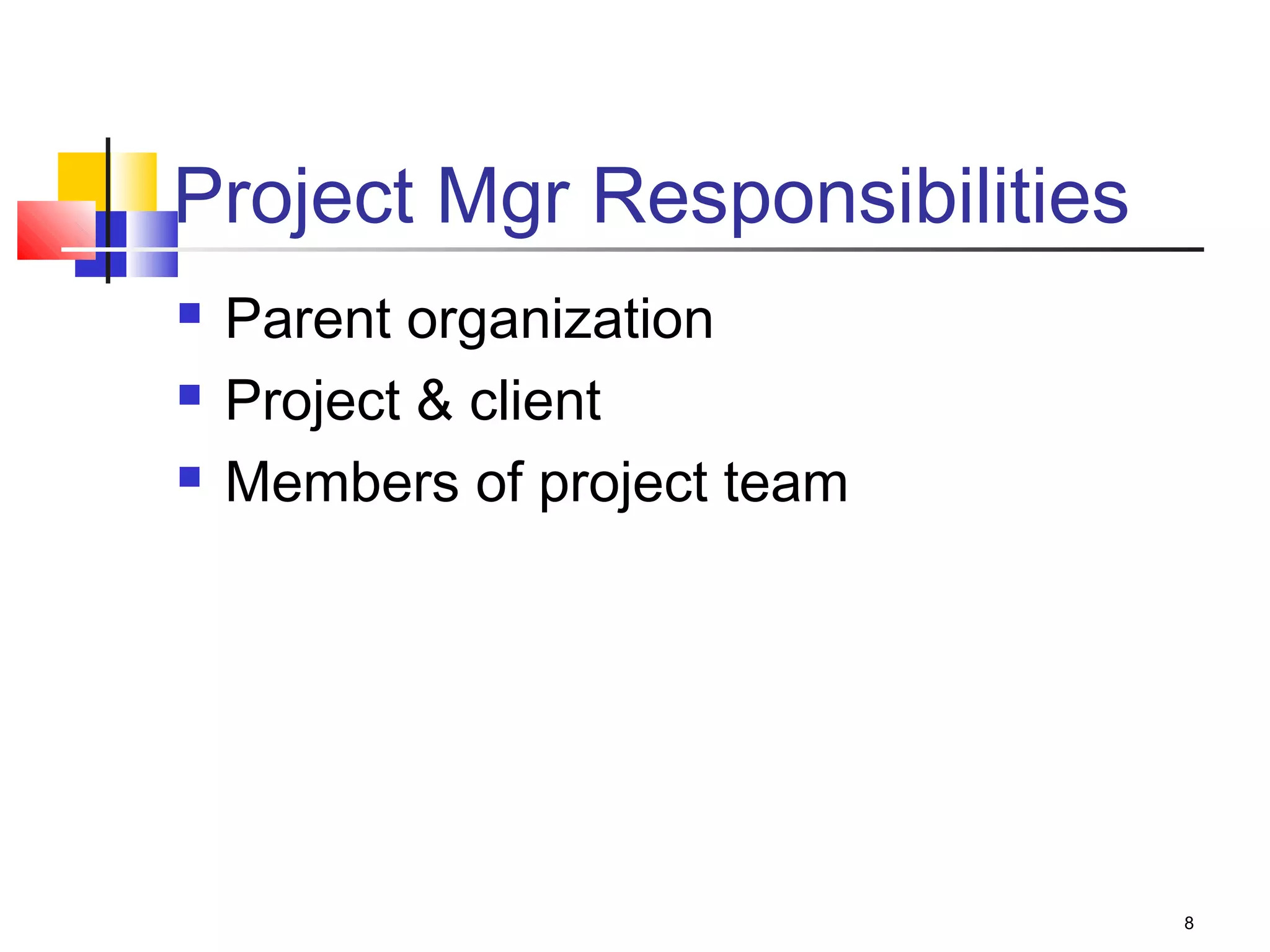
Project Mgr Responsibilities
 Parent organization
 Project & client
 Members of project team
9
Responsibilities to Parent
Company
 Proper conservation of resources
 Timely and accurate project communication
 Competent management of the project
 Keep management informed – project’s
status, cost, timing and prospects
 Running over budget or delay
 Protect firm from risk
 Damage control
10
Responsibilities to the Project
 Preserve integrity of the project
 Resolve conflicting demands made by
many parties – engineering, marketing,
manufacturing, administration,
purchasing
11
Responsibilities to Project
Team Members
 Finite nature of the project
 Specialized nature of the team
 Concern with future of project people
 Transition back to functional units
12
PM Career Path
 Participation in small and then larger
project
 Give command over small and large
project
 Project engineer, manufacturing
manager, deputy project manager,
project manager
13
Special Demands on the
Project Manager
 Acquiring Adequate Resources
 Acquiring and Motivating Personnel
 Dealing With Obstacles
 Making Project Goal Trade-offs
 Failure and the Risk and Fear of Failure
 Breadth of Communication
 Negotiation
14
Acquiring Adequate
Resources
 Human resource, material, machine,
subcontractors, consultants, space,
utilities
 Resource trade-offs
 Human resource – skills, pay
 Subcontracting – cost, delay, control
 Under and overestimate of resources
 Resource acquisition
15
Acquiring and Motivating
Personnel
 “Borrowed” from functional department
 Top producers and high skill
 Challenge and variety in project
 Influence over salary and promotions
 Effective team members:
 High quality technical skills
 Political sensitivity
 Strong problem orientation
 Strong goal orientation
 High self esteem
16
Dealing With Obstacles
 Better planning, fewer crises
 Project inception – resources
 Budget and schedule
 Change in technical plans, schedule
 Uncertainty surrounding what happens
at the end of the project
 Open communication with all parties
17
Making Project Goal Trade-
offs
 Trade-offs – cost, time, performance
 Technical and managerial functions
 Project formation – no difference in
importance
 Build-up stage – schedule
 Final stage – performance
 Smoothness of running project team
for technical progress
18
Failure and the Risk and Fear
of Failure
 Failure in routine project – come in late
or over budget
 Failure in new project – technical
problem
 Waves of pessimism and optimism
19
Breadth of Communication
 Top management, functional department,
clients, suppliers, authorities, subcontractors
 Engineering change management
 Use of cyber communication tools
 PM fully understand project’s intent
 PM has managed projects that failed
 Have support of top management
 Build and maintain solid information network
 PM must be flexible
20
Negotiation
 Highly skill negotiator
21
Selecting the Project Manager
 Strong technical background
 Hard-nosed manager
 Mature individual
 Someone who is currently available
 Someone on good terms with senior
executives
 A person who can keep the project teams
happy
 One who has worked is several departments
 A person who can walk on the waters
22
Credibility
 Technical credibility –perceived as
possessing sufficient technical knowledge
 Reasonable understanding of base
technologies
 Administrative credibility – responsibilities to
client and senior management
 Trade-offs decisions
 Mature judgments, courage
23
Sensitivity
 Political sensitivity
 Sense inter-personal conflict
 Persuade people to cooperate
 Sense any failure
24
Leadership and Management
style
“Interpersonal influence, exercised in situations
and directed through communication process,
toward the attainment of specified goal or
goals”
 Capitalize on people’s strengths, cover their
weaknesses, know when to take over
 When to punish/reward
 When to communicate
Thank
You
25

Project manager

  • 1.
    By Umesh Kumar Meher1 The Project Manager “Project Managers are special people who will ensure project success”
  • 2.
    2 Project Manager  Responsiblefor implementing and completing the project  Prepare preliminary budget and schedule  Select people to serve the project team  Know the client  Ensure that proper facilities are available  Ensure that supplies are available when needed  Take care of routine details
  • 3.
    3 Comparison between Functionaland Project Manager’s Role and Responsibilities
  • 4.
    4 Functional Manager ProjectManager In charge of 1 functional dept.(eg;marketing,finance) Oversee many functional areas Specialist in the area they manage Generalist-wide b.ground of experience and knowledge Analytically oriented More skills at synthesis Know some details of each operation Rarely has in depth knowledge of all areas Responsible for 4W 1H of each job/task Use systems approach Direct,technical supervisor Facilitator Know the technology to advise and solve problems Facilitate cooperation
  • 5.
    5 Vice President Manufacturing Welding MachiningAssembly Painting Example of Functional Structure
  • 6.
    6 Example of ProjectManager responsibilities Project Manager Finance Engineering Contracts PlanningManufacturing Purchasin g
  • 7.
    7 Task of Synthesis What needs to be done?  When must it be done?  How are resources required to do the job to be obtained?
  • 8.
    8 Project Mgr Responsibilities Parent organization  Project & client  Members of project team
  • 9.
    9 Responsibilities to Parent Company Proper conservation of resources  Timely and accurate project communication  Competent management of the project  Keep management informed – project’s status, cost, timing and prospects  Running over budget or delay  Protect firm from risk  Damage control
  • 10.
    10 Responsibilities to theProject  Preserve integrity of the project  Resolve conflicting demands made by many parties – engineering, marketing, manufacturing, administration, purchasing
  • 11.
    11 Responsibilities to Project TeamMembers  Finite nature of the project  Specialized nature of the team  Concern with future of project people  Transition back to functional units
  • 12.
    12 PM Career Path Participation in small and then larger project  Give command over small and large project  Project engineer, manufacturing manager, deputy project manager, project manager
  • 13.
    13 Special Demands onthe Project Manager  Acquiring Adequate Resources  Acquiring and Motivating Personnel  Dealing With Obstacles  Making Project Goal Trade-offs  Failure and the Risk and Fear of Failure  Breadth of Communication  Negotiation
  • 14.
    14 Acquiring Adequate Resources  Humanresource, material, machine, subcontractors, consultants, space, utilities  Resource trade-offs  Human resource – skills, pay  Subcontracting – cost, delay, control  Under and overestimate of resources  Resource acquisition
  • 15.
    15 Acquiring and Motivating Personnel “Borrowed” from functional department  Top producers and high skill  Challenge and variety in project  Influence over salary and promotions  Effective team members:  High quality technical skills  Political sensitivity  Strong problem orientation  Strong goal orientation  High self esteem
  • 16.
    16 Dealing With Obstacles Better planning, fewer crises  Project inception – resources  Budget and schedule  Change in technical plans, schedule  Uncertainty surrounding what happens at the end of the project  Open communication with all parties
  • 17.
    17 Making Project GoalTrade- offs  Trade-offs – cost, time, performance  Technical and managerial functions  Project formation – no difference in importance  Build-up stage – schedule  Final stage – performance  Smoothness of running project team for technical progress
  • 18.
    18 Failure and theRisk and Fear of Failure  Failure in routine project – come in late or over budget  Failure in new project – technical problem  Waves of pessimism and optimism
  • 19.
    19 Breadth of Communication Top management, functional department, clients, suppliers, authorities, subcontractors  Engineering change management  Use of cyber communication tools  PM fully understand project’s intent  PM has managed projects that failed  Have support of top management  Build and maintain solid information network  PM must be flexible
  • 20.
  • 21.
    21 Selecting the ProjectManager  Strong technical background  Hard-nosed manager  Mature individual  Someone who is currently available  Someone on good terms with senior executives  A person who can keep the project teams happy  One who has worked is several departments  A person who can walk on the waters
  • 22.
    22 Credibility  Technical credibility–perceived as possessing sufficient technical knowledge  Reasonable understanding of base technologies  Administrative credibility – responsibilities to client and senior management  Trade-offs decisions  Mature judgments, courage
  • 23.
    23 Sensitivity  Political sensitivity Sense inter-personal conflict  Persuade people to cooperate  Sense any failure
  • 24.
    24 Leadership and Management style “Interpersonalinfluence, exercised in situations and directed through communication process, toward the attainment of specified goal or goals”  Capitalize on people’s strengths, cover their weaknesses, know when to take over  When to punish/reward  When to communicate
  • 25.