PROJECT
FORMULATION
PRESENTED BY:
ROHIT MALIK
 Project Formulation
 Stages of Project Formulation
 Project Report
Topics Covered
 Project formulation is the systematic
development of a project idea for arriving at an
investment decision. It has the built-in
mechanism of ringing the danger bell at the
earliest possible stage of resource utilization.
Project formulation is a process involving the joint
efforts of a team of experts. Each member of the
team should be familiar with the broad strategy,
objectives & other ingredients of the project.
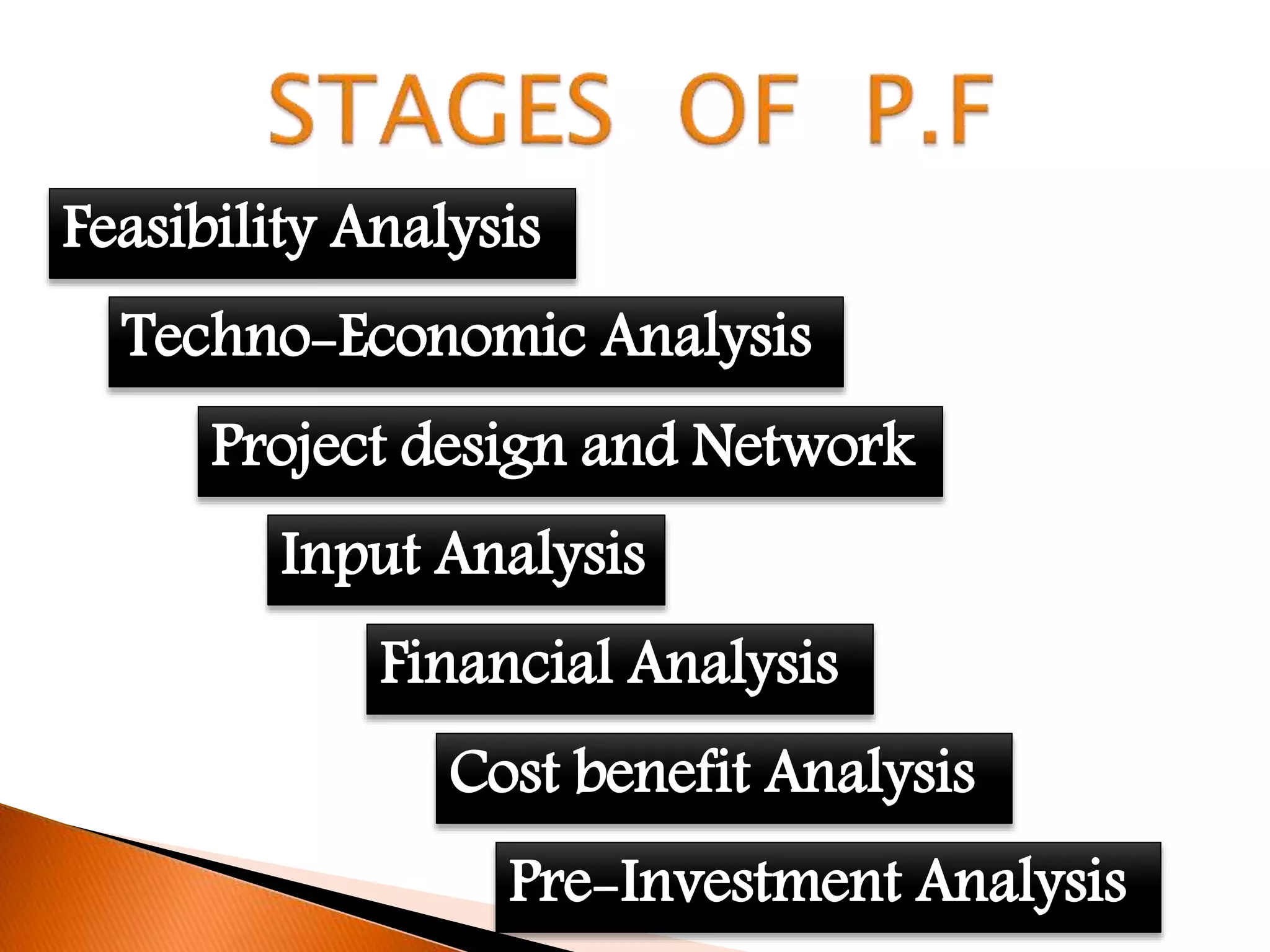
Feasibility Analysis
Input Analysis
Financial Analysis
Cost benefit Analysis
Pre-Investment Analysis
Techno-Economic Analysis
Project design and Network
 First stage in project formulation.
 Examination to see whether to go in for a
detailed investment proposal or not.
 Screening for internal and external
constraints.
 Whether project is Feasible or not.
 Screens the idea to-Estimate of potential of
the demand for goods/services.
 Choice of optimal technology.
 This analysis gives the project a platform
for preparation of detailed project design.
 It is the heart of the project entity.
 It defines the sequence of events of the
project.
 Time is allocated for each activity.
 It is presented in a form of a network drawing.
 It helps to identify project inputs, finance
needed and cost-benefit profile of the project.
 Its assesses the input requirements during the
construction and operation of the project.
 It defines the inputs required for each activity.
 Inputs include materials, human resources.
 It evaluates the feasibility of the project from
the point of view of the availability of
necessary resources.
 This aids in assessing the project cost.
 It involves estimating the project costs, operating
cost and fund requirements.
 It helps in comparing various project proposals on
a common scale.
 Analytical tools used are discounted cash flow,
cost-volume-profit relationship and ratio analysis.
 Investment decisions involve commitment of
resources in future, with a long time horizon.
 It needs caution and foresight in developing
financial forecasts.
 The overall worth of a project is
considered.
 The project design forms the basis of
evaluation.
 It considers costs that all entities have
to bear and the benefit connected to it.
 The results obtained in previous stages
are consolidated to arrive at clear
conclusions.
 Helps the project-sponsoring body, the
project-implementing body and the
external consulting agencies to
accept/reject the proposal.
PROJECT REPORT
• .
• .
.
• .
• .
.
• .
• .
.
.
It is a concise copy of detailed analysis done
for the project.
An entrepreneur/expert prepares the report
before the investment in project is done.
The report assesses the demand for
proposed product/service, works out cost
of investment and profitability on this
investment.
It acts as an instrument to convince
investors to invest in the project.
THANKYOU

Project formulation

  • 1.
  • 2.
     Project Formulation Stages of Project Formulation  Project Report Topics Covered
  • 3.
     Project formulationis the systematic development of a project idea for arriving at an investment decision. It has the built-in mechanism of ringing the danger bell at the earliest possible stage of resource utilization. Project formulation is a process involving the joint efforts of a team of experts. Each member of the team should be familiar with the broad strategy, objectives & other ingredients of the project.
  • 4.
    Feasibility Analysis Input Analysis FinancialAnalysis Cost benefit Analysis Pre-Investment Analysis Techno-Economic Analysis Project design and Network
  • 5.
     First stagein project formulation.  Examination to see whether to go in for a detailed investment proposal or not.  Screening for internal and external constraints.  Whether project is Feasible or not.
  • 6.
     Screens theidea to-Estimate of potential of the demand for goods/services.  Choice of optimal technology.  This analysis gives the project a platform for preparation of detailed project design.
  • 7.
     It isthe heart of the project entity.  It defines the sequence of events of the project.  Time is allocated for each activity.  It is presented in a form of a network drawing.  It helps to identify project inputs, finance needed and cost-benefit profile of the project.
  • 8.
     Its assessesthe input requirements during the construction and operation of the project.  It defines the inputs required for each activity.  Inputs include materials, human resources.  It evaluates the feasibility of the project from the point of view of the availability of necessary resources.  This aids in assessing the project cost.
  • 9.
     It involvesestimating the project costs, operating cost and fund requirements.  It helps in comparing various project proposals on a common scale.  Analytical tools used are discounted cash flow, cost-volume-profit relationship and ratio analysis.  Investment decisions involve commitment of resources in future, with a long time horizon.  It needs caution and foresight in developing financial forecasts.
  • 10.
     The overallworth of a project is considered.  The project design forms the basis of evaluation.  It considers costs that all entities have to bear and the benefit connected to it.
  • 11.
     The resultsobtained in previous stages are consolidated to arrive at clear conclusions.  Helps the project-sponsoring body, the project-implementing body and the external consulting agencies to accept/reject the proposal.
  • 12.
    PROJECT REPORT • . •. . • . • . . • . • . . . It is a concise copy of detailed analysis done for the project. An entrepreneur/expert prepares the report before the investment in project is done. The report assesses the demand for proposed product/service, works out cost of investment and profitability on this investment. It acts as an instrument to convince investors to invest in the project.
  • 13.