
Project Charter 
A. General Information 
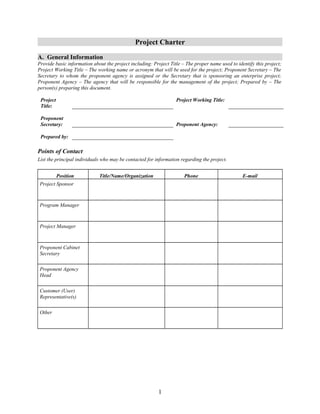
Provide basic information about the project including: Project Title – The proper name used to identify this project; 
Project Working Title – The working name or acronym that will be used for the project; Proponent Secretary – The 
Secretary to whom the proponent agency is assigned or the Secretary that is sponsoring an enterprise project; 
Proponent Agency – The agency that will be responsible for the management of the project; Prepared by – The 
person(s) preparing this document. 
Project 
Project Working Title: 
Title: 
Proponent 
Secretary: Proponent Agency: 
Prepared by: 
Points of Contact 
List the principal individuals who may be contacted for information regarding the project. 
Position Title/Name/Organization Phone E-mail 
Project Sponsor 
Program Manager 
Project Manager 
Proponent Cabinet 
Secretary 
Proponent Agency 
Head 
Customer (User) 
Representative(s) 
Other 
1
B. Executive Summary 
An Executive Summary is required when Sections C thru G of the charter are excessively long. In two or three 
paragraphs, provide a brief overview of this project and the contents of this document. 
C. Project Purpose 
Explain the business reason(s) for doing this project. The Project Purpose (the Business Problem and Project 
Business Objectives) is in the Project Proposal, Section B. 
1. Business Problem 
The Business Problem is a question, issue, or situation, pertaining to the business, which needs to be answered or 
resolved. State in specific terms the problem or issue this project will resolve. Often, the Business Problem is 
reflected as a critical business issue or initiative in the Agency’s Strategic Plan or IT Strategic Plan. 
2
2. Project Business Objectives 
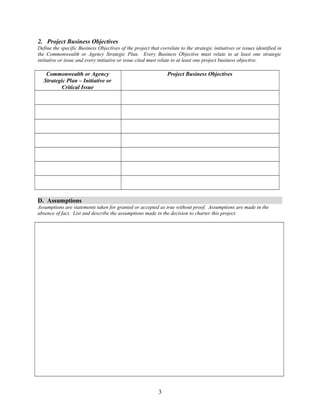
Define the specific Business Objectives of the project that correlate to the strategic initiatives or issues identified in 
the Commonwealth or Agency Strategic Plan. Every Business Objective must relate to at least one strategic 
initiative or issue and every initiative or issue cited must relate to at least one project business objective. 
Commonwealth or Agency 
Strategic Plan – Initiative or 
Critical Issue 
Project Business Objectives 
D. Assumptions 
Assumptions are statements taken for granted or accepted as true without proof. Assumptions are made in the 
absence of fact. List and describe the assumptions made in the decision to charter this project. 
3
E. Project Description, Scope and Management Milestones 
1. Project Description 
Describe the project approach, specific solution, customer(s), and benefits. The Project Description is located in 
the Project Proposal, Section C. 
2. Scope 
The Project Scope defines all of the products and services provided by a project, and identifies the limits of the 
project. In other words, the Project Scope establishes the boundaries of a project. The Project Scope addresses the 
who, what, where, when, and why of a project. 
4
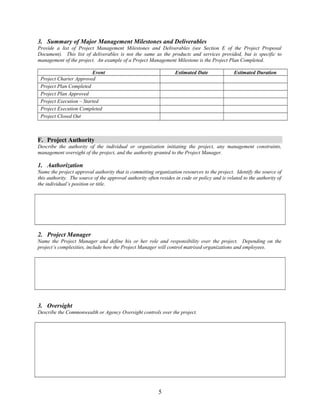
3. Summary of Major Management Milestones and Deliverables 
Provide a list of Project Management Milestones and Deliverables (see Section E of the Project Proposal 
Document). This list of deliverables is not the same as the products and services provided, but is specific to 
management of the project. An example of a Project Management Milestone is the Project Plan Completed. 
Event Estimated Date Estimated Duration 
Project Charter Approved 
Project Plan Completed 
Project Plan Approved 
Project Execution – Started 
Project Execution Completed 
Project Closed Out 
F. Project Authority 
Describe the authority of the individual or organization initiating the project, any management constraints, 
management oversight of the project, and the authority granted to the Project Manager. 
1. Authorization 
Name the project approval authority that is committing organization resources to the project. Identify the source of 
this authority. The source of the approval authority often resides in code or policy and is related to the authority of 
the individual’s position or title. 
2. Project Manager 
Name the Project Manager and define his or her role and responsibility over the project. Depending on the 
project’s complexities, include how the Project Manager will control matrixed organizations and employees. 
3. Oversight 
Describe the Commonwealth or Agency Oversight controls over the project. 
5
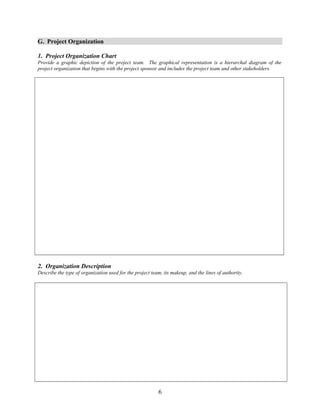
G. Project Organization 
1. Project Organization Chart 
Provide a graphic depiction of the project team. The graphical representation is a hierarchal diagram of the 
project organization that begins with the project sponsor and includes the project team and other stakeholders. 
2. Organization Description 
Describe the type of organization used for the project team, its makeup, and the lines of authority. 
6
3. Roles and Responsibilities 
Describe, at a minimum, the Roles and Responsibilities of all stakeholders identified in the organizational diagram 
above. Some stakeholders may exist whom are not part of the formal project team but have roles and 
responsibilities related to the project. Include these stakeholders’ roles and responsibilities also. 
7
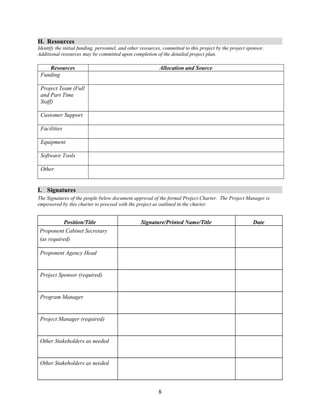
H. Resources 
Identify the initial funding, personnel, and other resources, committed to this project by the project sponsor. 
Additional resources may be committed upon completion of the detailed project plan. 
Resources Allocation and Source 
Funding 
Project Team (Full 
and Part Time 
Staff) 
Customer Support 
Facilities 
Equipment 
Software Tools 
Other 
I. Signatures 
The Signatures of the people below document approval of the formal Project Charter. The Project Manager is 
empowered by this charter to proceed with the project as outlined in the charter. 
Position/Title Signature/Printed Name/Title Date 
Proponent Cabinet Secretary 
(as required) 
Proponent Agency Head 
Project Sponsor (required) 
Program Manager 
Project Manager (required) 
Other Stakeholders as needed 
8

Project charter-template

  • 1.
    Project Charter A.General Information Provide basic information about the project including: Project Title – The proper name used to identify this project; Project Working Title – The working name or acronym that will be used for the project; Proponent Secretary – The Secretary to whom the proponent agency is assigned or the Secretary that is sponsoring an enterprise project; Proponent Agency – The agency that will be responsible for the management of the project; Prepared by – The person(s) preparing this document. Project Project Working Title: Title: Proponent Secretary: Proponent Agency: Prepared by: Points of Contact List the principal individuals who may be contacted for information regarding the project. Position Title/Name/Organization Phone E-mail Project Sponsor Program Manager Project Manager Proponent Cabinet Secretary Proponent Agency Head Customer (User) Representative(s) Other 1
  • 2.
    B. Executive Summary An Executive Summary is required when Sections C thru G of the charter are excessively long. In two or three paragraphs, provide a brief overview of this project and the contents of this document. C. Project Purpose Explain the business reason(s) for doing this project. The Project Purpose (the Business Problem and Project Business Objectives) is in the Project Proposal, Section B. 1. Business Problem The Business Problem is a question, issue, or situation, pertaining to the business, which needs to be answered or resolved. State in specific terms the problem or issue this project will resolve. Often, the Business Problem is reflected as a critical business issue or initiative in the Agency’s Strategic Plan or IT Strategic Plan. 2
  • 3.
    2. Project BusinessObjectives Define the specific Business Objectives of the project that correlate to the strategic initiatives or issues identified in the Commonwealth or Agency Strategic Plan. Every Business Objective must relate to at least one strategic initiative or issue and every initiative or issue cited must relate to at least one project business objective. Commonwealth or Agency Strategic Plan – Initiative or Critical Issue Project Business Objectives D. Assumptions Assumptions are statements taken for granted or accepted as true without proof. Assumptions are made in the absence of fact. List and describe the assumptions made in the decision to charter this project. 3
  • 4.
    E. Project Description,Scope and Management Milestones 1. Project Description Describe the project approach, specific solution, customer(s), and benefits. The Project Description is located in the Project Proposal, Section C. 2. Scope The Project Scope defines all of the products and services provided by a project, and identifies the limits of the project. In other words, the Project Scope establishes the boundaries of a project. The Project Scope addresses the who, what, where, when, and why of a project. 4
  • 5.
    3. Summary ofMajor Management Milestones and Deliverables Provide a list of Project Management Milestones and Deliverables (see Section E of the Project Proposal Document). This list of deliverables is not the same as the products and services provided, but is specific to management of the project. An example of a Project Management Milestone is the Project Plan Completed. Event Estimated Date Estimated Duration Project Charter Approved Project Plan Completed Project Plan Approved Project Execution – Started Project Execution Completed Project Closed Out F. Project Authority Describe the authority of the individual or organization initiating the project, any management constraints, management oversight of the project, and the authority granted to the Project Manager. 1. Authorization Name the project approval authority that is committing organization resources to the project. Identify the source of this authority. The source of the approval authority often resides in code or policy and is related to the authority of the individual’s position or title. 2. Project Manager Name the Project Manager and define his or her role and responsibility over the project. Depending on the project’s complexities, include how the Project Manager will control matrixed organizations and employees. 3. Oversight Describe the Commonwealth or Agency Oversight controls over the project. 5
  • 6.
    G. Project Organization 1. Project Organization Chart Provide a graphic depiction of the project team. The graphical representation is a hierarchal diagram of the project organization that begins with the project sponsor and includes the project team and other stakeholders. 2. Organization Description Describe the type of organization used for the project team, its makeup, and the lines of authority. 6
  • 7.
    3. Roles andResponsibilities Describe, at a minimum, the Roles and Responsibilities of all stakeholders identified in the organizational diagram above. Some stakeholders may exist whom are not part of the formal project team but have roles and responsibilities related to the project. Include these stakeholders’ roles and responsibilities also. 7
  • 8.
    H. Resources Identifythe initial funding, personnel, and other resources, committed to this project by the project sponsor. Additional resources may be committed upon completion of the detailed project plan. Resources Allocation and Source Funding Project Team (Full and Part Time Staff) Customer Support Facilities Equipment Software Tools Other I. Signatures The Signatures of the people below document approval of the formal Project Charter. The Project Manager is empowered by this charter to proceed with the project as outlined in the charter. Position/Title Signature/Printed Name/Title Date Proponent Cabinet Secretary (as required) Proponent Agency Head Project Sponsor (required) Program Manager Project Manager (required) Other Stakeholders as needed Other Stakeholders as needed 8