PROJECT-BASED LEARNING
Presented and Created By: Laurel Peace, Kim Gunnell, Gabe Pullin, Kayla
Hudson
PROJECT-BASED LEARNING: KNOWN AS PBL
AND A PILLAR IN 21 ST CENTURY EDUCATION
• The pillar: PBL Project Based Learning
• Description: Students go through an extended process of
researching a complex question, problem, or challenge in a
group setting. PBL’s are carefully planned to ensure that
students are learning key academic points.
• Project Based learning is important because students need to
acquire the skills needed to work with their peers in a productive
manor, while using critical thinking with in a group setting.
• Role in the 21st century: PBL’s play a role because of the use of
technology. They can involve cell phones, websites, blogs and so
much more.
IMPLEMENTING TECHNOLOGY TO PROMOTE
PROJECT BASED LEARNING
•

Using a class YouTube page and allowing students access to cameras would
promote Project based learning, as students could be divided into groups and
asked to write a script collectively, with parts for each student in the group and
record the product.

•

A group research project, such as completing a Webquest , would promote Project
based learning by teaching students to research as a group by dividing work and
combining research and critical thinking skills to come up with an original ending
presentation to the situation the Webquest would have proposed.

•

Writing and maintaining a blog as a group would promote project based learning by
allowing students to learn each other’s interests and expand on each other’s
thoughts and ideas.

•

A class Twitter would promote project based learning by giving a group of students
a way to keep in contact with each other and plan meetings and activities with the
class and their own group.

•

Working on a group photo shopped poster would promote project based learning by
implementing combined ideas, and combined expertise with technology could help
instruct others in the group who are not as knowledgeable.
CREATION OF A NATION OBJECTIVE
•

Objective: A 9 th* grade class of 22 students (12 white, 8 African
American, 2 Chinese) will be creating a project within a group to
make their own national territory
including, laws, rules, regulations, demographics, Geographic's,
and culture. The students will use Blogspot.com to create and
discuss a blog where they can figure out what laws, rules, and
regulations they would like to have in their territory. They will use
PowerPoint to make a slideshow presentation to present laws to
citizens, a YouTube video to introduce their country, a podcast to
announce a presidential election, and a Pinterest account to
create and show what will embody the culture of their individual
territory. In the span of one month, the students will complete
this with 100% accuracy.
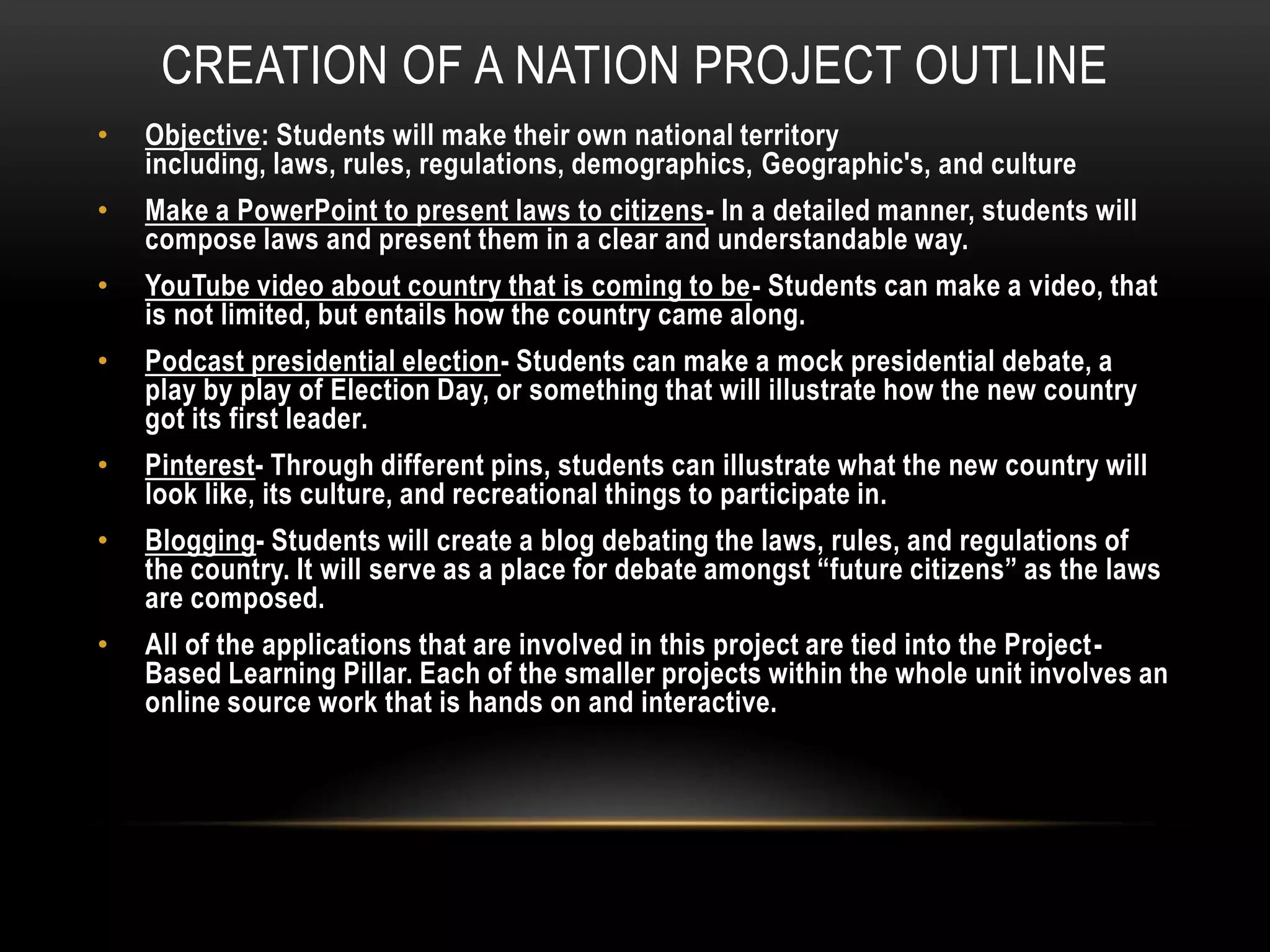
CREATION OF A NATION PROJECT OUTLINE
•

Objective: Students will make their own national territory
including, laws, rules, regulations, demographics, Geographic's, and culture

•

Make a PowerPoint to present laws to citizens- In a detailed manner, students will
compose laws and present them in a clear and understandable way.

•

YouTube video about country that is coming to be- Students can make a video, that
is not limited, but entails how the country came along.

•

Podcast presidential election- Students can make a mock presidential debate, a
play by play of Election Day, or something that will illustrate how the new country
got its first leader.

•

Pinterest- Through different pins, students can illustrate what the new country will
look like, its culture, and recreational things to participate in.

•

Blogging- Students will create a blog debating the laws, rules, and regulations of
the country. It will serve as a place for debate amongst “future citizens” as the laws
are composed.

•

All of the applications that are involved in this project are tied into the ProjectBased Learning Pillar. Each of the smaller projects within the whole unit involves an
online source work that is hands on and interactive.
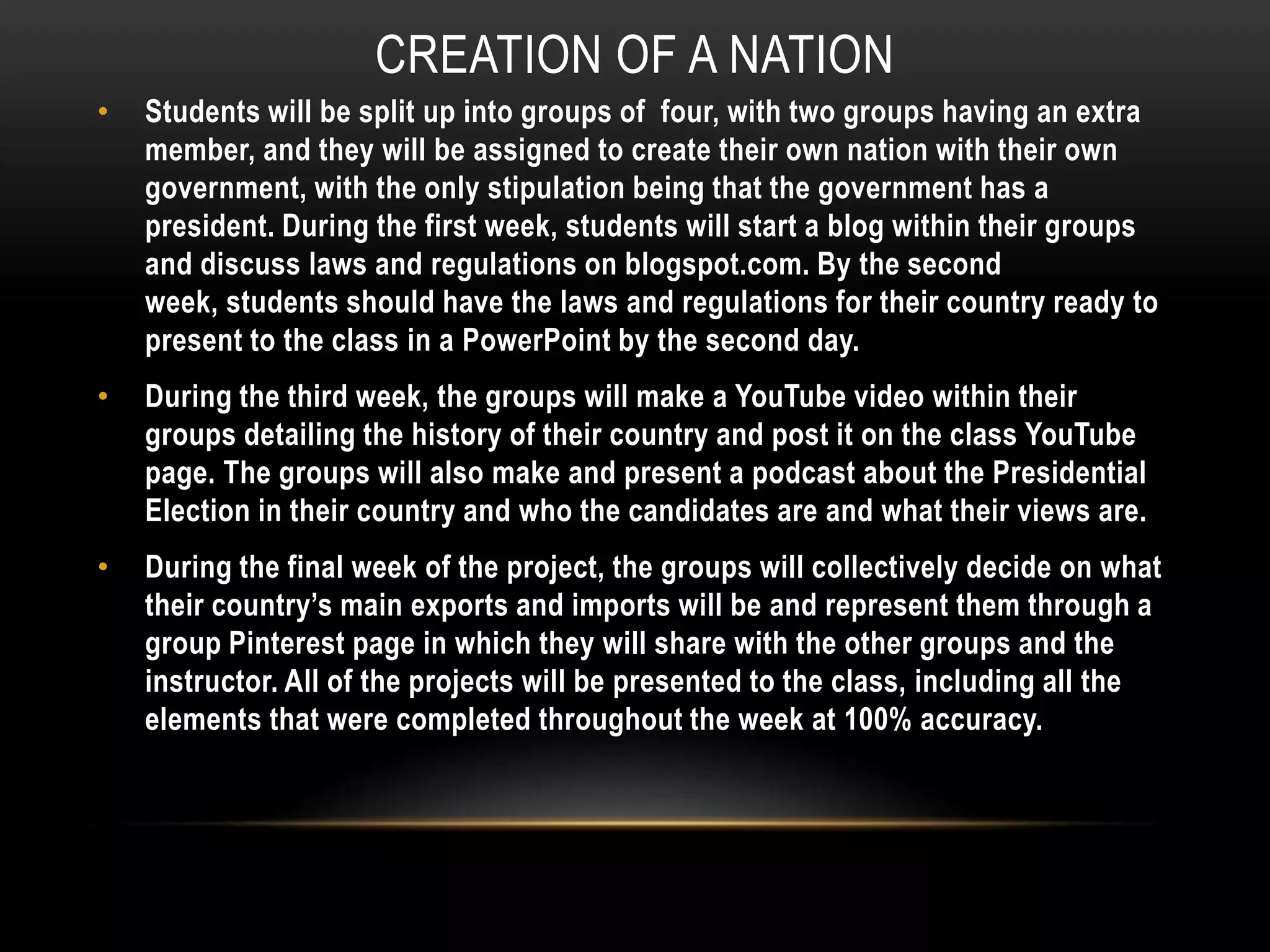
CREATION OF A NATION
•

Students will be split up into groups of four, with two groups having an extra
member, and they will be assigned to create their own nation with their own
government, with the only stipulation being that the government has a
president. During the first week, students will start a blog within their groups
and discuss laws and regulations on blogspot.com. By the second
week, students should have the laws and regulations for their country ready to
present to the class in a PowerPoint by the second day.

•

During the third week, the groups will make a YouTube video within their
groups detailing the history of their country and post it on the class YouTube
page. The groups will also make and present a podcast about the Presidential
Election in their country and who the candidates are and what their views are.

•

During the final week of the project, the groups will collectively decide on what
their country’s main exports and imports will be and represent them through a
group Pinterest page in which they will share with the other groups and the
instructor. All of the projects will be presented to the class, including all the
elements that were completed throughout the week at 100% accuracy.
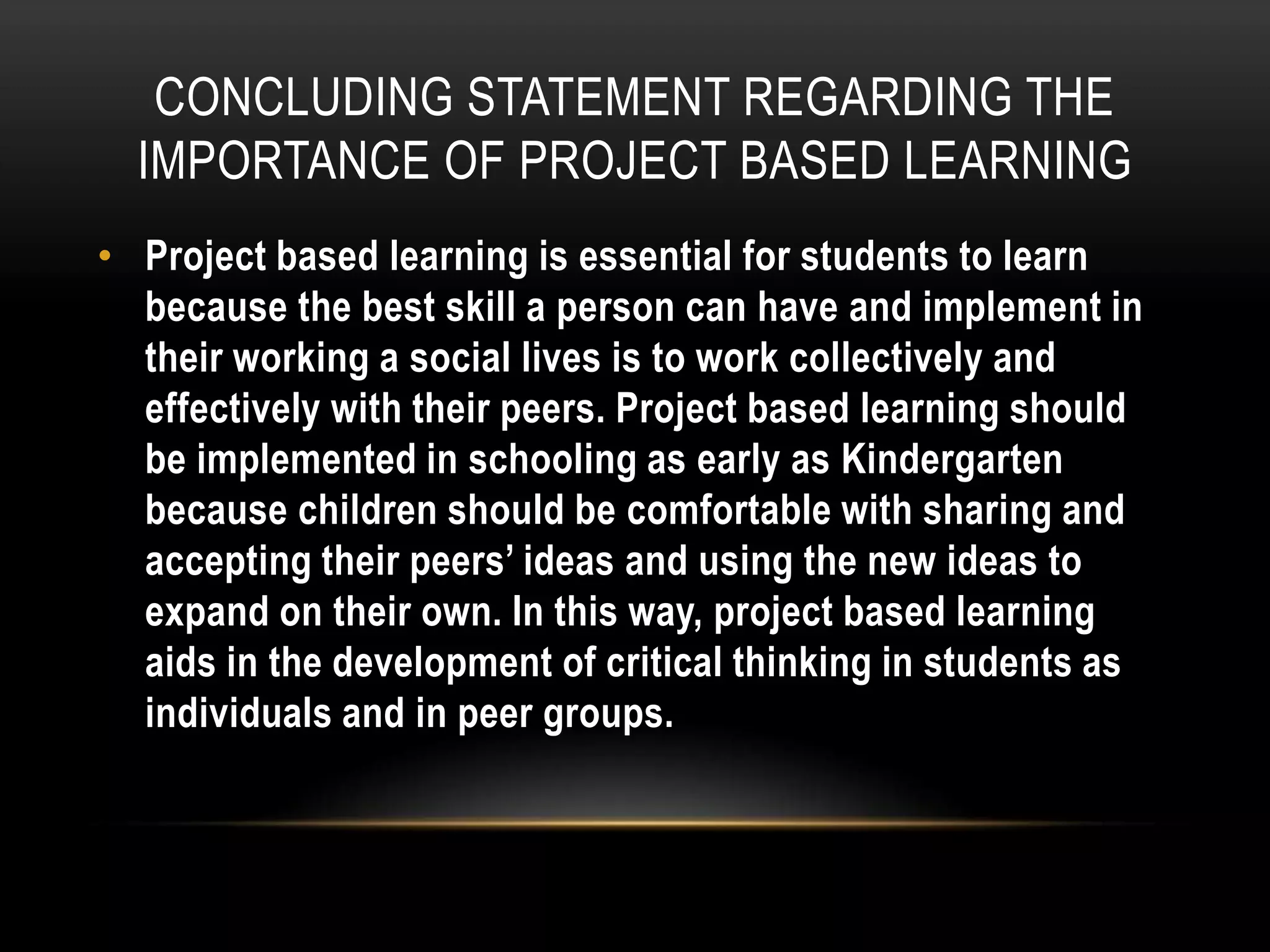
CONCLUDING STATEMENT REGARDING THE
IMPORTANCE OF PROJECT BASED LEARNING
• Project based learning is essential for students to learn
because the best skill a person can have and implement in
their working a social lives is to work collectively and
effectively with their peers. Project based learning should
be implemented in schooling as early as Kindergarten
because children should be comfortable with sharing and
accepting their peers’ ideas and using the new ideas to
expand on their own. In this way, project based learning
aids in the development of critical thinking in students as
individuals and in peer groups.
WORKS CITED
• http://www.bie.org/about/what_is_pbl

• http://www.ascd.org/publications/educational_leadershi
p/sept10/vol68/num01/Seven_Essentials_for_ProjectBased_Learning.aspx

Project Based Learning

  • 1.
    PROJECT-BASED LEARNING Presented andCreated By: Laurel Peace, Kim Gunnell, Gabe Pullin, Kayla Hudson
  • 2.
    PROJECT-BASED LEARNING: KNOWNAS PBL AND A PILLAR IN 21 ST CENTURY EDUCATION • The pillar: PBL Project Based Learning • Description: Students go through an extended process of researching a complex question, problem, or challenge in a group setting. PBL’s are carefully planned to ensure that students are learning key academic points. • Project Based learning is important because students need to acquire the skills needed to work with their peers in a productive manor, while using critical thinking with in a group setting. • Role in the 21st century: PBL’s play a role because of the use of technology. They can involve cell phones, websites, blogs and so much more.
  • 3.
    IMPLEMENTING TECHNOLOGY TOPROMOTE PROJECT BASED LEARNING • Using a class YouTube page and allowing students access to cameras would promote Project based learning, as students could be divided into groups and asked to write a script collectively, with parts for each student in the group and record the product. • A group research project, such as completing a Webquest , would promote Project based learning by teaching students to research as a group by dividing work and combining research and critical thinking skills to come up with an original ending presentation to the situation the Webquest would have proposed. • Writing and maintaining a blog as a group would promote project based learning by allowing students to learn each other’s interests and expand on each other’s thoughts and ideas. • A class Twitter would promote project based learning by giving a group of students a way to keep in contact with each other and plan meetings and activities with the class and their own group. • Working on a group photo shopped poster would promote project based learning by implementing combined ideas, and combined expertise with technology could help instruct others in the group who are not as knowledgeable.
  • 4.
    CREATION OF ANATION OBJECTIVE • Objective: A 9 th* grade class of 22 students (12 white, 8 African American, 2 Chinese) will be creating a project within a group to make their own national territory including, laws, rules, regulations, demographics, Geographic's, and culture. The students will use Blogspot.com to create and discuss a blog where they can figure out what laws, rules, and regulations they would like to have in their territory. They will use PowerPoint to make a slideshow presentation to present laws to citizens, a YouTube video to introduce their country, a podcast to announce a presidential election, and a Pinterest account to create and show what will embody the culture of their individual territory. In the span of one month, the students will complete this with 100% accuracy.
  • 5.
    CREATION OF ANATION PROJECT OUTLINE • Objective: Students will make their own national territory including, laws, rules, regulations, demographics, Geographic's, and culture • Make a PowerPoint to present laws to citizens- In a detailed manner, students will compose laws and present them in a clear and understandable way. • YouTube video about country that is coming to be- Students can make a video, that is not limited, but entails how the country came along. • Podcast presidential election- Students can make a mock presidential debate, a play by play of Election Day, or something that will illustrate how the new country got its first leader. • Pinterest- Through different pins, students can illustrate what the new country will look like, its culture, and recreational things to participate in. • Blogging- Students will create a blog debating the laws, rules, and regulations of the country. It will serve as a place for debate amongst “future citizens” as the laws are composed. • All of the applications that are involved in this project are tied into the ProjectBased Learning Pillar. Each of the smaller projects within the whole unit involves an online source work that is hands on and interactive.
  • 6.
    CREATION OF ANATION • Students will be split up into groups of four, with two groups having an extra member, and they will be assigned to create their own nation with their own government, with the only stipulation being that the government has a president. During the first week, students will start a blog within their groups and discuss laws and regulations on blogspot.com. By the second week, students should have the laws and regulations for their country ready to present to the class in a PowerPoint by the second day. • During the third week, the groups will make a YouTube video within their groups detailing the history of their country and post it on the class YouTube page. The groups will also make and present a podcast about the Presidential Election in their country and who the candidates are and what their views are. • During the final week of the project, the groups will collectively decide on what their country’s main exports and imports will be and represent them through a group Pinterest page in which they will share with the other groups and the instructor. All of the projects will be presented to the class, including all the elements that were completed throughout the week at 100% accuracy.
  • 7.
    CONCLUDING STATEMENT REGARDINGTHE IMPORTANCE OF PROJECT BASED LEARNING • Project based learning is essential for students to learn because the best skill a person can have and implement in their working a social lives is to work collectively and effectively with their peers. Project based learning should be implemented in schooling as early as Kindergarten because children should be comfortable with sharing and accepting their peers’ ideas and using the new ideas to expand on their own. In this way, project based learning aids in the development of critical thinking in students as individuals and in peer groups.
  • 8.
    WORKS CITED • http://www.bie.org/about/what_is_pbl •http://www.ascd.org/publications/educational_leadershi p/sept10/vol68/num01/Seven_Essentials_for_ProjectBased_Learning.aspx