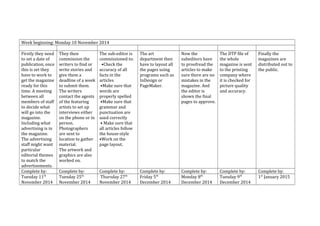
Week beginning: Monday 10 November 2014
Firstly they need
to set a date of
publication, once
this is set they
have to work to
get the magazine
ready for this
time. A meeting
between all
members of staff
to decide what
will go into the
magazine.
Including what
advertising is in
the magazine.
The advertising
staff might want
particular
editorial themes
to match the
advertisements.
They then
commission the
writers to find or
write stories and
give them a
deadline of a week
to submit them.
The writers
contact the agents
of the featuring
artists to set up
interviews either
on the phone or in
person.
Photographers
are sent to
location to gather
material.
The artwork and
graphics are also
worked on.
The sub-editor is
commissioned to:
•Check the
accuracy of all
facts in the
articles
•Make sure that
words are
properly spelled
•Make sure that
grammar and
punctuation are
used correctly
• Make sure that
all articles follow
the house-style
•Work on the
page layout.
The art
department then
have to layout all
the pages using
programs such as
InDesign or
PageMaker.
Now the
subeditors have
to proofread the
articles to make
sure there are no
mistakes in the
magazine. And
the editor is
shown the final
pages to approve.
The DTP file of
the whole
magazine is sent
to the printing
company where
it is checked for
picture quality
and accuracy.
Finally the
magazines are
distributed out to
the public.
Complete by: Complete by: Complete by: Complete by: Complete by: Complete by: Complete by:
Tuesday 11th
November 2014
Tuesday 25th
November 2014
Thursday 27th
November 2014
Friday 5th
December 2014
Monday 8th
December 2014
Tuesday 9th
December 2014
1st
January 2015
The production process:
1. Firstly they need to set a date of publication, once this is set they have to work to get the magazine ready for this time.
2. They now need to decide what will go into the magazine.
3. They then gather the content through writers both internally and externally. The artwork and graphics are also worked on.
4. The sub-editor is commissioned to:
•Check the accuracy of all facts in the articles
•Make sure that words are properly spelled
•Make sure that grammar and punctuation are used correctly
• Make sure that all articles follow the house-style
•Work on the page layout.
5. They then have to layout all the pages using programs such as InDesign or PageMaker.
6. Now they have to proofread their work to make sure there are no mistakes in the magazine.
7. The DTP file of the whole magazine is sent to the printing company where it is checked again by the editor and if they are
satisfied then the printers will print the magazine.
8. Finally the magazines are distributed out to the public.
Source: http://hosbeg.com/the-magazine-production-process/
There are some other steps that need to be followed for the production of a magazine to be successful. These include:
Create a production schedule
This is very important as it acts as a template to stick to, to ensure that the magazine is made in time for release.
Create a content plan
This is equally important as it gives the team a clear idea of what should be in the magazine in terms of the content what makes up the
stories in the magazine.
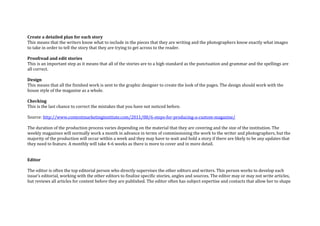
Create a detailed plan for each story
This means that the writers know what to include in the pieces that they are writing and the photographers know exactly what images
to take in order to tell the story that they are trying to get across to the reader.
Proofread and edit stories
This is an important step as it means that all of the stories are to a high standard as the punctuation and grammar and the spellings are
all correct.
Design
This means that all the finished work is sent to the graphic designer to create the look of the pages. The design should work with the
house style of the magazine as a whole.
Checking
This is the last chance to correct the mistakes that you have not noticed before.
Source: http://www.contentmarketinginstitute.com/2011/08/6-steps-for-producing-a-custom-magazine/
The duration of the production process varies depending on the material that they are covering and the size of the institution. The
weekly magazines will normally work a month in advance in terms of commissioning the work to the writer and photographers, but the
majority of the production will occur within a week and they may have to wait and hold a story if there are likely to be any updates that
they need to feature. A monthly will take 4-6 weeks as there is more to cover and in more detail.
Editor
The editor is often the top editorial person who directly supervises the other editors and writers. This person works to develop each
issue’s editorial, working with the other editors to finalize specific stories, angles and sources. The editor may or may not write articles,
but reviews all articles for content before they are published. The editor often has subject expertise and contacts that allow her to shape
an article’s direction with the writer, down to recommending sources of information, such as industry research, organizations and
sources.
Writers
The writers put together stories for the magazine that are relevant to the topic being discussed on the magazine. They also talk to
sources to gather information regarding the subject in hand. The feature editor will make the final decision on what is included.
Photographer
Photographers are hired by the magazine to gather/ take all of the images relating to a particular story that they want to cover. The
decision to hire the person is made by the picture editor and they also choose the images that they think are best for the story.
Graphic designer/layout artists
They work together with all the team involved to produce the layout of the page. This means that they position all of the parts of the
story to make the most effective use of the space available. They can also alter the ‘image’ of the magazine by adjusting the fonts, the way
that the page is broken up by adverts or headings and colour scheme.

Production plan

  • 1.
    Week beginning: Monday10 November 2014 Firstly they need to set a date of publication, once this is set they have to work to get the magazine ready for this time. A meeting between all members of staff to decide what will go into the magazine. Including what advertising is in the magazine. The advertising staff might want particular editorial themes to match the advertisements. They then commission the writers to find or write stories and give them a deadline of a week to submit them. The writers contact the agents of the featuring artists to set up interviews either on the phone or in person. Photographers are sent to location to gather material. The artwork and graphics are also worked on. The sub-editor is commissioned to: •Check the accuracy of all facts in the articles •Make sure that words are properly spelled •Make sure that grammar and punctuation are used correctly • Make sure that all articles follow the house-style •Work on the page layout. The art department then have to layout all the pages using programs such as InDesign or PageMaker. Now the subeditors have to proofread the articles to make sure there are no mistakes in the magazine. And the editor is shown the final pages to approve. The DTP file of the whole magazine is sent to the printing company where it is checked for picture quality and accuracy. Finally the magazines are distributed out to the public. Complete by: Complete by: Complete by: Complete by: Complete by: Complete by: Complete by: Tuesday 11th November 2014 Tuesday 25th November 2014 Thursday 27th November 2014 Friday 5th December 2014 Monday 8th December 2014 Tuesday 9th December 2014 1st January 2015
  • 2.
    The production process: 1.Firstly they need to set a date of publication, once this is set they have to work to get the magazine ready for this time. 2. They now need to decide what will go into the magazine. 3. They then gather the content through writers both internally and externally. The artwork and graphics are also worked on. 4. The sub-editor is commissioned to: •Check the accuracy of all facts in the articles •Make sure that words are properly spelled •Make sure that grammar and punctuation are used correctly • Make sure that all articles follow the house-style •Work on the page layout. 5. They then have to layout all the pages using programs such as InDesign or PageMaker. 6. Now they have to proofread their work to make sure there are no mistakes in the magazine. 7. The DTP file of the whole magazine is sent to the printing company where it is checked again by the editor and if they are satisfied then the printers will print the magazine. 8. Finally the magazines are distributed out to the public. Source: http://hosbeg.com/the-magazine-production-process/ There are some other steps that need to be followed for the production of a magazine to be successful. These include: Create a production schedule This is very important as it acts as a template to stick to, to ensure that the magazine is made in time for release. Create a content plan This is equally important as it gives the team a clear idea of what should be in the magazine in terms of the content what makes up the stories in the magazine.
  • 3.
    Create a detailedplan for each story This means that the writers know what to include in the pieces that they are writing and the photographers know exactly what images to take in order to tell the story that they are trying to get across to the reader. Proofread and edit stories This is an important step as it means that all of the stories are to a high standard as the punctuation and grammar and the spellings are all correct. Design This means that all the finished work is sent to the graphic designer to create the look of the pages. The design should work with the house style of the magazine as a whole. Checking This is the last chance to correct the mistakes that you have not noticed before. Source: http://www.contentmarketinginstitute.com/2011/08/6-steps-for-producing-a-custom-magazine/ The duration of the production process varies depending on the material that they are covering and the size of the institution. The weekly magazines will normally work a month in advance in terms of commissioning the work to the writer and photographers, but the majority of the production will occur within a week and they may have to wait and hold a story if there are likely to be any updates that they need to feature. A monthly will take 4-6 weeks as there is more to cover and in more detail. Editor The editor is often the top editorial person who directly supervises the other editors and writers. This person works to develop each issue’s editorial, working with the other editors to finalize specific stories, angles and sources. The editor may or may not write articles, but reviews all articles for content before they are published. The editor often has subject expertise and contacts that allow her to shape
  • 4.
    an article’s directionwith the writer, down to recommending sources of information, such as industry research, organizations and sources. Writers The writers put together stories for the magazine that are relevant to the topic being discussed on the magazine. They also talk to sources to gather information regarding the subject in hand. The feature editor will make the final decision on what is included. Photographer Photographers are hired by the magazine to gather/ take all of the images relating to a particular story that they want to cover. The decision to hire the person is made by the picture editor and they also choose the images that they think are best for the story. Graphic designer/layout artists They work together with all the team involved to produce the layout of the page. This means that they position all of the parts of the story to make the most effective use of the space available. They can also alter the ‘image’ of the magazine by adjusting the fonts, the way that the page is broken up by adverts or headings and colour scheme.