 It is a process of creating new product
to be sold by business .
 It is concerned with efficient and
effective generation and development
of ideas through process that leads to
new products
 “Product design is concerned
with the determination of what
product would like, how it will
be made ,what function the
product will perform and how it
will perform”
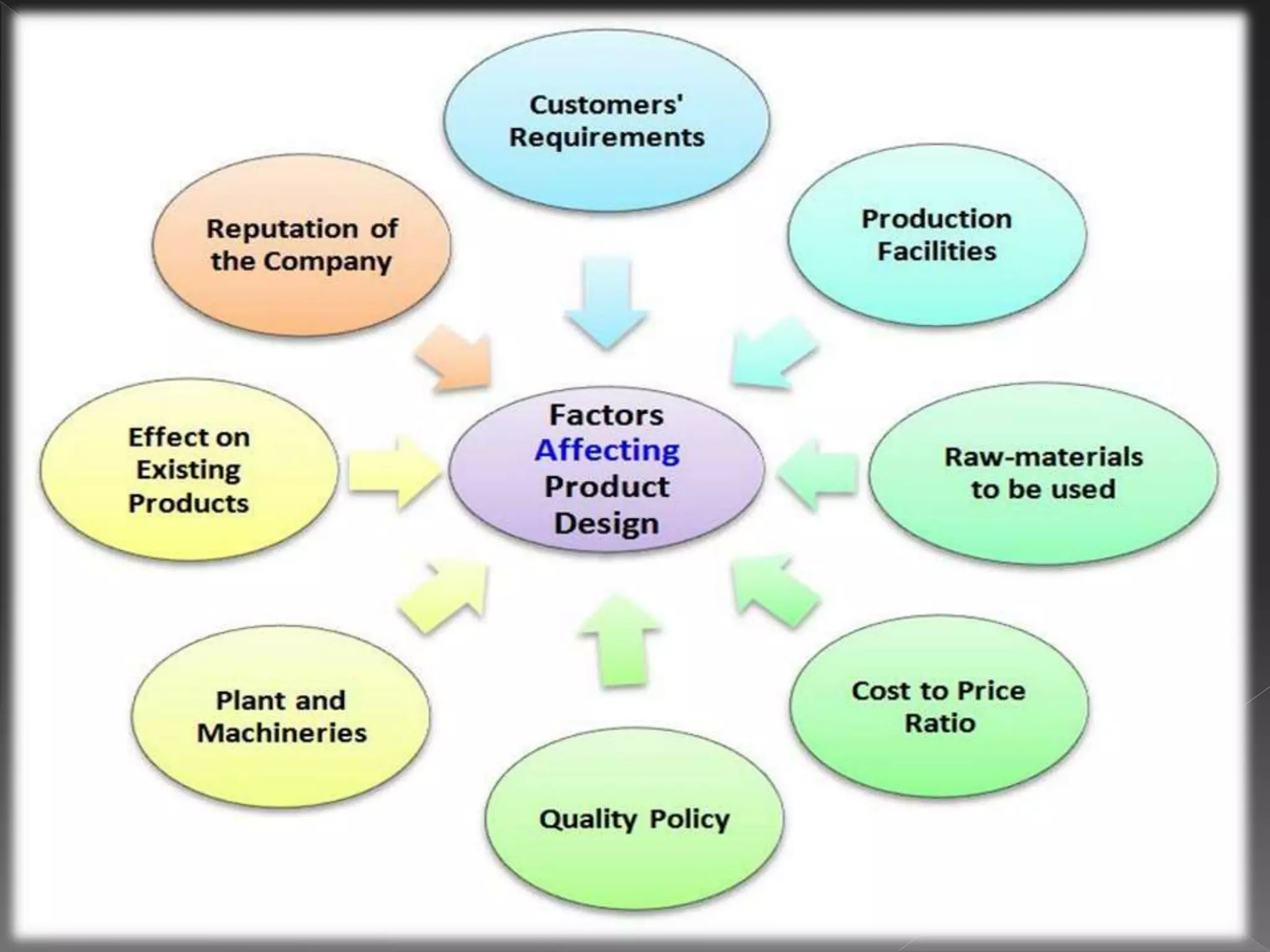
 Functions or performance
 Appearance
 Reliability
 Maintainability
 Availability
 Standardization
 Safety and specification
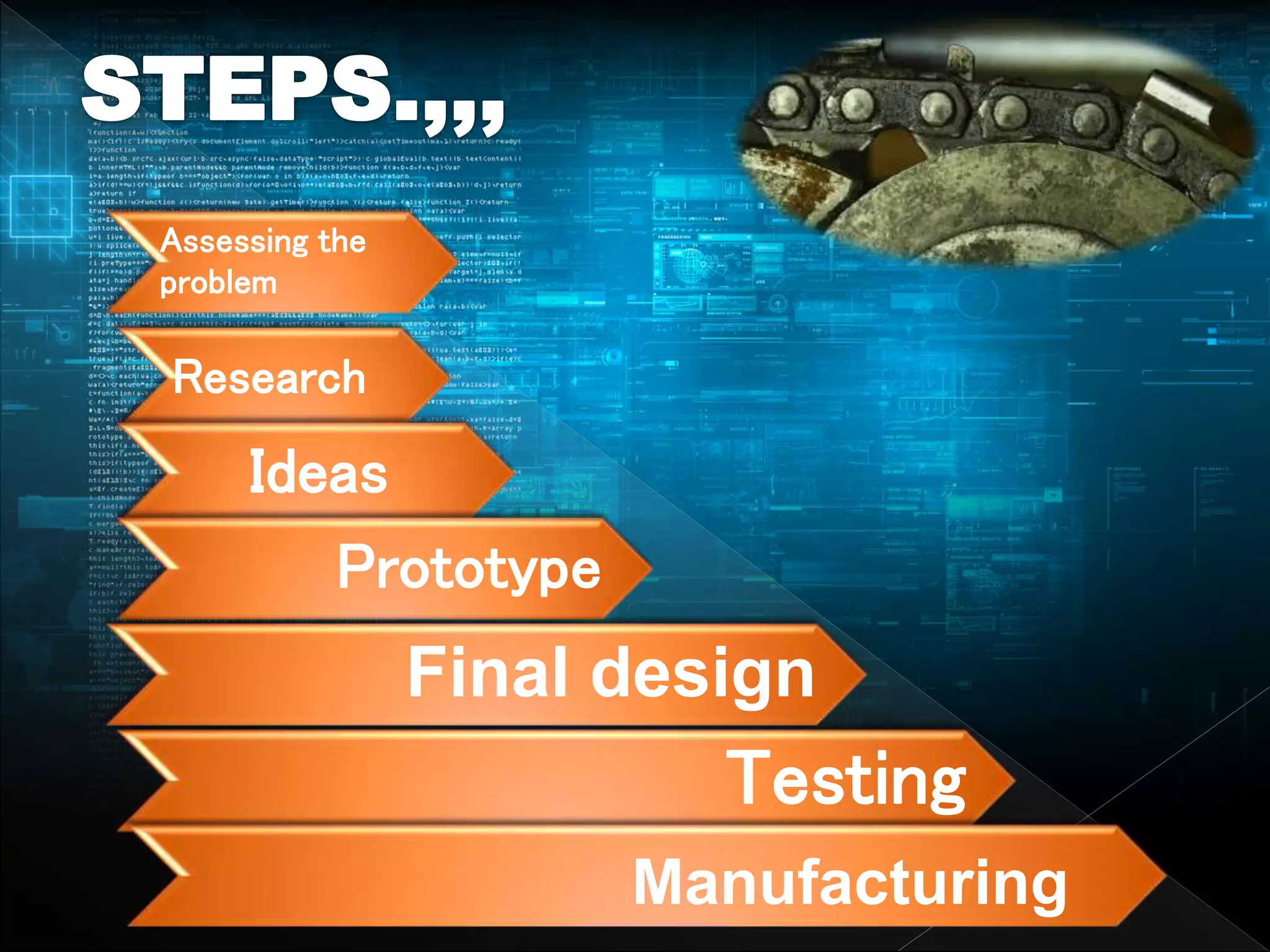
Assessing the
problem
Research
Ideas
Prototype
Testing
Final design
Manufacturing
 To achieve the desired product quality
 To reduce the cost of the product
 To ensure the validity of the product according to
the needs of customer
 To generate profit in the long run
 To implement the idea of a
new product
 innovative
 useful
 aesthetic
 understandable
 unobtrusive
 honest
 long lasting
 accuracy
 environmental friendly
 1.
Different correlated teams are formed,
which performed different activities of
designing a product
In Practice Different Concepts Are
Combined And Applied Together
 it is a process of carefully
dismantling a product,
understanding its design and
developing A product which
is better than existing one
 Robust design is a design technique by
considering environmental variation,
manufacturing variation, and company
deterioration.
 This type of design focusing on
fundamental functions of product
 Facilitate flexible design
 It is a design approach that subdivides
a system into smaller part called
modules, that can be independently
created and then assembled or used in
different system.
 The main purpose of standardization is to
establish mandatory or obligation norms
for the design and production of
machines so as to reduce variations in
their types and grades and achieve
quality characteristics in raw material,
semi finished goods and finished
products
 This allows manufacturing to have input
into design and make suggestion on how
best design a product that minimizes
production cost
OBJECTIVES
› Estimate manufacturing cost
› Reduce the cost of components
› Reduce cost of supporting production
› Consider DFM decision
 DFA addresses product structure
simplification since the total number of
parts in a product is a key indicator of
design.
 How to design for ease of assembly and
reduce assemble time and cost
 It is a part of DFM and together it is called
DFMA
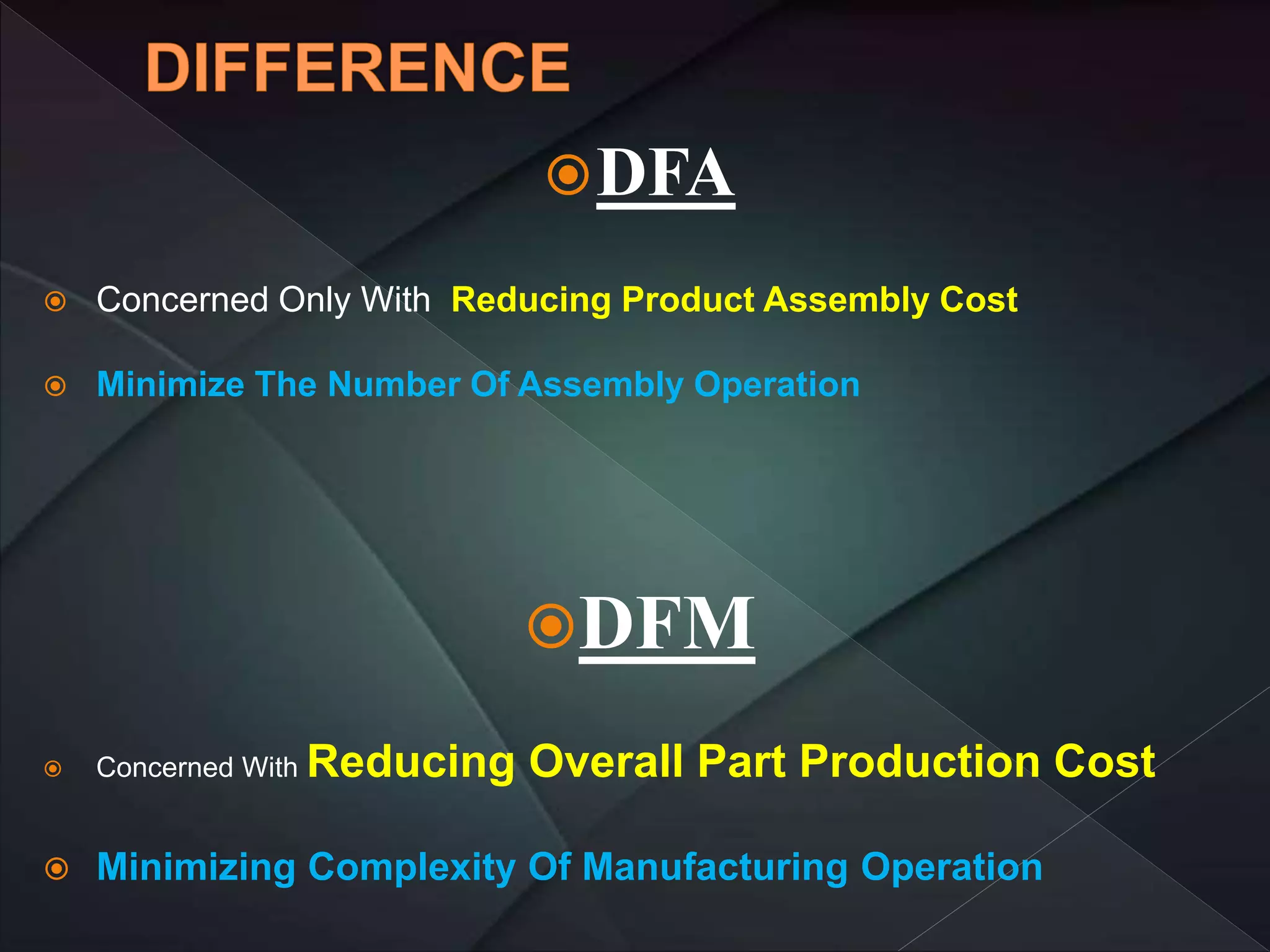
DFA
 Concerned Only With Reducing Product Assembly Cost
 Minimize The Number Of Assembly Operation
DFM
 Concerned With Reducing Overall Part Production Cost
 Minimizing Complexity Of Manufacturing Operation
 It is a aspect of designing products
for ease of transporting from
manufacturing to the
Customer.
 The designing and packaging
should be minimize the
space of transporting
 DFQ recognizes that quality starts in
the product design.
 DFQ focused on developing the
product, improving the system
to bring forth and sustain.
 Avoid Deffects,errors,Etc.….
 Quality –it’s not just happen,
 And it’s not sole responsibility
of manufacturing, but it’s main
responsibility of manufacturing
 Service design is an activity of organizing and
planning people ,communication
,infrastructure and material components in
order to improve service quality.it is the
interaction between the services provider
and customer and customers experiences.
 It is created and delivered simultaneously
aspect
Creation &
delivery
inventory
• Tangible aspect
• Intangible aspect
• At Different time
• simultaneously
• can be Maintained
• Not possible to
maintain
 What’s old -> new again
 Digitization
 Smart product
 Mass customization
 Workers involvement
 Environmental concerns
 Flexibility
 Computer aided design
 Minimal material cost
 Minimize in labor cost
 Shipment and logistic
 Procurement
 Maintenance friendly design
 Side product consideration
 Cost effective quantities
 Finance and taxes
 Create the Manufacturing Bill of
Material[MBOM]
 “design” the cost before design the product
 Make a Pareto graph of cost
 Don't miss the hidden cost
 Time is money
PEOPLE DON’T USE THE
PRODUCT BECAUSE OF THE
GREAT DESIGN.
GREAT DESIGN HELPS MAKE
THEM USE THE PRODUCT “

Product design -By Arun raj v

  • 2.
     It isa process of creating new product to be sold by business .  It is concerned with efficient and effective generation and development of ideas through process that leads to new products
  • 3.
     “Product designis concerned with the determination of what product would like, how it will be made ,what function the product will perform and how it will perform”
  • 4.
     Functions orperformance  Appearance  Reliability  Maintainability  Availability  Standardization  Safety and specification
  • 6.
  • 7.
     To achievethe desired product quality  To reduce the cost of the product  To ensure the validity of the product according to the needs of customer  To generate profit in the long run  To implement the idea of a new product
  • 9.
     innovative  useful aesthetic  understandable  unobtrusive  honest  long lasting  accuracy  environmental friendly
  • 10.
  • 11.
    Different correlated teamsare formed, which performed different activities of designing a product In Practice Different Concepts Are Combined And Applied Together
  • 12.
     it isa process of carefully dismantling a product, understanding its design and developing A product which is better than existing one
  • 14.
     Robust designis a design technique by considering environmental variation, manufacturing variation, and company deterioration.  This type of design focusing on fundamental functions of product  Facilitate flexible design
  • 15.
     It isa design approach that subdivides a system into smaller part called modules, that can be independently created and then assembled or used in different system.
  • 16.
     The mainpurpose of standardization is to establish mandatory or obligation norms for the design and production of machines so as to reduce variations in their types and grades and achieve quality characteristics in raw material, semi finished goods and finished products
  • 17.
     This allowsmanufacturing to have input into design and make suggestion on how best design a product that minimizes production cost OBJECTIVES › Estimate manufacturing cost › Reduce the cost of components › Reduce cost of supporting production › Consider DFM decision
  • 18.
     DFA addressesproduct structure simplification since the total number of parts in a product is a key indicator of design.  How to design for ease of assembly and reduce assemble time and cost  It is a part of DFM and together it is called DFMA
  • 19.
    DFA  Concerned OnlyWith Reducing Product Assembly Cost  Minimize The Number Of Assembly Operation DFM  Concerned With Reducing Overall Part Production Cost  Minimizing Complexity Of Manufacturing Operation
  • 20.
     It isa aspect of designing products for ease of transporting from manufacturing to the Customer.  The designing and packaging should be minimize the space of transporting
  • 21.
     DFQ recognizesthat quality starts in the product design.  DFQ focused on developing the product, improving the system to bring forth and sustain.  Avoid Deffects,errors,Etc.….  Quality –it’s not just happen,  And it’s not sole responsibility of manufacturing, but it’s main responsibility of manufacturing
  • 22.
     Service designis an activity of organizing and planning people ,communication ,infrastructure and material components in order to improve service quality.it is the interaction between the services provider and customer and customers experiences.  It is created and delivered simultaneously
  • 23.
    aspect Creation & delivery inventory • Tangibleaspect • Intangible aspect • At Different time • simultaneously • can be Maintained • Not possible to maintain
  • 24.
     What’s old-> new again  Digitization  Smart product  Mass customization  Workers involvement  Environmental concerns  Flexibility  Computer aided design
  • 25.
     Minimal materialcost  Minimize in labor cost  Shipment and logistic  Procurement  Maintenance friendly design  Side product consideration  Cost effective quantities  Finance and taxes
  • 26.
     Create theManufacturing Bill of Material[MBOM]  “design” the cost before design the product  Make a Pareto graph of cost  Don't miss the hidden cost  Time is money
  • 29.
    PEOPLE DON’T USETHE PRODUCT BECAUSE OF THE GREAT DESIGN. GREAT DESIGN HELPS MAKE THEM USE THE PRODUCT “