Product Design And Development
UNIT-I (Introduction)
Design versus Scientific method, Considerations of a Good
Design, Product Development process cycles,
Organizations for Product Design, Technological
Innovation and Business Strategies, Modern Product
development and design theories, Reverse engineering
and redesign methodology.
Product Design
Product development is the complete process of delivering a new
product or improving an existing one for customers. The customers
can be external or internal within a company. ... The objective is to
ensure that the new or enhanced product satisfies a real customer
need and helps the company reach business goals.
Why Product Development is Important
Product development strategies are important
to ensure value for your potential customers,
as well as ensuring that there is demand and
that your final products are of the highest
possible quality before your take the products
to market
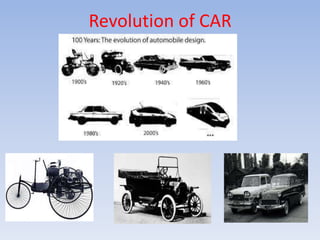
Revolution of CAR
How to Create a Product Development Plan
A product development plan should cover the journey from
concept to market and engage as many stakeholders as possible in
the process to ensure their needs and concerns are addressed,
while also engaging with the market to ensure the final product
will have market value.
Product development strategies are important to ensure value for your potential
customers, as well as ensuring that there is demand and that your final products are of
the highest possible quality before your take the products to market
Why Product Development is Important
How to Create a Product Development Plan
1. Identify Market Need
The first stage in creating a product is determining if there is a need for it in the
market. By speaking with customers and taking on other research activities,
such as test marketing and surveys, you should be able to tell if there is interest
in your product and the problems that it will solve.
2. Quantify the Opportunity
Just because there is a problem to be solved or an indication of market
interest, does not necessarily mean that a product should be created. Not
every problem needs a product-based solution and there should also be a
willingness for a customer to pay the required price for the solution too.
3. Conceptualise the Product
You team can now begin to get creative and brainstorm ideas to design
solutions that solve the problem and meet market needs. This can lead to the
creation of several potential solutions that will need to be assessed.
4. Validate the Solution
Prototype design and creation can be costly, so it is worth taking time to
assess and validate your concepts. This assessment can be carried out at
a conceptual level to weed out those designs that are not worth
pursuing further.
5. Build a Product Roadmap
Once the proposed concepts have been settled, it is time for the
product management team to create a roadmap for your product. This
will identify which themes and goals are to be developed first to solve
the most important parts of your challenge. This step should lead to the
creation of an early version of the product that can be tested and
examined by sections of the market. See below for more information
about product roadmaps.
6. Develop a Minimum Viable Product (MVP)
Following your product roadmap should lead to the creation of a
product that has enough functionality to be used by your customer
base. It may not be the finished product but should be enough to test
the market and gain initial feedback.
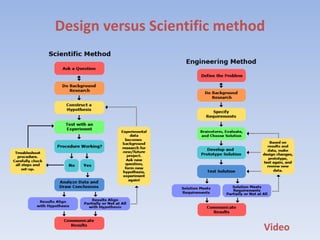
Design versus Scientific method
Video
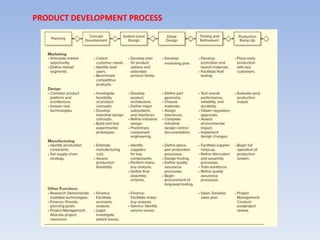
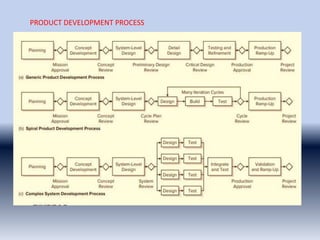
PRODUCT DEVELOPMENT PROCESS
Product design and development

Product design and development

  • 1.
    Product Design AndDevelopment
  • 2.
    Product Design AndDevelopment UNIT-I (Introduction) Design versus Scientific method, Considerations of a Good Design, Product Development process cycles, Organizations for Product Design, Technological Innovation and Business Strategies, Modern Product development and design theories, Reverse engineering and redesign methodology.
  • 3.
    Product Design Product developmentis the complete process of delivering a new product or improving an existing one for customers. The customers can be external or internal within a company. ... The objective is to ensure that the new or enhanced product satisfies a real customer need and helps the company reach business goals. Why Product Development is Important Product development strategies are important to ensure value for your potential customers, as well as ensuring that there is demand and that your final products are of the highest possible quality before your take the products to market
  • 4.
  • 5.
    How to Createa Product Development Plan A product development plan should cover the journey from concept to market and engage as many stakeholders as possible in the process to ensure their needs and concerns are addressed, while also engaging with the market to ensure the final product will have market value. Product development strategies are important to ensure value for your potential customers, as well as ensuring that there is demand and that your final products are of the highest possible quality before your take the products to market Why Product Development is Important
  • 6.
    How to Createa Product Development Plan 1. Identify Market Need The first stage in creating a product is determining if there is a need for it in the market. By speaking with customers and taking on other research activities, such as test marketing and surveys, you should be able to tell if there is interest in your product and the problems that it will solve. 2. Quantify the Opportunity Just because there is a problem to be solved or an indication of market interest, does not necessarily mean that a product should be created. Not every problem needs a product-based solution and there should also be a willingness for a customer to pay the required price for the solution too. 3. Conceptualise the Product You team can now begin to get creative and brainstorm ideas to design solutions that solve the problem and meet market needs. This can lead to the creation of several potential solutions that will need to be assessed.
  • 7.
    4. Validate theSolution Prototype design and creation can be costly, so it is worth taking time to assess and validate your concepts. This assessment can be carried out at a conceptual level to weed out those designs that are not worth pursuing further. 5. Build a Product Roadmap Once the proposed concepts have been settled, it is time for the product management team to create a roadmap for your product. This will identify which themes and goals are to be developed first to solve the most important parts of your challenge. This step should lead to the creation of an early version of the product that can be tested and examined by sections of the market. See below for more information about product roadmaps. 6. Develop a Minimum Viable Product (MVP) Following your product roadmap should lead to the creation of a product that has enough functionality to be used by your customer base. It may not be the finished product but should be enough to test the market and gain initial feedback.
  • 8.
  • 9.
  • 10.