Problems and
 Solutions
   in Research
Self-Fulfilling
     Prophecy

A situation in which a researcher’s
expectations influence that person’s
own behavior

Those behaviors can then influence
the participant’s behavior
Two ways to avoid self-
  fulfilling prophecy
 Single Blind - an experiment in which
 the participants are unaware of which
 participants have received the
 treatment

 Double Blind - an experiment in which
 neither the participants nor the
 experimenter know which participants
 receive which treatment
Milgram Experiment
Hypothesis - Would participants
administer painful shocks because an
authority figure had instructed them
to do so

Independent variable - instructed to
deliver shocks from authority figure

Dependent variable - administer
shocks and increasing the level
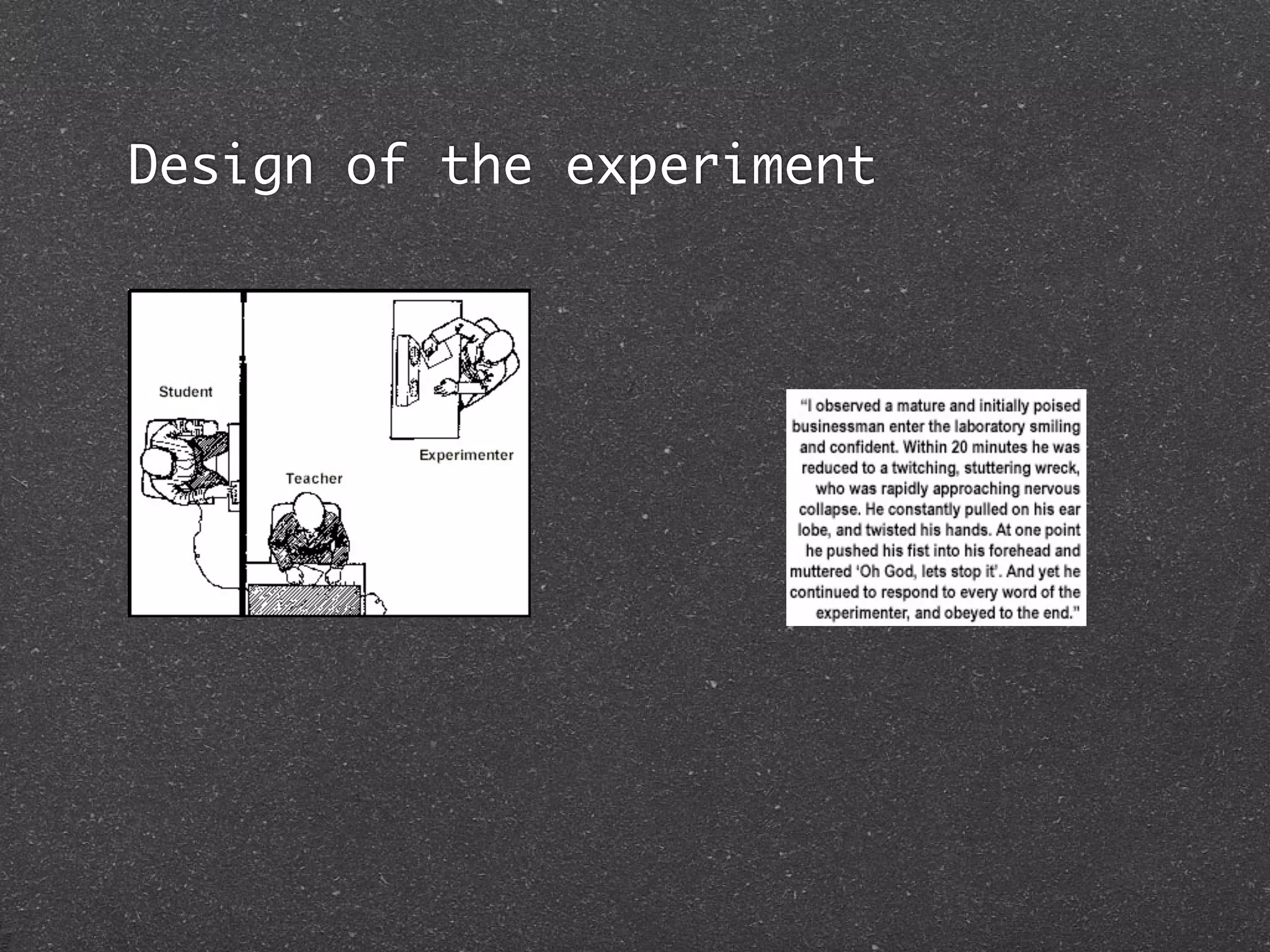
Design of the experiment
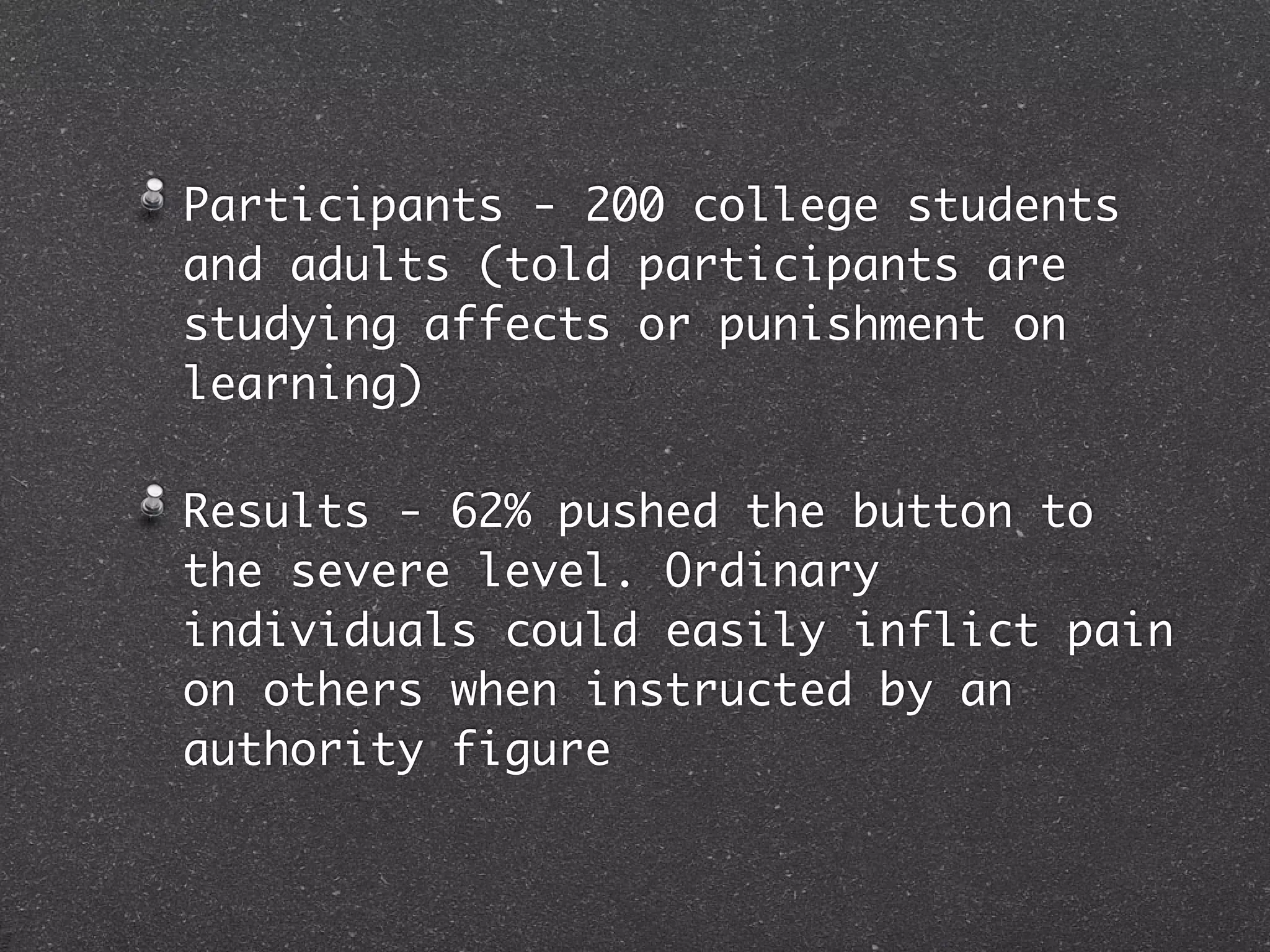
Participants - 200 college students
and adults (told participants are
studying affects or punishment on
learning)

Results - 62% pushed the button to
the severe level. Ordinary
individuals could easily inflict pain
on others when instructed by an
authority figure
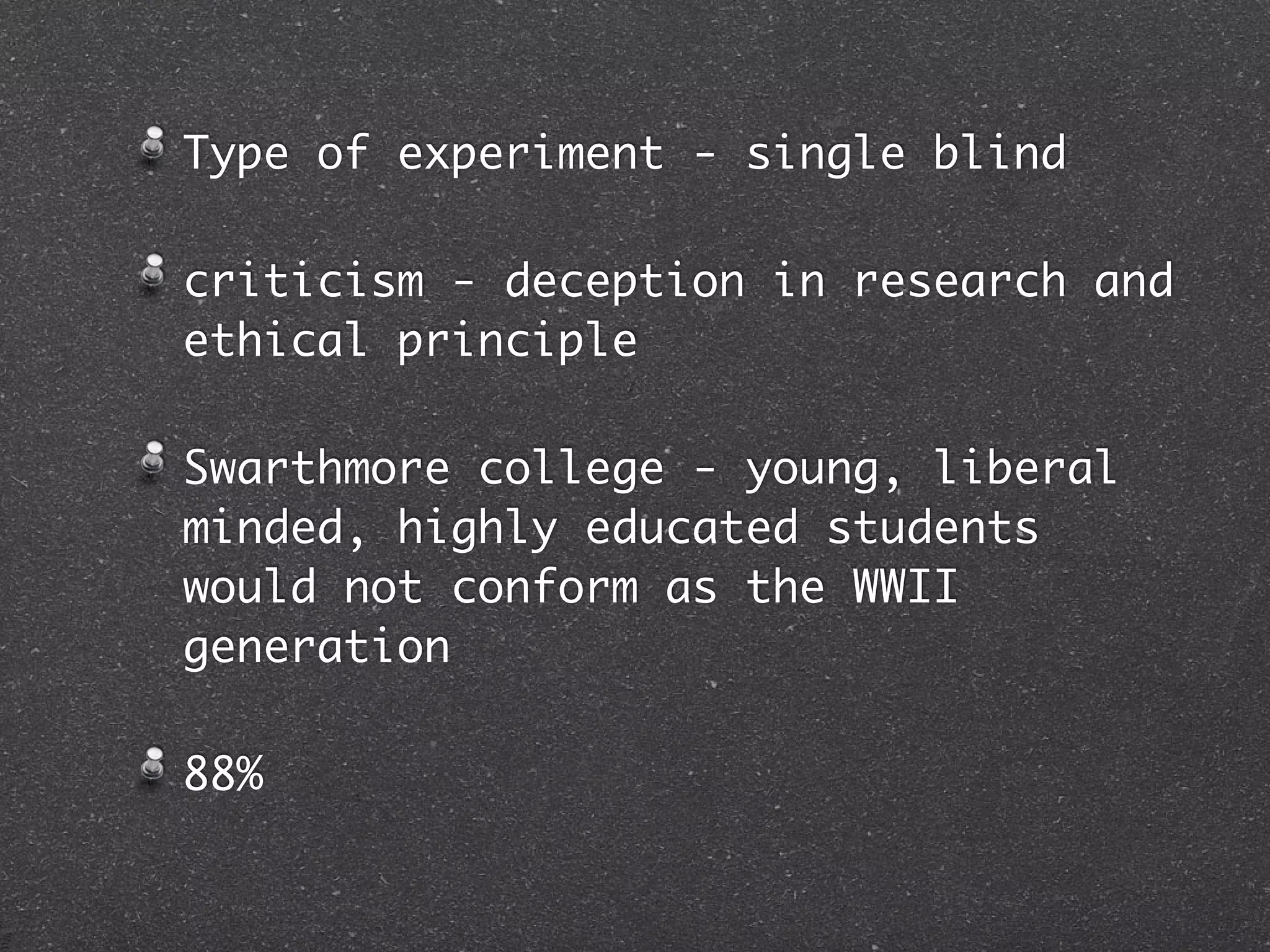
Type of experiment - single blind

criticism - deception in research and
ethical principle

Swarthmore college - young, liberal
minded, highly educated students
would not conform as the WWII
generation

88%
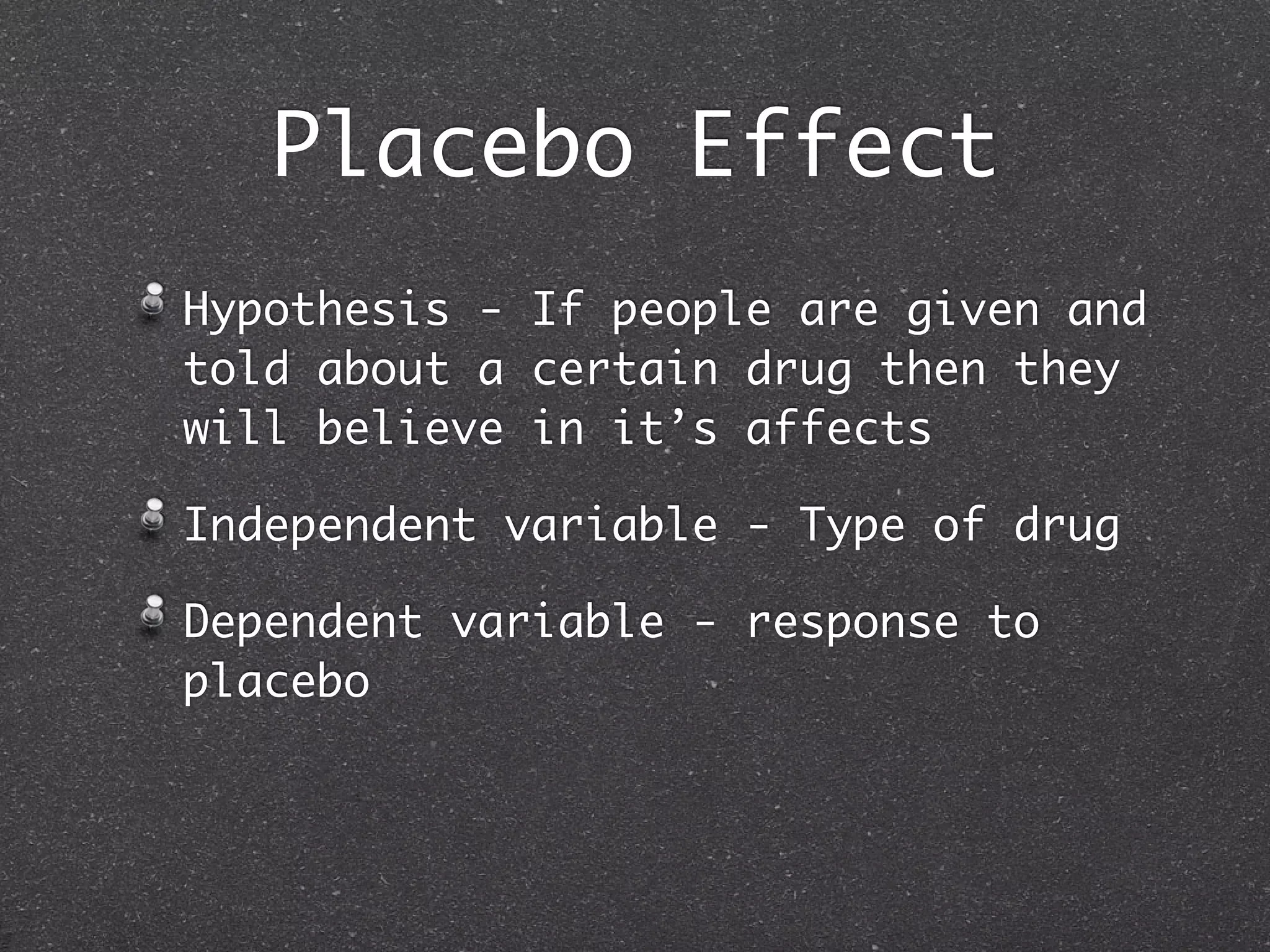
Placebo Effect
Hypothesis - If people are given and
told about a certain drug then they
will believe in it’s affects

Independent variable - Type of drug

Dependent variable - response to
placebo
Participants

  experimental group -

    “new tranquilizer”

     “new energizer”

  Control group - no drugs
Results - 53% - 80% reported that
they had benefitted from the drug

Type of experiment - double blind

Problems and solutions in research

  • 1.
  • 2.
    Self-Fulfilling Prophecy A situation in which a researcher’s expectations influence that person’s own behavior Those behaviors can then influence the participant’s behavior
  • 3.
    Two ways toavoid self- fulfilling prophecy Single Blind - an experiment in which the participants are unaware of which participants have received the treatment Double Blind - an experiment in which neither the participants nor the experimenter know which participants receive which treatment
  • 4.
    Milgram Experiment Hypothesis -Would participants administer painful shocks because an authority figure had instructed them to do so Independent variable - instructed to deliver shocks from authority figure Dependent variable - administer shocks and increasing the level
  • 5.
    Design of theexperiment
  • 8.
    Participants - 200college students and adults (told participants are studying affects or punishment on learning) Results - 62% pushed the button to the severe level. Ordinary individuals could easily inflict pain on others when instructed by an authority figure
  • 9.
    Type of experiment- single blind criticism - deception in research and ethical principle Swarthmore college - young, liberal minded, highly educated students would not conform as the WWII generation 88%
  • 10.
    Placebo Effect Hypothesis -If people are given and told about a certain drug then they will believe in it’s affects Independent variable - Type of drug Dependent variable - response to placebo
  • 11.
    Participants experimentalgroup - “new tranquilizer” “new energizer” Control group - no drugs
  • 12.
    Results - 53%- 80% reported that they had benefitted from the drug Type of experiment - double blind