French
Revolution
“Great Fear”
• outbreak of violence
• peasants felt landlords were starving them
• peasants attacked manor houses and monastaries
• led to the formation of the people’s army led by
  General Lafayette
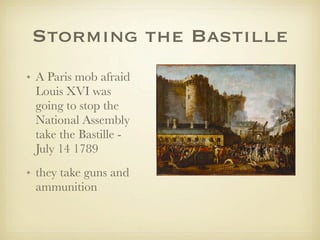
Storming the Bastille
• A Paris mob afraid
  Louis XVI was
  going to stop the
  National Assembly
  take the Bastille -
  July 14 1789
• they take guns and
  ammunition
Old Regime

• Emigres
   • nobles fled to Great Britain, Switzerland, and
     Germany
   • plotted to overthrow the revolution
   • asked assistance from other countries
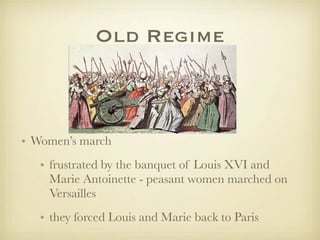
Old Regime


• Women’s march
   • frustrated by the banquet of Louis XVI and
     Marie Antoinette - peasant women marched on
     Versailles
   • they forced Louis and Marie back to Paris
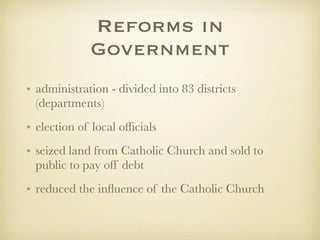
Reforms in
             Government
• administration - divided into 83 districts
  (departments)
• election of local officials
• seized land from Catholic Church and sold to
  public to pay off debt
• reduced the influence of the Catholic Church
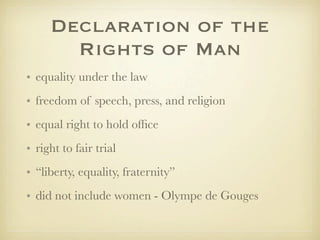
Declaration of the
       Rights of Man
• equality under the law
• freedom of speech, press, and religion
• equal right to hold office
• right to fair trial
• “liberty, equality, fraternity”
• did not include women - Olympe de Gouges
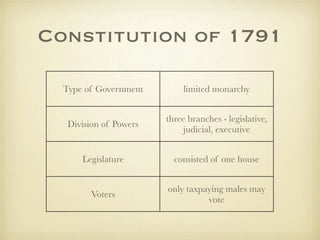
Constitution of 1791

  Type of Government        limited monarchy


                        three branches - legislative,
   Division of Powers
                            judicial, executive


      Legislature         consisted of one house


                        only taxpaying males may
        Voters
                                  vote
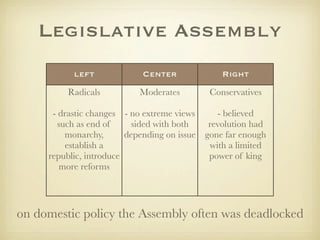
Legislative Assembly
           left             Center              Right
         Radicals          Moderates        Conservatives

      - drastic changes - no extreme views     - believed
        such as end of    sided with both    revolution had
          monarchy,      depending on issue gone far enough
          establish a                        with a limited
     republic, introduce                     power of king
        more reforms


on domestic policy the Assembly often was deadlocked
Foreign Invasion

• Emperor Leopold II of Austria and King Frederick
  William II of Prussia issued the Declaration of
  Pillnitz - invitation to war with France
• each group of assembly hoped the war would
  improve their position and votes for war against
  Austria
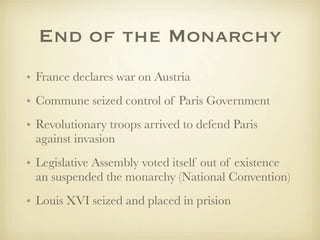
End of the Monarchy
• France declares war on Austria
• Commune seized control of Paris Government
• Revolutionary troops arrived to defend Paris
  against invasion
• Legislative Assembly voted itself out of existence
  an suspended the monarchy (National Convention)
• Louis XVI seized and placed in prision
French revolution

French revolution

  • 1.
  • 2.
    “Great Fear” • outbreakof violence • peasants felt landlords were starving them • peasants attacked manor houses and monastaries • led to the formation of the people’s army led by General Lafayette
  • 3.
    Storming the Bastille •A Paris mob afraid Louis XVI was going to stop the National Assembly take the Bastille - July 14 1789 • they take guns and ammunition
  • 4.
    Old Regime • Emigres • nobles fled to Great Britain, Switzerland, and Germany • plotted to overthrow the revolution • asked assistance from other countries
  • 5.
    Old Regime • Women’smarch • frustrated by the banquet of Louis XVI and Marie Antoinette - peasant women marched on Versailles • they forced Louis and Marie back to Paris
  • 6.
    Reforms in Government • administration - divided into 83 districts (departments) • election of local officials • seized land from Catholic Church and sold to public to pay off debt • reduced the influence of the Catholic Church
  • 7.
    Declaration of the Rights of Man • equality under the law • freedom of speech, press, and religion • equal right to hold office • right to fair trial • “liberty, equality, fraternity” • did not include women - Olympe de Gouges
  • 8.
    Constitution of 1791 Type of Government limited monarchy three branches - legislative, Division of Powers judicial, executive Legislature consisted of one house only taxpaying males may Voters vote
  • 9.
    Legislative Assembly left Center Right Radicals Moderates Conservatives - drastic changes - no extreme views - believed such as end of sided with both revolution had monarchy, depending on issue gone far enough establish a with a limited republic, introduce power of king more reforms on domestic policy the Assembly often was deadlocked
  • 10.
    Foreign Invasion • EmperorLeopold II of Austria and King Frederick William II of Prussia issued the Declaration of Pillnitz - invitation to war with France • each group of assembly hoped the war would improve their position and votes for war against Austria
  • 11.
    End of theMonarchy • France declares war on Austria • Commune seized control of Paris Government • Revolutionary troops arrived to defend Paris against invasion • Legislative Assembly voted itself out of existence an suspended the monarchy (National Convention) • Louis XVI seized and placed in prision