Problem 
Words: 
Rules and 
Guidelines
Words Rules Example 
A, an, the These words are 
articles 
A, an Use a and an before 
singular nouns. Use a 
before a word that 
begins with a consonant 
sound. Use an before a 
word that begins with a 
vowel sounds. 
A banana an apple 
The Use the word both 
singular and plural 
The apple the apples 
The books that I like are 
long. 
Can Can means “to be able 
to do something” 
Nellie can read quickly. 
May May means “to be 
allowed to do 
something” 
May I borrow your 
book?
Good Good is an adjective. The weather looks 
good. 
Well Well is usually an 
adverb. It is an 
adjective only when it 
refers to health. 
She swims well. 
Do you feel well? 
Its Its is a pronoun. The dog wagged its tail. 
It’s It’s is a contraction of it 
is. 
It’s cold today. 
Let Let means “to permit or 
allow” 
Please let me go 
swimming. 
Leave Leave means “to go 
away from” or “to 
remain in place” 
I will leave soon. 
Leave it on my desk 
Raise Raise means “to move 
something up,” “to grow 
something,” or 
“increase something.” 
Our principal will raise 
the flag. 
Julio and Myra raise 
rabbits. 
The bus line raised its 
prices.
Rise Rise means “to get up 
or go up” 
The ski lift rises quickly. 
Sit Sit means “to rest in 
one place.” 
Please sit in the chair. 
Set Set means “to place or 
put” 
Set the vase on the 
table. 
Teach Teach means “to give 
instructions.” 
He teaches us how to 
dance. 
Learn Learn means “to 
receive instructions.” 
I learned about history. 
Their Their is a possessive 
pronoun. 
Their coats are on the 
bed. 
There There is an adverb. It 
may also start a 
sentence. 
Is Carlos there? 
There is my book. 
They’re They’re is a contraction 
of they are. 
They’re going to the 
store.
Two Two is a number. I bought two shirts. 
To To means “in the 
direction of” 
A squirrel ran to the 
tree. 
Too Too means “more than 
enough” and “also” 
I ate too many cherries. 
Can I go, too? 
Who Use the pronoun who 
as a subject. 
Who can solve the math 
problem? 
Whom Use the pronoun whom 
as a direct object. 
Whom did she ask for 
an autograph? 
Your Your is a possessive 
pronoun. 
Are these your glasses? 
You’ve You’re is a contraction 
for you are. 
You’re late again!
The End

Problem Words Rules and Guildlines

  • 1.
    Problem Words: Rulesand Guidelines
  • 2.
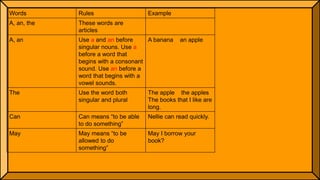
    Words Rules Example A, an, the These words are articles A, an Use a and an before singular nouns. Use a before a word that begins with a consonant sound. Use an before a word that begins with a vowel sounds. A banana an apple The Use the word both singular and plural The apple the apples The books that I like are long. Can Can means “to be able to do something” Nellie can read quickly. May May means “to be allowed to do something” May I borrow your book?
  • 3.
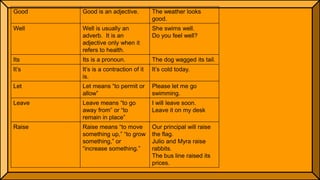
    Good Good isan adjective. The weather looks good. Well Well is usually an adverb. It is an adjective only when it refers to health. She swims well. Do you feel well? Its Its is a pronoun. The dog wagged its tail. It’s It’s is a contraction of it is. It’s cold today. Let Let means “to permit or allow” Please let me go swimming. Leave Leave means “to go away from” or “to remain in place” I will leave soon. Leave it on my desk Raise Raise means “to move something up,” “to grow something,” or “increase something.” Our principal will raise the flag. Julio and Myra raise rabbits. The bus line raised its prices.
  • 4.
    Rise Rise means“to get up or go up” The ski lift rises quickly. Sit Sit means “to rest in one place.” Please sit in the chair. Set Set means “to place or put” Set the vase on the table. Teach Teach means “to give instructions.” He teaches us how to dance. Learn Learn means “to receive instructions.” I learned about history. Their Their is a possessive pronoun. Their coats are on the bed. There There is an adverb. It may also start a sentence. Is Carlos there? There is my book. They’re They’re is a contraction of they are. They’re going to the store.
  • 5.
    Two Two isa number. I bought two shirts. To To means “in the direction of” A squirrel ran to the tree. Too Too means “more than enough” and “also” I ate too many cherries. Can I go, too? Who Use the pronoun who as a subject. Who can solve the math problem? Whom Use the pronoun whom as a direct object. Whom did she ask for an autograph? Your Your is a possessive pronoun. Are these your glasses? You’ve You’re is a contraction for you are. You’re late again!
  • 6.