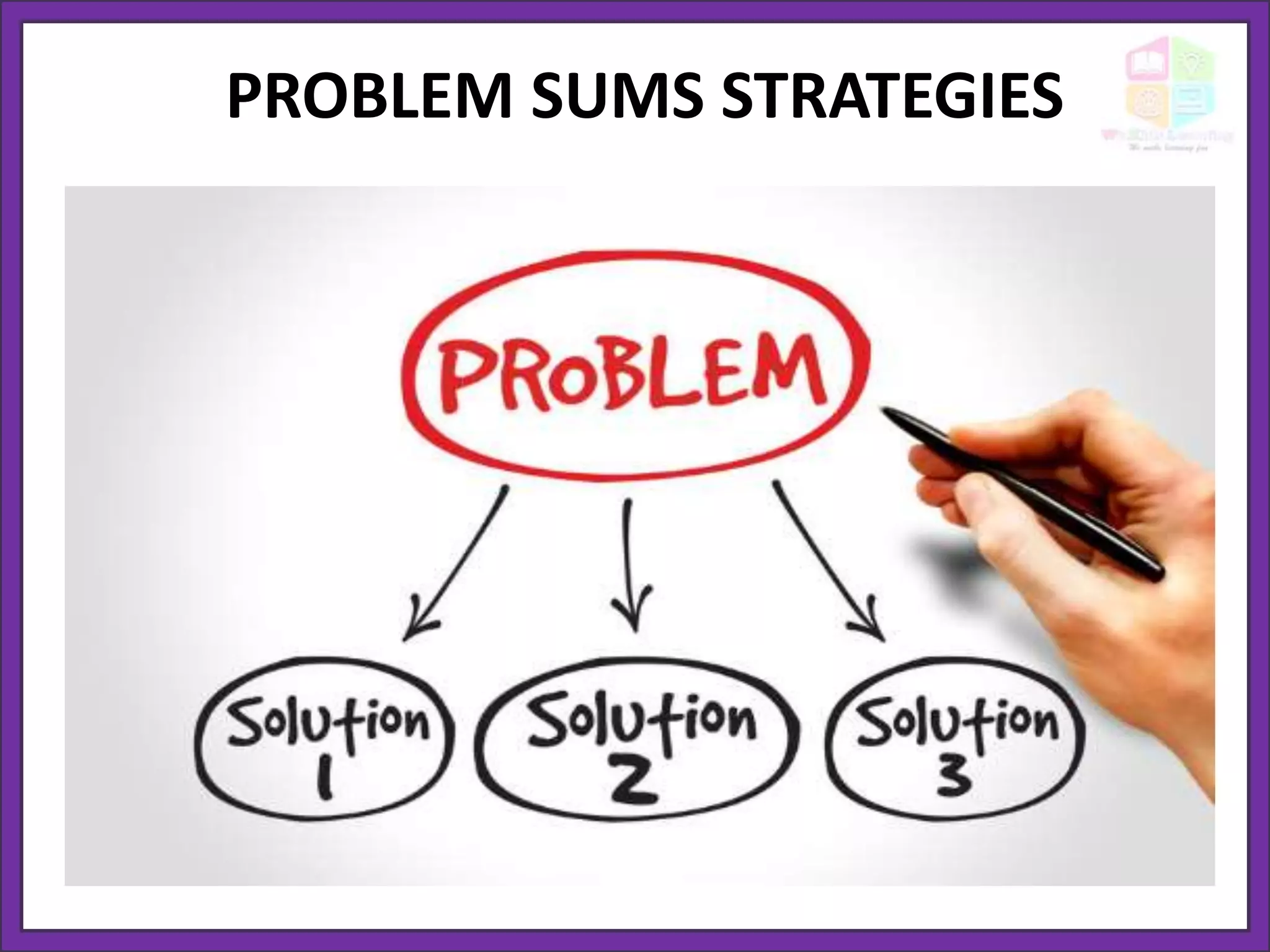
PROBLEM SUMS STRATEGIES
 Read the problem carefully and try to understand what is being said.
 Pay attention to given information and what is it is asking you to find.
(underline)
 Explain the question in your own works.
 Visualize, draw or act out what the sum is about.
 What useful information can help you solve the problem?
 Is there any missing information that you need to find or figure out?
 Have you done any similar sum like it or do you notice a similar pattern.
 Would my solution be larger or smaller?
STEP 1
 Ask yourself which strategy will help you get a solution
 Look for a pattern
 Use manipulations (objects)
 Draw a picture or diagram
 Make an organized list/table
 Act it out
 Work backwards
 Break up the problem
 Write a number sentence
 Use logical reasoning
 Guess and check
STEP 2
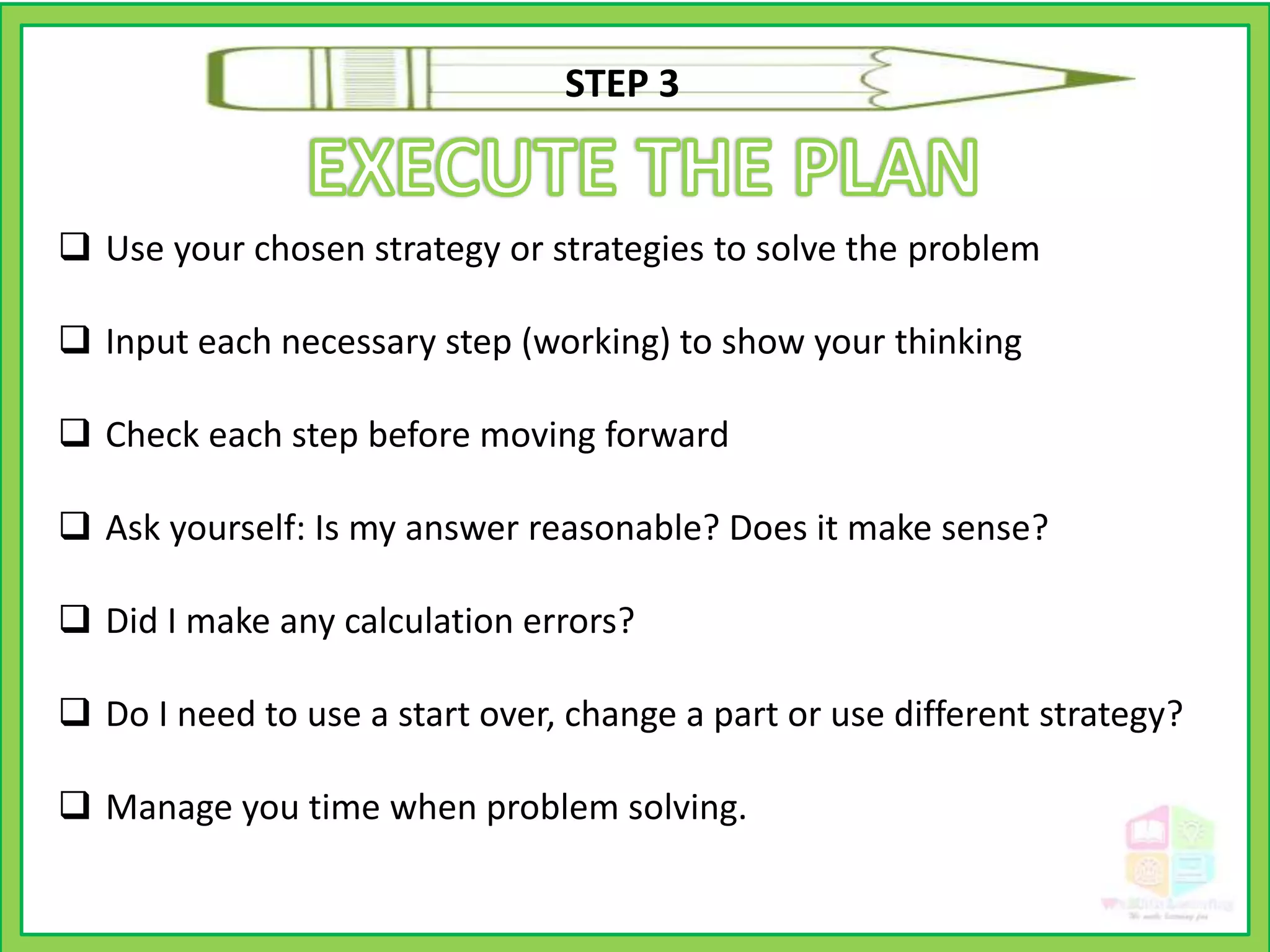
 Use your chosen strategy or strategies to solve the problem
 Input each necessary step (working) to show your thinking
 Check each step before moving forward
 Ask yourself: Is my answer reasonable? Does it make sense?
 Did I make any calculation errors?
 Do I need to use a start over, change a part or use different strategy?
 Manage you time when problem solving.
STEP 3
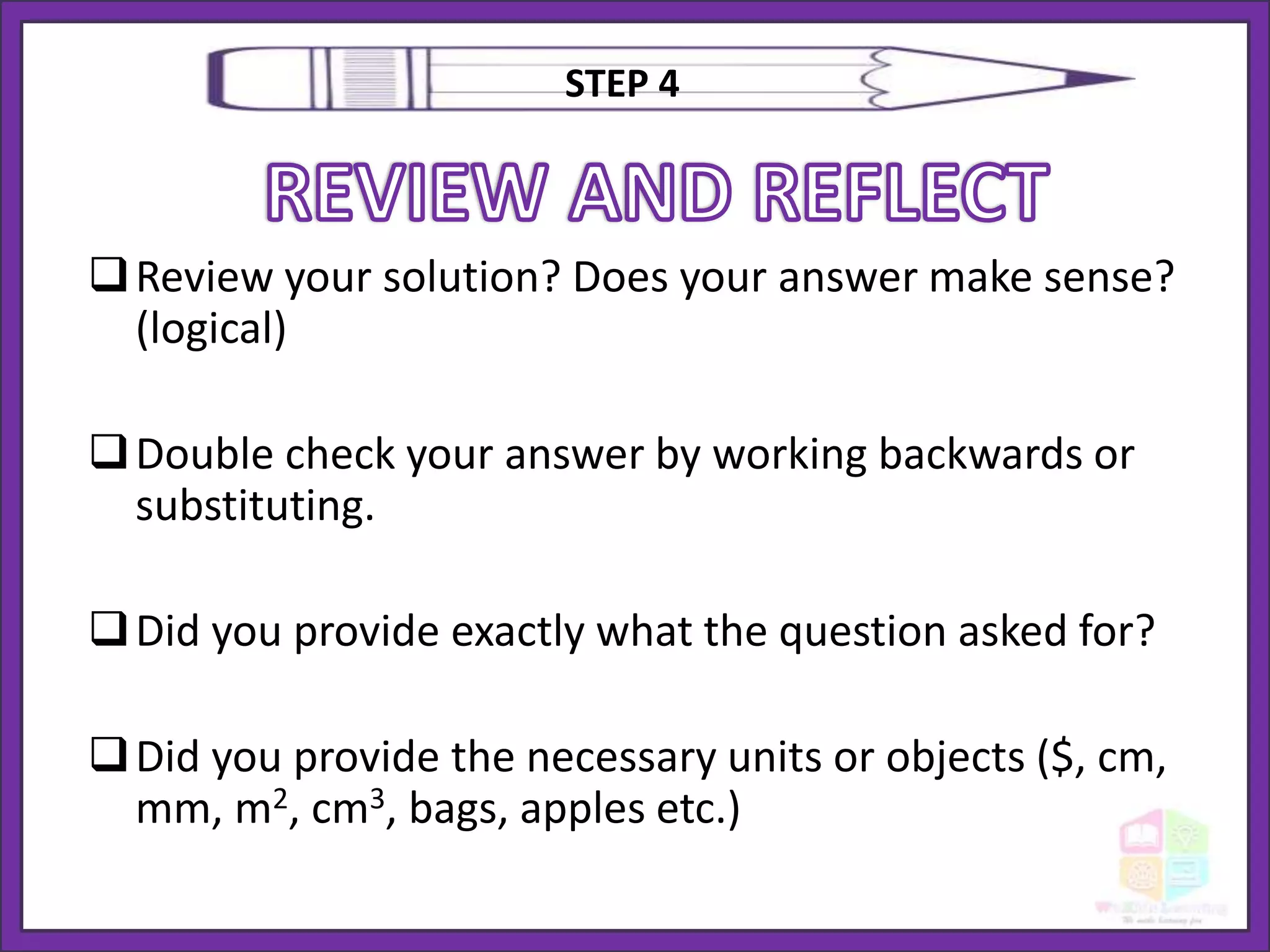
Review your solution? Does your answer make sense?
(logical)
Double check your answer by working backwards or
substituting.
Did you provide exactly what the question asked for?
Did you provide the necessary units or objects ($, cm,
mm, m2, cm3, bags, apples etc.)
STEP 4
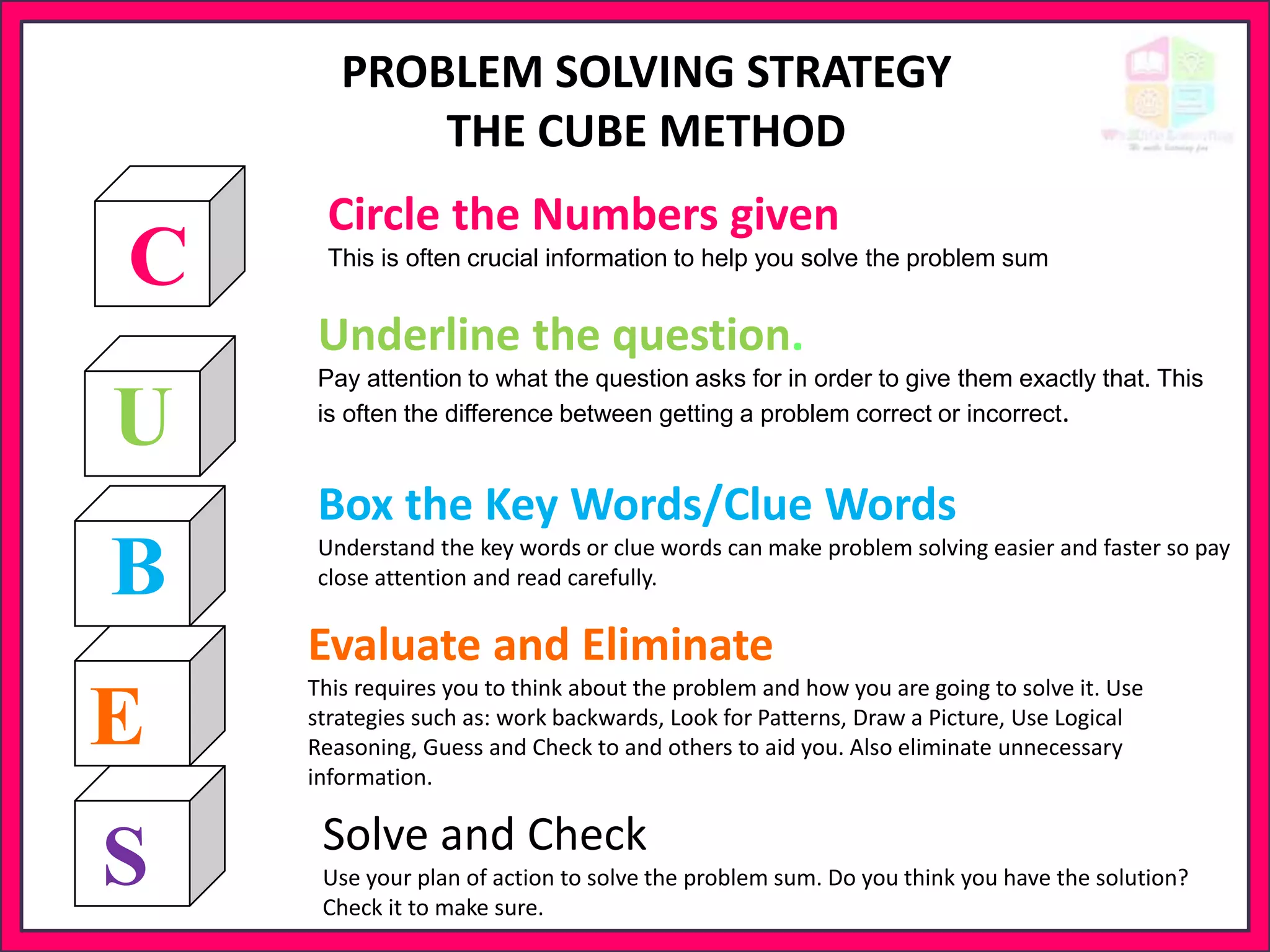
PROBLEM SOLVING STRATEGY
THE CUBE METHOD
C
U
B
E
S
Circle the Numbers given
This is often crucial information to help you solve the problem sum
Underline the question.
Pay attention to what the question asks for in order to give them exactly that. This
is often the difference between getting a problem correct or incorrect.
Box the Key Words/Clue Words
Understand the key words or clue words can make problem solving easier and faster so pay
close attention and read carefully.
Evaluate and Eliminate
This requires you to think about the problem and how you are going to solve it. Use
strategies such as: work backwards, Look for Patterns, Draw a Picture, Use Logical
Reasoning, Guess and Check to and others to aid you. Also eliminate unnecessary
information.
Solve and Check
Use your plan of action to solve the problem sum. Do you think you have the solution?
Check it to make sure.
Problem sums strategies

Problem sums strategies

  • 2.
  • 3.
     Read theproblem carefully and try to understand what is being said.  Pay attention to given information and what is it is asking you to find. (underline)  Explain the question in your own works.  Visualize, draw or act out what the sum is about.  What useful information can help you solve the problem?  Is there any missing information that you need to find or figure out?  Have you done any similar sum like it or do you notice a similar pattern.  Would my solution be larger or smaller? STEP 1
  • 4.
     Ask yourselfwhich strategy will help you get a solution  Look for a pattern  Use manipulations (objects)  Draw a picture or diagram  Make an organized list/table  Act it out  Work backwards  Break up the problem  Write a number sentence  Use logical reasoning  Guess and check STEP 2
  • 5.
     Use yourchosen strategy or strategies to solve the problem  Input each necessary step (working) to show your thinking  Check each step before moving forward  Ask yourself: Is my answer reasonable? Does it make sense?  Did I make any calculation errors?  Do I need to use a start over, change a part or use different strategy?  Manage you time when problem solving. STEP 3
  • 6.
    Review your solution?Does your answer make sense? (logical) Double check your answer by working backwards or substituting. Did you provide exactly what the question asked for? Did you provide the necessary units or objects ($, cm, mm, m2, cm3, bags, apples etc.) STEP 4
  • 7.
    PROBLEM SOLVING STRATEGY THECUBE METHOD C U B E S Circle the Numbers given This is often crucial information to help you solve the problem sum Underline the question. Pay attention to what the question asks for in order to give them exactly that. This is often the difference between getting a problem correct or incorrect. Box the Key Words/Clue Words Understand the key words or clue words can make problem solving easier and faster so pay close attention and read carefully. Evaluate and Eliminate This requires you to think about the problem and how you are going to solve it. Use strategies such as: work backwards, Look for Patterns, Draw a Picture, Use Logical Reasoning, Guess and Check to and others to aid you. Also eliminate unnecessary information. Solve and Check Use your plan of action to solve the problem sum. Do you think you have the solution? Check it to make sure.