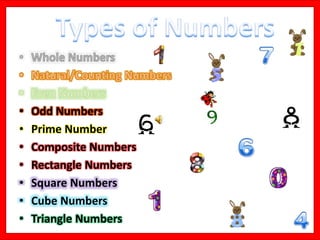
• Odd Numbers
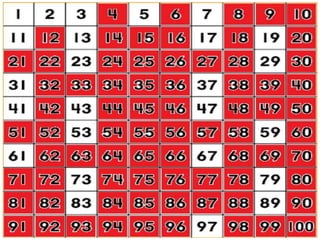
• Prime Number
• Composite Numbers
• Rectangle Numbers
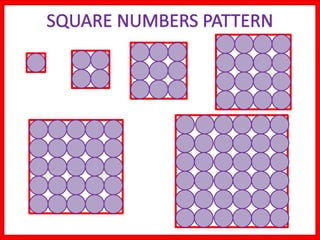
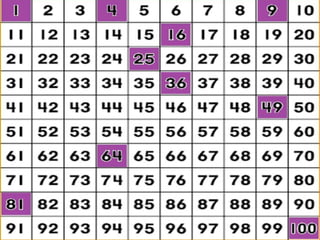
• Square Numbers
• Cube Numbers
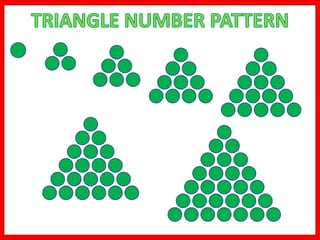
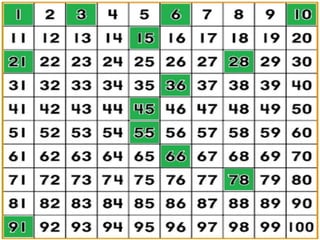
• Triangle Numbers
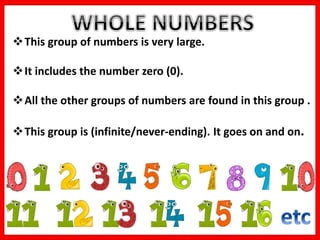
This group of numbers is very large.
It includes the number zero (0).
All the other groups of numbers are found in this group .
This group is (infinite/never-ending). It goes on and on.
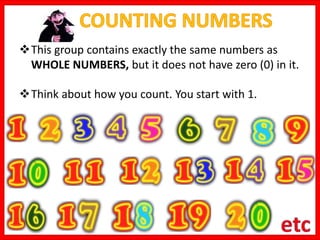
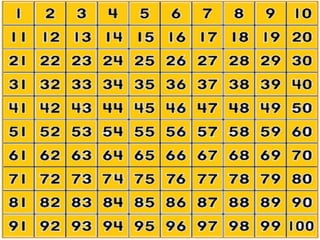
This group contains exactly the same numbers as
WHOLE NUMBERS, but it does not have zero (0) in it.
Think about how you count. You start with 1.
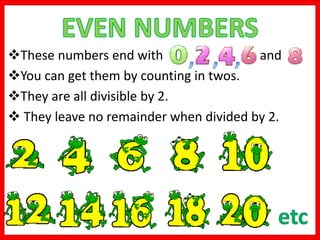
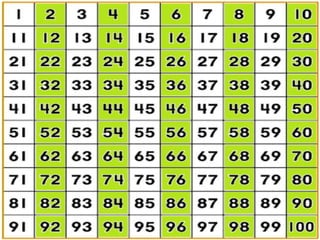
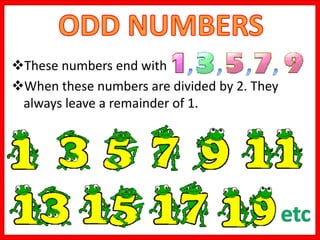
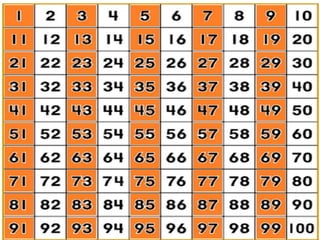
These numbers end with and
You can get them by counting in twos.
They are all divisible by 2.
 They leave no remainder when divided by 2.
These numbers end with
When these numbers are divided by 2. They
always leave a remainder of 1.
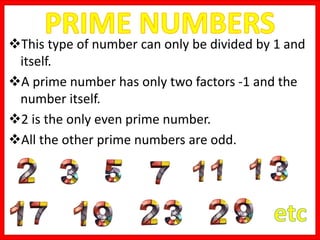
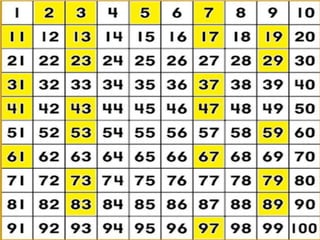
This type of number can only be divided by 1 and
itself.
A prime number has only two factors -1 and the
number itself.
2 is the only even prime number.
All the other prime numbers are odd.
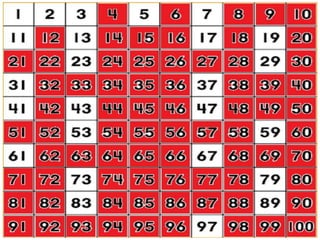
These numbers can be divided exactly by 3 or
more numbers including itself and 1.
These numbers have more than 2 factors.
If you are not a prime, you’re a composite
number.
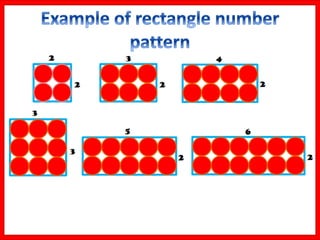
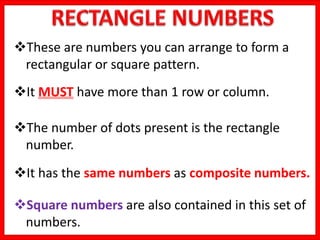
These are numbers you can arrange to form a
rectangular or square pattern.
It MUST have more than 1 row or column.
The number of dots present is the rectangle
number.
It has the same numbers as composite numbers.
Square numbers are also contained in this set of
numbers.
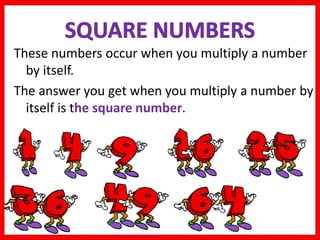
These numbers occur when you multiply a number
by itself.
The answer you get when you multiply a number by
itself is the square number.
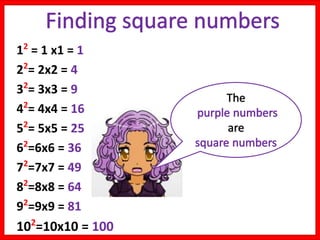
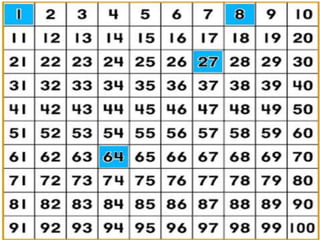
12
= 1 x1 = 1
22
= 2x2 = 4
32
= 3x3 = 9
42
= 4x4 = 16
52
= 5x5 = 25
62
=6x6 = 36
72
=7x7 = 49
82
=8x8 = 64
92
=9x9 = 81
102
=10x10 = 100
These numbers occur when you multiply a
number by itself 3 times.
The answer you get when you multiply a
number by itself 3 times is the CUBE NUMBER.
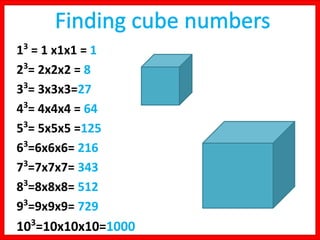
13
= 1 x1x1 = 1
23
= 2x2x2 = 8
33
= 3x3x3=27
43
= 4x4x4 = 64
53
= 5x5x5 =125
63
=6x6x6= 216
73
=7x7x7= 343
83
=8x8x8= 512
93
=9x9x9= 729
103
=10x10x10=1000
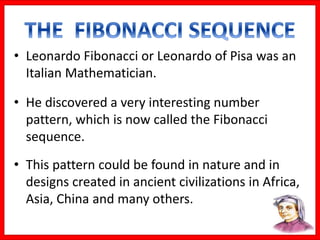
• Leonardo Fibonacci or Leonardo of Pisa was an
Italian Mathematician.
• He discovered a very interesting number
pattern, which is now called the Fibonacci
sequence.
• This pattern could be found in nature and in
designs created in ancient civilizations in Africa,
Asia, China and many others.
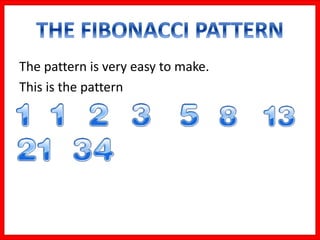
The pattern is very easy to make.
This is the pattern
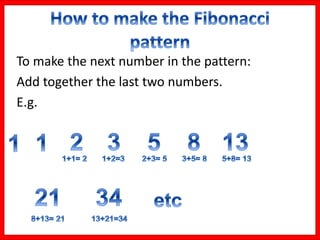
To make the next number in the pattern:
Add together the last two numbers.
E.g.
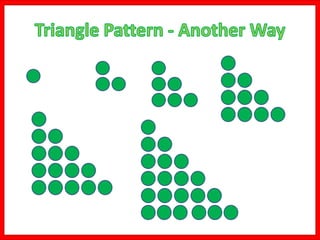
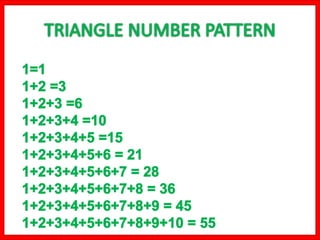
You can arrange these number to form
triangular patterns with dots
Numbers updated
Numbers updated
Numbers updated
Numbers updated
Numbers updated
Numbers updated

Numbers updated

  • 3.
    • Odd Numbers •Prime Number • Composite Numbers • Rectangle Numbers • Square Numbers • Cube Numbers • Triangle Numbers
  • 4.
    This group ofnumbers is very large. It includes the number zero (0). All the other groups of numbers are found in this group . This group is (infinite/never-ending). It goes on and on.
  • 5.
    This group containsexactly the same numbers as WHOLE NUMBERS, but it does not have zero (0) in it. Think about how you count. You start with 1.
  • 7.
    These numbers endwith and You can get them by counting in twos. They are all divisible by 2.  They leave no remainder when divided by 2.
  • 9.
    These numbers endwith When these numbers are divided by 2. They always leave a remainder of 1.
  • 11.
    This type ofnumber can only be divided by 1 and itself. A prime number has only two factors -1 and the number itself. 2 is the only even prime number. All the other prime numbers are odd.
  • 13.
    These numbers canbe divided exactly by 3 or more numbers including itself and 1. These numbers have more than 2 factors. If you are not a prime, you’re a composite number.
  • 15.
    These are numbersyou can arrange to form a rectangular or square pattern. It MUST have more than 1 row or column. The number of dots present is the rectangle number. It has the same numbers as composite numbers. Square numbers are also contained in this set of numbers.
  • 18.
    These numbers occurwhen you multiply a number by itself. The answer you get when you multiply a number by itself is the square number.
  • 19.
    12 = 1 x1= 1 22 = 2x2 = 4 32 = 3x3 = 9 42 = 4x4 = 16 52 = 5x5 = 25 62 =6x6 = 36 72 =7x7 = 49 82 =8x8 = 64 92 =9x9 = 81 102 =10x10 = 100
  • 22.
    These numbers occurwhen you multiply a number by itself 3 times. The answer you get when you multiply a number by itself 3 times is the CUBE NUMBER.
  • 23.
    13 = 1 x1x1= 1 23 = 2x2x2 = 8 33 = 3x3x3=27 43 = 4x4x4 = 64 53 = 5x5x5 =125 63 =6x6x6= 216 73 =7x7x7= 343 83 =8x8x8= 512 93 =9x9x9= 729 103 =10x10x10=1000
  • 25.
    • Leonardo Fibonaccior Leonardo of Pisa was an Italian Mathematician. • He discovered a very interesting number pattern, which is now called the Fibonacci sequence. • This pattern could be found in nature and in designs created in ancient civilizations in Africa, Asia, China and many others.
  • 26.
    The pattern isvery easy to make. This is the pattern
  • 27.
    To make thenext number in the pattern: Add together the last two numbers. E.g.
  • 28.
    You can arrangethese number to form triangular patterns with dots