‘How RTI Works’ Series © 2011 Jim Wright www.interventioncentral.org 1 
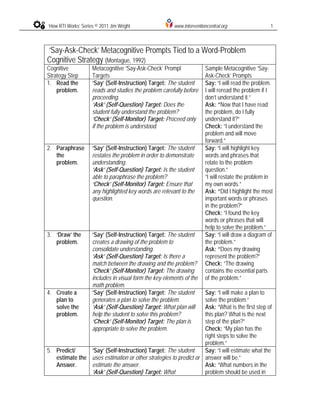
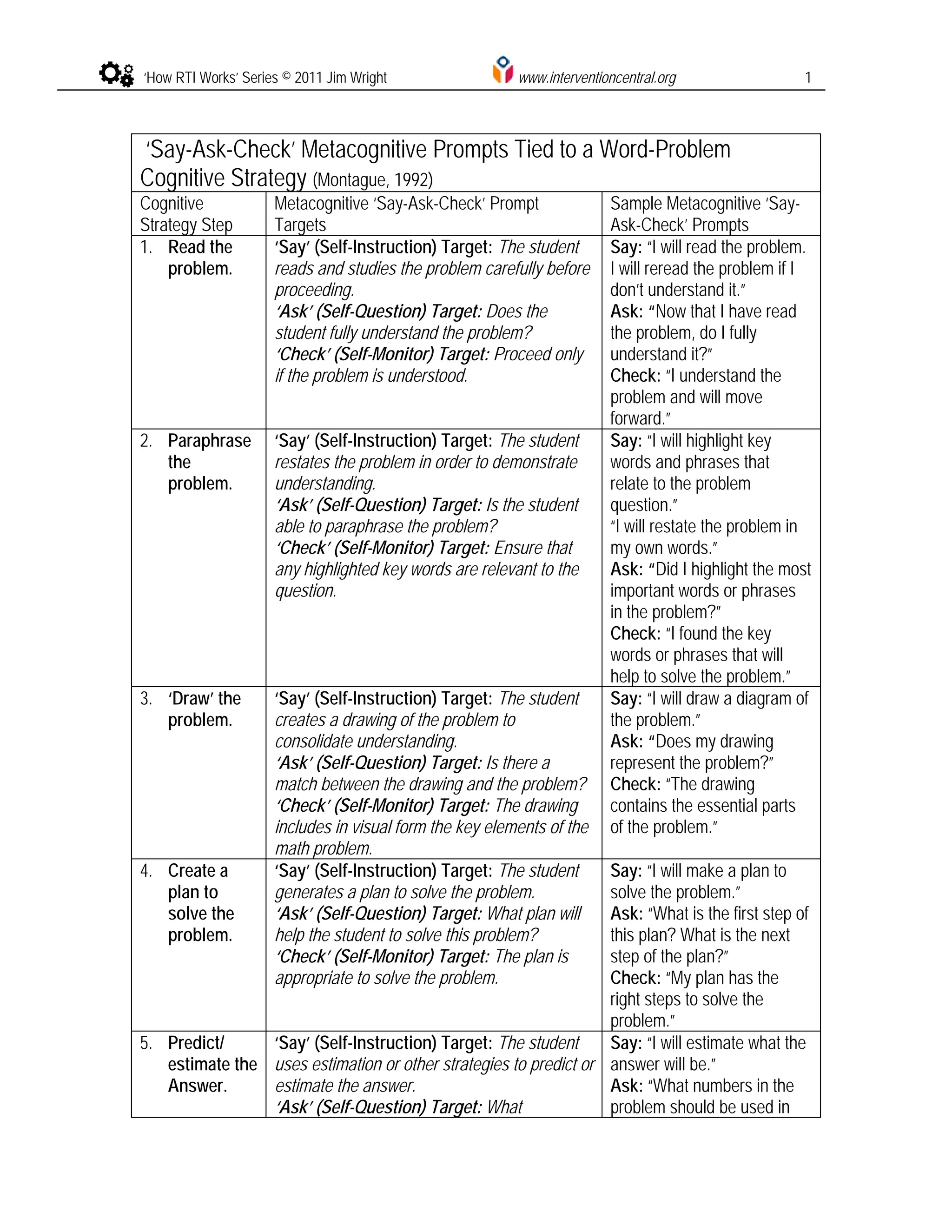
‘Say-Ask-Check’ Metacognitive Prompts Tied to a Word-Problem 
Cognitive Strategy (Montague, 1992) 
Cognitive 
Metacognitive ‘Say-Ask-Check’ Prompt 
Strategy Step 
Targets 
Sample Metacognitive ‘Say- 
Ask-Check’ Prompts 
1. Read the 
problem. 
‘Say’ (Self-Instruction) Target: The student 
reads and studies the problem carefully before 
proceeding. 
‘Ask’ (Self-Question) Target: Does the 
student fully understand the problem? 
‘Check’ (Self-Monitor) Target: Proceed only 
if the problem is understood. 
Say: “I will read the problem. 
I will reread the problem if I 
don’t understand it.” 
Ask: “Now that I have read 
the problem, do I fully 
understand it?” 
Check: “I understand the 
problem and will move 
forward.” 
2. Paraphrase 
the 
problem. 
‘Say’ (Self-Instruction) Target: The student 
restates the problem in order to demonstrate 
understanding. 
‘Ask’ (Self-Question) Target: Is the student 
able to paraphrase the problem? 
‘Check’ (Self-Monitor) Target: Ensure that 
any highlighted key words are relevant to the 
question. 
Say: “I will highlight key 
words and phrases that 
relate to the problem 
question.” 
“I will restate the problem in 
my own words.” 
Ask: “Did I highlight the most 
important words or phrases 
in the problem?” 
Check: “I found the key 
words or phrases that will 
help to solve the problem.” 
3. ‘Draw’ the 
problem. 
‘Say’ (Self-Instruction) Target: The student 
creates a drawing of the problem to 
consolidate understanding. 
‘Ask’ (Self-Question) Target: Is there a 
match between the drawing and the problem? 
‘Check’ (Self-Monitor) Target: The drawing 
includes in visual form the key elements of the 
math problem. 
Say: “I will draw a diagram of 
the problem.” 
Ask: “Does my drawing 
represent the problem?” 
Check: “The drawing 
contains the essential parts 
of the problem.” 
4. Create a 
plan to 
solve the 
problem. 
‘Say’ (Self-Instruction) Target: The student 
generates a plan to solve the problem. 
‘Ask’ (Self-Question) Target: What plan will 
help the student to solve this problem? 
‘Check’ (Self-Monitor) Target: The plan is 
appropriate to solve the problem. 
Say: “I will make a plan to 
solve the problem.” 
Ask: “What is the first step of 
this plan? What is the next 
step of the plan?” 
Check: “My plan has the 
right steps to solve the 
problem.” 
5. Predict/ 
estimate the 
Answer. 
‘Say’ (Self-Instruction) Target: The student 
uses estimation or other strategies to predict or 
estimate the answer. 
‘Ask’ (Self-Question) Target: What 
Say: “I will estimate what the 
answer will be.” 
Ask: “What numbers in the 
problem should be used in
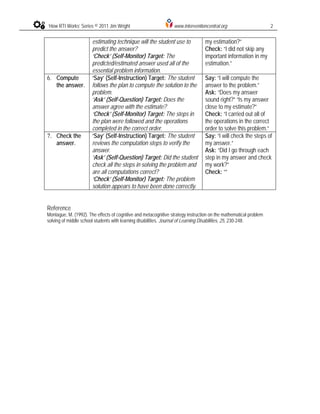
‘How RTI Works’ Series © 2011 Jim Wright www.interventioncentral.org 2 
estimating technique will the student use to 
predict the answer? 
‘Check’ (Self-Monitor) Target: The 
predicted/estimated answer used all of the 
essential problem information. 
my estimation?” 
Check: “I did not skip any 
important information in my 
estimation.” 
6. Compute 
the answer. 
‘Say’ (Self-Instruction) Target: The student 
follows the plan to compute the solution to the 
problem. 
‘Ask’ (Self-Question) Target: Does the 
answer agree with the estimate? 
‘Check’ (Self-Monitor) Target: The steps in 
the plan were followed and the operations 
completed in the correct order. 
Say: “I will compute the 
answer to the problem.” 
Ask: “Does my answer 
sound right?” “Is my answer 
close to my estimate?” 
Check: “I carried out all of 
the operations in the correct 
order to solve this problem.” 
7. Check the 
answer. 
‘Say’ (Self-Instruction) Target: The student 
reviews the computation steps to verify the 
answer. 
‘Ask’ (Self-Question) Target: Did the student 
check all the steps in solving the problem and 
are all computations correct? 
‘Check’ (Self-Monitor) Target: The problem 
solution appears to have been done correctly. 
Say: “I will check the steps of 
my answer.” 
Ask: “Did I go through each 
step in my answer and check 
my work?” 
Check: “” 
Reference 
Montague, M. (1992). The effects of cognitive and metacognitive strategy instruction on the mathematical problem 
solving of middle school students with learning disabilities. Journal of Learning Disabilities, 25, 230-248.

Math meta cog_strategy_montague_say_ask_check

  • 1.
    ‘How RTI Works’Series © 2011 Jim Wright www.interventioncentral.org 1 ‘Say-Ask-Check’ Metacognitive Prompts Tied to a Word-Problem Cognitive Strategy (Montague, 1992) Cognitive Metacognitive ‘Say-Ask-Check’ Prompt Strategy Step Targets Sample Metacognitive ‘Say- Ask-Check’ Prompts 1. Read the problem. ‘Say’ (Self-Instruction) Target: The student reads and studies the problem carefully before proceeding. ‘Ask’ (Self-Question) Target: Does the student fully understand the problem? ‘Check’ (Self-Monitor) Target: Proceed only if the problem is understood. Say: “I will read the problem. I will reread the problem if I don’t understand it.” Ask: “Now that I have read the problem, do I fully understand it?” Check: “I understand the problem and will move forward.” 2. Paraphrase the problem. ‘Say’ (Self-Instruction) Target: The student restates the problem in order to demonstrate understanding. ‘Ask’ (Self-Question) Target: Is the student able to paraphrase the problem? ‘Check’ (Self-Monitor) Target: Ensure that any highlighted key words are relevant to the question. Say: “I will highlight key words and phrases that relate to the problem question.” “I will restate the problem in my own words.” Ask: “Did I highlight the most important words or phrases in the problem?” Check: “I found the key words or phrases that will help to solve the problem.” 3. ‘Draw’ the problem. ‘Say’ (Self-Instruction) Target: The student creates a drawing of the problem to consolidate understanding. ‘Ask’ (Self-Question) Target: Is there a match between the drawing and the problem? ‘Check’ (Self-Monitor) Target: The drawing includes in visual form the key elements of the math problem. Say: “I will draw a diagram of the problem.” Ask: “Does my drawing represent the problem?” Check: “The drawing contains the essential parts of the problem.” 4. Create a plan to solve the problem. ‘Say’ (Self-Instruction) Target: The student generates a plan to solve the problem. ‘Ask’ (Self-Question) Target: What plan will help the student to solve this problem? ‘Check’ (Self-Monitor) Target: The plan is appropriate to solve the problem. Say: “I will make a plan to solve the problem.” Ask: “What is the first step of this plan? What is the next step of the plan?” Check: “My plan has the right steps to solve the problem.” 5. Predict/ estimate the Answer. ‘Say’ (Self-Instruction) Target: The student uses estimation or other strategies to predict or estimate the answer. ‘Ask’ (Self-Question) Target: What Say: “I will estimate what the answer will be.” Ask: “What numbers in the problem should be used in
  • 2.
    ‘How RTI Works’Series © 2011 Jim Wright www.interventioncentral.org 2 estimating technique will the student use to predict the answer? ‘Check’ (Self-Monitor) Target: The predicted/estimated answer used all of the essential problem information. my estimation?” Check: “I did not skip any important information in my estimation.” 6. Compute the answer. ‘Say’ (Self-Instruction) Target: The student follows the plan to compute the solution to the problem. ‘Ask’ (Self-Question) Target: Does the answer agree with the estimate? ‘Check’ (Self-Monitor) Target: The steps in the plan were followed and the operations completed in the correct order. Say: “I will compute the answer to the problem.” Ask: “Does my answer sound right?” “Is my answer close to my estimate?” Check: “I carried out all of the operations in the correct order to solve this problem.” 7. Check the answer. ‘Say’ (Self-Instruction) Target: The student reviews the computation steps to verify the answer. ‘Ask’ (Self-Question) Target: Did the student check all the steps in solving the problem and are all computations correct? ‘Check’ (Self-Monitor) Target: The problem solution appears to have been done correctly. Say: “I will check the steps of my answer.” Ask: “Did I go through each step in my answer and check my work?” Check: “” Reference Montague, M. (1992). The effects of cognitive and metacognitive strategy instruction on the mathematical problem solving of middle school students with learning disabilities. Journal of Learning Disabilities, 25, 230-248.