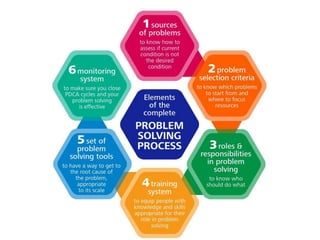









Rajlaxmi Bhosale
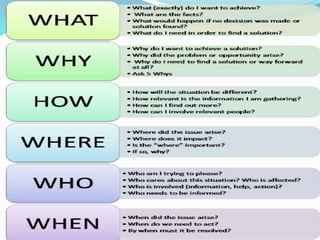
Ask problems as questions
 When you rephrase problems and challenges as
open-ended questions with multiple possibilities, it's
easier to come up with solutions.
 Asking these types of questions generates lots of rich
information, while asking closed questions tends to
elicit short answers, such as confirmations or
disagreements.
 Problem statements tend to generate limited
responses, or none at all.
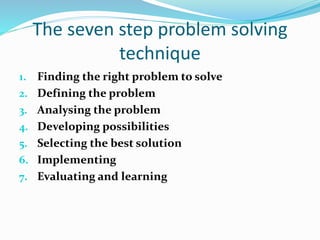
The seven step problem solving
technique
1. Finding the right problem to solve
2. Defining the problem
3. Analysing the problem
4. Developing possibilities
5. Selecting the best solution
6. Implementing
7. Evaluating and learning
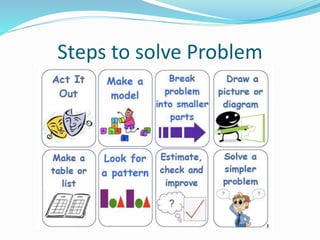
Steps to solve Problem
Core Principles of Creative
Problem Solving
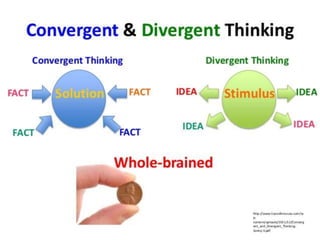
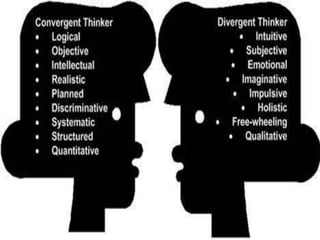
 Divergent and convergent thinking must be
balanced.
 The key to creativity is learning how to identify and
balance divergent and convergent thinking (done
separately), and knowing when to practice each one.
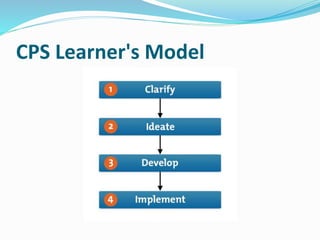
CPS Learner's Model
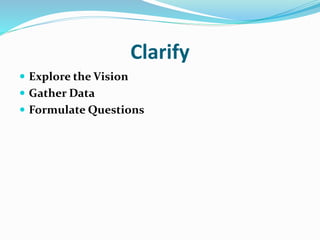
Clarify
 Explore the Vision
 Gather Data
 Formulate Questions
Ideate
 Explore Ideas
 Generate ideas that answer the challenge questions
you identified in step 1.
 It can be tempting to consider solutions that you've
tried before, as our minds tend to return to habitual
thinking patterns that stop us from producing new
ideas. However, this is a chance to use your creativity
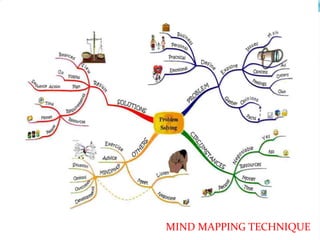
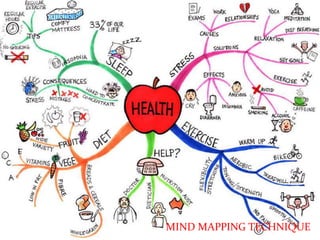
 Brainstorming and Mind Maps are great ways to
explore ideas during this divergent stage of CPS
Develop
 Formulate Solutions
 This is the convergent stage of CPS, where you begin to
focus on evaluating all of your possible options and
come up with solutions.
 Analyze whether potential solutions meet your needs
and criteria, and decide whether you can implement
them successfully.
 Next, consider how you can strengthen them and
determine which ones are the best "fit”
Implement
 Formulate a Plan
 Once you've chosen the best solution, it's time to
develop a plan of action.
 Start by identifying resources and actions that will
allow you to implement your chosen solution.
 Next, communicate your plan and make sure that
everyone involved understands and accepts it.
Apply This to
Your Life
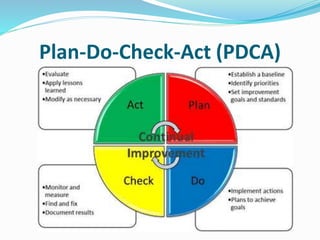
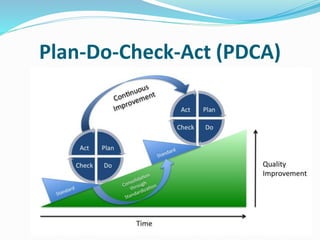
Plan-Do-Check-Act (PDCA)
PDCA
 The four phases in the Plan-Do-Check-Act Cycle
involve:
 Plan: Identifying and analyzing the problem.
 Do: Developing and testing a potential solution.
 Check: Measuring how effective the test solution was,
and analyzing whether it could be improved in any
way.
 Act: Implementing the improved solution fully.
Step 1: Plan
 First, identify exactly what your problem is. You
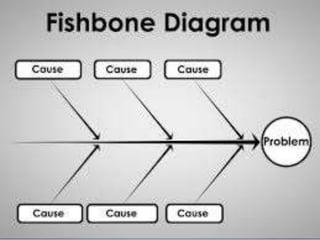
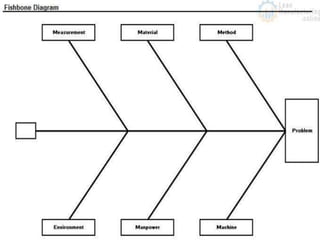
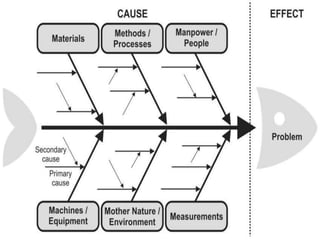
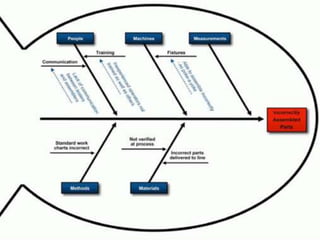
may find it useful to use tools like Drill
Down, Cause and Effect Diagrams , and the 5
Whys to help you really get to the root of it. Once
you've done this, it may be appropriate for you
tomap the process that is at the root of the
problem.
 Next, draw together any other information you
need that will help you start sketching out
solutions.
Step 2: Do
 Generate possible solutions.
 Select the best of these solutions, perhaps using
techniques like Impact Analysis to scrutinize
them.
 Implement a pilot project on a small scale basis,
with a small group, or in a limited geographical
area, or using some other trial design appropriate
to the nature of your problem, product or
initiative.
Step 3: Check
 In this phase, you measure how effective the pilot
solution has been, and gather together any learnings
from it that could make it even better.
 Depending on the success of the pilot, the number of
areas for improvement you have identified, and the
scope of the whole initiative, you may decide to repeat
the "Do" and "Check" phases, incorporating your
additional improvements.
 Once you are finally satisfied that the costs would
outweigh the benefits of repeating the Do-Check sub-
cycle any more, you can move on to the final phase.
Step 4: Act
 Now you implement your solution fully.
However, your use of the PDCA Cycle
doesn't necessarily stop there. If you are
using the PDCA or Deming Wheel as part of
a continuous improvement initiative, you
need to loop back to the Plan Phase (Step 1),
and seek out further areas for improvement.
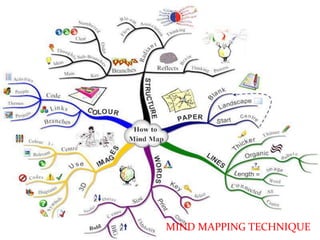
MIND MAPPING TECHNIQUE
STAND OUT !
Roles of a Manager
 Figurehead
 Leader
 Liaison
 Monitor
 Disseminator
 Spokesperson
 Entrepreneur
 Disturbance Handler
 Resource Allocator
 Negotiator
Stress management
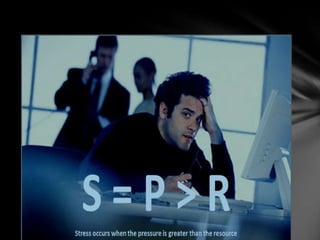
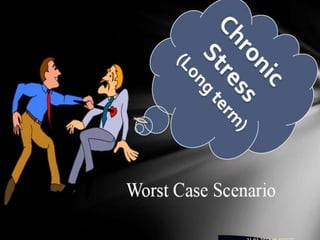
 Stress is an adaptive response to an external situation
that results in physical ,psychological and/ or
behavioural deviations for organizational participants
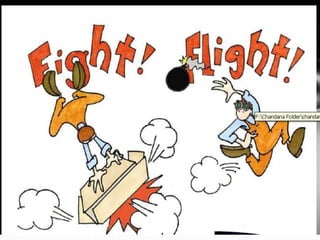
 Stress is the body’s automatic response to any physical
or mental demand placed on it.
 Adrenaline is a chemical naturally produced in our
body as a response to stress .
 Fight or Flight response is illicited.
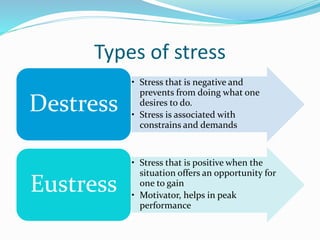
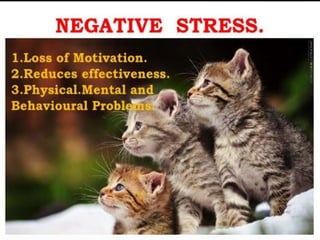
Types of stress
• Stress that is negative and
prevents from doing what one
desires to do.
• Stress is associated with
constrains and demands
Destress
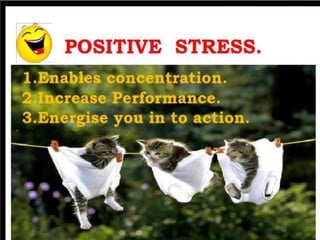
• Stress that is positive when the
situation offers an opportunity for
one to gain
• Motivator, helps in peak
performance
Eustress
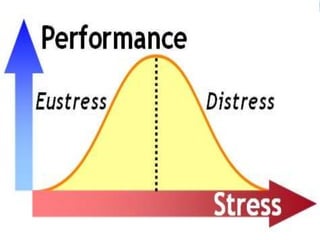
Is All Stress Bad?
 Moderate levels of stress may actually improve
performance and efficiency
 Too little stress may result in boredom
 Too much stress may cause an unproductive anxiety
level
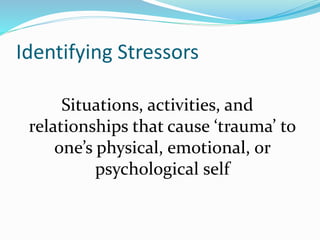
Identifying Stressors
Situations, activities, and
relationships that cause ‘trauma’ to
one’s physical, emotional, or
psychological self
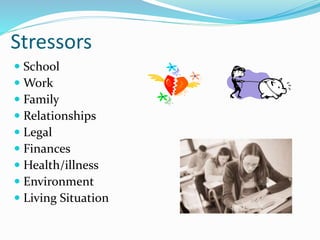
Stressors
 School
 Work
 Family
 Relationships
 Legal
 Finances
 Health/illness
 Environment
 Living Situation
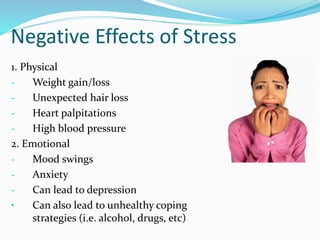
Negative Effects of Stress
1. Physical
- Weight gain/loss
- Unexpected hair loss
- Heart palpitations
- High blood pressure
2. Emotional
- Mood swings
- Anxiety
- Can lead to depression
• Can also lead to unhealthy coping
strategies (i.e. alcohol, drugs, etc)
How to fight stress?
Be Assertive
 Assertiveness is about self confidence which means
having a positive attitude towards yourself and others.
 Assertiveness helps to manage stressful situations,
and will , in time, help to reduce their frequency
 verbal and non - verbal communication
 stand up for your personal rights
 express your thoughts, feelings and beliefs directly,
honestly and spontaneously in ways that don’t infringe
the rights of others.
Assertive Skills
 Establish good eye contact / don’t stare
 Stand or sit comfortably - don’t fidget
 Talk in a firm, steady voice
 Use body language
 ‘I think’ / ‘I feel’
 ‘What do you think?’ ‘How do you feel ?’
 Concise and to the point
How to fight stress?
 Get Organised
 Poor organisation is one of the most
common causes of stress. Structured
approaches offer security against ‘out of the
blue’ problems. Prioritising objectives,
duties and activities makes them
manageable and achievable. Don’t overload
your mind. Organisation will help avoid
personal and professional chaos.
How to fight stress?
 Time Management
 Make a list
 What MUST be done
 What SHOULD be done
 What would you LIKE to do
 Cut out time wasting
 Learn to drop unimportant activities
 Say no or delegate
Time Management
Plan your day
Set achievable goals
Don’t waste time making
excuses for not doing something
How to fight stress?
 Humour
 Good stress - reducer
 Applies at home and work
 Relieves muscular tension
 Improves breathing
 Pumps endorphins into the bloodstream -
the body’s natural painkillers
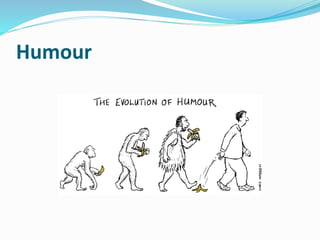
Humour
How to fight stress?
 Ventilation
 ‘A problem shared is a problem halved’
 Develop a support network through friends or
colleagues to talk with. It’s not always events that are
stressful but how we perceive them.
 Writing a diary or notes may help release feelings but
do not re-read what has been written
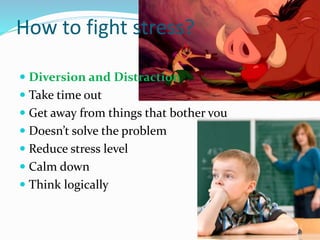
How to fight stress?
 Diversion and Distraction
 Take time out
 Get away from things that bother you
 Doesn’t solve the problem
 Reduce stress level
 Calm down
 Think logically
Problem solving and stress management

Problem solving and stress management

  • 1.
  • 2.
    Ask problems asquestions  When you rephrase problems and challenges as open-ended questions with multiple possibilities, it's easier to come up with solutions.  Asking these types of questions generates lots of rich information, while asking closed questions tends to elicit short answers, such as confirmations or disagreements.  Problem statements tend to generate limited responses, or none at all.
  • 5.
    The seven stepproblem solving technique 1. Finding the right problem to solve 2. Defining the problem 3. Analysing the problem 4. Developing possibilities 5. Selecting the best solution 6. Implementing 7. Evaluating and learning
  • 6.
  • 7.
    Core Principles ofCreative Problem Solving  Divergent and convergent thinking must be balanced.  The key to creativity is learning how to identify and balance divergent and convergent thinking (done separately), and knowing when to practice each one.
  • 10.
  • 11.
    Clarify  Explore theVision  Gather Data  Formulate Questions
  • 12.
    Ideate  Explore Ideas Generate ideas that answer the challenge questions you identified in step 1.  It can be tempting to consider solutions that you've tried before, as our minds tend to return to habitual thinking patterns that stop us from producing new ideas. However, this is a chance to use your creativity  Brainstorming and Mind Maps are great ways to explore ideas during this divergent stage of CPS
  • 13.
    Develop  Formulate Solutions This is the convergent stage of CPS, where you begin to focus on evaluating all of your possible options and come up with solutions.  Analyze whether potential solutions meet your needs and criteria, and decide whether you can implement them successfully.  Next, consider how you can strengthen them and determine which ones are the best "fit”
  • 14.
    Implement  Formulate aPlan  Once you've chosen the best solution, it's time to develop a plan of action.  Start by identifying resources and actions that will allow you to implement your chosen solution.  Next, communicate your plan and make sure that everyone involved understands and accepts it.
  • 15.
  • 16.
  • 17.
  • 18.
    PDCA  The fourphases in the Plan-Do-Check-Act Cycle involve:  Plan: Identifying and analyzing the problem.  Do: Developing and testing a potential solution.  Check: Measuring how effective the test solution was, and analyzing whether it could be improved in any way.  Act: Implementing the improved solution fully.
  • 19.
    Step 1: Plan First, identify exactly what your problem is. You may find it useful to use tools like Drill Down, Cause and Effect Diagrams , and the 5 Whys to help you really get to the root of it. Once you've done this, it may be appropriate for you tomap the process that is at the root of the problem.  Next, draw together any other information you need that will help you start sketching out solutions.
  • 20.
    Step 2: Do Generate possible solutions.  Select the best of these solutions, perhaps using techniques like Impact Analysis to scrutinize them.  Implement a pilot project on a small scale basis, with a small group, or in a limited geographical area, or using some other trial design appropriate to the nature of your problem, product or initiative.
  • 21.
    Step 3: Check In this phase, you measure how effective the pilot solution has been, and gather together any learnings from it that could make it even better.  Depending on the success of the pilot, the number of areas for improvement you have identified, and the scope of the whole initiative, you may decide to repeat the "Do" and "Check" phases, incorporating your additional improvements.  Once you are finally satisfied that the costs would outweigh the benefits of repeating the Do-Check sub- cycle any more, you can move on to the final phase.
  • 22.
    Step 4: Act Now you implement your solution fully. However, your use of the PDCA Cycle doesn't necessarily stop there. If you are using the PDCA or Deming Wheel as part of a continuous improvement initiative, you need to loop back to the Plan Phase (Step 1), and seek out further areas for improvement.
  • 28.
  • 29.
  • 30.
  • 31.
  • 32.
    Roles of aManager  Figurehead  Leader  Liaison  Monitor  Disseminator  Spokesperson  Entrepreneur  Disturbance Handler  Resource Allocator  Negotiator
  • 33.
    Stress management  Stressis an adaptive response to an external situation that results in physical ,psychological and/ or behavioural deviations for organizational participants  Stress is the body’s automatic response to any physical or mental demand placed on it.  Adrenaline is a chemical naturally produced in our body as a response to stress .  Fight or Flight response is illicited.
  • 34.
    Types of stress •Stress that is negative and prevents from doing what one desires to do. • Stress is associated with constrains and demands Destress • Stress that is positive when the situation offers an opportunity for one to gain • Motivator, helps in peak performance Eustress
  • 38.
    Is All StressBad?  Moderate levels of stress may actually improve performance and efficiency  Too little stress may result in boredom  Too much stress may cause an unproductive anxiety level
  • 42.
    Identifying Stressors Situations, activities,and relationships that cause ‘trauma’ to one’s physical, emotional, or psychological self
  • 49.
    Stressors  School  Work Family  Relationships  Legal  Finances  Health/illness  Environment  Living Situation
  • 50.
    Negative Effects ofStress 1. Physical - Weight gain/loss - Unexpected hair loss - Heart palpitations - High blood pressure 2. Emotional - Mood swings - Anxiety - Can lead to depression • Can also lead to unhealthy coping strategies (i.e. alcohol, drugs, etc)
  • 52.
    How to fightstress? Be Assertive  Assertiveness is about self confidence which means having a positive attitude towards yourself and others.  Assertiveness helps to manage stressful situations, and will , in time, help to reduce their frequency  verbal and non - verbal communication  stand up for your personal rights  express your thoughts, feelings and beliefs directly, honestly and spontaneously in ways that don’t infringe the rights of others.
  • 53.
    Assertive Skills  Establishgood eye contact / don’t stare  Stand or sit comfortably - don’t fidget  Talk in a firm, steady voice  Use body language  ‘I think’ / ‘I feel’  ‘What do you think?’ ‘How do you feel ?’  Concise and to the point
  • 54.
    How to fightstress?  Get Organised  Poor organisation is one of the most common causes of stress. Structured approaches offer security against ‘out of the blue’ problems. Prioritising objectives, duties and activities makes them manageable and achievable. Don’t overload your mind. Organisation will help avoid personal and professional chaos.
  • 55.
    How to fightstress?  Time Management  Make a list  What MUST be done  What SHOULD be done  What would you LIKE to do  Cut out time wasting  Learn to drop unimportant activities  Say no or delegate
  • 56.
    Time Management Plan yourday Set achievable goals Don’t waste time making excuses for not doing something
  • 57.
    How to fightstress?  Humour  Good stress - reducer  Applies at home and work  Relieves muscular tension  Improves breathing  Pumps endorphins into the bloodstream - the body’s natural painkillers
  • 58.
  • 59.
    How to fightstress?  Ventilation  ‘A problem shared is a problem halved’  Develop a support network through friends or colleagues to talk with. It’s not always events that are stressful but how we perceive them.  Writing a diary or notes may help release feelings but do not re-read what has been written
  • 60.
    How to fightstress?  Diversion and Distraction  Take time out  Get away from things that bother you  Doesn’t solve the problem  Reduce stress level  Calm down  Think logically