PRINT MEDIA
Gayatri S S
English
Optional
WHAT IS PRINT
MEDIA?
Print media refers to physical
forms of communication that use
printed text and images to deliver
information or entertainment,
such as newspapers, magazines,
books, brochures, and pamphlets.
EVOLUTION OF
PRINT MEDIA
WOODBLOCK PRINTING
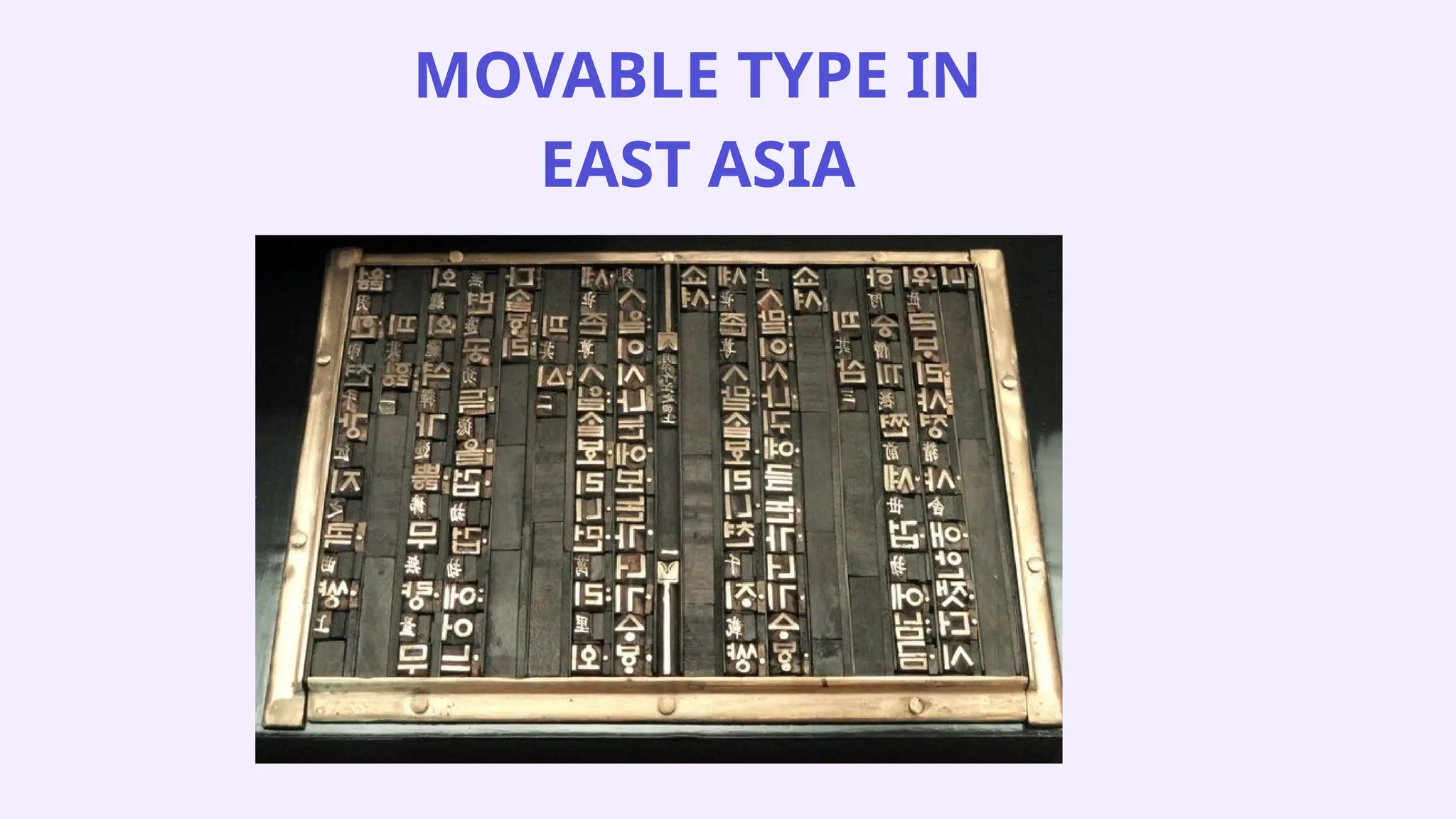
MOVABLE TYPE IN
EAST ASIA
JOHANNES GUTENBERG
[Around 1436-1440] - invented the first
practical mechanical printing press in the
West
INDUSTRIAL ERA
PHOTOGRAPHIC PRINTING
DIGITAL REVOLUTION
TYPES OF PRINT MEDIA
FUNCTIONS:
• Print media provides timely and reliable news,
information, and updates about current
events, policies, business, and society -
reaching a broad audience.
• Print media helps spread new ideas, research,
and awareness among the public and
professionals.
• Newspapers, magazines, and books include
content such as stories, comics, puzzles, and
features for reader enjoyment and relaxation.
• Businesses use print media (especially
newspapers and magazines) to reach specific
audiences with advertisements about
products, services, job openings, and events.
• Print media facilitates public discussion,
enables debate and commentary on issues,
and shapes social and political perspectives
through editorials, letters, and opinion
pieces.
• Repeated exposure to content in print media
helps reinforce cultural norms, social values,
and collective identities, and serves in the
• They are collections of printed
pages.       
• They are portable and disposable.
• Their content can be public affairs
and events information and/or
entertainment.
• Preparation and production of print
media can take hours.
CHARACTERISTICS:
• Print media is usually
printed in large quantities.
• They are published once or
at regular intervals.
• Relatively permanent
medium
• Needs door to door physical
distribution.
ADVANTAGES:
• Because it exists in a fixed form, readers
often perceive printed information as
more authoritative and permanent than
digital content.
• Print materials encourage focused reading
without the multitasking, notifications, or
hyperlinks that often distract users online.
This leads to deeper engagement and
better retention of information.
• Print media can effectively reach specific
geographic or demographic audiences that
might be missed by broad digital
campaigns.
• Magazines, newspapers, brochures, and
advertisements in print often stay in
homes and offices longer than fleeting
digital ads, resulting in repeated
exposure.
• Physical copies can be collected and
referenced for years, serving as historical
records.
• Readers are less likely to be overwhelmed
by advertising overload compared to the
digital space, where content vies for
DISADVANTAGES:
• Print media is restricted by geography and distribution logistics, making it
slower and narrower in reach, especially compared to the global, real-time
updates of digital media.
• Printing and distributing newspapers, magazines, or flyers is more
expensive and less environmentally friendly (due to paper use) than digital
publishing.
• Print is generally one-way communication and cannot provide immediate
feedback, two-way conversation, or real-time news like digital platforms.
• Unlike digital media, print struggles to tailor content or ads to the interests
or behaviors of specific readers.
• Physical copies require space and can deteriorate over time,
making storage and searchability more challenging than with
digital archives
• Younger and more tech-savvy audiences increasingly favor
digital media, making print less relevant for some
demographics.
CHALLENGES:
• The rise of digital platforms has caused a
steady fall in print readership and
advertising money.
• Print media cannot match the speed of
online news, which provides real-time
updates accessible 24/7. This makes print
seem outdated for breaking news and fast-
evolving stories.
• Printing and distributing physical copies is
expensive and less flexible than digital. This
includes costs of paper, ink, logistics, and
labor which digital media largely avoids.
• Print publishers face challenges investing
in and mastering new digital tools,
requiring significant resources and new
skill sets to produce interactive,
multimedia content and maintain an
online presence.
• Many digital news sources offer free
content, making it harder for print media
to convince readers to pay for
subscriptions or physical copies.
• Modern audiences, especially younger
generations, prefer interactive,
multimedia, and on-demand content
versus static print formats.
• Print media must redefine its unique value
amid the dominance of instant, interactive
digital media where reader engagement
expectations have shifted.
• Balancing traditional print with digital
platforms requires careful integration, often
demanding innovation, additional investment,
and new revenue models like paywalls or
branded content.
THANKS FOR
LISTENING!

PRINT MEDIA - EDUCATIONAL TECHNOLOGY - PRESENTATION

  • 1.
    PRINT MEDIA Gayatri SS English Optional
  • 2.
  • 3.
    Print media refersto physical forms of communication that use printed text and images to deliver information or entertainment, such as newspapers, magazines, books, brochures, and pamphlets.
  • 4.
  • 6.
  • 7.
  • 8.
    JOHANNES GUTENBERG [Around 1436-1440]- invented the first practical mechanical printing press in the West
  • 10.
  • 11.
  • 12.
  • 13.
  • 16.
    FUNCTIONS: • Print mediaprovides timely and reliable news, information, and updates about current events, policies, business, and society - reaching a broad audience. • Print media helps spread new ideas, research, and awareness among the public and professionals. • Newspapers, magazines, and books include content such as stories, comics, puzzles, and features for reader enjoyment and relaxation.
  • 17.
    • Businesses useprint media (especially newspapers and magazines) to reach specific audiences with advertisements about products, services, job openings, and events. • Print media facilitates public discussion, enables debate and commentary on issues, and shapes social and political perspectives through editorials, letters, and opinion pieces. • Repeated exposure to content in print media helps reinforce cultural norms, social values, and collective identities, and serves in the
  • 18.
    • They arecollections of printed pages.        • They are portable and disposable. • Their content can be public affairs and events information and/or entertainment. • Preparation and production of print media can take hours. CHARACTERISTICS:
  • 19.
    • Print mediais usually printed in large quantities. • They are published once or at regular intervals. • Relatively permanent medium • Needs door to door physical distribution.
  • 20.
    ADVANTAGES: • Because itexists in a fixed form, readers often perceive printed information as more authoritative and permanent than digital content. • Print materials encourage focused reading without the multitasking, notifications, or hyperlinks that often distract users online. This leads to deeper engagement and better retention of information. • Print media can effectively reach specific geographic or demographic audiences that might be missed by broad digital campaigns.
  • 21.
    • Magazines, newspapers,brochures, and advertisements in print often stay in homes and offices longer than fleeting digital ads, resulting in repeated exposure. • Physical copies can be collected and referenced for years, serving as historical records. • Readers are less likely to be overwhelmed by advertising overload compared to the digital space, where content vies for
  • 22.
    DISADVANTAGES: • Print mediais restricted by geography and distribution logistics, making it slower and narrower in reach, especially compared to the global, real-time updates of digital media. • Printing and distributing newspapers, magazines, or flyers is more expensive and less environmentally friendly (due to paper use) than digital publishing. • Print is generally one-way communication and cannot provide immediate feedback, two-way conversation, or real-time news like digital platforms. • Unlike digital media, print struggles to tailor content or ads to the interests or behaviors of specific readers.
  • 23.
    • Physical copiesrequire space and can deteriorate over time, making storage and searchability more challenging than with digital archives • Younger and more tech-savvy audiences increasingly favor digital media, making print less relevant for some demographics.
  • 24.
    CHALLENGES: • The riseof digital platforms has caused a steady fall in print readership and advertising money. • Print media cannot match the speed of online news, which provides real-time updates accessible 24/7. This makes print seem outdated for breaking news and fast- evolving stories. • Printing and distributing physical copies is expensive and less flexible than digital. This includes costs of paper, ink, logistics, and labor which digital media largely avoids.
  • 25.
    • Print publishersface challenges investing in and mastering new digital tools, requiring significant resources and new skill sets to produce interactive, multimedia content and maintain an online presence. • Many digital news sources offer free content, making it harder for print media to convince readers to pay for subscriptions or physical copies. • Modern audiences, especially younger generations, prefer interactive, multimedia, and on-demand content versus static print formats.
  • 26.
    • Print mediamust redefine its unique value amid the dominance of instant, interactive digital media where reader engagement expectations have shifted. • Balancing traditional print with digital platforms requires careful integration, often demanding innovation, additional investment, and new revenue models like paywalls or branded content.
  • 27.