Principles as used
in Teaching and
Learning
Vangelin Yonting
BBTE ITE 3-2N
Teaching
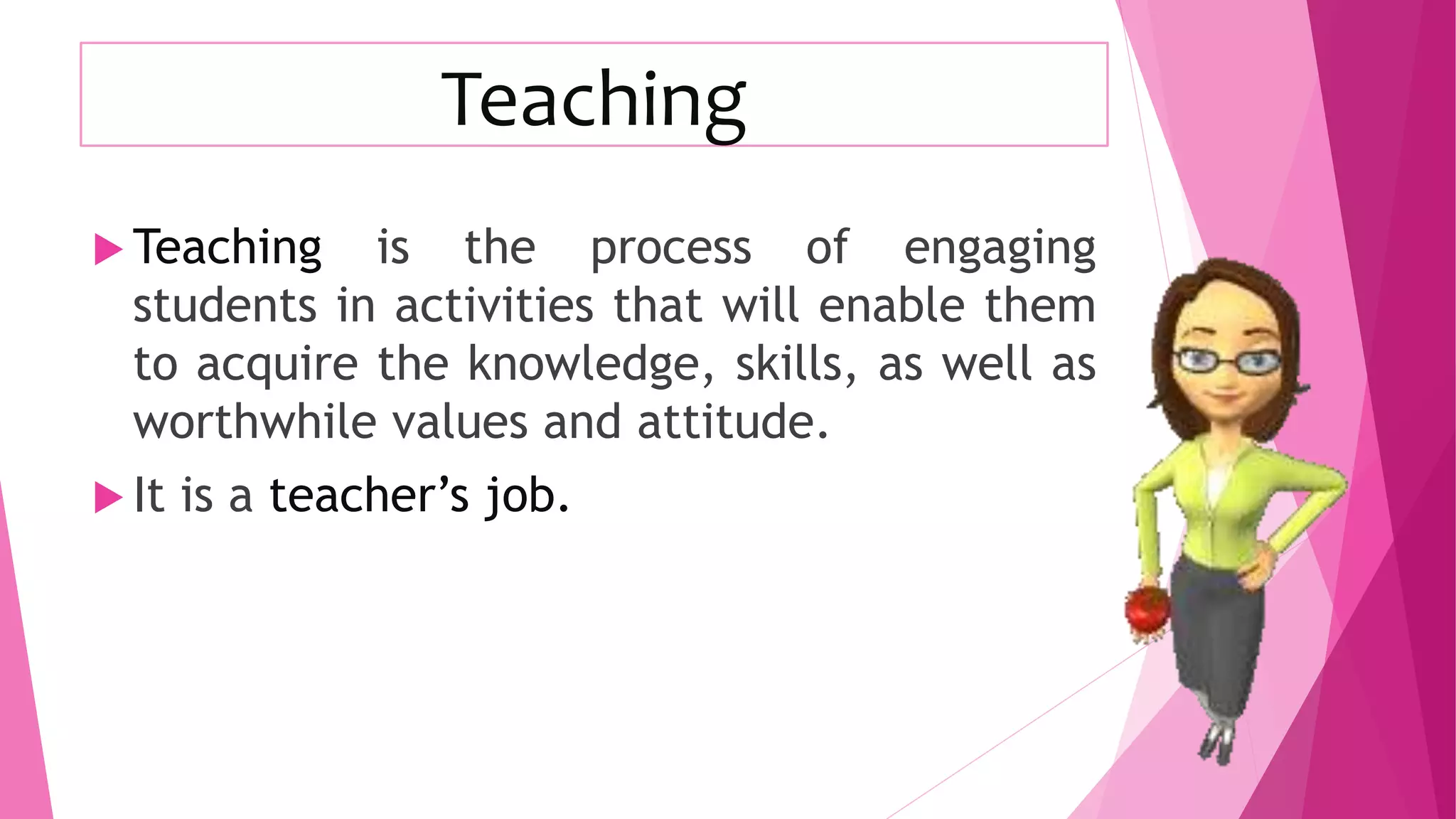
 Teaching is the process of engaging
students in activities that will enable them
to acquire the knowledge, skills, as well as
worthwhile values and attitude.
 It is a teacher’s job.
Learning
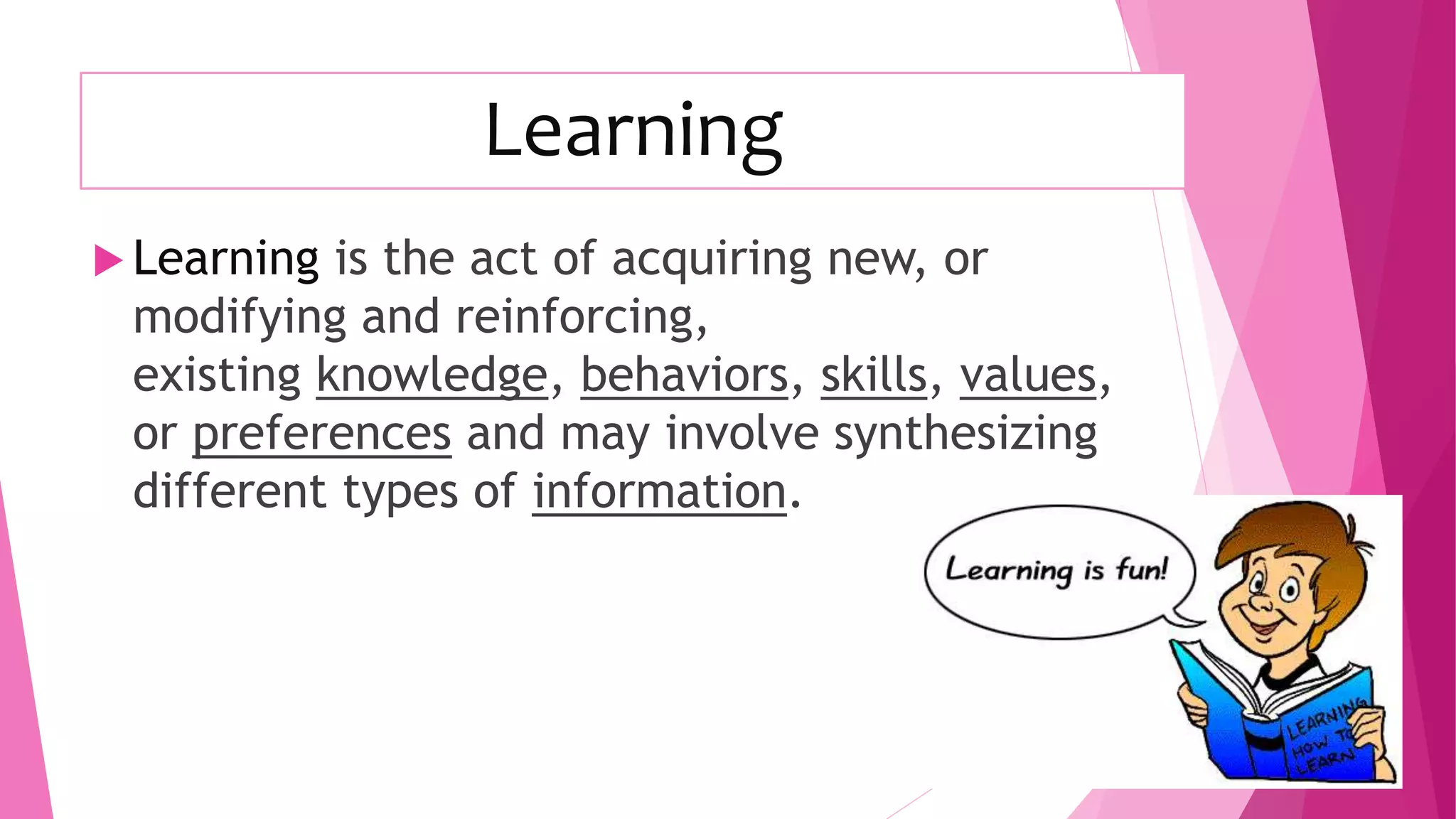
 Learning is the act of acquiring new, or
modifying and reinforcing,
existing knowledge, behaviors, skills, values,
or preferences and may involve synthesizing
different types of information.
Principles of Teaching and
Learning
 These principles are the chief guides to make teaching,
and at the same time, learning effective and productive.
Considering the changes in the teaching-learning situation
of the present world, teachers must be guided with the
sound principles of teaching formulated from carefully
observed facts and objectively measured results.
Principles of Teaching
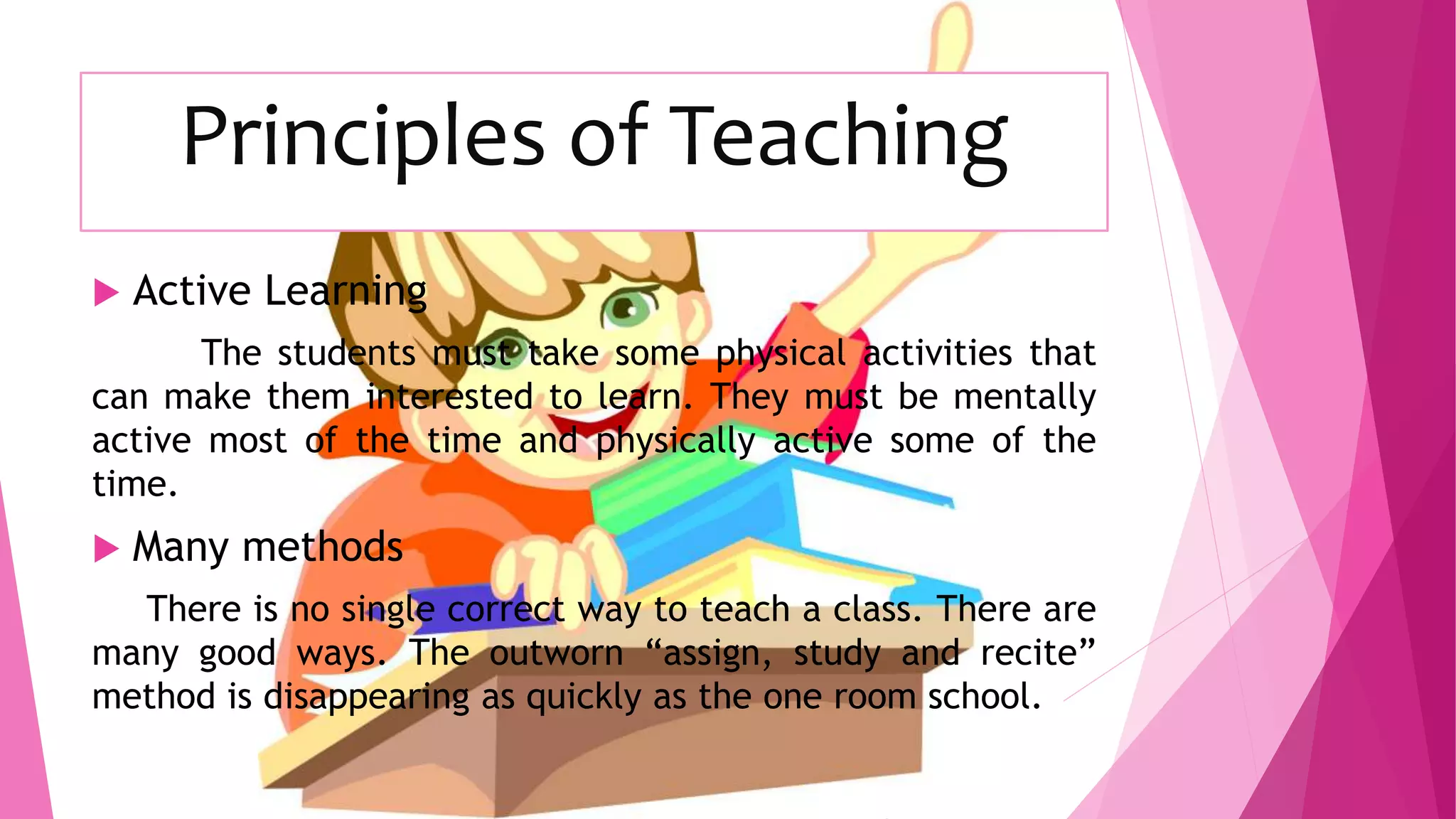
 Active Learning
The students must take some physical activities that
can make them interested to learn. They must be mentally
active most of the time and physically active some of the
time.
 Many methods
There is no single correct way to teach a class. There are
many good ways. The outworn “assign, study and recite”
method is disappearing as quickly as the one room school.
 Motivation
Effective motivation arises from students’ interests, needs,
problems and expressed purposes. Although we humans learn
only what we want to learn, it is nevertheless true that relating
unknown to known interest can develop interest in the
unfamiliar.
 Well-balanced curriculum
The curriculum should serve two purposes:
a. To provide essential skills for the students to enable
him to become a useful member of society
b. To satisfy the student’s personal and immediate needs
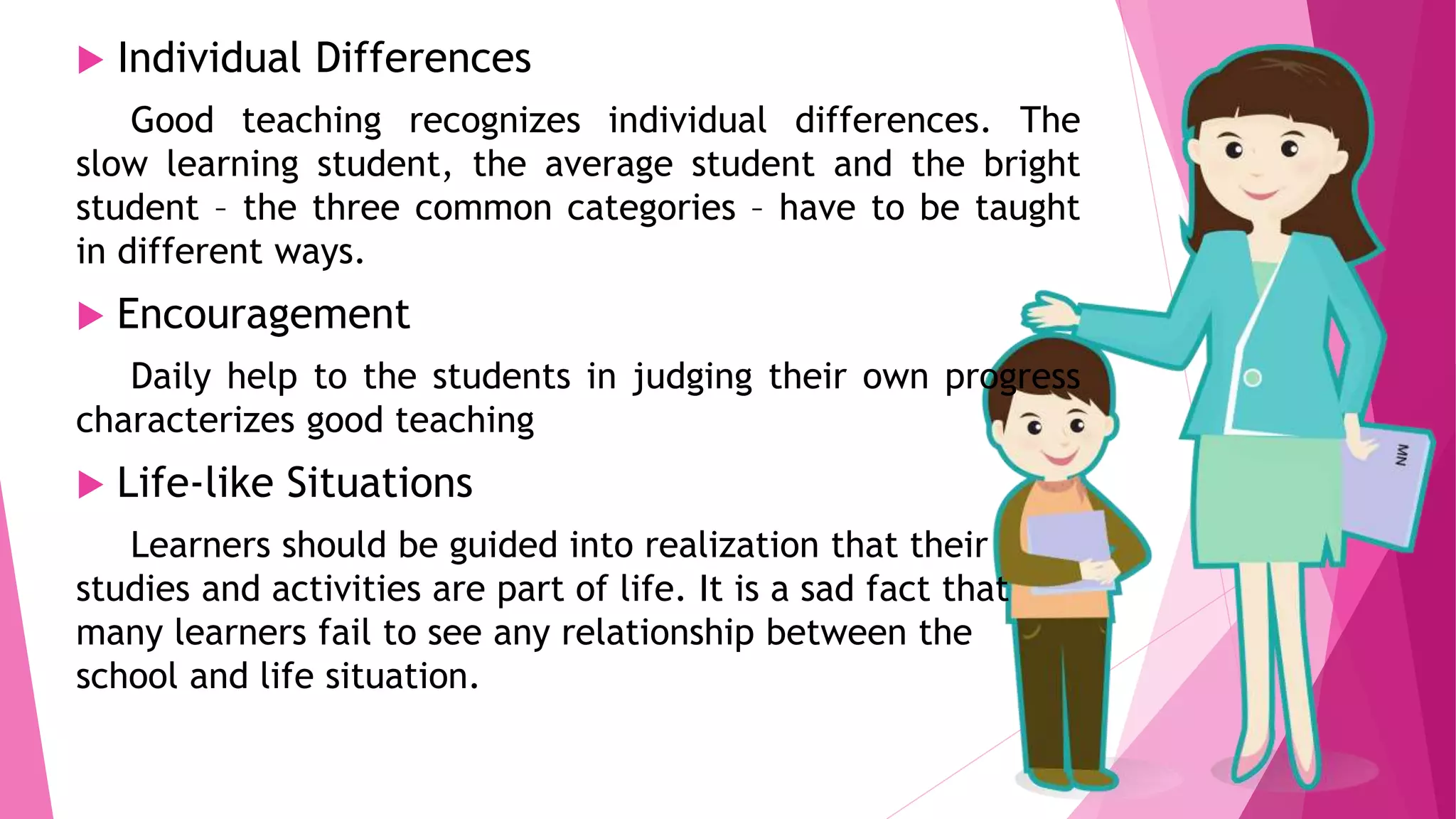
 Individual Differences
Good teaching recognizes individual differences. The
slow learning student, the average student and the bright
student – the three common categories – have to be taught
in different ways.
 Encouragement
Daily help to the students in judging their own progress
characterizes good teaching
 Life-like Situations
Learners should be guided into realization that their
studies and activities are part of life. It is a sad fact that
many learners fail to see any relationship between the
school and life situation.
Principles of Learning
 Learning is an experience which occurs inside the
learner and activated by the learner.
 Learning is the discovery of the personal meaning and
relevance of ideas.
 Learning (behavioral change) is a consequence of
experience.
 Learning is an evolutionary
 One of the richest resources for the learning is the
learner himself.

Principles as used in Teaching and Learning

  • 1.
    Principles as used inTeaching and Learning Vangelin Yonting BBTE ITE 3-2N
  • 2.
    Teaching  Teaching isthe process of engaging students in activities that will enable them to acquire the knowledge, skills, as well as worthwhile values and attitude.  It is a teacher’s job.
  • 3.
    Learning  Learning isthe act of acquiring new, or modifying and reinforcing, existing knowledge, behaviors, skills, values, or preferences and may involve synthesizing different types of information.
  • 4.
    Principles of Teachingand Learning  These principles are the chief guides to make teaching, and at the same time, learning effective and productive. Considering the changes in the teaching-learning situation of the present world, teachers must be guided with the sound principles of teaching formulated from carefully observed facts and objectively measured results.
  • 5.
    Principles of Teaching Active Learning The students must take some physical activities that can make them interested to learn. They must be mentally active most of the time and physically active some of the time.  Many methods There is no single correct way to teach a class. There are many good ways. The outworn “assign, study and recite” method is disappearing as quickly as the one room school.
  • 6.
     Motivation Effective motivationarises from students’ interests, needs, problems and expressed purposes. Although we humans learn only what we want to learn, it is nevertheless true that relating unknown to known interest can develop interest in the unfamiliar.  Well-balanced curriculum The curriculum should serve two purposes: a. To provide essential skills for the students to enable him to become a useful member of society b. To satisfy the student’s personal and immediate needs
  • 7.
     Individual Differences Goodteaching recognizes individual differences. The slow learning student, the average student and the bright student – the three common categories – have to be taught in different ways.  Encouragement Daily help to the students in judging their own progress characterizes good teaching  Life-like Situations Learners should be guided into realization that their studies and activities are part of life. It is a sad fact that many learners fail to see any relationship between the school and life situation.
  • 8.
    Principles of Learning Learning is an experience which occurs inside the learner and activated by the learner.  Learning is the discovery of the personal meaning and relevance of ideas.  Learning (behavioral change) is a consequence of experience.  Learning is an evolutionary  One of the richest resources for the learning is the learner himself.