PO 375
Fall 2016
 Found in Article II of the Constitution
 Basic Qualifications:
 Natural-born citizen of the United States
 At least 35 years old
 U.S. resident for 14 years
 Presidential elections do not occur by popular vote,
but indirectly through Electoral College.
 Found in Article II, Section I
 Allocating Electoral CollegeVotes by State:
 Number of Reps +Two Senators = #of Electors
 Illinois: 18 Reps+ 2 Senators = 20 ElectoralVotes
 Winner has most Electoral CollegeVotes—Usually
 Modified through Amendments
 Twelfth – Separated balloting for Pres andVP
after 1800 Election between Jefferson and Burr
 Twenty-Third – DC given representation in EC
 Citizens vote for slate of state electors
 “Winner-Take-All” or “Unit Rule’ Method
 Exceptions are Maine and Nebraska (Cong. Districts)
 Electors meet in state capitol to cast voters
following election
 Methods of Selecting Electors
 Issue of “Faithless Electors”
 President of Senate (VP) reads votes
 Election requires 50% + 1 of total number of
all 538 Electoral CollegeVotes or 270
 VP announces their election...or defeat
 If no majority in Electoral College, House
votes for President and Senate forVice Pres
 Political Stability andTwo-Party System
 Minority Interests
 Personal Campaigning – Urban/Rural Areas
 Contested Recounts in Few States
 Winner’sVictory and “Mandate”
 Works OverTime
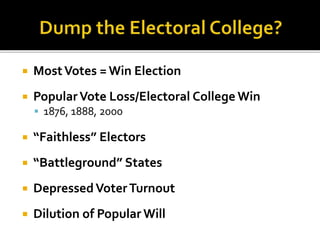
 MostVotes = Win Election
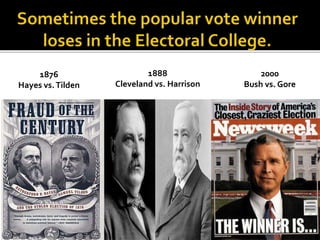
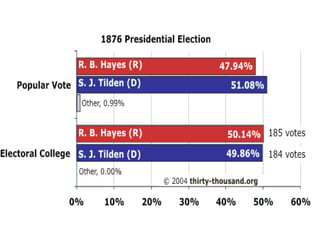
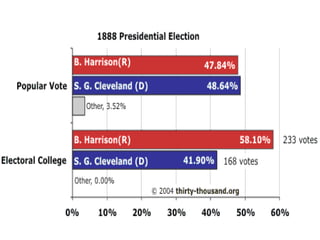
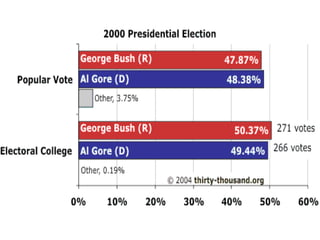
 PopularVote Loss/Electoral College Win
 1876, 1888, 2000
 “Faithless” Electors
 “Battleground” States
 DepressedVoterTurnout
 Dilution of Popular Will
1876
Hayes vs.Tilden
2000
Bush vs. Gore
1888
Cleveland vs. Harrison
Presidential Elections

Presidential Elections

  • 1.
  • 3.
     Found inArticle II of the Constitution  Basic Qualifications:  Natural-born citizen of the United States  At least 35 years old  U.S. resident for 14 years
  • 5.
     Presidential electionsdo not occur by popular vote, but indirectly through Electoral College.  Found in Article II, Section I  Allocating Electoral CollegeVotes by State:  Number of Reps +Two Senators = #of Electors  Illinois: 18 Reps+ 2 Senators = 20 ElectoralVotes  Winner has most Electoral CollegeVotes—Usually
  • 6.
     Modified throughAmendments  Twelfth – Separated balloting for Pres andVP after 1800 Election between Jefferson and Burr  Twenty-Third – DC given representation in EC
  • 7.
     Citizens votefor slate of state electors  “Winner-Take-All” or “Unit Rule’ Method  Exceptions are Maine and Nebraska (Cong. Districts)  Electors meet in state capitol to cast voters following election  Methods of Selecting Electors  Issue of “Faithless Electors”
  • 8.
     President ofSenate (VP) reads votes  Election requires 50% + 1 of total number of all 538 Electoral CollegeVotes or 270  VP announces their election...or defeat  If no majority in Electoral College, House votes for President and Senate forVice Pres
  • 9.
     Political StabilityandTwo-Party System  Minority Interests  Personal Campaigning – Urban/Rural Areas  Contested Recounts in Few States  Winner’sVictory and “Mandate”  Works OverTime
  • 10.
     MostVotes =Win Election  PopularVote Loss/Electoral College Win  1876, 1888, 2000  “Faithless” Electors  “Battleground” States  DepressedVoterTurnout  Dilution of Popular Will
  • 11.
    1876 Hayes vs.Tilden 2000 Bush vs.Gore 1888 Cleveland vs. Harrison