The Electoral College

              Lizzy
                Lily
             Alyssa
Why was it established?

 The Electoral College was established
  because they needed to find a way to appoint
  a President and Vice President that would
  settle everyone’s feather.
 Originally, three different options were
  presented before they settled on an indirect
  popular vote:
  1. Have Congress vote,
  2. Have State Legislature choose, and
  3. Using a direct popular vote.
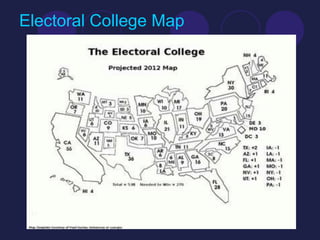
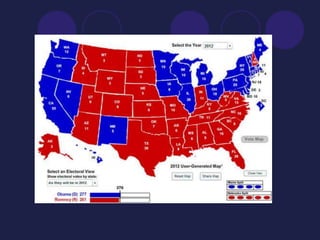
Electoral College Map
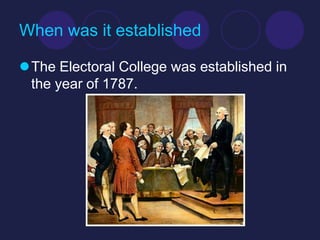
When was it established

The Electoral College was established in
 the year of 1787.
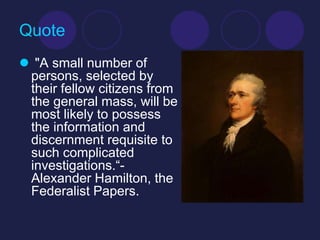
Quote
 "A small number of
 persons, selected by
 their fellow citizens from
 the general mass, will be
 most likely to possess
 the information and
 discernment requisite to
 such complicated
 investigations.“-
 Alexander Hamilton, the
 Federalist Papers.
How does the Electoral College
work?
 A body of electors chosen by the voters in each state to
  elect the President and vice President of the U.S.
 The number of electors is equal to the number of
  members of congress each state has
 All electors pledged to the candidate who wins the most
  votes in that state become electors for that state, except
  Nebraska and Maine in which they divide up votes by
  districts
 There are no laws making the elector vote to honor their
  pledge but they almost always do
How to Win the Electoral Vote

 The electoral college consists of 538 electors
  representing each states Congressional
  delegation.
 A majority of 270 votes is required to win the
  presidency.
 Your state’s entitled allotment of electors
  equals the number of members in its
  Congressional delegation: one for each
  member in the House of Representatives
  plus two for your Senators
Presidents who Have Won the
Electoral College but Lost the Popular
                 Vote
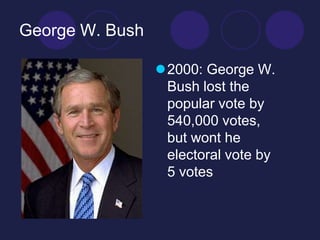
George W. Bush

                 2000: George W.
                  Bush lost the
                  popular vote by
                  540,000 votes,
                  but wont he
                  electoral vote by
                  5 votes
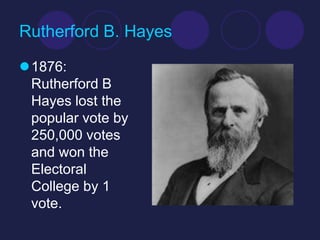
Rutherford B. Hayes

1876:
 Rutherford B
 Hayes lost the
 popular vote by
 250,000 votes
 and won the
 Electoral
 College by 1
 vote.
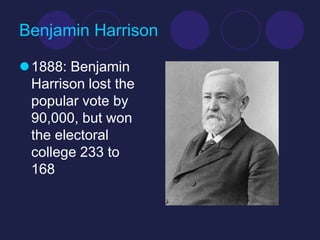
Benjamin Harrison

1888: Benjamin
 Harrison lost the
 popular vote by
 90,000, but won
 the electoral
 college 233 to
 168
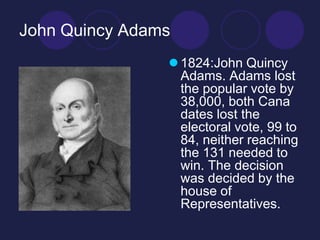
John Quincy Adams
                 1824:John Quincy
                  Adams. Adams lost
                  the popular vote by
                  38,000, both Cana
                  dates lost the
                  electoral vote, 99 to
                  84, neither reaching
                  the 131 needed to
                  win. The decision
                  was decided by the
                  house of
                  Representatives.
Criticisms

Failure to reflect the national popular vote
The winner takes all approach does not
 show each districts option
Gives swing states to much power over
 the election
Should we abolish the Electoral College?

 This is a hard topic with valid arguments on both sides.
 Cons
   Not truly a democracy because it is not always the
     same results as popular vote
   Gives swing state too much power
   Does not properly represent the districts but instead
     the state as a whole
 Pros
   Does not include outliers that could possible change
     the outcome of the election
   Provides a competitive election
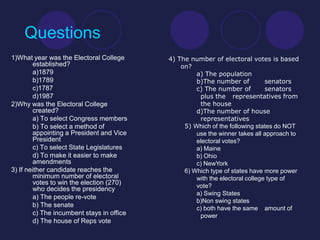
Questions
1)What year was the Electoral College      4) The number of electoral votes is based
        established?                           on?
        a)1879                                      a) The population
        b)1789                                      b)The number of           senators
        c)1787                                      c) The number of          senators
        d)1987                                       plus the representatives from
2)Why was the Electoral College                      the house
        created?                                    d)The number of house
        a) To select Congress members                representatives
        b) To select a method of                5) Which of the following states do NOT
        appointing a President and Vice             use the winner takes all approach to
        President                                   electoral votes?
        c) To select State Legislatures             a) Maine
        d) To make it easier to make                b) Ohio
        amendments                                  c) NewYork
3) If neither candidate reaches the             6) Which type of states have more power
        minimum number of electoral                 with the electoral college type of
        votes to win the election (270)             vote?
        who decides the presidency
                                                    a) Swing States
        a) The people re-vote
                                                    b)Non swing states
        b) The senate                               c) both have the same amount of
        c) The incumbent stays in office             power
        d) The house of Reps vote
Websites
 http://www.factcheck.org/2008/03/presidents-winning-without-popular-vote/
 http://www.archives.gov/federal-register/electoral-college/about.html
 http://www.cnn.com/ELECTION/2004/special/president/electoral.college/mo
  re.html
 http://uselectionatlas.org/INFORMATION/INFORMATION/electcollege_histo
  ry.php
 http://www.oregonrepublicanparty.org/AllQuotes/
 http://blogs.e-rockford.com/applesauce/2011/04/04/early-look-at-electoral-
  college-in-2012-dems-232-votes-gop-191-tossups-115/
 http://www.theprovocation.net/2011/10/suddenly-republicans-want-to-do-
  away.html
 http://www.nmpolitics.net/index/2011/03/time-for-a-review-of-the-electoral-
  college/
 http://dictionary.reference.com/browse/electoral+college
 http://www.examiner.com/article/an-updated-look-at-the-2012-electoral-
  college-map-with-polls-13

The electoral college[1]

  • 1.
    The Electoral College Lizzy Lily Alyssa
  • 2.
    Why was itestablished?  The Electoral College was established because they needed to find a way to appoint a President and Vice President that would settle everyone’s feather.  Originally, three different options were presented before they settled on an indirect popular vote: 1. Have Congress vote, 2. Have State Legislature choose, and 3. Using a direct popular vote.
  • 3.
  • 4.
    When was itestablished The Electoral College was established in the year of 1787.
  • 5.
    Quote  "A smallnumber of persons, selected by their fellow citizens from the general mass, will be most likely to possess the information and discernment requisite to such complicated investigations.“- Alexander Hamilton, the Federalist Papers.
  • 6.
    How does theElectoral College work?  A body of electors chosen by the voters in each state to elect the President and vice President of the U.S.  The number of electors is equal to the number of members of congress each state has  All electors pledged to the candidate who wins the most votes in that state become electors for that state, except Nebraska and Maine in which they divide up votes by districts  There are no laws making the elector vote to honor their pledge but they almost always do
  • 8.
    How to Winthe Electoral Vote  The electoral college consists of 538 electors representing each states Congressional delegation.  A majority of 270 votes is required to win the presidency.  Your state’s entitled allotment of electors equals the number of members in its Congressional delegation: one for each member in the House of Representatives plus two for your Senators
  • 9.
    Presidents who HaveWon the Electoral College but Lost the Popular Vote
  • 10.
    George W. Bush 2000: George W. Bush lost the popular vote by 540,000 votes, but wont he electoral vote by 5 votes
  • 11.
    Rutherford B. Hayes 1876: Rutherford B Hayes lost the popular vote by 250,000 votes and won the Electoral College by 1 vote.
  • 12.
    Benjamin Harrison 1888: Benjamin Harrison lost the popular vote by 90,000, but won the electoral college 233 to 168
  • 13.
    John Quincy Adams  1824:John Quincy Adams. Adams lost the popular vote by 38,000, both Cana dates lost the electoral vote, 99 to 84, neither reaching the 131 needed to win. The decision was decided by the house of Representatives.
  • 14.
    Criticisms Failure to reflectthe national popular vote The winner takes all approach does not show each districts option Gives swing states to much power over the election
  • 15.
    Should we abolishthe Electoral College?  This is a hard topic with valid arguments on both sides.  Cons Not truly a democracy because it is not always the same results as popular vote Gives swing state too much power Does not properly represent the districts but instead the state as a whole  Pros Does not include outliers that could possible change the outcome of the election Provides a competitive election
  • 16.
    Questions 1)What year wasthe Electoral College 4) The number of electoral votes is based established? on? a)1879 a) The population b)1789 b)The number of senators c)1787 c) The number of senators d)1987 plus the representatives from 2)Why was the Electoral College the house created? d)The number of house a) To select Congress members representatives b) To select a method of 5) Which of the following states do NOT appointing a President and Vice use the winner takes all approach to President electoral votes? c) To select State Legislatures a) Maine d) To make it easier to make b) Ohio amendments c) NewYork 3) If neither candidate reaches the 6) Which type of states have more power minimum number of electoral with the electoral college type of votes to win the election (270) vote? who decides the presidency a) Swing States a) The people re-vote b)Non swing states b) The senate c) both have the same amount of c) The incumbent stays in office power d) The house of Reps vote
  • 17.
    Websites  http://www.factcheck.org/2008/03/presidents-winning-without-popular-vote/  http://www.archives.gov/federal-register/electoral-college/about.html http://www.cnn.com/ELECTION/2004/special/president/electoral.college/mo re.html  http://uselectionatlas.org/INFORMATION/INFORMATION/electcollege_histo ry.php  http://www.oregonrepublicanparty.org/AllQuotes/  http://blogs.e-rockford.com/applesauce/2011/04/04/early-look-at-electoral- college-in-2012-dems-232-votes-gop-191-tossups-115/  http://www.theprovocation.net/2011/10/suddenly-republicans-want-to-do- away.html  http://www.nmpolitics.net/index/2011/03/time-for-a-review-of-the-electoral- college/  http://dictionary.reference.com/browse/electoral+college  http://www.examiner.com/article/an-updated-look-at-the-2012-electoral- college-map-with-polls-13