NATIONAL, STATE, AND LOCAL
ELECTIONS IN THE USA
The United States Election
Process
The President
ď‚— President and Vice President serve a four year term
ď‚— Maximum of two terms
ď‚— President elected through the electoral college
ď‚— Gets nominated through the primary election or
incumbency
The Electoral College
ď‚— A body of people representing the states of the US,
who cast votes for the election of the president and
vice president.
ď‚— Number of electors equals the number of senators
and representatives in Congress
ď‚— We vote for these electors, not the president directly
ď‚— Possible to win popular vote, but lose electoral votes
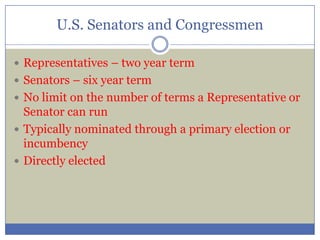
U.S. Senators and Congressmen
 Representatives – two year term
 Senators – six year term
ď‚— No limit on the number of terms a Representative or
Senator can run
ď‚— Typically nominated through a primary election or
incumbency
ď‚— Directly elected
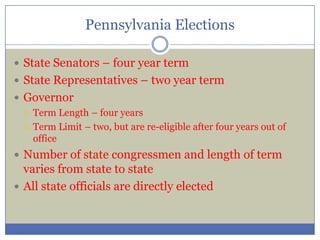
Pennsylvania Elections
 State Senators – four year term
 State Representatives – two year term
ď‚— Governor
 Term Length – four years
 Term Limit – two, but are re-eligible after four years out of
office
ď‚— Number of state congressmen and length of term
varies from state to state
ď‚— All state officials are directly elected
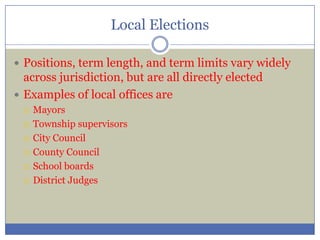
Local Elections
ď‚— Positions, term length, and term limits vary widely
across jurisdiction, but are all directly elected
ď‚— Examples of local offices are
 Mayors
 Township supervisors
 City Council
 County Council
 School boards
 District Judges

The united states election process

  • 1.
    NATIONAL, STATE, ANDLOCAL ELECTIONS IN THE USA The United States Election Process
  • 2.
    The President ď‚— Presidentand Vice President serve a four year term ď‚— Maximum of two terms ď‚— President elected through the electoral college ď‚— Gets nominated through the primary election or incumbency
  • 3.
    The Electoral College ď‚—A body of people representing the states of the US, who cast votes for the election of the president and vice president. ď‚— Number of electors equals the number of senators and representatives in Congress ď‚— We vote for these electors, not the president directly ď‚— Possible to win popular vote, but lose electoral votes
  • 4.
    U.S. Senators andCongressmen  Representatives – two year term  Senators – six year term  No limit on the number of terms a Representative or Senator can run  Typically nominated through a primary election or incumbency  Directly elected
  • 5.
    Pennsylvania Elections  StateSenators – four year term  State Representatives – two year term  Governor  Term Length – four years  Term Limit – two, but are re-eligible after four years out of office  Number of state congressmen and length of term varies from state to state  All state officials are directly elected
  • 6.
    Local Elections  Positions,term length, and term limits vary widely across jurisdiction, but are all directly elected  Examples of local offices are  Mayors  Township supervisors  City Council  County Council  School boards  District Judges