It takes TIME to memorize a speech! 
NO SHORT-CUTS 
HINTS TO HELP: 
1. Check your attitude 
2. Check your focus 
3. Make it a priority 
4. Set short and long term goals 
5. Keep copy with you at all times 
6. Mark up your script 
7. Make multiple copies 
8. Record and listen to 
9. Memorize in bite- size 
10. Make copies of portions 
11. PRACTICE,PRACTICE,PRACTICE 
12. Read out loud with script 
13. Say speech out loud without script
DELIVERY/ THE VOICE 
Volume 
Enunciation 
Tone 
Pace 
Animation 
DO NOT BE MONOTONE 
Don’t be a MUMBLER *
DELIVERY/ YOUR BODY 
 Your stance 
(with or without a podium) 
 Standing vs. Walking 
When to walk or not walk? 
 Eyes 
Look at audience, show emotions 
 Hand and arm gestures 
Don’t be stiff, Don’t put hands in pockets, 
Don’t move hands constantly
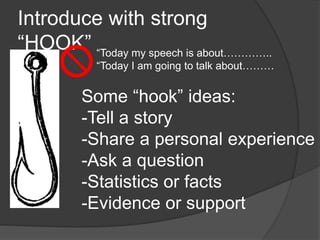
Introduce with strong 
“HOOK” “Today my speech is about………….. 
“Today I am going to talk about……… 
Some “hook” ideas: 
-Tell a story 
-Share a personal experience 
-Ask a question 
-Statistics or facts 
-Evidence or support
Using Visual Aids 
Practice using visual aids 
Whether objects you will hold, a poster 
or display or powerpoint. 
WORST SPEECH MISTAKE= 
POWERPOINT DISASTER 
- Use mirror and/or family audience to 
practice. 
*
DATES 
 October 22- Informative Speech 
 November 5- Persuasive Speech 
 Demonstrative speech video is due by 
November 12th.
Where to find ideas: 
 -YOU 
 Strong convictions 
 People you know 
 Media 
 History 
 Theater 
 Current events 
 Books 
 Internet
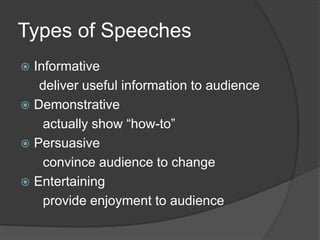
Types of Speeches 
 Informative 
deliver useful information to audience 
 Demonstrative 
actually show “how-to” 
 Persuasive 
convince audience to change 
 Entertaining 
provide enjoyment to audience
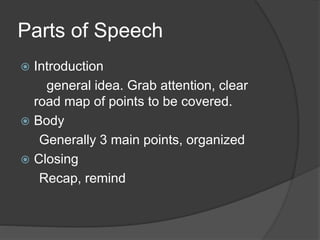
Parts of Speech 
 Introduction 
general idea. Grab attention, clear 
road map of points to be covered. 
 Body 
Generally 3 main points, organized 
 Closing 
Recap, remind
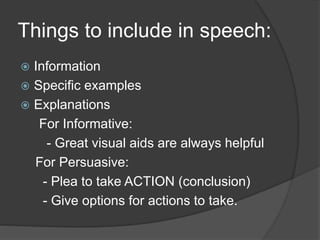
Things to include in speech: 
 Information 
 Specific examples 
 Explanations 
For Informative: 
- Great visual aids are always helpful 
For Persuasive: 
- Plea to take ACTION (conclusion) 
- Give options for actions to take.
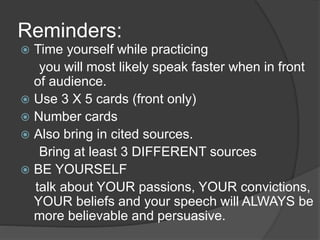
Reminders: 
 Time yourself while practicing 
you will most likely speak faster when in front 
of audience. 
 Use 3 X 5 cards (front only) 
 Number cards 
 Also bring in cited sources. 
Bring at least 3 DIFFERENT sources 
 BE YOURSELF 
talk about YOUR passions, YOUR convictions, 
YOUR beliefs and your speech will ALWAYS be 
more believable and persuasive.

Presentation3

  • 1.
    It takes TIMEto memorize a speech! NO SHORT-CUTS HINTS TO HELP: 1. Check your attitude 2. Check your focus 3. Make it a priority 4. Set short and long term goals 5. Keep copy with you at all times 6. Mark up your script 7. Make multiple copies 8. Record and listen to 9. Memorize in bite- size 10. Make copies of portions 11. PRACTICE,PRACTICE,PRACTICE 12. Read out loud with script 13. Say speech out loud without script
  • 2.
    DELIVERY/ THE VOICE Volume Enunciation Tone Pace Animation DO NOT BE MONOTONE Don’t be a MUMBLER *
  • 3.
    DELIVERY/ YOUR BODY  Your stance (with or without a podium)  Standing vs. Walking When to walk or not walk?  Eyes Look at audience, show emotions  Hand and arm gestures Don’t be stiff, Don’t put hands in pockets, Don’t move hands constantly
  • 4.
    Introduce with strong “HOOK” “Today my speech is about………….. “Today I am going to talk about……… Some “hook” ideas: -Tell a story -Share a personal experience -Ask a question -Statistics or facts -Evidence or support
  • 5.
    Using Visual Aids Practice using visual aids Whether objects you will hold, a poster or display or powerpoint. WORST SPEECH MISTAKE= POWERPOINT DISASTER - Use mirror and/or family audience to practice. *
  • 6.
    DATES  October22- Informative Speech  November 5- Persuasive Speech  Demonstrative speech video is due by November 12th.
  • 7.
    Where to findideas:  -YOU  Strong convictions  People you know  Media  History  Theater  Current events  Books  Internet
  • 8.
    Types of Speeches  Informative deliver useful information to audience  Demonstrative actually show “how-to”  Persuasive convince audience to change  Entertaining provide enjoyment to audience
  • 9.
    Parts of Speech  Introduction general idea. Grab attention, clear road map of points to be covered.  Body Generally 3 main points, organized  Closing Recap, remind
  • 10.
    Things to includein speech:  Information  Specific examples  Explanations For Informative: - Great visual aids are always helpful For Persuasive: - Plea to take ACTION (conclusion) - Give options for actions to take.
  • 11.
    Reminders:  Timeyourself while practicing you will most likely speak faster when in front of audience.  Use 3 X 5 cards (front only)  Number cards  Also bring in cited sources. Bring at least 3 DIFFERENT sources  BE YOURSELF talk about YOUR passions, YOUR convictions, YOUR beliefs and your speech will ALWAYS be more believable and persuasive.