


SURENDRA JATAV
M.S. (PHARM.) 2ND SEMESTER
DEPT. OF MEDICINAL CHEMISTRY
FLOW OF PRESENTATION
Introduction
Work done in our lab
Problem statement
Objectives
Methodology
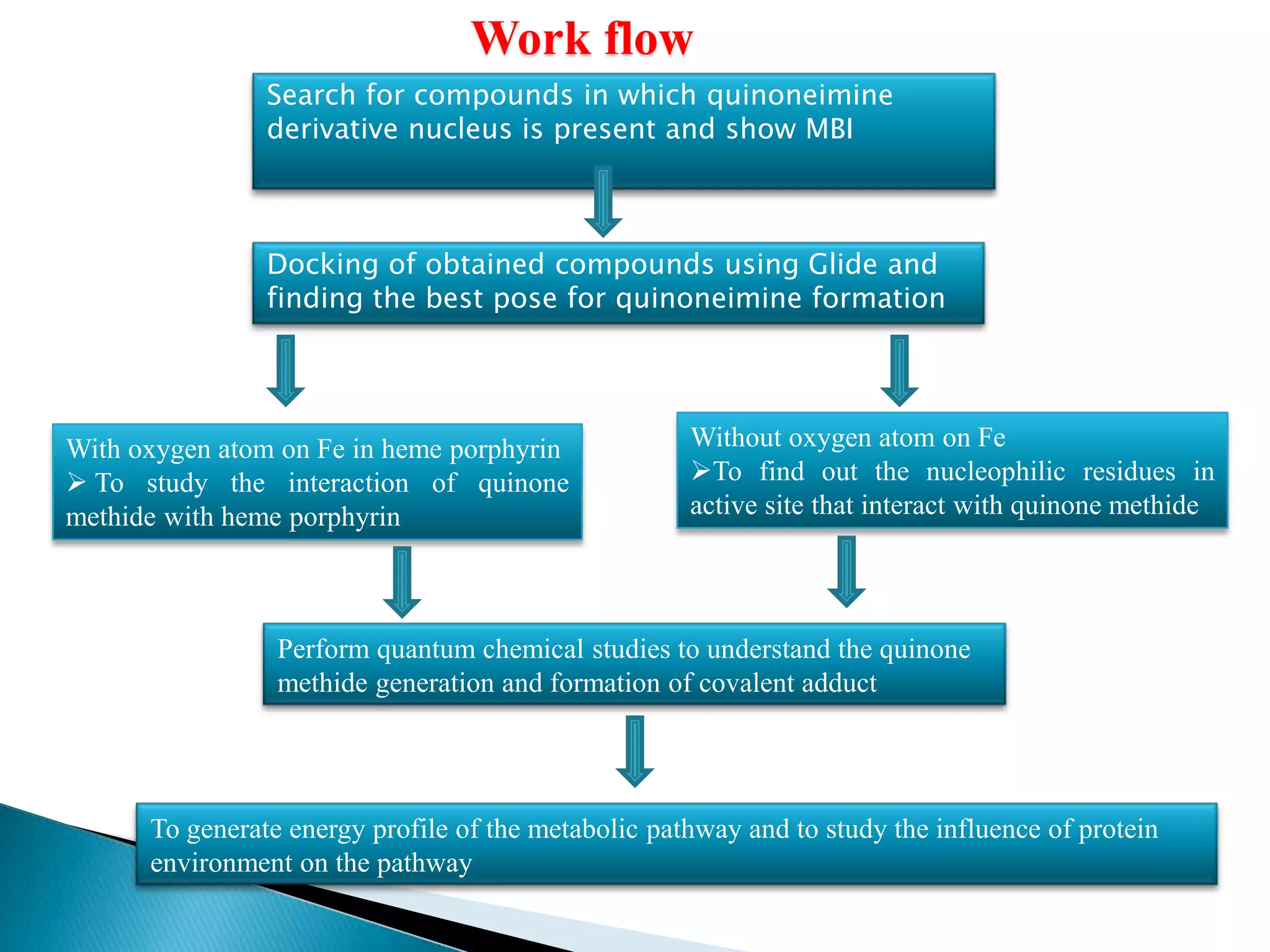
Work flow
Expected outcomes
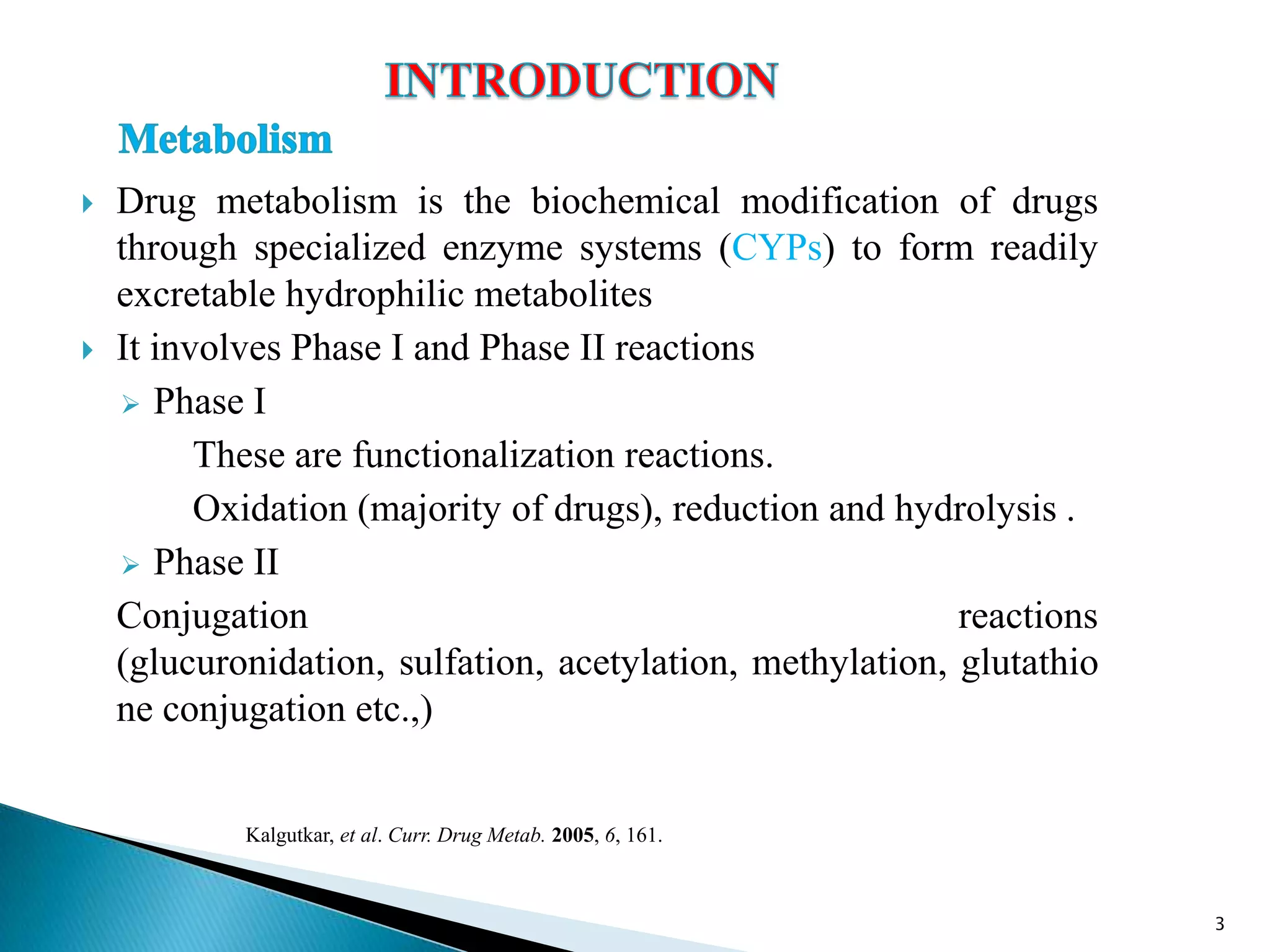
 Drug metabolism is the biochemical modification of drugs
through specialized enzyme systems (CYPs) to form readily
excretable hydrophilic metabolites
 It involves Phase I and Phase II reactions
 Phase I
These are functionalization reactions.
Oxidation (majority of drugs), reduction and hydrolysis .
 Phase II
Conjugation reactions
(glucuronidation, sulfation, acetylation, methylation, glutathio
ne conjugation etc.,)
3
Kalgutkar, et al. Curr. Drug Metab. 2005, 6, 161.
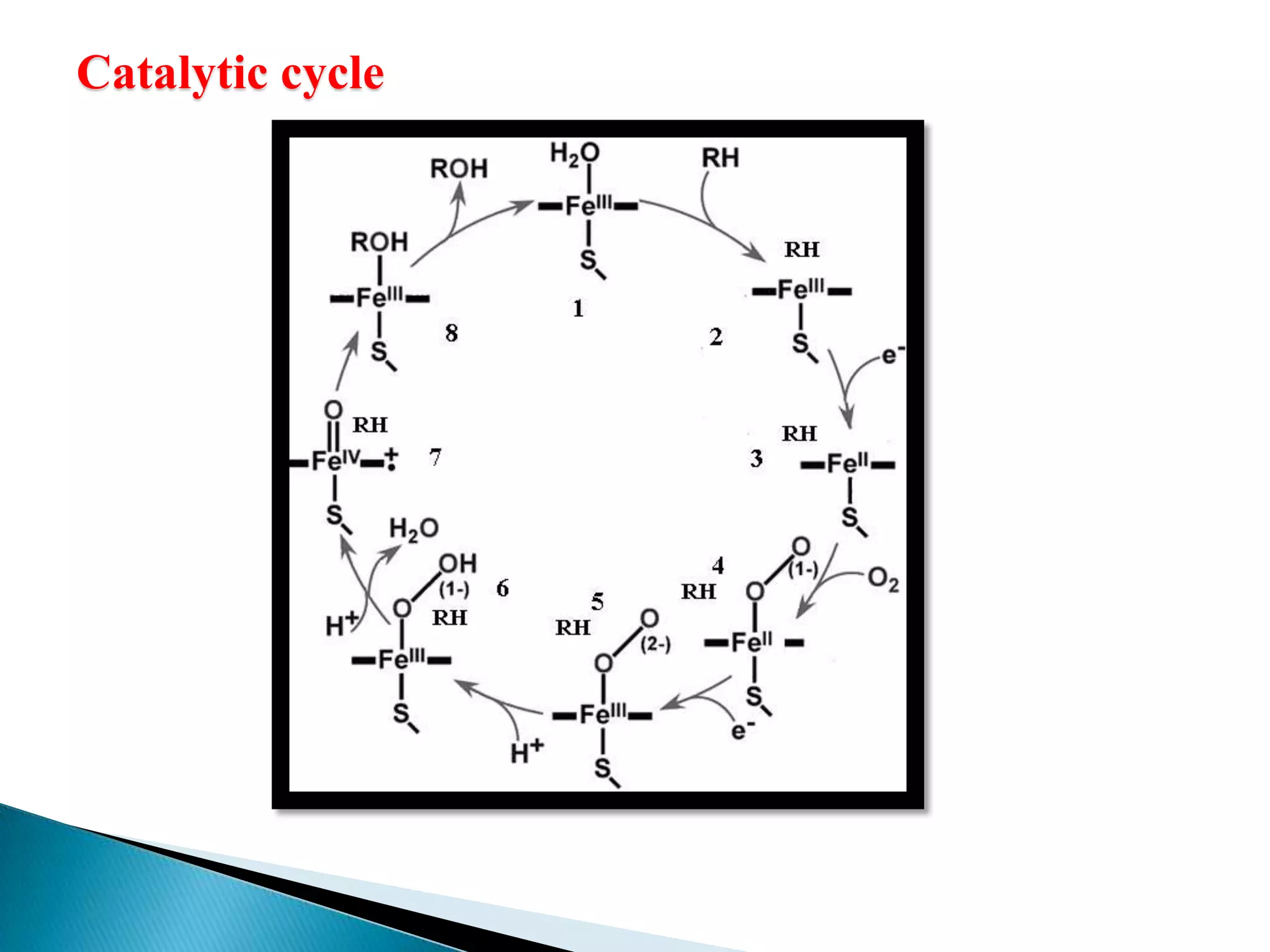
Catalytic cycle
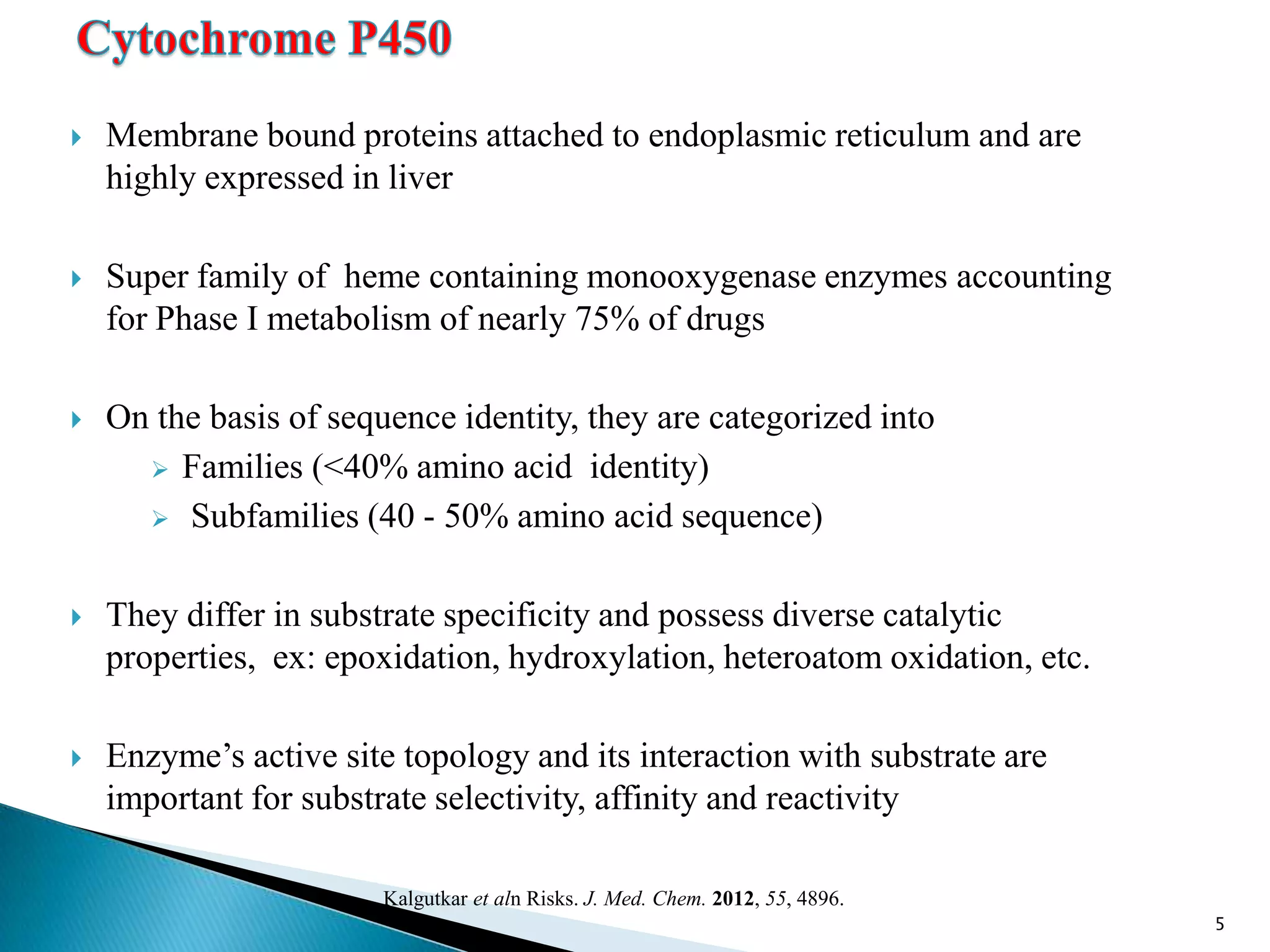
 Membrane bound proteins attached to endoplasmic reticulum and are
highly expressed in liver
 Super family of heme containing monooxygenase enzymes accounting
for Phase I metabolism of nearly 75% of drugs
 On the basis of sequence identity, they are categorized into
 Families (<40% amino acid identity)
 Subfamilies (40 - 50% amino acid sequence)
 They differ in substrate specificity and possess diverse catalytic
properties, ex: epoxidation, hydroxylation, heteroatom oxidation, etc.
 Enzyme’s active site topology and its interaction with substrate are
important for substrate selectivity, affinity and reactivity
5
Kalgutkar et aln Risks. J. Med. Chem. 2012, 55, 4896.
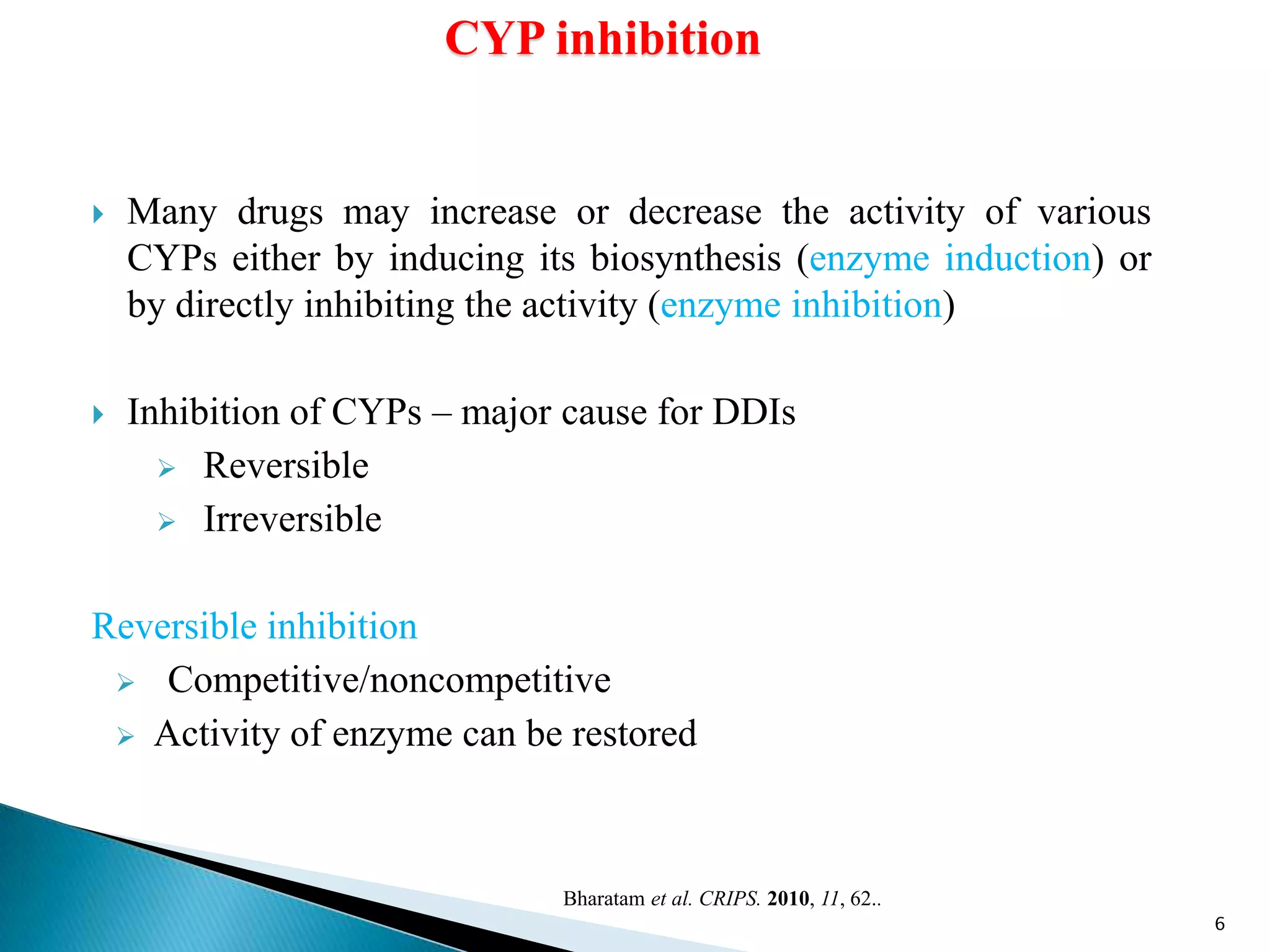
CYP inhibition
 Many drugs may increase or decrease the activity of various
CYPs either by inducing its biosynthesis (enzyme induction) or
by directly inhibiting the activity (enzyme inhibition)
 Inhibition of CYPs – major cause for DDIs
 Reversible
 Irreversible
Reversible inhibition
 Competitive/noncompetitive
 Activity of enzyme can be restored
6
Bharatam et al. CRIPS. 2010, 11, 62..
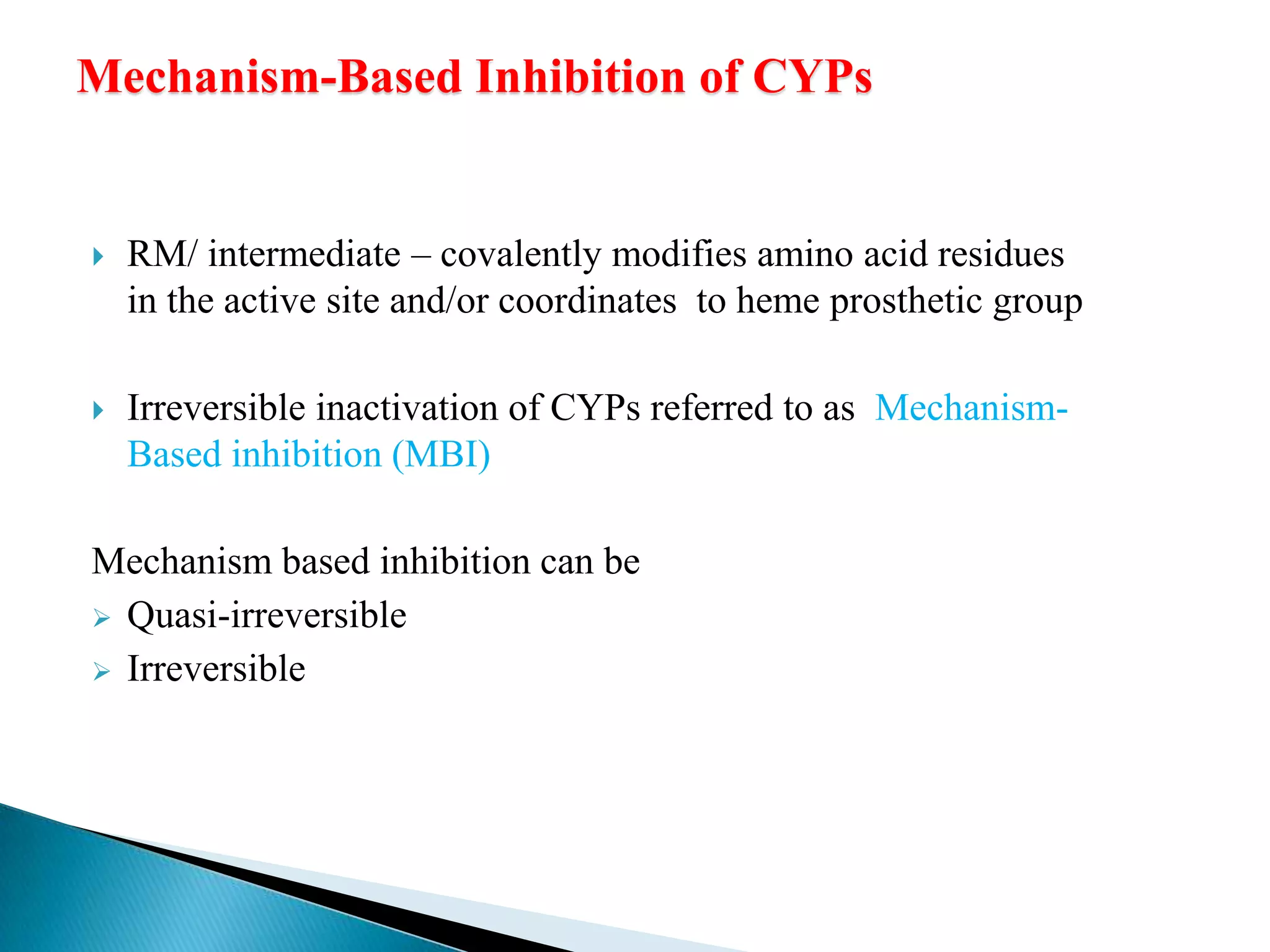
Mechanism-Based Inhibition of CYPs
 RM/ intermediate – covalently modifies amino acid residues
in the active site and/or coordinates to heme prosthetic group
 Irreversible inactivation of CYPs referred to as Mechanism-
Based inhibition (MBI)
Mechanism based inhibition can be
 Quasi-irreversible
 Irreversible
. Reaction pathway of quinoneimine
reactive metabolite.
Work done in our lab
 MBI by RMs such as nitroso, carbenes have been carried out
using quantum chemical methods
 Study of mechanistic pathways - provided new molecular
insights behind actual mechanism of MBI by RMs
 Quantum chemical calculations on TZD class of drugs have
been reported
 Molecular level mechanism of MBI of CYP by epoxide
metabolite of furan ring containing compounds has been
recently determined
Problem statement
 What is the molecular mechanism for the formation of
quinone methide metabolite from the substrates?
 What are the nucleophilic residues involved in the interaction
with the quinone methide, leading to MBI of CYPs?
 What is the energy profile for the whole metabolic pathway
leading to MBI of CYPs by the quinone methide
intermediate?
 What is the effect of the protein environment on this
metabolic pathway?
Objectives
 To perform comparative crystal structure analysis
 To perform molecular docking studies with & without
oxygen atom on Fe in heme porphyrin moiety – to find the
nucleophilic residues responsible for covalent adduct
formation
 To carry out quantum chemical studies to understand the
reaction mechanism and energy profile for MBI by
quinoneimine
 To carry out QM/MM analysis on the whole reaction
pathway to study the influence of the surrounding residues
Work flow
Search for compounds in which quinoneimine
derivative nucleus is present and show MBI
Docking of obtained compounds using Glide and
finding the best pose for quinoneimine formation
With oxygen atom on Fe in heme porphyrin
 To study the interaction of quinone
methide with heme porphyrin
Without oxygen atom on Fe
To find out the nucleophilic residues in
active site that interact with quinone methide
Perform quantum chemical studies to understand the quinone
methide generation and formation of covalent adduct
To generate energy profile of the metabolic pathway and to study the influence of protein
environment on the pathway
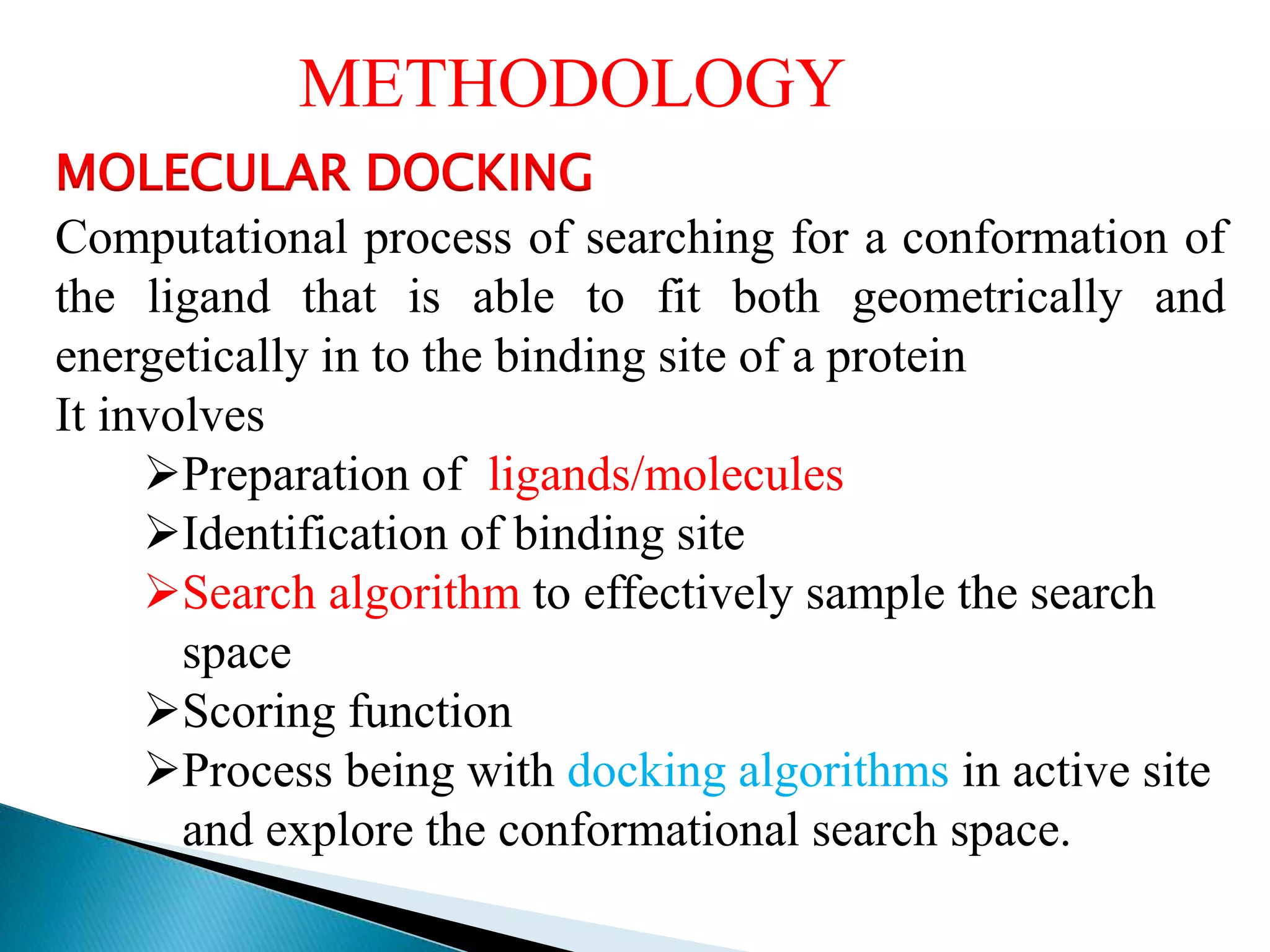
MOLECULAR DOCKING
Computational process of searching for a conformation of
the ligand that is able to fit both geometrically and
energetically in to the binding site of a protein
It involves
Preparation of ligands/molecules
Identification of binding site
Search algorithm to effectively sample the search
space
Scoring function
Process being with docking algorithms in active site
and explore the conformational search space.
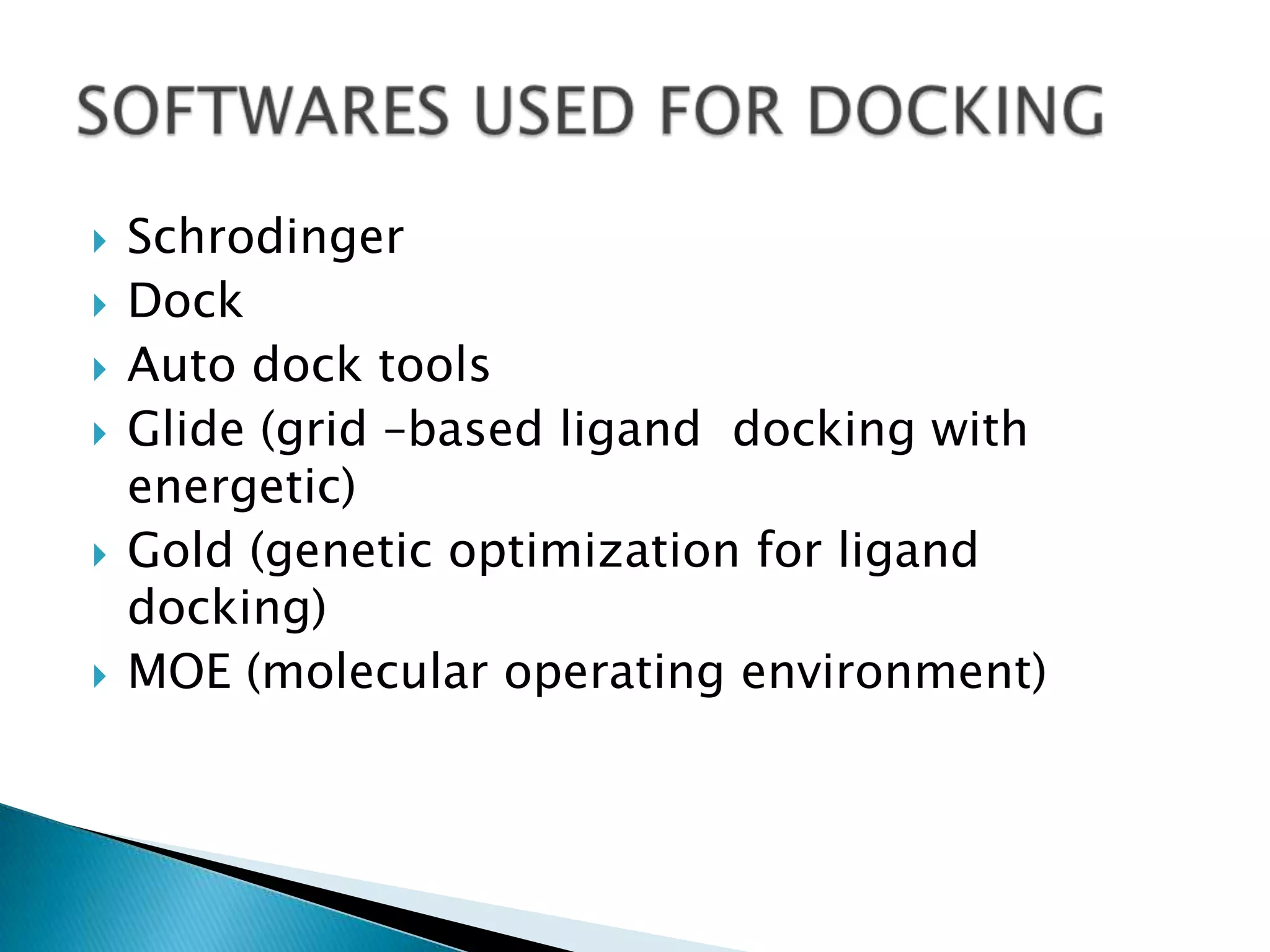
METHODOLOGY
 Schrodinger
 Dock
 Auto dock tools
 Glide (grid –based ligand docking with
energetic)
 Gold (genetic optimization for ligand
docking)
 MOE (molecular operating environment)
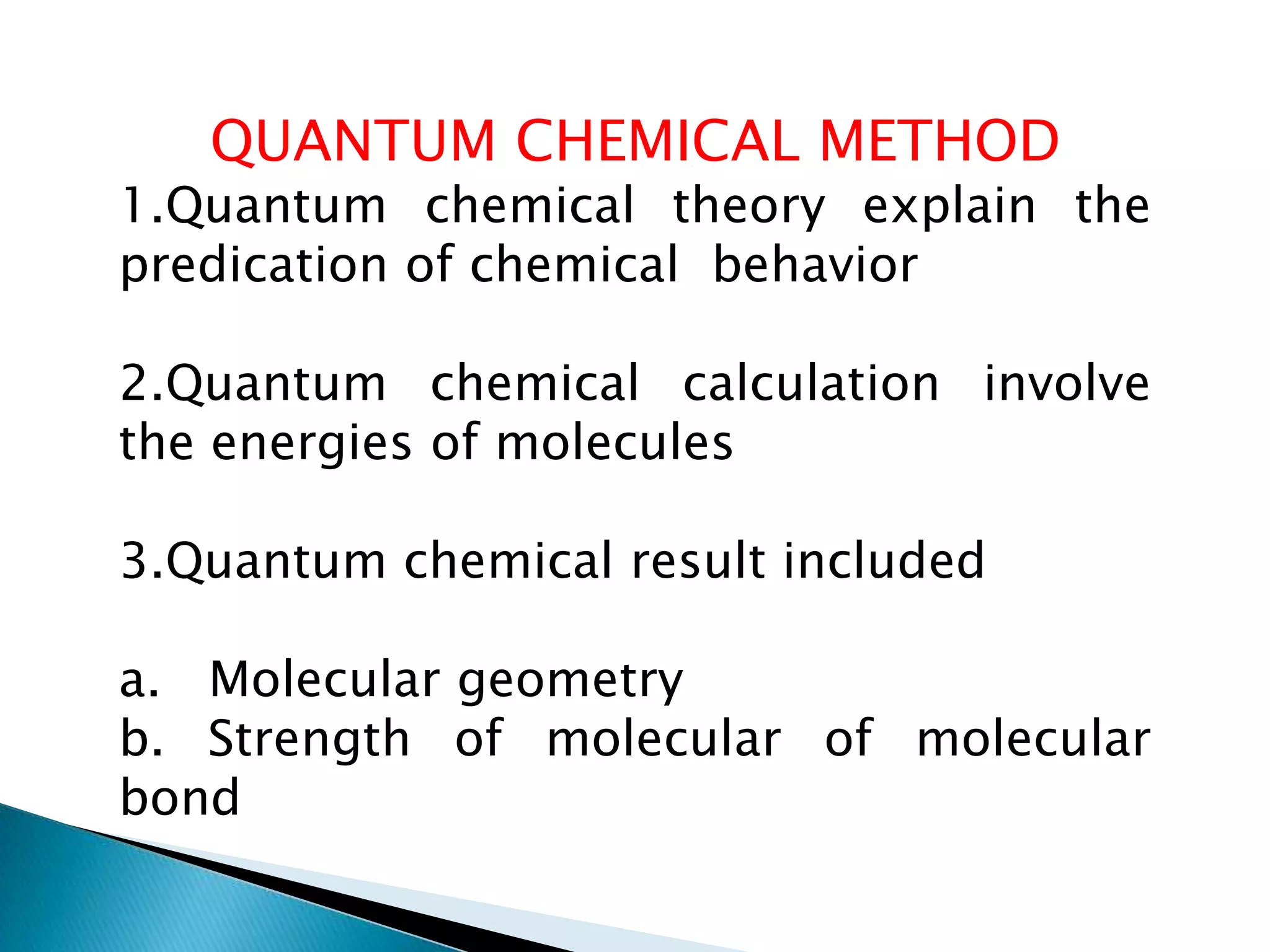
QUANTUM CHEMICAL METHOD
1.Quantum chemical theory explain the
predication of chemical behavior
2.Quantum chemical calculation involve
the energies of molecules
3.Quantum chemical result included
a. Molecular geometry
b. Strength of molecular of molecular
bond
mechanism based inactivation by quinoneimine reactive metabolite

mechanism based inactivation by quinoneimine reactive metabolite

  • 1.
    SURENDRA JATAV M.S. (PHARM.)2ND SEMESTER DEPT. OF MEDICINAL CHEMISTRY
  • 2.
    FLOW OF PRESENTATION Introduction Workdone in our lab Problem statement Objectives Methodology Work flow Expected outcomes
  • 3.
     Drug metabolismis the biochemical modification of drugs through specialized enzyme systems (CYPs) to form readily excretable hydrophilic metabolites  It involves Phase I and Phase II reactions  Phase I These are functionalization reactions. Oxidation (majority of drugs), reduction and hydrolysis .  Phase II Conjugation reactions (glucuronidation, sulfation, acetylation, methylation, glutathio ne conjugation etc.,) 3 Kalgutkar, et al. Curr. Drug Metab. 2005, 6, 161.
  • 4.
  • 5.
     Membrane boundproteins attached to endoplasmic reticulum and are highly expressed in liver  Super family of heme containing monooxygenase enzymes accounting for Phase I metabolism of nearly 75% of drugs  On the basis of sequence identity, they are categorized into  Families (<40% amino acid identity)  Subfamilies (40 - 50% amino acid sequence)  They differ in substrate specificity and possess diverse catalytic properties, ex: epoxidation, hydroxylation, heteroatom oxidation, etc.  Enzyme’s active site topology and its interaction with substrate are important for substrate selectivity, affinity and reactivity 5 Kalgutkar et aln Risks. J. Med. Chem. 2012, 55, 4896.
  • 6.
    CYP inhibition  Manydrugs may increase or decrease the activity of various CYPs either by inducing its biosynthesis (enzyme induction) or by directly inhibiting the activity (enzyme inhibition)  Inhibition of CYPs – major cause for DDIs  Reversible  Irreversible Reversible inhibition  Competitive/noncompetitive  Activity of enzyme can be restored 6 Bharatam et al. CRIPS. 2010, 11, 62..
  • 7.
    Mechanism-Based Inhibition ofCYPs  RM/ intermediate – covalently modifies amino acid residues in the active site and/or coordinates to heme prosthetic group  Irreversible inactivation of CYPs referred to as Mechanism- Based inhibition (MBI) Mechanism based inhibition can be  Quasi-irreversible  Irreversible
  • 8.
    . Reaction pathwayof quinoneimine reactive metabolite.
  • 9.
    Work done inour lab  MBI by RMs such as nitroso, carbenes have been carried out using quantum chemical methods  Study of mechanistic pathways - provided new molecular insights behind actual mechanism of MBI by RMs  Quantum chemical calculations on TZD class of drugs have been reported  Molecular level mechanism of MBI of CYP by epoxide metabolite of furan ring containing compounds has been recently determined
  • 10.
    Problem statement  Whatis the molecular mechanism for the formation of quinone methide metabolite from the substrates?  What are the nucleophilic residues involved in the interaction with the quinone methide, leading to MBI of CYPs?  What is the energy profile for the whole metabolic pathway leading to MBI of CYPs by the quinone methide intermediate?  What is the effect of the protein environment on this metabolic pathway?
  • 11.
    Objectives  To performcomparative crystal structure analysis  To perform molecular docking studies with & without oxygen atom on Fe in heme porphyrin moiety – to find the nucleophilic residues responsible for covalent adduct formation  To carry out quantum chemical studies to understand the reaction mechanism and energy profile for MBI by quinoneimine  To carry out QM/MM analysis on the whole reaction pathway to study the influence of the surrounding residues
  • 12.
    Work flow Search forcompounds in which quinoneimine derivative nucleus is present and show MBI Docking of obtained compounds using Glide and finding the best pose for quinoneimine formation With oxygen atom on Fe in heme porphyrin  To study the interaction of quinone methide with heme porphyrin Without oxygen atom on Fe To find out the nucleophilic residues in active site that interact with quinone methide Perform quantum chemical studies to understand the quinone methide generation and formation of covalent adduct To generate energy profile of the metabolic pathway and to study the influence of protein environment on the pathway
  • 15.
    MOLECULAR DOCKING Computational processof searching for a conformation of the ligand that is able to fit both geometrically and energetically in to the binding site of a protein It involves Preparation of ligands/molecules Identification of binding site Search algorithm to effectively sample the search space Scoring function Process being with docking algorithms in active site and explore the conformational search space. METHODOLOGY
  • 16.
     Schrodinger  Dock Auto dock tools  Glide (grid –based ligand docking with energetic)  Gold (genetic optimization for ligand docking)  MOE (molecular operating environment)
  • 18.
    QUANTUM CHEMICAL METHOD 1.Quantumchemical theory explain the predication of chemical behavior 2.Quantum chemical calculation involve the energies of molecules 3.Quantum chemical result included a. Molecular geometry b. Strength of molecular of molecular bond