User Driven Health Care: Students as
Community Engagement Links
Arindam Basu
Prepared for the NZ Tertiary Education
Summit,
Christchurch
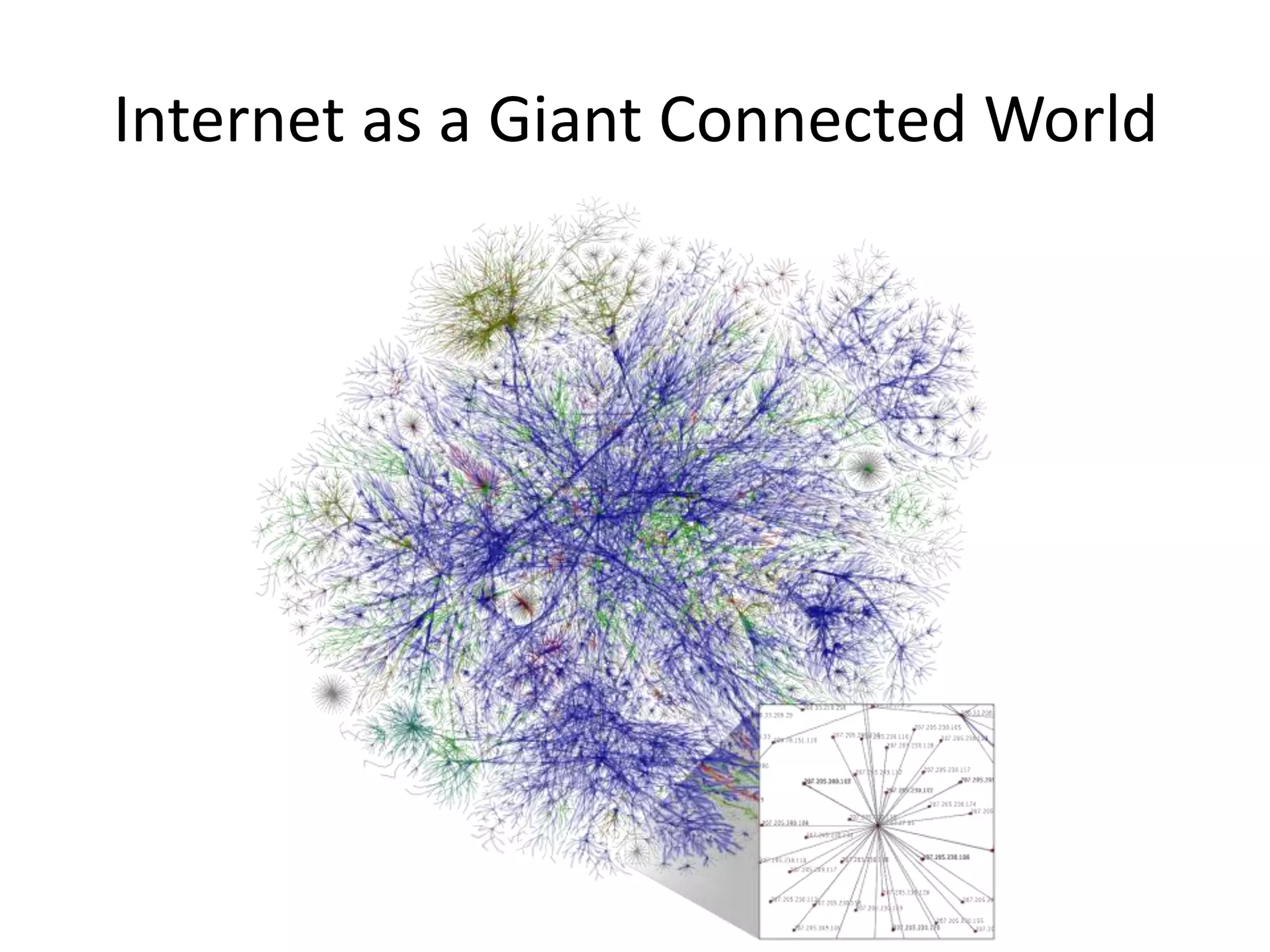
Internet as a Giant Connected World
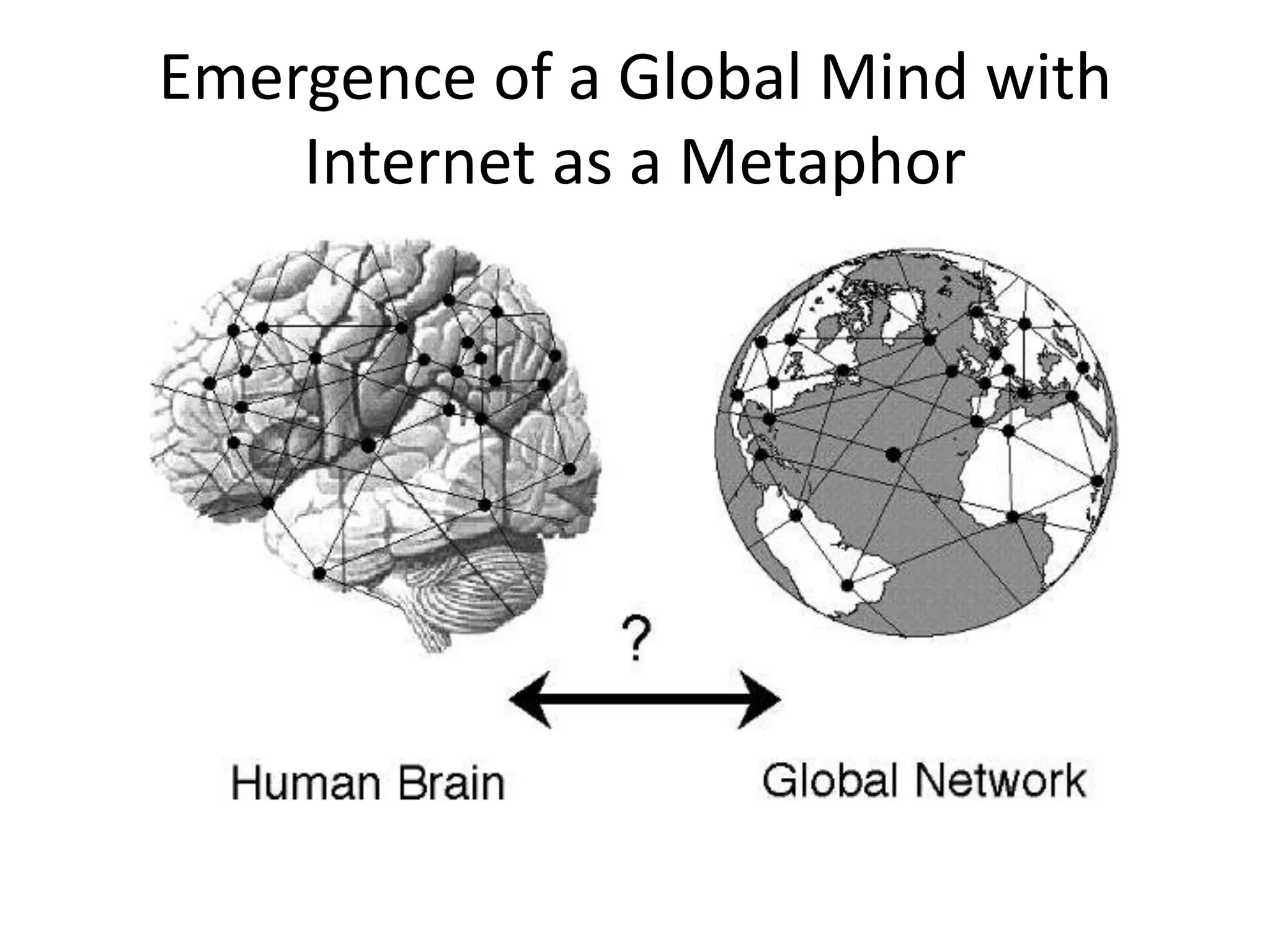
Emergence of a Global Mind with
Internet as a Metaphor
How Do We Use this to solve a Major
Problem?
• Access to Evidence Based Health Information is a
Major Challenge to Millions of People in the
World
• Patients are Not Where the Experts Are
• Patients Have a Set of Information, Providers
Have Another, Need for an Interface
• Challenge for future trainees and practitioners of
Medicine
• Solve Health Care Access for people in
Developing Countries (South Asia for instance
with 1.4 Billion People)
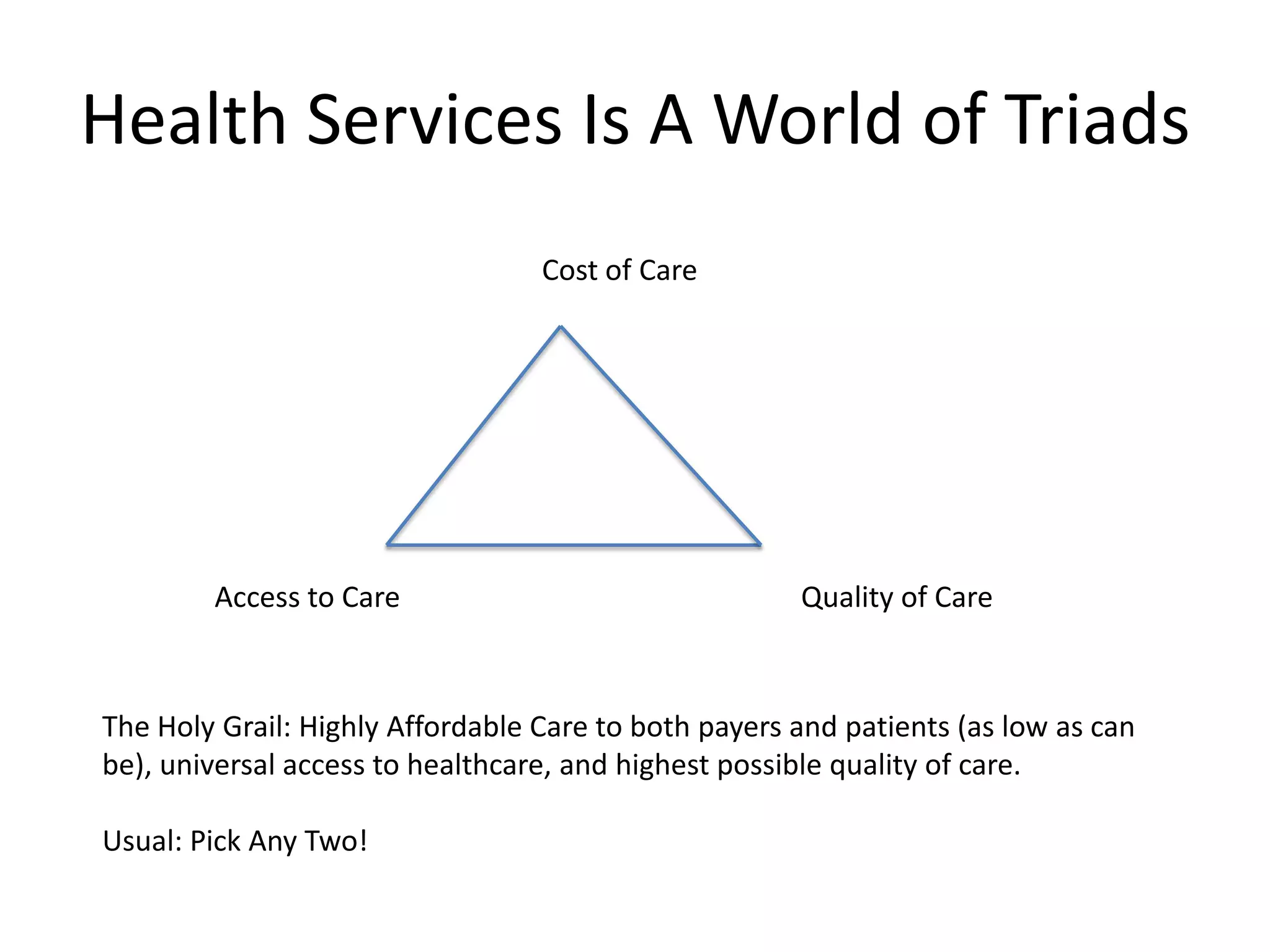
Health Services Is A World of Triads
Cost of Care
Access to Care Quality of Care
The Holy Grail: Highly Affordable Care to both payers and patients (as low as can
be), universal access to healthcare, and highest possible quality of care.
Usual: Pick Any Two!
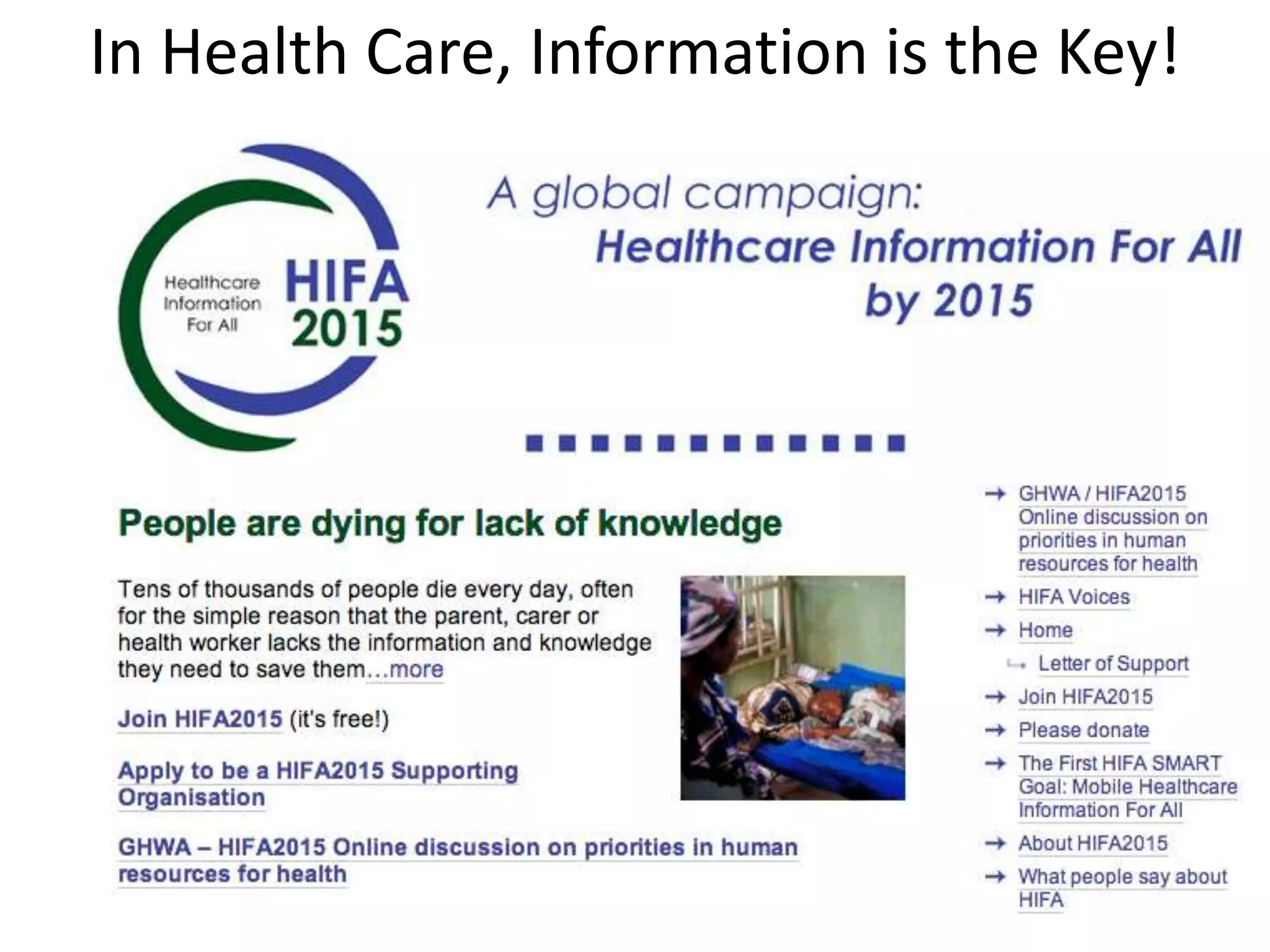
In Health Care, Information is the Key!
In UDHC, You are a User
• Providers
– Health Professionals
• Payers
– You, in a fee for service system
– If you are an insurer or represent Insurance Sector
• Patient
– Seek Health Information
– Connect and Interact
• Healthcare Professionals, Patients, Anyone with a
username on WWW
• U Drive the System!
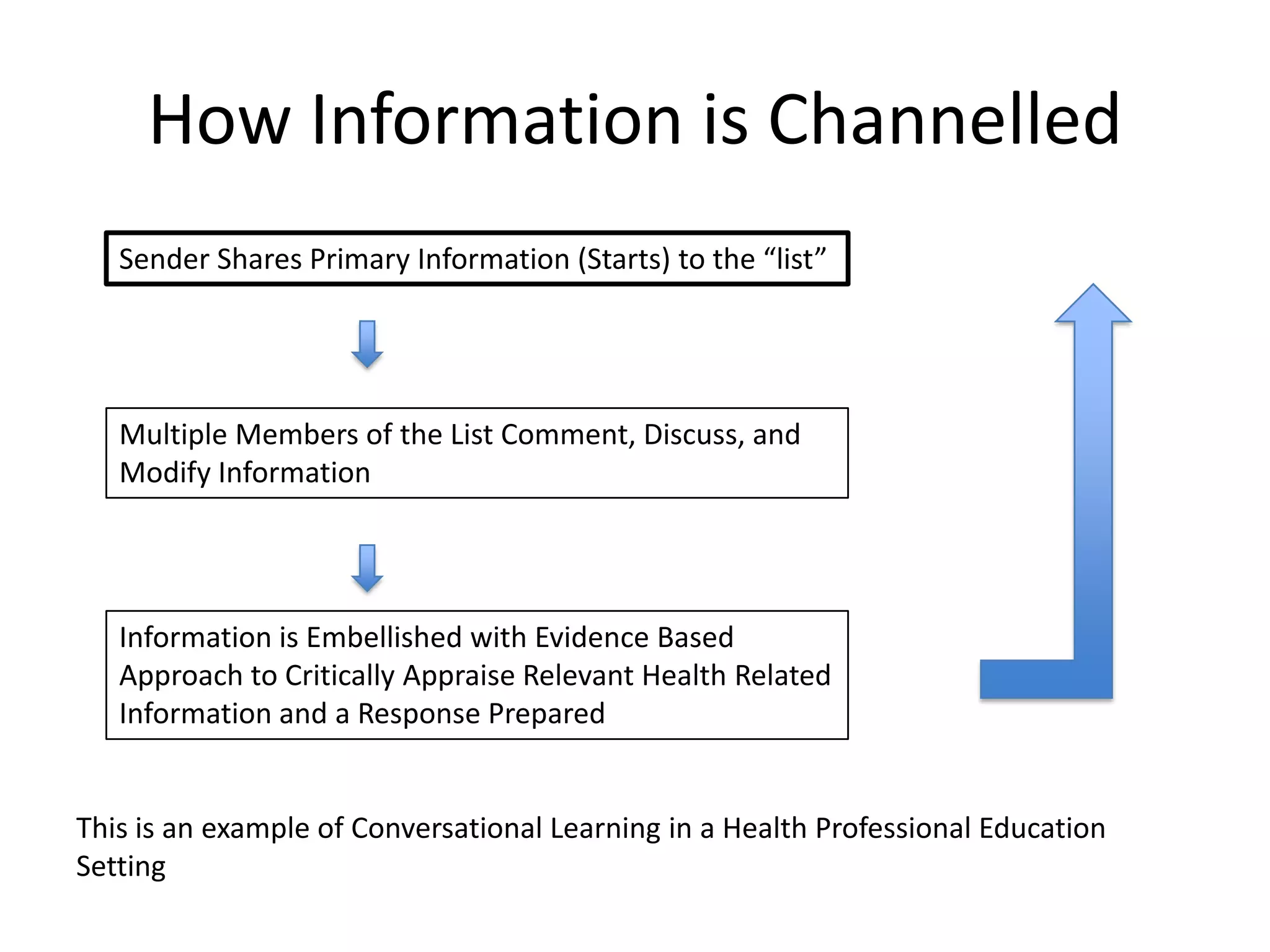
How Information is Channelled
Sender Shares Primary Information (Starts) to the “list”
Multiple Members of the List Comment, Discuss, and
Modify Information
Information is Embellished with Evidence Based
Approach to Critically Appraise Relevant Health Related
Information and a Response Prepared
This is an example of Conversational Learning in a Health Professional Education
Setting
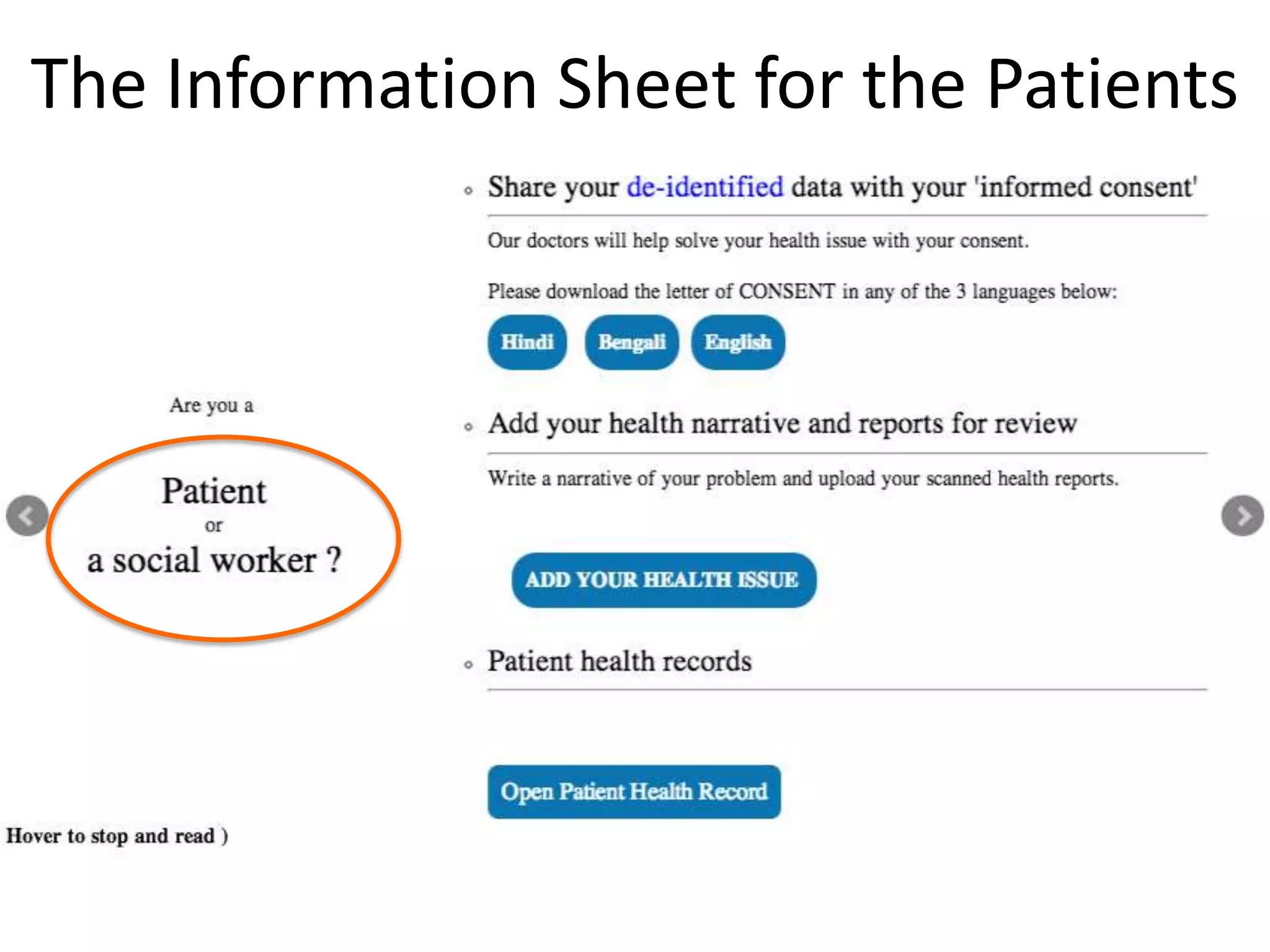
The Information Sheet for the Patients
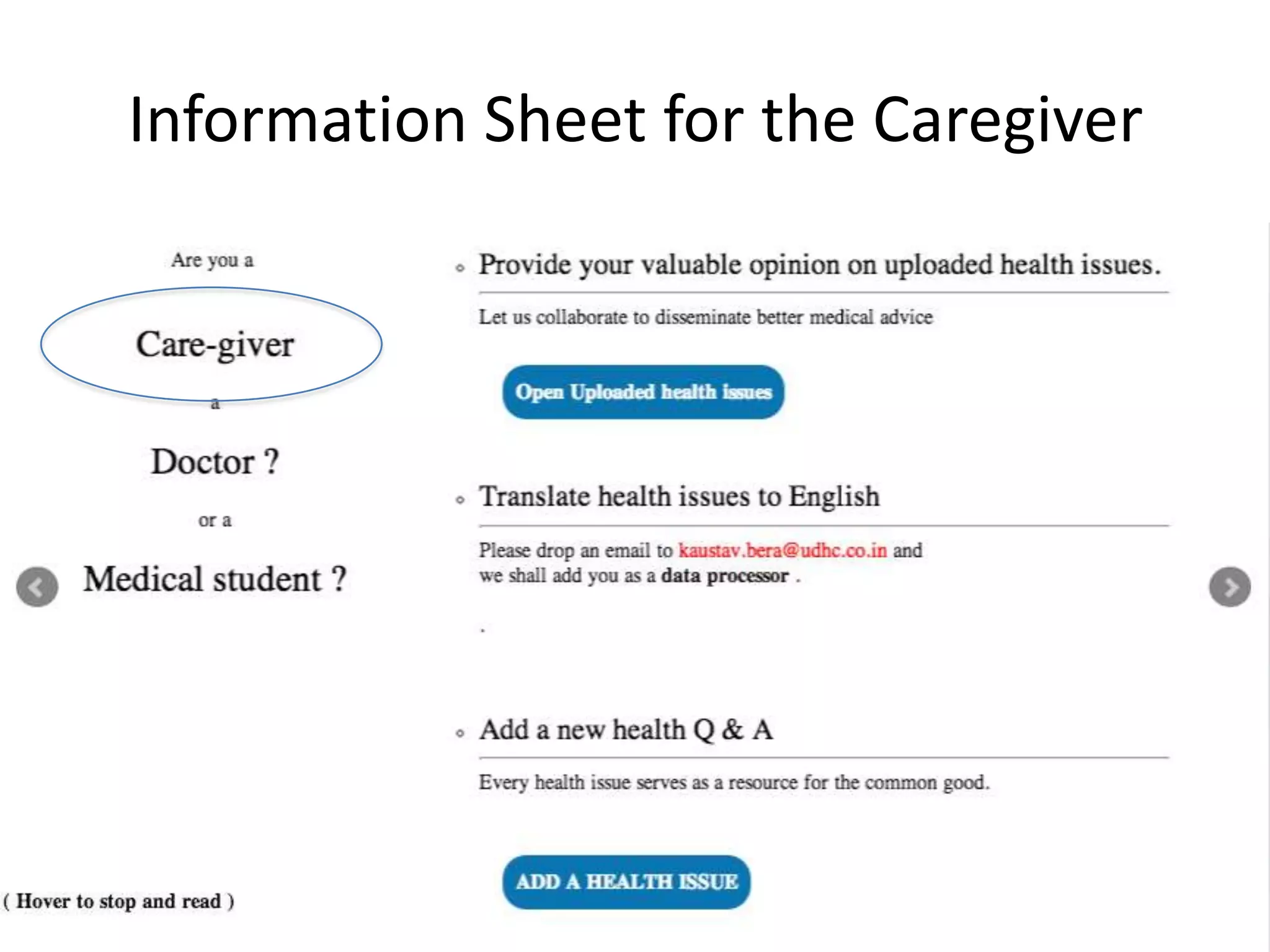
Information Sheet for the Caregiver
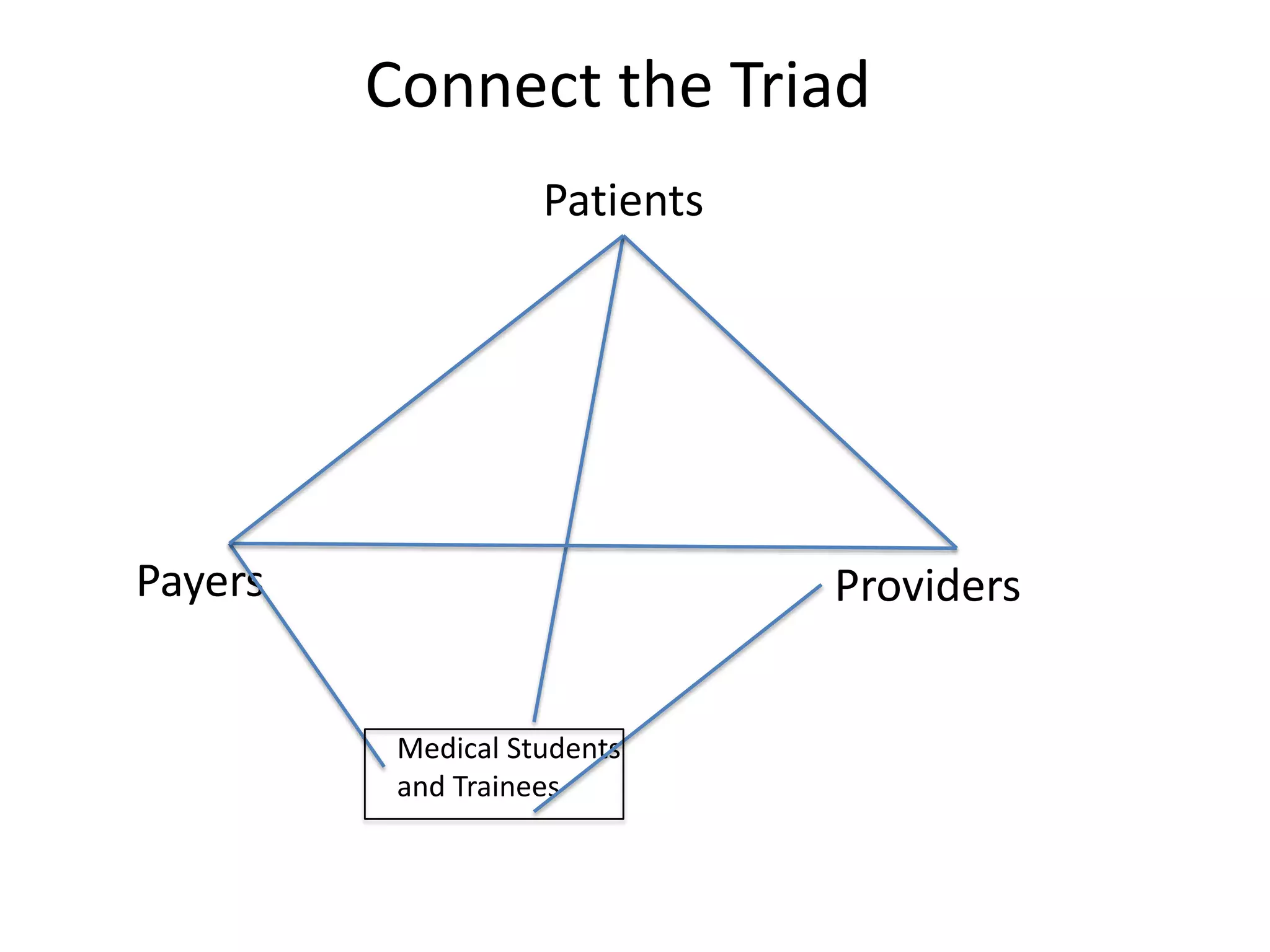
Connect the Triad
Patients
Payers Providers
Medical Students
and Trainees
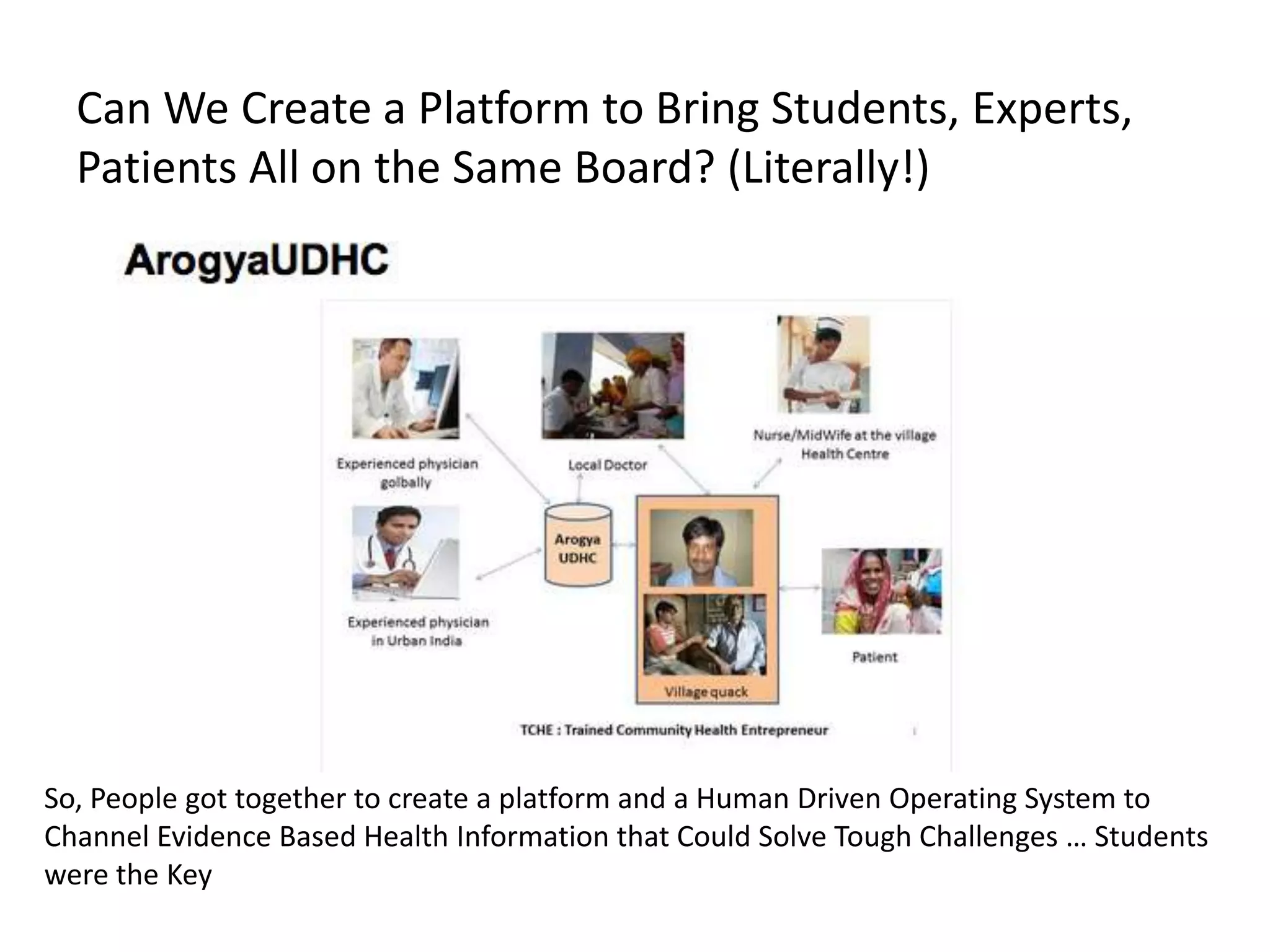
Can We Create a Platform to Bring Students, Experts,
Patients All on the Same Board? (Literally!)
So, People got together to create a platform and a Human Driven Operating System to
Channel Evidence Based Health Information that Could Solve Tough Challenges … Students
were the Key
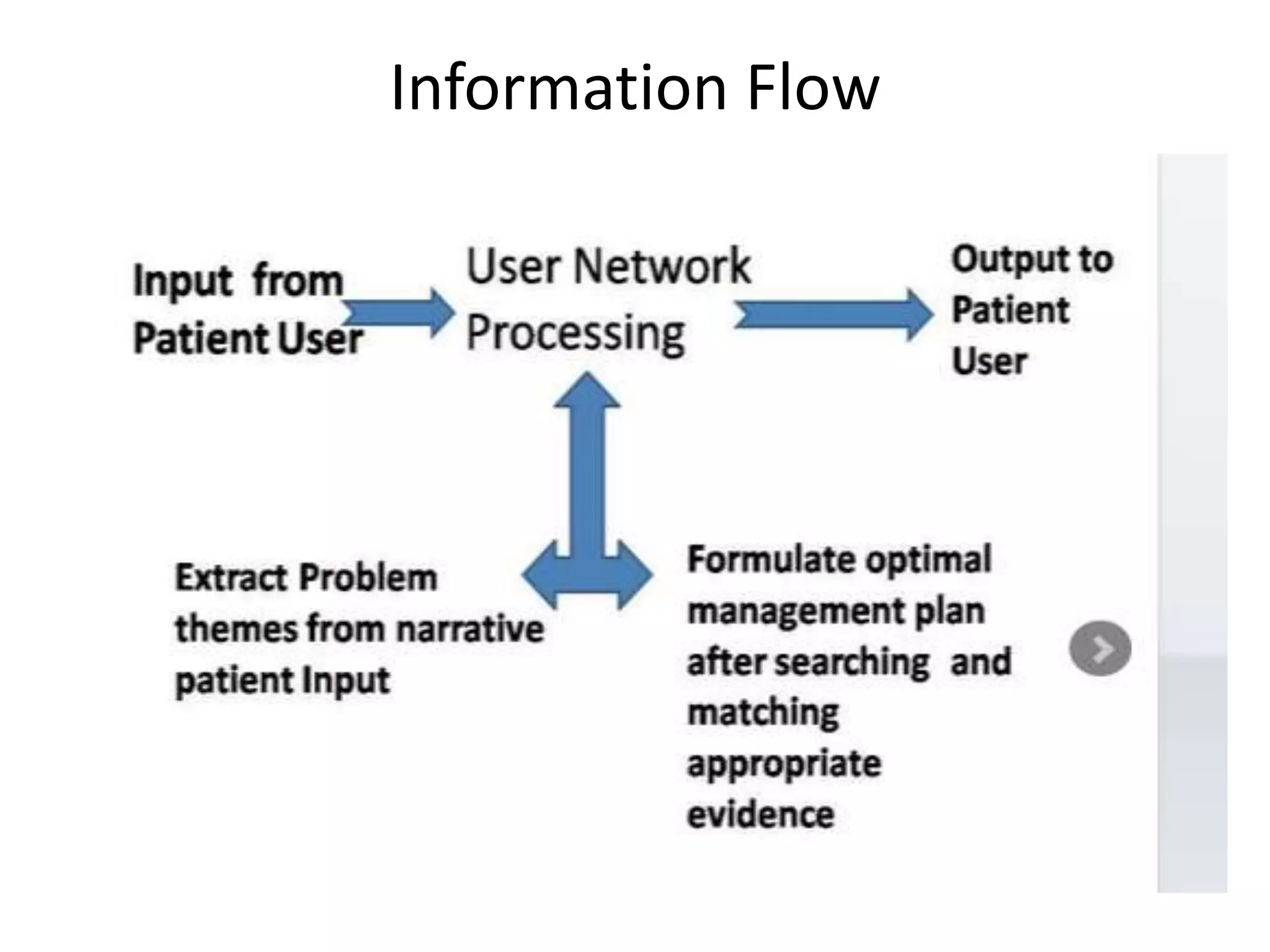
Information Flow
Conversational Learning Fosters
Connection to Community As Well as
Connecting to Deep Professional
Knowledge
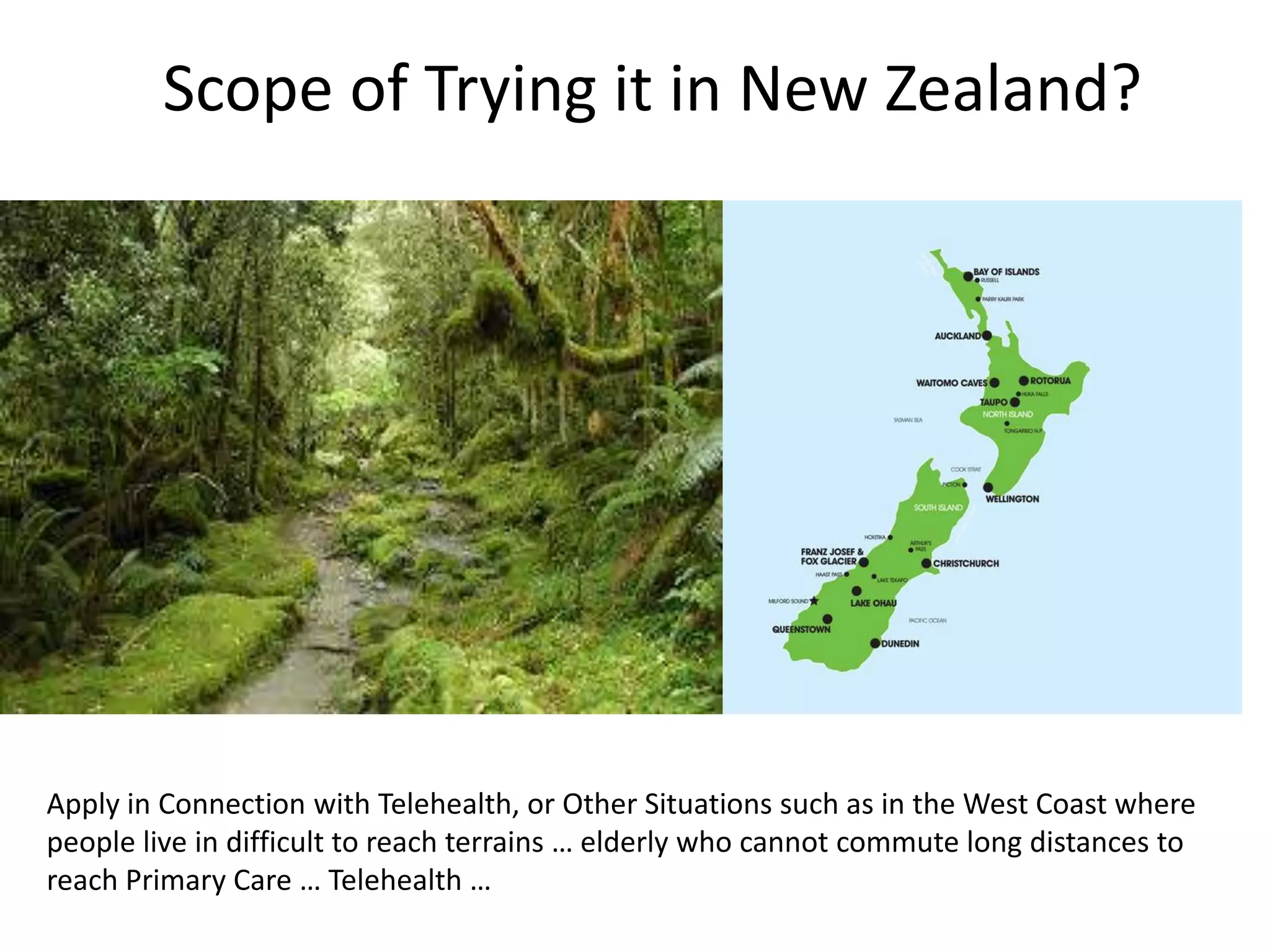
Scope of Trying it in New Zealand?
Apply in Connection with Telehealth, or Other Situations such as in the West Coast where
people live in difficult to reach terrains … elderly who cannot commute long distances to
reach Primary Care … Telehealth …
The Next Steps
• Join the Network
• Contribute Your Questions
• Share Your Expertise
• Enrich the Community!

Presentation on UDHC for UC Tertiary Engagement Summit (Draft Slides)

  • 1.
    User Driven HealthCare: Students as Community Engagement Links Arindam Basu Prepared for the NZ Tertiary Education Summit, Christchurch
  • 2.
    Internet as aGiant Connected World
  • 3.
    Emergence of aGlobal Mind with Internet as a Metaphor
  • 4.
    How Do WeUse this to solve a Major Problem? • Access to Evidence Based Health Information is a Major Challenge to Millions of People in the World • Patients are Not Where the Experts Are • Patients Have a Set of Information, Providers Have Another, Need for an Interface • Challenge for future trainees and practitioners of Medicine • Solve Health Care Access for people in Developing Countries (South Asia for instance with 1.4 Billion People)
  • 5.
    Health Services IsA World of Triads Cost of Care Access to Care Quality of Care The Holy Grail: Highly Affordable Care to both payers and patients (as low as can be), universal access to healthcare, and highest possible quality of care. Usual: Pick Any Two!
  • 6.
    In Health Care,Information is the Key!
  • 7.
    In UDHC, Youare a User • Providers – Health Professionals • Payers – You, in a fee for service system – If you are an insurer or represent Insurance Sector • Patient – Seek Health Information – Connect and Interact • Healthcare Professionals, Patients, Anyone with a username on WWW • U Drive the System!
  • 8.
    How Information isChannelled Sender Shares Primary Information (Starts) to the “list” Multiple Members of the List Comment, Discuss, and Modify Information Information is Embellished with Evidence Based Approach to Critically Appraise Relevant Health Related Information and a Response Prepared This is an example of Conversational Learning in a Health Professional Education Setting
  • 9.
    The Information Sheetfor the Patients
  • 10.
    Information Sheet forthe Caregiver
  • 11.
    Connect the Triad Patients PayersProviders Medical Students and Trainees
  • 12.
    Can We Createa Platform to Bring Students, Experts, Patients All on the Same Board? (Literally!) So, People got together to create a platform and a Human Driven Operating System to Channel Evidence Based Health Information that Could Solve Tough Challenges … Students were the Key
  • 13.
  • 14.
    Conversational Learning Fosters Connectionto Community As Well as Connecting to Deep Professional Knowledge
  • 15.
    Scope of Tryingit in New Zealand? Apply in Connection with Telehealth, or Other Situations such as in the West Coast where people live in difficult to reach terrains … elderly who cannot commute long distances to reach Primary Care … Telehealth …
  • 16.
    The Next Steps •Join the Network • Contribute Your Questions • Share Your Expertise • Enrich the Community!

Editor's Notes

  • #2 The purpose of this presentation is to showcase a model of student engagement with community in the setting of professional education -- that of training of medical doctors both at the stage of studentship as well as during their post graduation years. The model is based on interactive collaboration between the patients and the providers and is labelled as "User Driven Health Care". In this setup, patients in the community share their stories, symptoms, and their primary caregivers in the community describe clinical signs, and where possible digitized radiographs, and other detailed results of investigations. These are then conveyed to the the students in medical schools or professionals in training. The students process these narratives and documents and translate them to make sense more technically, and a worldwide community of physicians/surgeons/health professionals respond to those questions and provide advice/support. Together these provide essential lessons for the students and provide excellent resources for review, at the same time benefit the community and enable sharing of high quality medical information among providers and patients. The processes and set up of this system will be described and discussed in this presentation.