PRESENTATION TOPIC NAME
GENERATOR
PREPARED BY
GROUP: H
Serial No. Students Name Students ID
1. Md. Noyon Mia 2224EEE51406
2. Foysal Kabir Emon 2224EEE51408
3. Faridul Islam 2224EEE51409
4. Md. Harun Rashid 2224EEE51410
5. Humayun Kabir 2224EEE51439
Manarat International University
Electrical and Electronics Engineering
Batch : 24 (A), Evening
Electrical Circuit II - 103
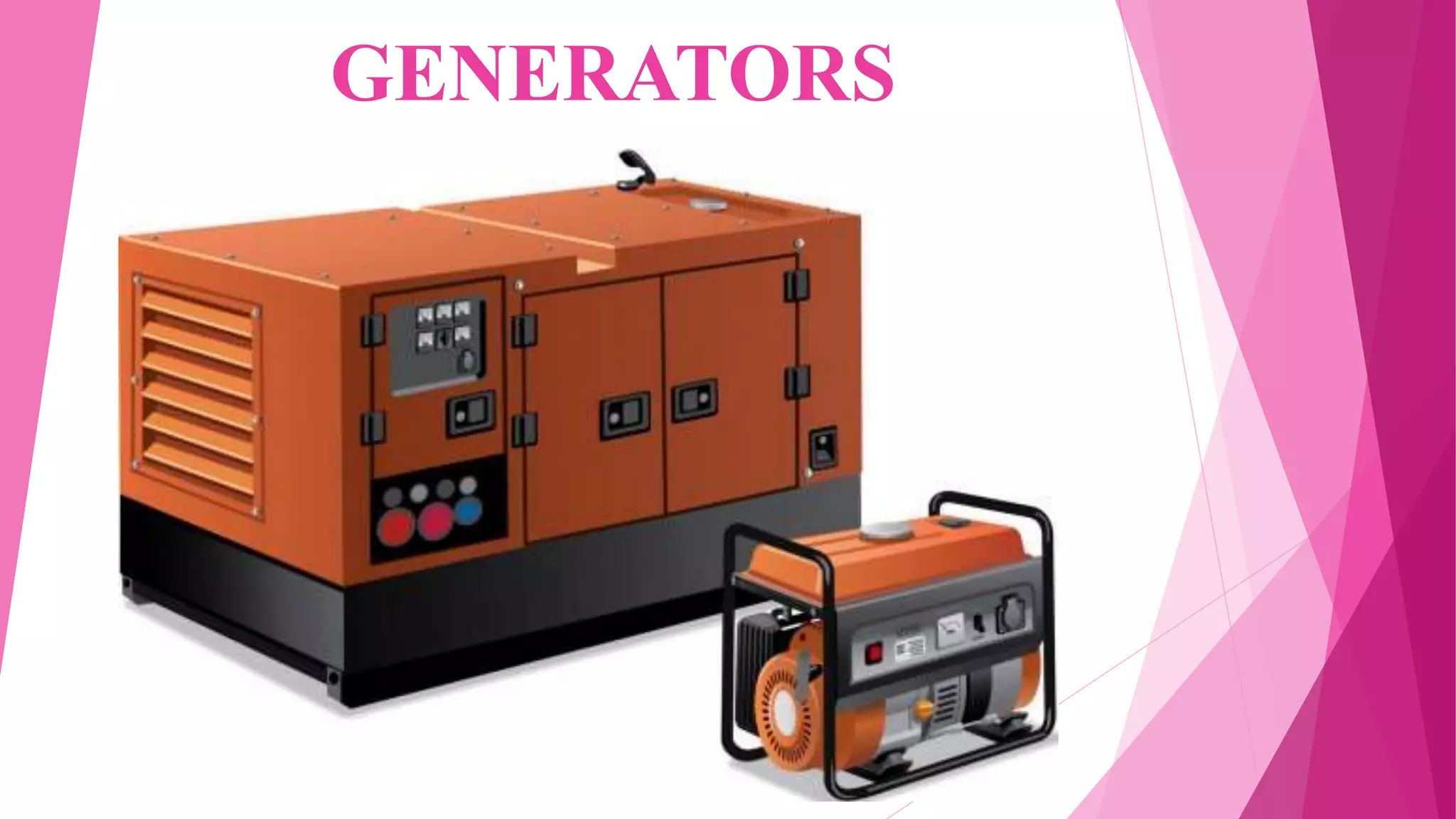
GENERATORS
CONTEXT
 Introduction to Generators
 Principle of working
 History of Generator
 Types of Generators
 Practical Generator
 Generators in daily life
 Conclusion
Introduction to Generators
 The device which converts mechanical energy to electrical energy is
called generator
Principle of working
 In generators mechanical energy is transformed into electrical energy.
 The principle of all of the generators is same,
although the detail of construction may be differ
 Somewhat:
 A generator has two main parts:
 Coil
 Magnet
Principle of working
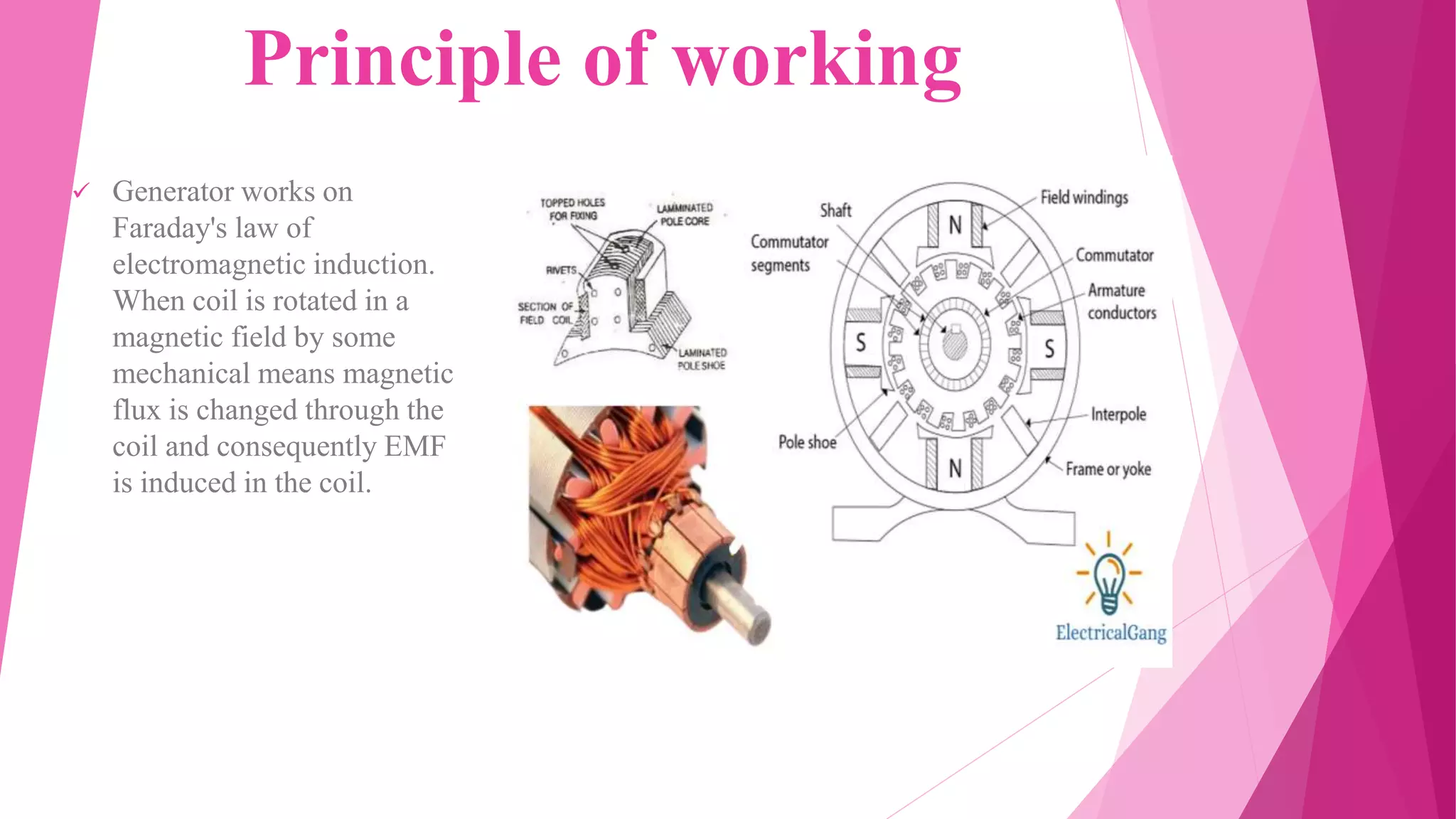
 Generator works on
Faraday's law of
electromagnetic induction.
When coil is rotated in a
magnetic field by some
mechanical means magnetic
flux is changed through the
coil and consequently EMF
is induced in the coil.
History and evolution of Generators
 Michel Faraday and Hippolyte Pixil were pioneers who invented early machines
like generator. There are following stages of evolution of Generators.
 Electrostatic generators.
 Principle of electromagnetic induction.
 Invention of Dynamos.
 Alternators and their evolution.
Electrostatic Generators
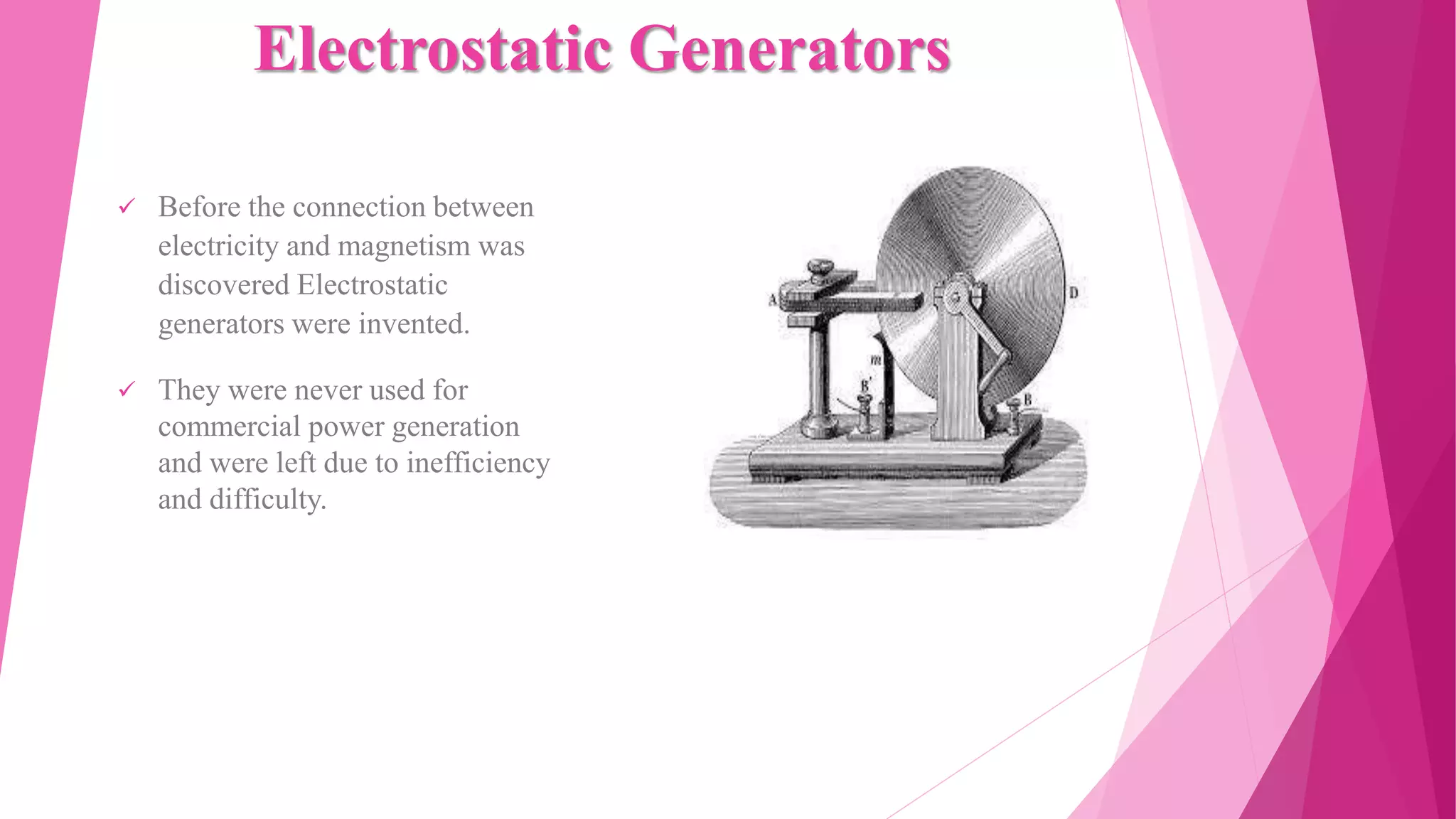
 Before the connection between
electricity and magnetism was
discovered Electrostatic
generators were invented.
 They were never used for
commercial power generation
and were left due to inefficiency
and difficulty.
Principle of electromagnetic induction
 The scientific principle on which modern generators work was discovered by Michel
Faraday, he gave first electrical demonstration of electromagnetic induction in august
1831.
 Then he created world's first electrical generator caller “Faraday's disk’’.
Dynamos
 Dynamos use electromagnetic
principles to convert mechanical
rotation into a pulsating direct
electric current through use of a
commentator.
 1st dynamo was built by Hippolyte
Pixil in 1832
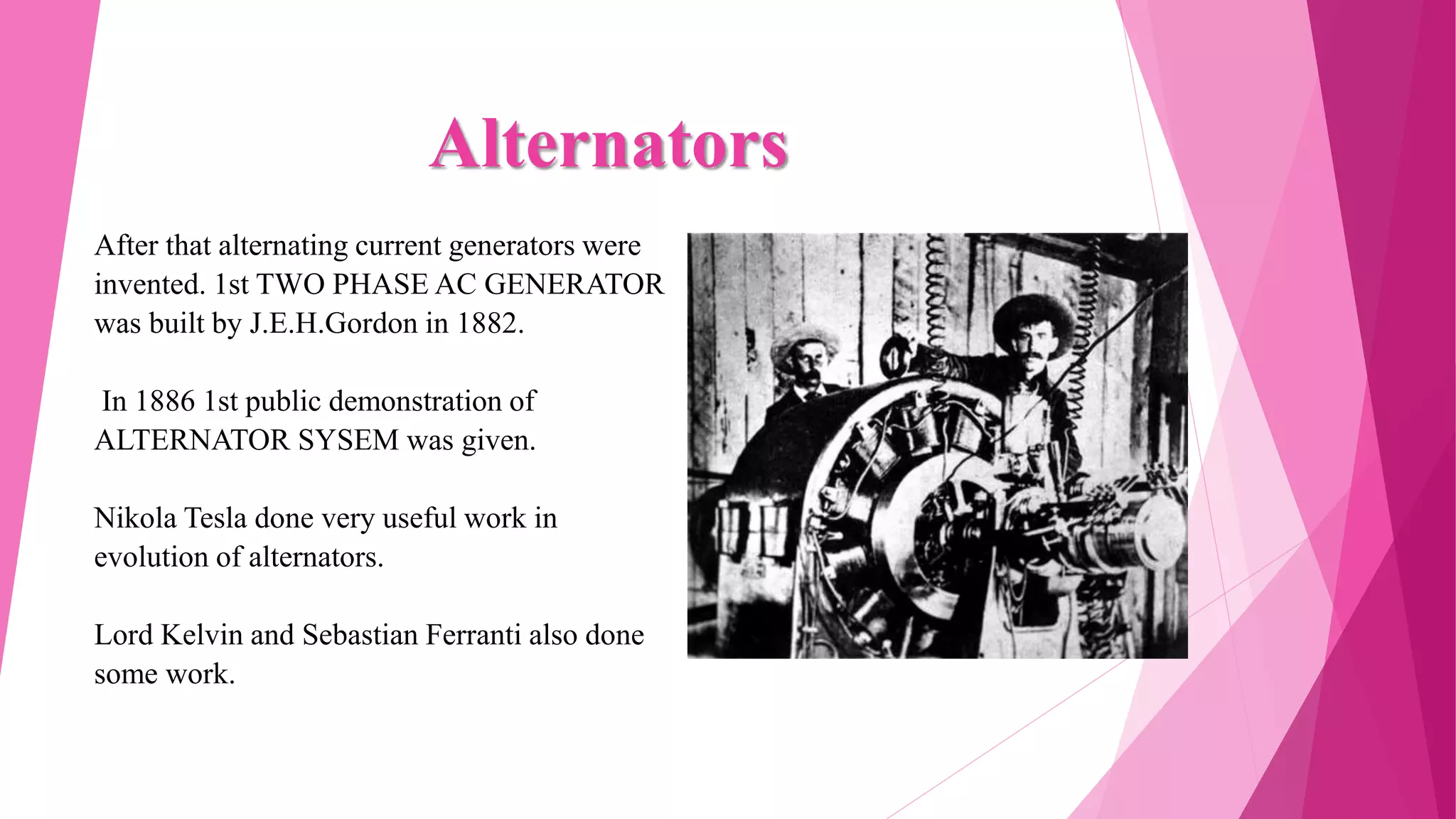
After that alternating current generators were
invented. 1st TWO PHASE AC GENERATOR
was built by J.E.H.Gordon in 1882.
In 1886 1st public demonstration of
ALTERNATOR SYSEM was given.
Nikola Tesla done very useful work in
evolution of alternators.
Lord Kelvin and Sebastian Ferranti also done
some work.
Alternators
Types of Generators
 According to output generators are of two yes AC
 generators and DC generators.
 According to mechanical work input generators can also be classified. As engine
generators, human powered generators, turbine generators and wind mill generators.
Types of Generators
 Mainly used generators are engine generators. They are also known as
Generate. They use engine, which provides mechanical energy by use of
chemical energy provided by different chemicals as Gasoline, Propane,
Diesel fuel and Natural gas.
 They can further be classified into 3 main types.
 Standby Generators
 Portable Generators
 Commercial Generators
Standby Generators
 These are large, often permanent
units often stationed outside a
building and like to provide
backup power in case the in
electricity switches off.
 They can sense when a power
interruption has occurred and
automatically start to provide
emergency power
Portable Generators
 These generators are designed to be
transported whether on cart trailer or by
hand where there is no utility of power.
 They are capable of providing up to 1000
kilowatts of power. They use either diesel
natural gas, gasoline or propane as fuel
Commercial Generators
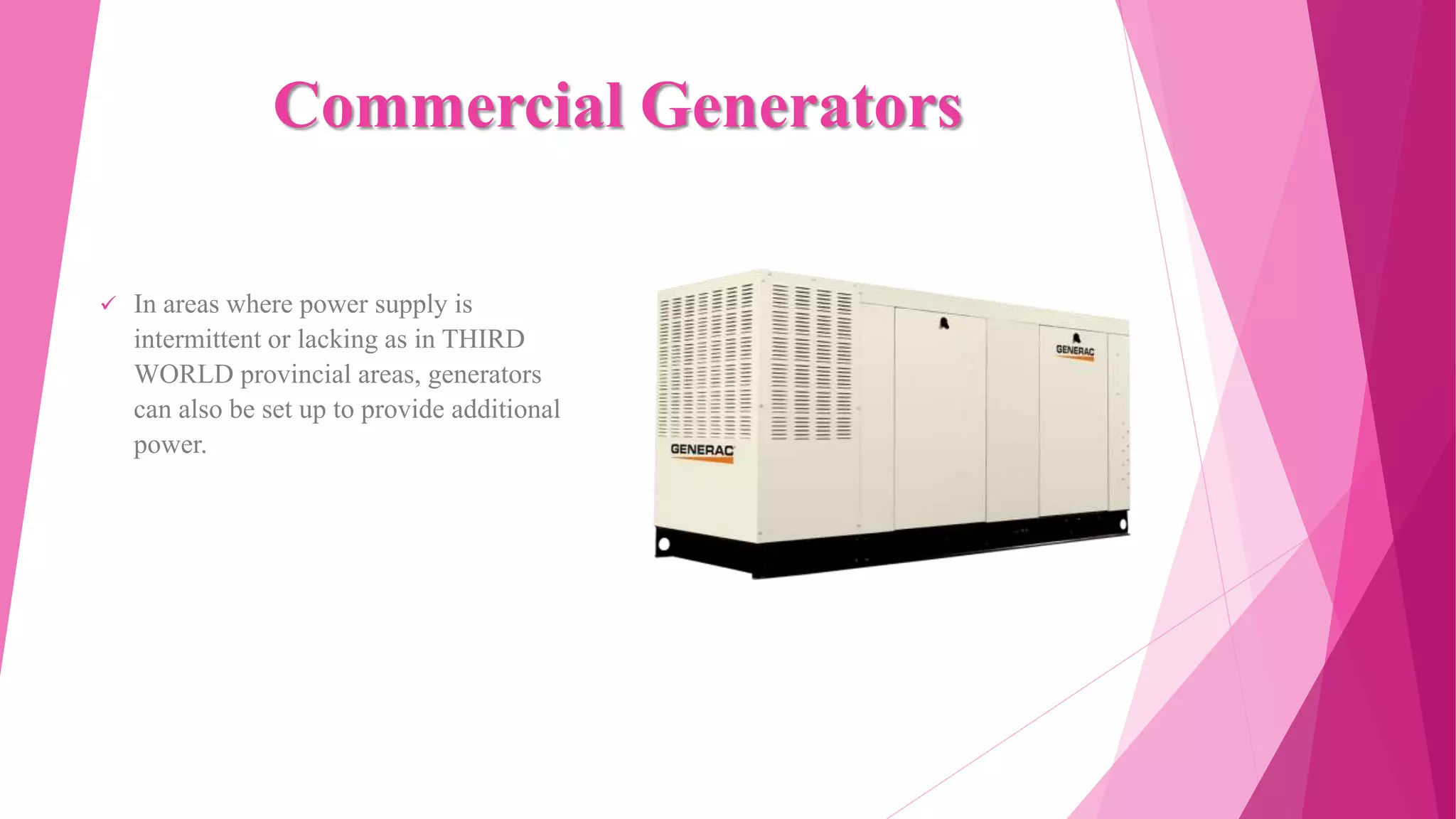
 In areas where power supply is
intermittent or lacking as in THIRD
WORLD provincial areas, generators
can also be set up to provide additional
power.
Presentation on Generator.pptx

Presentation on Generator.pptx

  • 2.
    PRESENTATION TOPIC NAME GENERATOR PREPAREDBY GROUP: H Serial No. Students Name Students ID 1. Md. Noyon Mia 2224EEE51406 2. Foysal Kabir Emon 2224EEE51408 3. Faridul Islam 2224EEE51409 4. Md. Harun Rashid 2224EEE51410 5. Humayun Kabir 2224EEE51439 Manarat International University Electrical and Electronics Engineering Batch : 24 (A), Evening Electrical Circuit II - 103
  • 3.
  • 4.
    CONTEXT  Introduction toGenerators  Principle of working  History of Generator  Types of Generators  Practical Generator  Generators in daily life  Conclusion
  • 5.
    Introduction to Generators The device which converts mechanical energy to electrical energy is called generator
  • 6.
    Principle of working In generators mechanical energy is transformed into electrical energy.  The principle of all of the generators is same, although the detail of construction may be differ  Somewhat:  A generator has two main parts:  Coil  Magnet
  • 7.
    Principle of working Generator works on Faraday's law of electromagnetic induction. When coil is rotated in a magnetic field by some mechanical means magnetic flux is changed through the coil and consequently EMF is induced in the coil.
  • 8.
    History and evolutionof Generators  Michel Faraday and Hippolyte Pixil were pioneers who invented early machines like generator. There are following stages of evolution of Generators.  Electrostatic generators.  Principle of electromagnetic induction.  Invention of Dynamos.  Alternators and their evolution.
  • 9.
    Electrostatic Generators  Beforethe connection between electricity and magnetism was discovered Electrostatic generators were invented.  They were never used for commercial power generation and were left due to inefficiency and difficulty.
  • 10.
    Principle of electromagneticinduction  The scientific principle on which modern generators work was discovered by Michel Faraday, he gave first electrical demonstration of electromagnetic induction in august 1831.  Then he created world's first electrical generator caller “Faraday's disk’’.
  • 11.
    Dynamos  Dynamos useelectromagnetic principles to convert mechanical rotation into a pulsating direct electric current through use of a commentator.  1st dynamo was built by Hippolyte Pixil in 1832
  • 12.
    After that alternatingcurrent generators were invented. 1st TWO PHASE AC GENERATOR was built by J.E.H.Gordon in 1882. In 1886 1st public demonstration of ALTERNATOR SYSEM was given. Nikola Tesla done very useful work in evolution of alternators. Lord Kelvin and Sebastian Ferranti also done some work. Alternators
  • 13.
    Types of Generators According to output generators are of two yes AC  generators and DC generators.  According to mechanical work input generators can also be classified. As engine generators, human powered generators, turbine generators and wind mill generators.
  • 14.
    Types of Generators Mainly used generators are engine generators. They are also known as Generate. They use engine, which provides mechanical energy by use of chemical energy provided by different chemicals as Gasoline, Propane, Diesel fuel and Natural gas.  They can further be classified into 3 main types.  Standby Generators  Portable Generators  Commercial Generators
  • 15.
    Standby Generators  Theseare large, often permanent units often stationed outside a building and like to provide backup power in case the in electricity switches off.  They can sense when a power interruption has occurred and automatically start to provide emergency power
  • 16.
    Portable Generators  Thesegenerators are designed to be transported whether on cart trailer or by hand where there is no utility of power.  They are capable of providing up to 1000 kilowatts of power. They use either diesel natural gas, gasoline or propane as fuel
  • 17.
    Commercial Generators  Inareas where power supply is intermittent or lacking as in THIRD WORLD provincial areas, generators can also be set up to provide additional power.