Cataract: Lens
                      opacity, Age-related
                      cataract


© 2012 Right Doctor
Do you see cloudy or blurry images?

         Do you have these symptoms?
                     Poor night vision
                     Colors seem faded
                     Glare
                     Cloudy or foggy vision
                     Frequent prescription changes in your eye-glasses or contact-lenses
                     Double vision


               You may have cataract, please read further to know more…


© 2012 Right Doctor
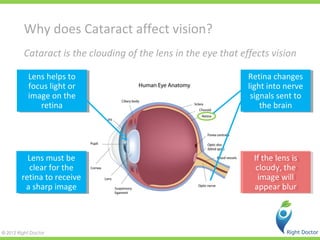
Why does Cataract affect vision?
         Cataract is the clouding of the lens in the eye that effects vision

           Lens helps to
            Lens helps to                                       Retina changes
                                                                 Retina changes
           focus light or
            focus light or                                      light into nerve
                                                                 light into nerve
           image on the
            image on the                                         signals sent to
                                                                  signals sent to
               retina
                retina                                              the brain
                                                                     the brain


           Lens must be
            Lens must be                                         If the lens is
                                                                  If the lens is
           clear for the
            clear for the                                         cloudy, the
                                                                   cloudy, the
        retina to receive
         retina to receive                                         image will
                                                                    image will
          aasharp image
             sharp image                                         appear blur
                                                                  appear blur


© 2012 Right Doctor
How does Cataract develop?
       •The      lens consists mostly of water and protein. As we age, proteins in
       the lens begin to break down and the lens becomes cloudy.
       •This     more often occurs in or near old age, progress being slow and
       painless.
       •Other         risk factors include:

                 Certain diseases (for e.g.
                  diabetes)
                                                      Prolonged use of some drugs
                 History of cataract in
                                                      Smoking and consumption
                  parents/elders
                                                       of alcohol
                 Prolonged exposure to
                  ultraviolet sunlight

© 2012 Right Doctor
Common Myths
       Cataract is infectious?

       Cataract does not spread from one eye to the other.

       If one eye has cataract other eye also will have…

       If you are detected with cataract in one eye, chances
       are that the other eye often has catarectus changes.
       It is very normal that one eye may be more affected
       than the other

       If detected with cataract I have to undergo surgery
       immediately?

       Cataract needs to be removed only when vision
       impairment or loss interferes with your everyday
                                                               Cataract eye – Cloudy and Opaque
       activities, such as driving, reading, or watching TV
                                                                              lens


© 2012 Right Doctor
Diagnosis
     Cataract is detected through a comprehensive eye exam that includes:
           Visual acuity test: This eye chart           Dilated eye exam: Drops are
           test measures how well you see               placed in your eyes to widen,
           at various distances and by                  or dilate the pupils and eyes
           observing opacity in the centre of           examined with light
           the eye – the pupil.


                                                                  Dilated eye


                Typical Snellen chart used for visual
                           acuity testing.
© 2012 Right Doctor
Treatment
         Non Surgical - For early cataract , change of eyeglasses, use of brighter light,
         anti-glare sunglasses, or magnifying lenses may help.
         Surgery - If these measures do not help, surgery is the only effective
         treatment. It involves replacing the cloudy lens with artificial lens. In such
         situations it is advisable to consult your Eye surgeon.


                                                              Artificial Lens


            If cataract does not produce too many symptoms or difficulties, treatment
             If cataract does not produce too many symptoms or difficulties, treatment
            could be deferred to convenient time at the same time, too much of delay
             could be deferred to convenient time at the same time, too much of delay
                                  can result in damage to the eye.
                                   can result in damage to the eye.


© 2012 Right Doctor
Disclaimer : The intent of the information provided
       by Right Doctor is to increase public awareness and
       should not be treated as a medical advice. A eye
       surgeon should be consulted for proper medical
       guidance


© 2012 Right Doctor

Cataract

  • 1.
    Cataract: Lens opacity, Age-related cataract © 2012 Right Doctor
  • 2.
    Do you seecloudy or blurry images? Do you have these symptoms?  Poor night vision  Colors seem faded  Glare  Cloudy or foggy vision  Frequent prescription changes in your eye-glasses or contact-lenses  Double vision You may have cataract, please read further to know more… © 2012 Right Doctor
  • 3.
    Why does Cataractaffect vision? Cataract is the clouding of the lens in the eye that effects vision Lens helps to Lens helps to Retina changes Retina changes focus light or focus light or light into nerve light into nerve image on the image on the signals sent to signals sent to retina retina the brain the brain Lens must be Lens must be If the lens is If the lens is clear for the clear for the cloudy, the cloudy, the retina to receive retina to receive image will image will aasharp image sharp image appear blur appear blur © 2012 Right Doctor
  • 4.
    How does Cataractdevelop? •The lens consists mostly of water and protein. As we age, proteins in the lens begin to break down and the lens becomes cloudy. •This more often occurs in or near old age, progress being slow and painless. •Other risk factors include:  Certain diseases (for e.g. diabetes)  Prolonged use of some drugs  History of cataract in  Smoking and consumption parents/elders of alcohol  Prolonged exposure to ultraviolet sunlight © 2012 Right Doctor
  • 5.
    Common Myths Cataract is infectious? Cataract does not spread from one eye to the other. If one eye has cataract other eye also will have… If you are detected with cataract in one eye, chances are that the other eye often has catarectus changes. It is very normal that one eye may be more affected than the other If detected with cataract I have to undergo surgery immediately? Cataract needs to be removed only when vision impairment or loss interferes with your everyday Cataract eye – Cloudy and Opaque activities, such as driving, reading, or watching TV lens © 2012 Right Doctor
  • 6.
    Diagnosis Cataract is detected through a comprehensive eye exam that includes: Visual acuity test: This eye chart Dilated eye exam: Drops are test measures how well you see placed in your eyes to widen, at various distances and by or dilate the pupils and eyes observing opacity in the centre of examined with light the eye – the pupil. Dilated eye Typical Snellen chart used for visual acuity testing. © 2012 Right Doctor
  • 7.
    Treatment Non Surgical - For early cataract , change of eyeglasses, use of brighter light, anti-glare sunglasses, or magnifying lenses may help. Surgery - If these measures do not help, surgery is the only effective treatment. It involves replacing the cloudy lens with artificial lens. In such situations it is advisable to consult your Eye surgeon. Artificial Lens If cataract does not produce too many symptoms or difficulties, treatment If cataract does not produce too many symptoms or difficulties, treatment could be deferred to convenient time at the same time, too much of delay could be deferred to convenient time at the same time, too much of delay can result in damage to the eye. can result in damage to the eye. © 2012 Right Doctor
  • 8.
    Disclaimer : Theintent of the information provided by Right Doctor is to increase public awareness and should not be treated as a medical advice. A eye surgeon should be consulted for proper medical guidance © 2012 Right Doctor