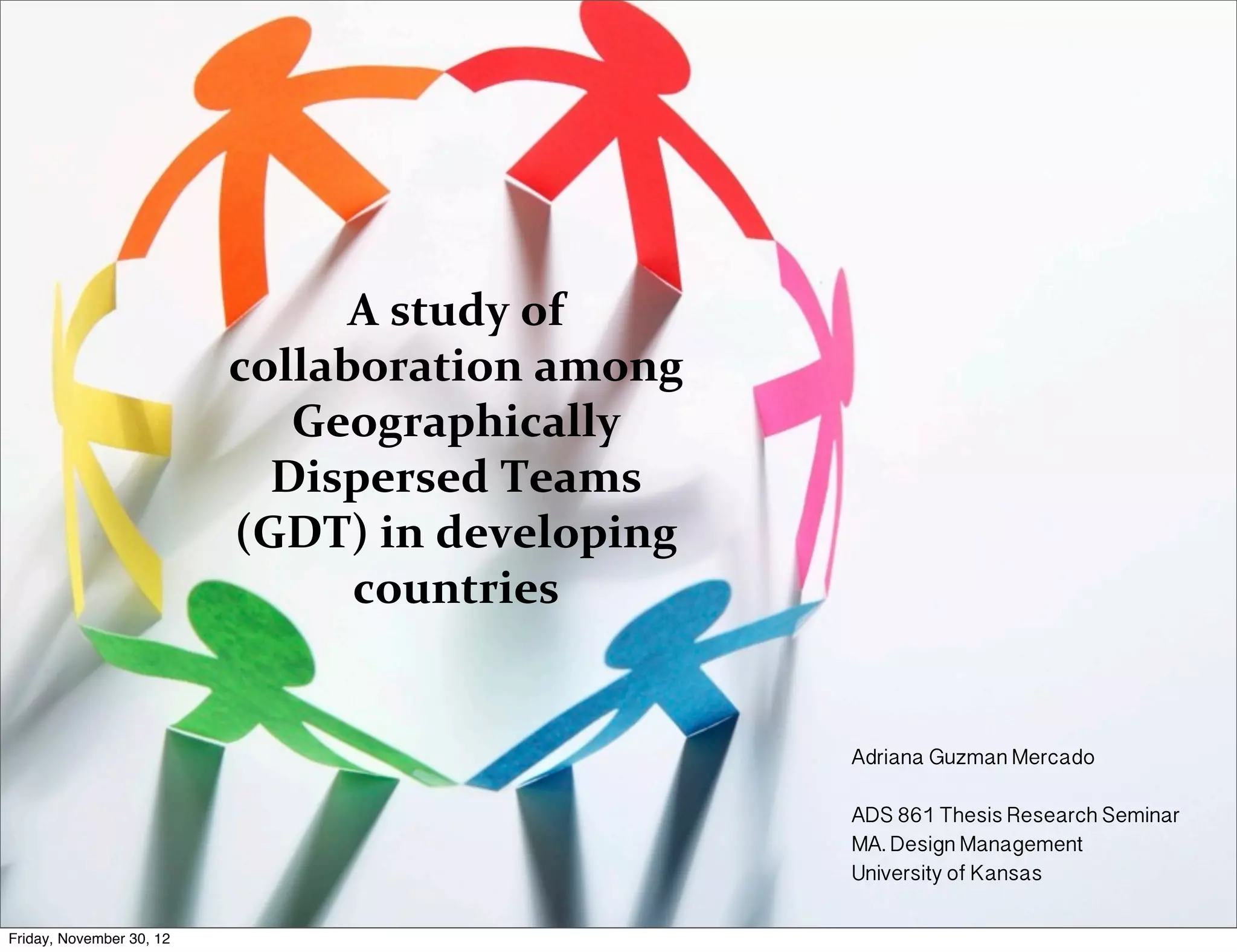
A	
  study	
  of	
  
                          collaboration	
  among	
  	
  
                             Geographically	
  
                            Dispersed	
  Teams	
  
                          (GDT)	
  in	
  developing	
  
                                countries


                                                           Adriana Guzman Mercado

                                                           ADS 861 Thesis Research Seminar
                                                           MA. Design Management
                                                           University of Kansas

Friday, November 30, 12
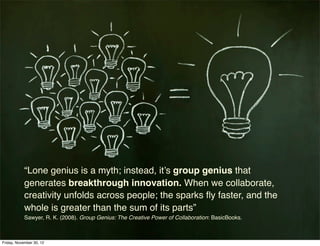
“Lone genius is a myth; instead, it’s group genius that
            generates breakthrough innovation. When we collaborate,
            creativity unfolds across people; the sparks fly faster, and the
            whole is greater than the sum of its parts”
            Sawyer, R. K. (2008). Group Genius: The Creative Power of Collaboration: BasicBooks.


Friday, November 30, 12
Research question

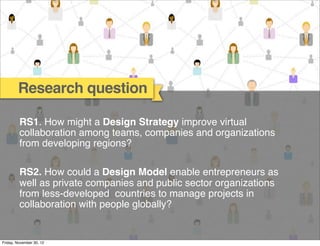
         RS1. How might a Design Strategy improve virtual
         collaboration among teams, companies and organizations
         from developing regions?

         RS2. How could a Design Model enable entrepreneurs as
         well as private companies and public sector organizations
         from less-developed countries to manage projects in
         collaboration with people globally?


Friday, November 30, 12
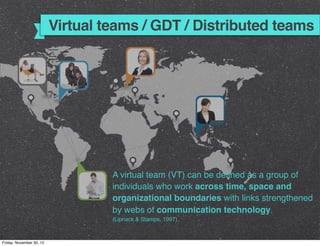
Virtual teams / GDT / Distributed teams


                                   A virtual team (VT) can be defined as a group of
                                   individuals who work across time, space and
                                   organizational boundaries with links strengthened
                                   by webs of communication technology.
                                   (Lipnack & Stamps, 1997).


Friday, November 30, 12
The project’s goal
           Improve the quality
           and effectiveness of
           collaboration based
           on the needs of
           people and
           organizations in this
           context, particularly in
           environments where
           access to the best
           technology is
           limited.


Friday, November 30, 12
Expected results


                1. Tools to improve the likelihood that virtual
                teams in this context will be effective
                2. Guidelines for selecting, adapting, and
                using these technologies appropriately.


Friday, November 30, 12
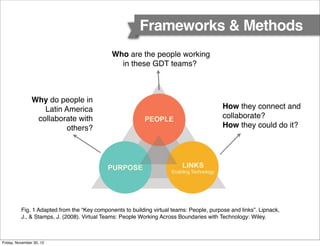
Frameworks & Methods
                                              Who are the people working
                                                in these GDT teams?


                Why do people in
                   Latin America                                                          How they connect and
                 collaborate with                                                         collaborate?
                         others?                                                          How they could do it?


          Fig. 1 Adapted from the “Key components to building virtual teams: People, purpose and links”. Lipnack,
          J., & Stamps, J. (2008). Virtual Teams: People Working Across Boundaries with Technology: Wiley.


Friday, November 30, 12
Initial interviews

             Language represents a barrier

             Constant problems with technology devices and
             applications.

             Lack of training on the use of tools.

             The most used type of videoconferencing is room-
             based video conferencing or pc based video
             conferencing

             Collaborative software and project management tools
             are expensive.


Friday, November 30, 12
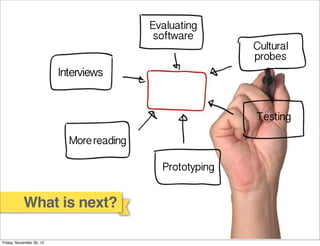
Evaluating
                                           software
                                                           Cultural
                                                           probes
                          Interviews


                                                           Testing

                            More reading

                                             Prototyping


           What is next?

Friday, November 30, 12
References
             Ale Ebrahim, N., Ahmed, S., & Taha, Z. (2009). Virtual R&D teams in small and medium enterprises: A literature review.
             Scientific Research and Essays, 4(13), 1575-1590.

             Boh, W. F., Ren, Y., Kiesler, S., & Bussjaeger, R. (2007). Expertise and Collaboration in the Geographically Dispersed
             Organization. Organization Science, 18(4), 595-612. doi: 10.1287/orsc.1070.0263

             Daim, T. U., Ha, A., Reutiman, S., Hughes, B., Pathak, U., Bynum, W., & Bhatla, A. (2012). Exploring the communication
             breakdown in global virtual teams. International Journal of Project Management, 30(2), 199-212. doi: 10.1016/j.ijproman.
             2011.06.004

             Joshi, A., Lazarova, M. B., & Liao, H. (2009). Getting Everyone on Board: The Role of Inspirational Leadership in
             Geographically Dispersed Teams. Organization Science, 20(1), 240-252. doi: 10.1287/Orsc.1080.0383

             Lipnack, J., & Stamps, J. (1997). Virtual Teams: Reaching Across Space, Time, and Organizations with Technology: John
             Wiley & Sons.

             Sawyer, R. K. (2008). Group Genius: The Creative Power of Collaboration: BasicBooks.

             Schwartz, T., Gomes, J., & D, C. M. C. P. (2010). The Way We're Working Isn't Working: The Four Forgotten Needs That
             Energize Great Performance: Free Press.

             Townsend, A. M., DeMarie, S. M., & Hendrickson, A. R. (1998). Virtual teams: Technology and the workplace of the future.
             The Academy of Management Executive, 12(3), 17-29. doi: 10.5465/ame.1998.1109047

             Vlaar, P. W. L., Fenema, P. C. v., & Tiwari, V. (2008). Cocreating understanding and value in distributed work: how members
             of onsite and offshore vendor teams give, make, demand, and break sense. MIS Q., 32(2), 227-255.


Friday, November 30, 12
Thanks!


Friday, November 30, 12

Presentation nov30

  • 1.
    A  study  of   collaboration  among     Geographically   Dispersed  Teams   (GDT)  in  developing   countries Adriana Guzman Mercado ADS 861 Thesis Research Seminar MA. Design Management University of Kansas Friday, November 30, 12
  • 2.
    “Lone genius isa myth; instead, it’s group genius that generates breakthrough innovation. When we collaborate, creativity unfolds across people; the sparks fly faster, and the whole is greater than the sum of its parts” Sawyer, R. K. (2008). Group Genius: The Creative Power of Collaboration: BasicBooks. Friday, November 30, 12
  • 3.
    Research question RS1. How might a Design Strategy improve virtual collaboration among teams, companies and organizations from developing regions? RS2. How could a Design Model enable entrepreneurs as well as private companies and public sector organizations from less-developed countries to manage projects in collaboration with people globally? Friday, November 30, 12
  • 4.
    Virtual teams /GDT / Distributed teams A virtual team (VT) can be defined as a group of individuals who work across time, space and organizational boundaries with links strengthened by webs of communication technology. (Lipnack & Stamps, 1997). Friday, November 30, 12
  • 5.
    The project’s goal Improve the quality and effectiveness of collaboration based on the needs of people and organizations in this context, particularly in environments where access to the best technology is limited. Friday, November 30, 12
  • 6.
    Expected results 1. Tools to improve the likelihood that virtual teams in this context will be effective 2. Guidelines for selecting, adapting, and using these technologies appropriately. Friday, November 30, 12
  • 7.
    Frameworks & Methods Who are the people working in these GDT teams? Why do people in Latin America How they connect and collaborate with collaborate? others? How they could do it? Fig. 1 Adapted from the “Key components to building virtual teams: People, purpose and links”. Lipnack, J., & Stamps, J. (2008). Virtual Teams: People Working Across Boundaries with Technology: Wiley. Friday, November 30, 12
  • 8.
    Initial interviews Language represents a barrier Constant problems with technology devices and applications. Lack of training on the use of tools. The most used type of videoconferencing is room- based video conferencing or pc based video conferencing Collaborative software and project management tools are expensive. Friday, November 30, 12
  • 9.
    Evaluating software Cultural probes Interviews Testing More reading Prototyping What is next? Friday, November 30, 12
  • 10.
    References Ale Ebrahim, N., Ahmed, S., & Taha, Z. (2009). Virtual R&D teams in small and medium enterprises: A literature review. Scientific Research and Essays, 4(13), 1575-1590. Boh, W. F., Ren, Y., Kiesler, S., & Bussjaeger, R. (2007). Expertise and Collaboration in the Geographically Dispersed Organization. Organization Science, 18(4), 595-612. doi: 10.1287/orsc.1070.0263 Daim, T. U., Ha, A., Reutiman, S., Hughes, B., Pathak, U., Bynum, W., & Bhatla, A. (2012). Exploring the communication breakdown in global virtual teams. International Journal of Project Management, 30(2), 199-212. doi: 10.1016/j.ijproman. 2011.06.004 Joshi, A., Lazarova, M. B., & Liao, H. (2009). Getting Everyone on Board: The Role of Inspirational Leadership in Geographically Dispersed Teams. Organization Science, 20(1), 240-252. doi: 10.1287/Orsc.1080.0383 Lipnack, J., & Stamps, J. (1997). Virtual Teams: Reaching Across Space, Time, and Organizations with Technology: John Wiley & Sons. Sawyer, R. K. (2008). Group Genius: The Creative Power of Collaboration: BasicBooks. Schwartz, T., Gomes, J., & D, C. M. C. P. (2010). The Way We're Working Isn't Working: The Four Forgotten Needs That Energize Great Performance: Free Press. Townsend, A. M., DeMarie, S. M., & Hendrickson, A. R. (1998). Virtual teams: Technology and the workplace of the future. The Academy of Management Executive, 12(3), 17-29. doi: 10.5465/ame.1998.1109047 Vlaar, P. W. L., Fenema, P. C. v., & Tiwari, V. (2008). Cocreating understanding and value in distributed work: how members of onsite and offshore vendor teams give, make, demand, and break sense. MIS Q., 32(2), 227-255. Friday, November 30, 12
  • 11.