?
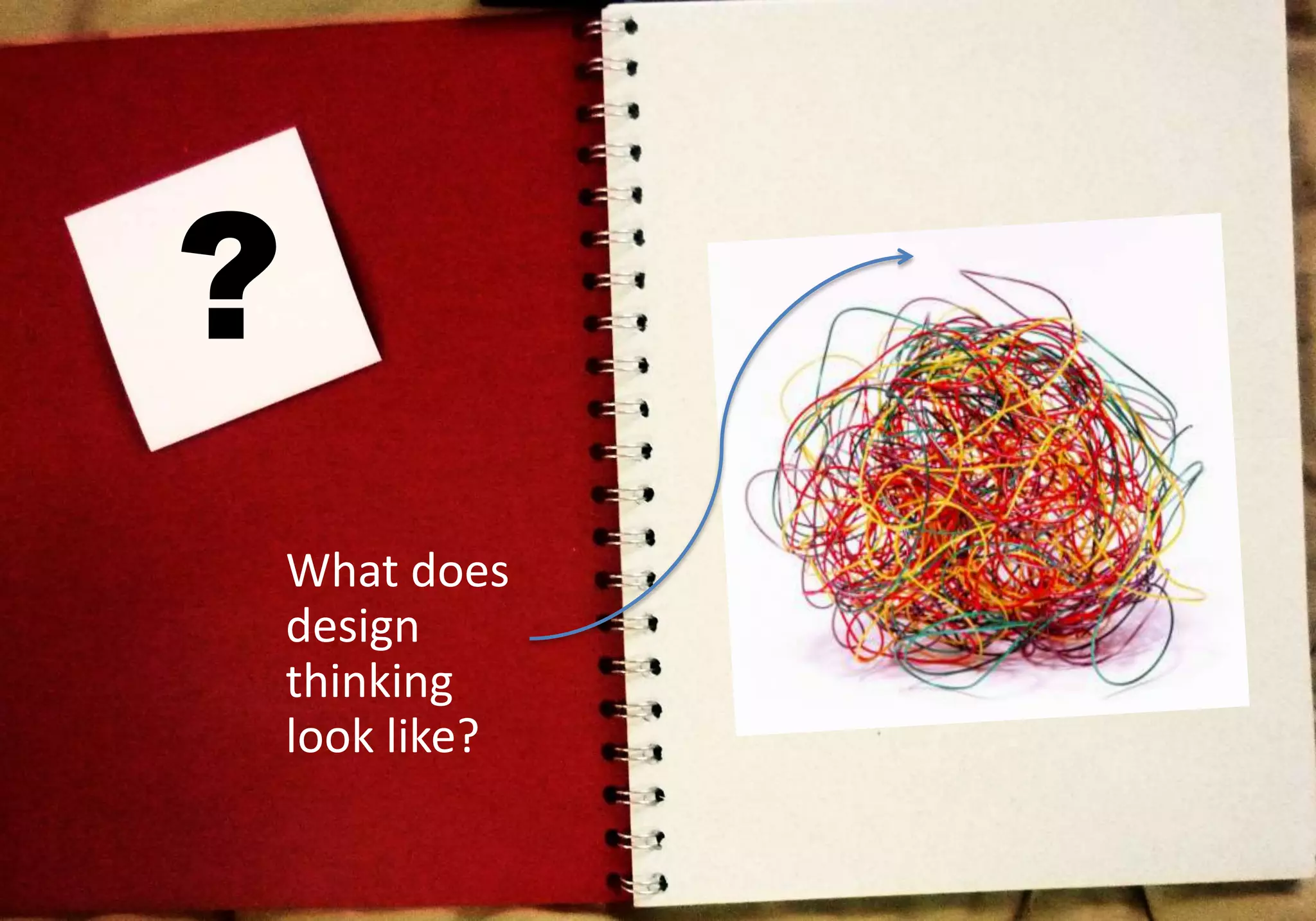
    What does
    design
    thinking
    look like?
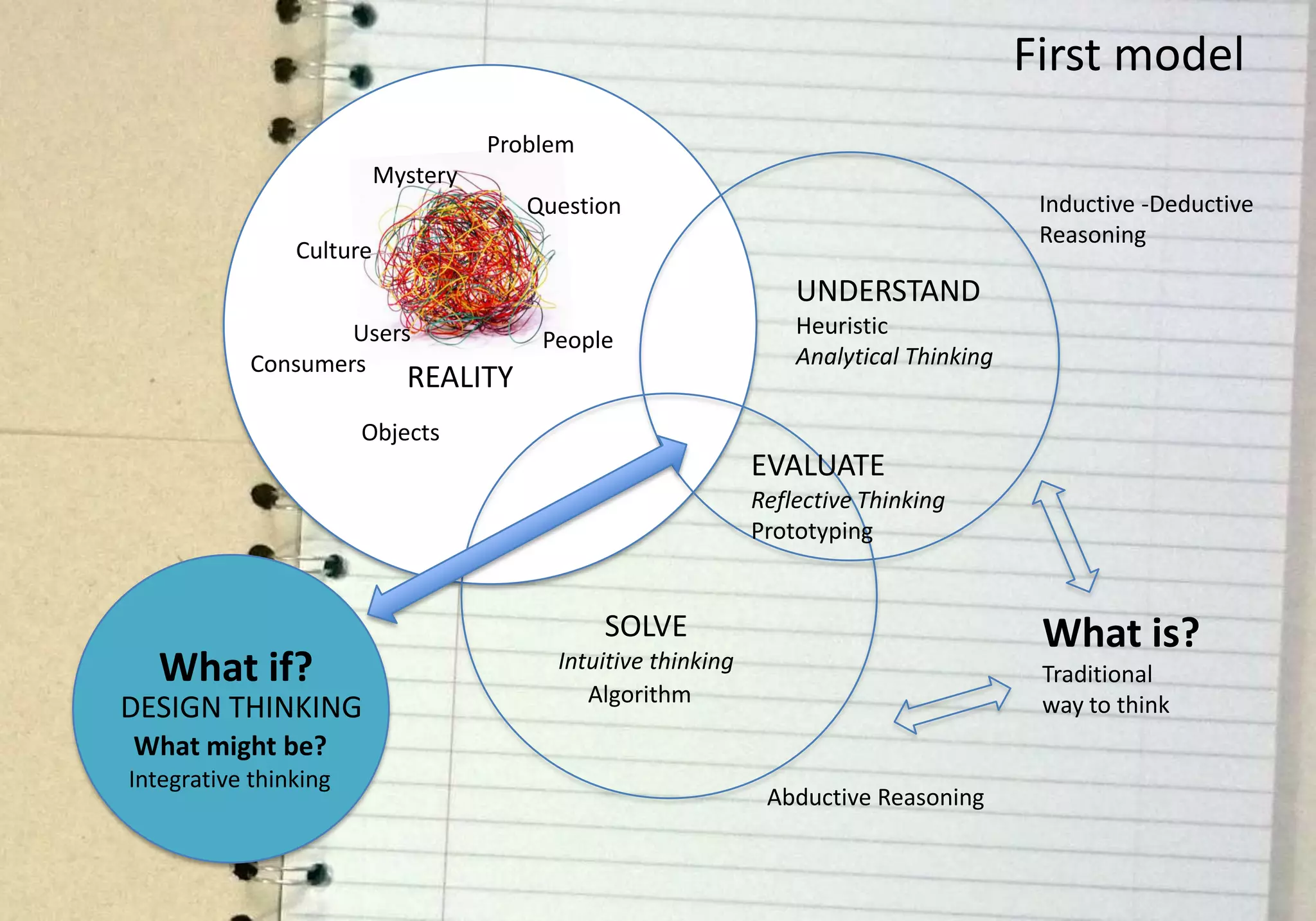
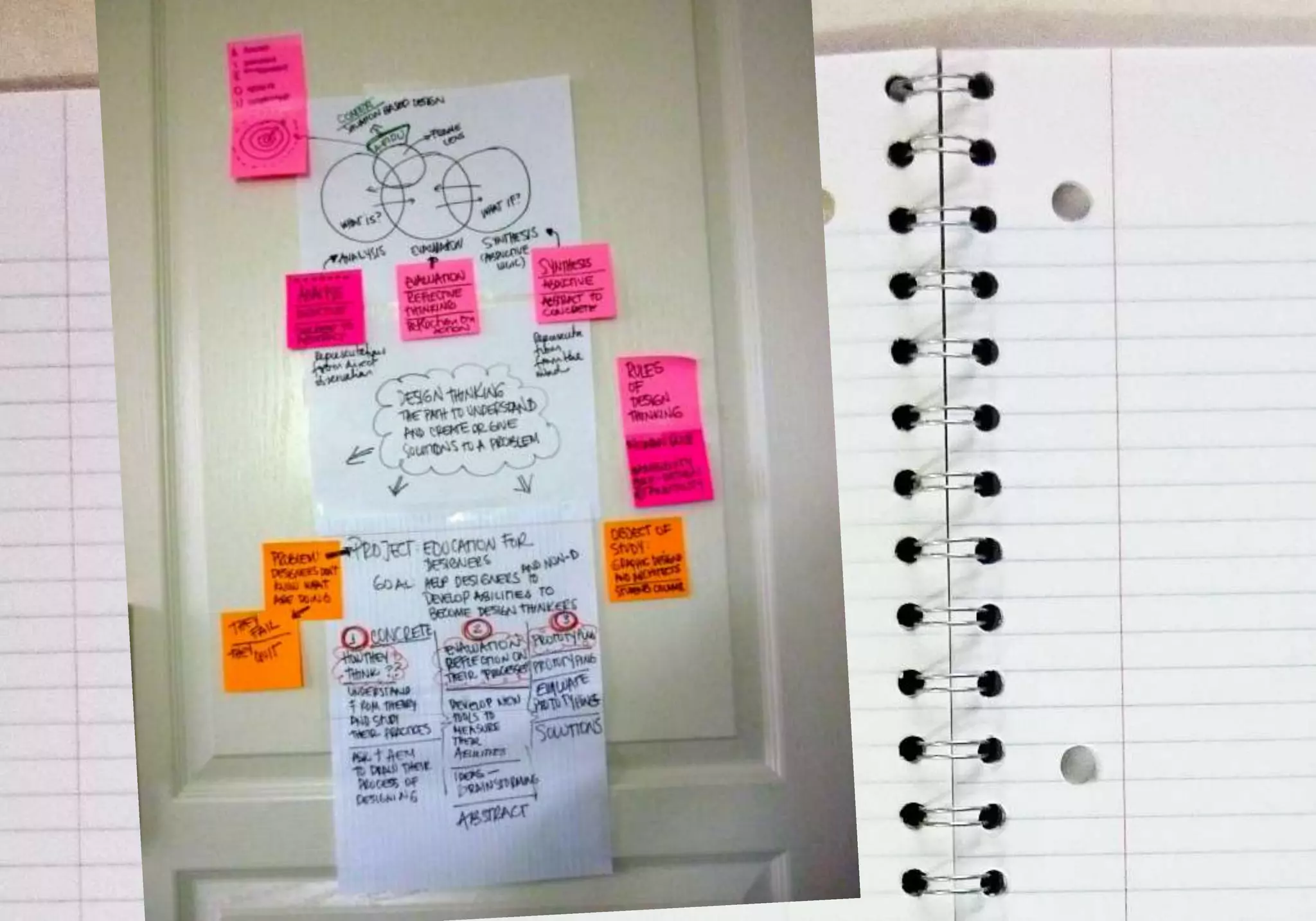
First model
                                    Problem
                          Mystery
                                       Question                                          Inductive -Deductive
                                                                                         Reasoning
                Culture
                                                                  UNDERSTAND
                    Users                                         Heuristic
                                        People
            Consumers                                             Analytical Thinking
                            REALITY
                       Objects
                                                              EVALUATE
                                                              Reflective Thinking
                                                              Prototyping


                                              SOLVE                                      What is?
  What if?                               Intuitive thinking
                                            Algorithm
                                                                                         Traditional
DESIGN THINKING                                                                          way to think
What might be?
Integrative thinking
                                                               Abductive Reasoning
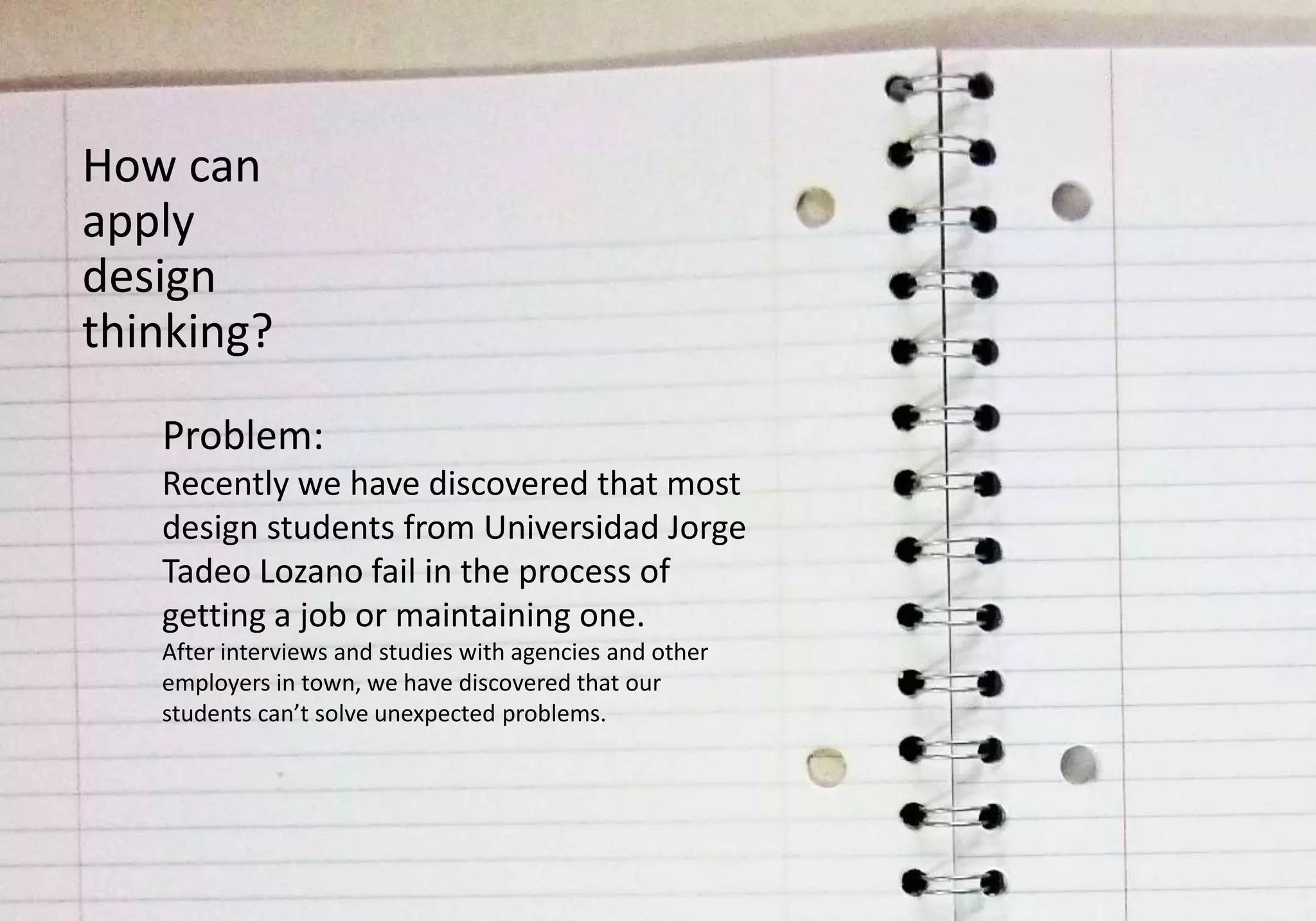
How can
apply
design
thinking?
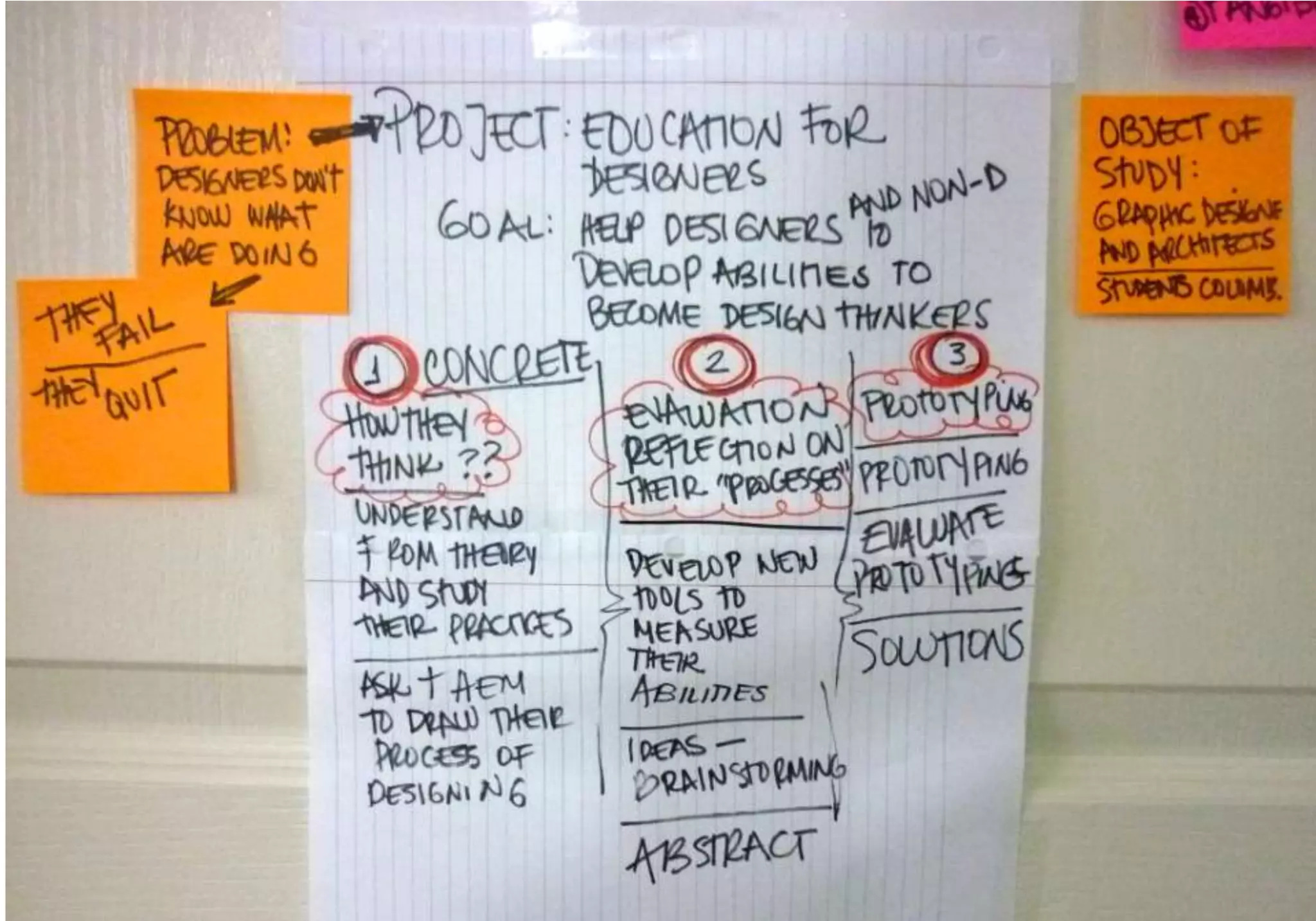
   Problem:
   Recently we have discovered that most
   design students from Universidad Jorge
   Tadeo Lozano fail in the process of
   getting a job or maintaining one.
   After interviews and studies with agencies and other
   employers in town, we have discovered that our
   students can’t solve unexpected problems.
OUR GOAL

- Educate our students to be
  capable in solving wicked and
  unexpected problems
  applying a design thinking
  approach.
UNDERSTAND
-   A group of students will
    be asked to represent
    the process they go
    trough when they have
    to design.
                               EVALUATION
-   After finishing it they
    will be answer
                               - The representations
    questions about the          should be evaluated
    exercise.                    and analyzed

-   Find the key variables     - Brainstorming for
    that affect their            solutions or ideas.
    learning process

-   A group of teachers will
    be asked to do a list of
    competences that their
    students have at this
    pint.
Random thoughts about
Design Thinking

Rules of Design Thinking:

    What makes a design thinker different
    from the others thinkers is his/her
    human-centric point of view, the courage
    to explore, experiment and face the
    failures, the ability to connect the
    present to the past to give a solution to
    the problem in advance for the future,
    and make this ideas/solutions tangible.
Context-based design
    Understanding the specific needs and
    behaviors of our users shouldn’t be only
    related to the activities they realize, the
    goals they want to reach or the objects
    they interact with everyday. A bigger
    understand of our users is the one that
    go deeper and examine the relationships
    between all these variables in the
    environment that surrounds the user.
Design and prototyping:

    According to Tim Brown we build to think
    and that implies Design thinking is a
    constant prototyping process. The only
    way to give the right solutions to a
    problem is having a continuous feedback.

    “Design is never done”
Reliability and validity
     Roger Martin explain design thinking as
     “the form of thinking that has both
     reliability and validity in mind and
     captures aspects of analytical thinking
     and intuitive thinking” so their approach
     gives the opportunity to explore new
     things (intuitive) and explode what is
     happening (analytical), the right
     combination to face future challenges.
“Integrative thinkers consider the
problem as a whole, rather than
breaking it down and farming out the
parts. Finally, they creatively resolve
tensions without making costly trade-
offs, turning challenges into
opportunities.”
Roger Martin. The opposable mind

Model design thinking

  • 2.
    ? What does design thinking look like?
  • 3.
    First model Problem Mystery Question Inductive -Deductive Reasoning Culture UNDERSTAND Users Heuristic People Consumers Analytical Thinking REALITY Objects EVALUATE Reflective Thinking Prototyping SOLVE What is? What if? Intuitive thinking Algorithm Traditional DESIGN THINKING way to think What might be? Integrative thinking Abductive Reasoning
  • 4.
    How can apply design thinking? Problem: Recently we have discovered that most design students from Universidad Jorge Tadeo Lozano fail in the process of getting a job or maintaining one. After interviews and studies with agencies and other employers in town, we have discovered that our students can’t solve unexpected problems.
  • 6.
    OUR GOAL - Educateour students to be capable in solving wicked and unexpected problems applying a design thinking approach.
  • 8.
    UNDERSTAND - A group of students will be asked to represent the process they go trough when they have to design. EVALUATION - After finishing it they will be answer - The representations questions about the should be evaluated exercise. and analyzed - Find the key variables - Brainstorming for that affect their solutions or ideas. learning process - A group of teachers will be asked to do a list of competences that their students have at this pint.
  • 9.
    Random thoughts about DesignThinking Rules of Design Thinking: What makes a design thinker different from the others thinkers is his/her human-centric point of view, the courage to explore, experiment and face the failures, the ability to connect the present to the past to give a solution to the problem in advance for the future, and make this ideas/solutions tangible.
  • 10.
    Context-based design Understanding the specific needs and behaviors of our users shouldn’t be only related to the activities they realize, the goals they want to reach or the objects they interact with everyday. A bigger understand of our users is the one that go deeper and examine the relationships between all these variables in the environment that surrounds the user.
  • 11.
    Design and prototyping: According to Tim Brown we build to think and that implies Design thinking is a constant prototyping process. The only way to give the right solutions to a problem is having a continuous feedback. “Design is never done”
  • 12.
    Reliability and validity Roger Martin explain design thinking as “the form of thinking that has both reliability and validity in mind and captures aspects of analytical thinking and intuitive thinking” so their approach gives the opportunity to explore new things (intuitive) and explode what is happening (analytical), the right combination to face future challenges.
  • 13.
    “Integrative thinkers considerthe problem as a whole, rather than breaking it down and farming out the parts. Finally, they creatively resolve tensions without making costly trade- offs, turning challenges into opportunities.” Roger Martin. The opposable mind